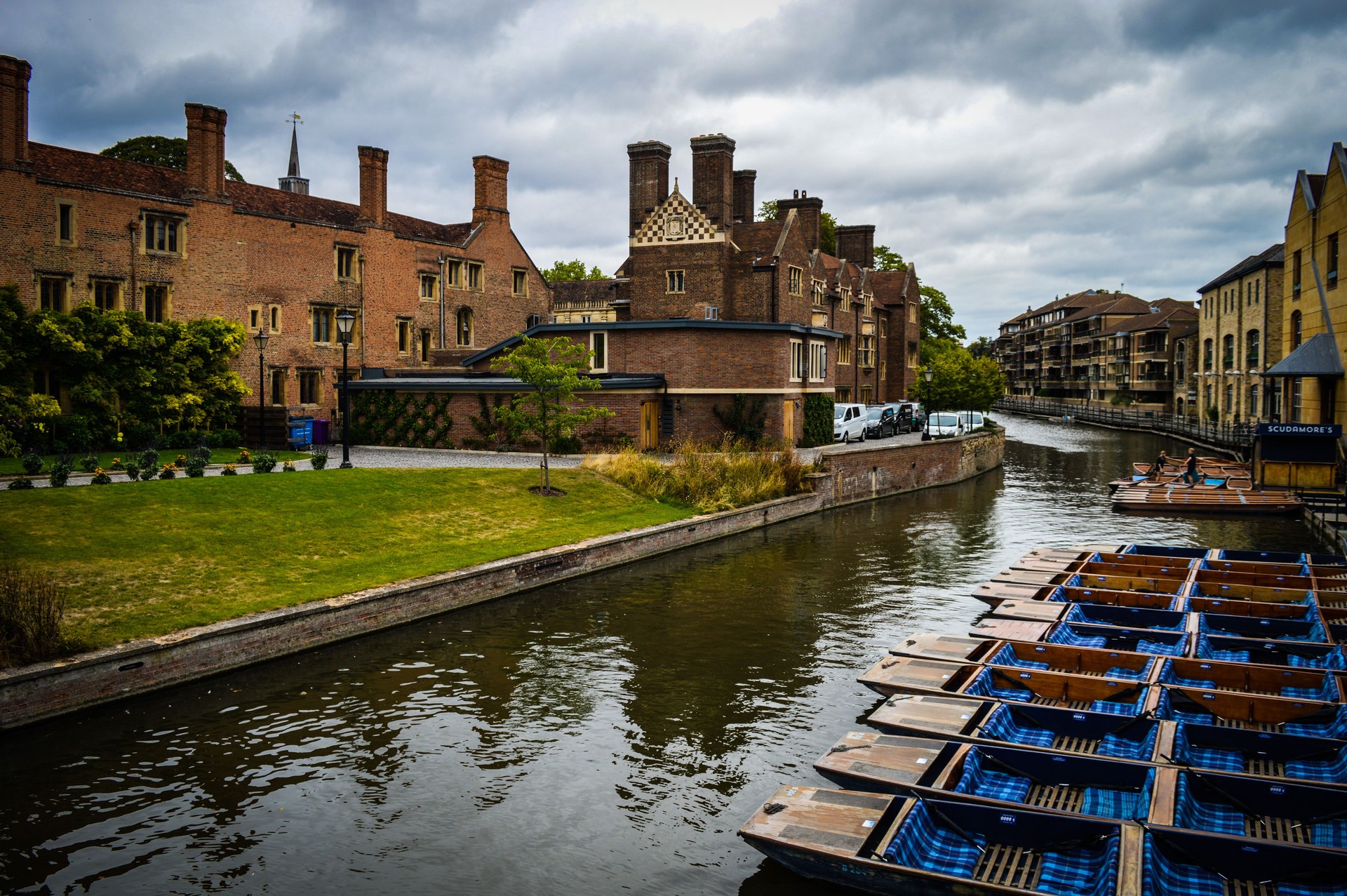
Feng shui treats water outside the home as a carrier of chi (qi) — the tradition’s term for circulating energy — and judges it mainly by movement, shape and position relative to the front door. Slow, clean, curving water is generally read as favourable; fast, straight or stagnant water is not. No school treats water as automatically good or bad.
What counts as “water” in this context?
In classical feng shui writing, “water” outside a house is not limited to oceans and rivers. It includes ponds, swimming pools, drainage ditches, roads (read as symbolic water in some Form School interpretation because of the way traffic moves), and even the slope of land that channels rainfall. Compass School texts extend this further, treating water as one half of a landscape pairing with “mountain” — the raised, solid form behind a site — that goes back to the discipline’s original name, feng shui, meaning wind and water.
This is worth stating plainly because a lot of online advice narrows “water” down to ornamental fountains and fish tanks. Those belong to the indoor version of this discussion, covered separately in the guide to water features placed inside a home and in the note on aquariums. Outside the home, the scale is larger and the reasoning is different again.
Why does Form School care about water at all?
Form School (Xingshi), the older of the two main traditions, is built on reading real terrain — hills, slopes, watercourses — rather than on compass direction. In Form School thinking, a house that sits with solid ground rising gently behind it and open, visible water in front is considered a strong classical arrangement, often summarised as “mountain behind, water in front.” The water is said to collect and slow the chi approaching the house rather than letting it rush past.
The corollary is that water behaving unpredictably or violently near a house — a river prone to flooding, a fast drainage channel directly at the property line — is read unfavourably. Practitioners in this tradition generally attribute this less to symbolism and more to the plain fact that unstable water has always meant unstable ground for a dwelling. That overlap between an old rule and an ordinary practical concern is one of the more defensible parts of the tradition, and it is discussed further in the site’s basics hub on what feng shui holds and what it does not.
What does Compass School add to the picture?
Compass School (Liqi) layers direction onto the same terrain reading. Where Form School asks “is this water shaped and positioned well,” Compass School asks “is this water in the right direction for this house, this period of time, and this occupant’s birth data.” This is done using a compass, a luopan in professional practice, and calculations tied to the Flying Stars system, which assigns different qualities to different compass sectors depending on the year a building was constructed.
Because these calculations require the building’s construction date, its facing direction and, in some branches, the occupants’ personal data, no general-audience article — including this one — can tell a reader whether water on a specific side of a specific house is favourable under Compass School. Any claim to the contrary, without that data, is not a Compass School reading; it is a guess dressed as one. This is a good example of why feng shui consultants disagree with each other so often — they are frequently applying different schools, or applying one school’s method without the data it actually requires.
What about a pond, pool or water feature in a garden?
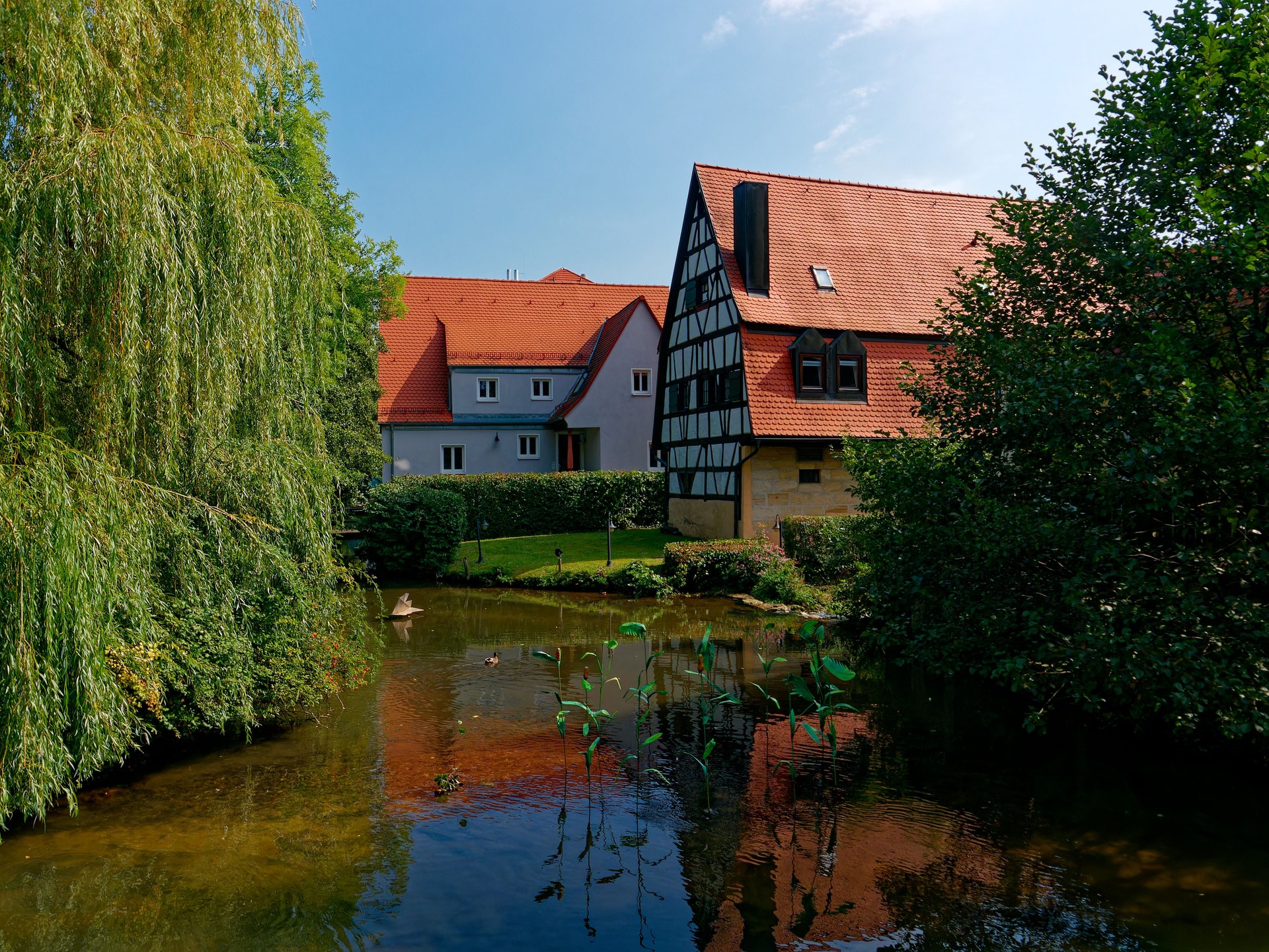
Form School guidance on a garden pond or pool generally comes down to three things: shape, position and condition.
- Curved or irregular edges are traditionally preferred over hard rectangles, on the reasoning that chi is said to move more easily along a curve than around a sharp corner.
- Positioned to the front or side of a house is generally preferred in Form School over directly behind it, on the same “water in front” reasoning discussed above.
- Clean and circulating water is preferred over standing water, which the tradition associates with stagnant chi — a rule that also has an unrelated, entirely practical justification, since standing water is a mosquito breeding site and a maintenance problem regardless of any school of feng shui.
A garden gate near a water feature raises its own questions about how chi is said to enter a property, covered in the piece on the feng shui meaning of a garden gate, and the same logic about smooth, unobstructed approach applies to the path leading to the front door.
Does a body of water behind the house matter?
Form School’s preference for water in front and solid ground behind means water directly behind a house — a canal, a steep drop to a river, a reservoir — is generally read less favourably than the same water positioned in front. The stated reasoning is that a home is thought to want a stable “back” and an open “front,” so a large body of water where the solid support is expected is seen as reversing that arrangement. No practical structural claim is being made here beyond the traditional reading itself, and it should not be confused with the very real, non-feng-shui questions a buyer would raise about a property’s position relative to a floodplain — those belong with a surveyor, a structural engineer or the relevant local planning authority, not with feng shui.
This is also where terrain readings intersect with a related question covered elsewhere on the site: a house built on a slope often has water draining across or below it, and Form School treats the two features — slope and water — as part of the same terrain reading rather than separately.
What about drainage, damp and standing water at the property line?
This is the point at which feng shui and ordinary building maintenance genuinely converge. A drainage channel, gutter overflow or low point in a garden that collects standing water is treated unfavourably in Form School on symbolic grounds — stagnant water, stagnant chi. It is also, independently of any tradition, a source of damp, foundation problems and pest issues that any property owner or letting agent would flag.
Where the two overlap, this site treats the practical explanation as the one worth acting on. Fixing drainage, regrading a garden, or clearing a blocked gutter is a maintenance and property matter, and this article is not engineering, building, or legal advice — a reader with a genuine drainage or flood-risk concern about a property should consult a qualified surveyor, a builder, or their local council’s guidance, not a feng shui text.
Does feng shui say water outside a home can be genuinely “bad”?
The tradition describes certain water configurations as unfavourable rather than neutral — most consistently, water that moves fast and straight directly toward a front door, which some Form School writers group with other so-called “secret arrows”, meaning features read as sending sharp, direct energy at an entrance. A straight canal, drain or road aligned head-on with a door is the recurring example.
What the tradition does not claim, and what this site will not repeat, is that such a feature causes financial loss, illness or misfortune. Practitioners describe the reasoning — fast, unbroken movement aimed at an entrance is read as disruptive rather than nourishing chi — and stop there. Readers should treat any version of this claim that promises a specific life outcome as marketing, not feng shui, a distinction discussed at length in the piece on what to ignore in most online feng shui advice.
What should someone actually do with this, in a real house?
For a reader evaluating a property, or living in one, the useful takeaways are modest:
- Note whether water — a drain, a slope, a pond, a nearby river — moves toward the house in a straight line or curves past it, since that is the distinction Form School actually uses.
- Treat standing water and poor drainage as a maintenance priority regardless of any feng shui reading, since the practical case for fixing it does not depend on the tradition at all.
- Be skeptical of any Compass School claim about a specific direction that does not account for the building’s construction date and facing — without that, it is not a real Compass School reading.
- Keep the broader approach to the house in mind as a whole, since water rarely sits in isolation from the path, the gate and the trees around a property, all of which the tradition reads together rather than one feature at a time.
The wider set of outdoor questions — gates, slopes, trees, junctions and approaches — is gathered in the Outdoors & Approach section of this site, which is the right place to look next for a specific feature rather than water in isolation.
Related reading
entrances and flow, light and air, small spaces, common mistakes, room by room, layout, objects and the approach to the house, What Feng Shui Says About a House Built on a Slope, What Does Feng Shui Say About a Balcony or Terrace?
About this site. Feng Shui Pack explains what the feng shui tradition holds and which school holds it, from published sources. Feng shui is a tradition of placement and orientation, not a science: nothing here will bring you wealth, health, luck or a relationship, and we never claim otherwise. Where a suggestion has an ordinary practical reason — daylight, airflow, sightlines, less clutter — we say so; where it does not, we say that too. This is not medical, financial, legal or tenancy advice. If a decision matters, talk to a professional in that field.