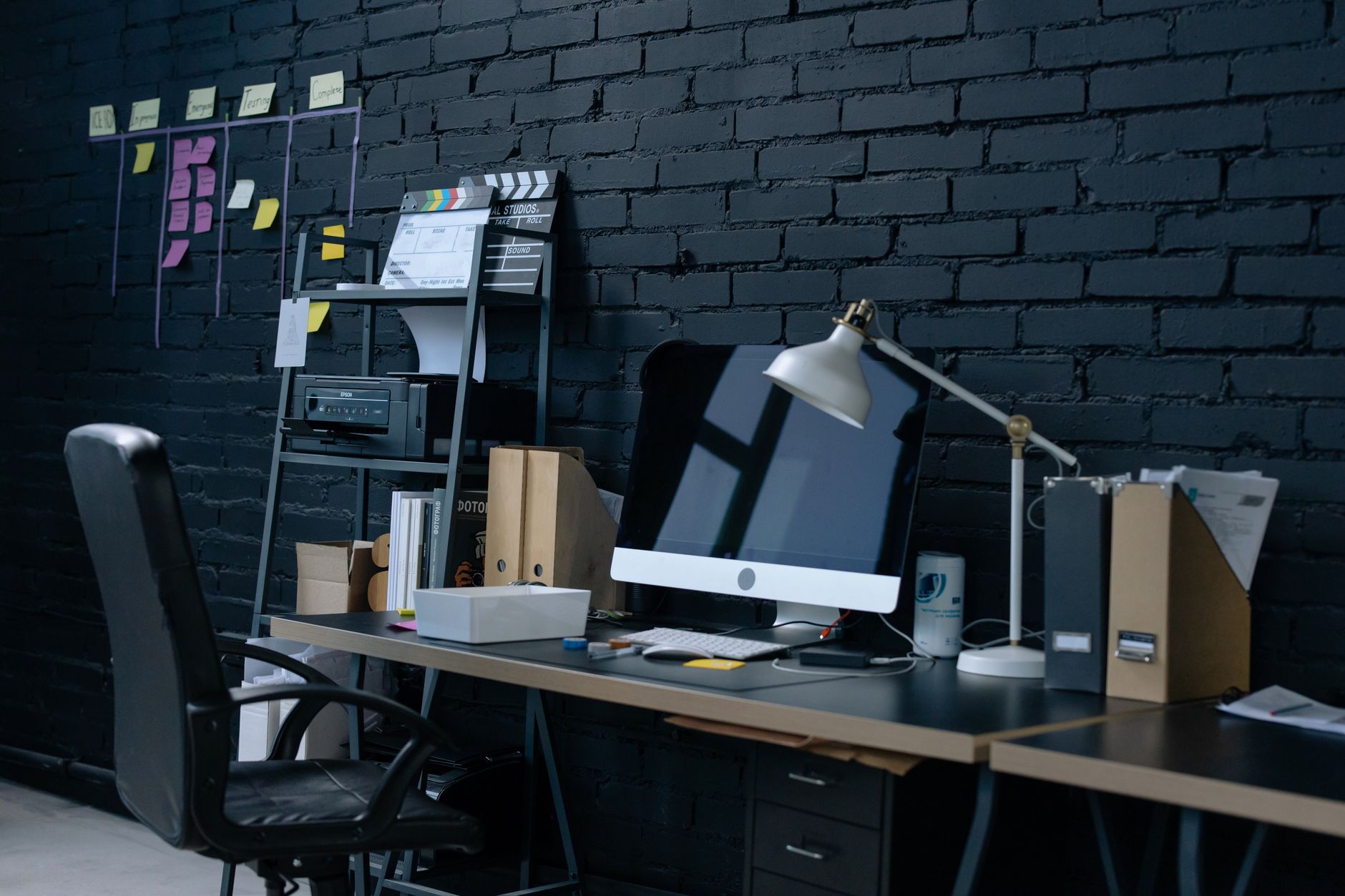
Feng shui traditions, across schools, generally advise against combining a home office and a bedroom in the same space, because a bed and a desk represent two different states — rest and activity — that the tradition holds should not compete for the same room. Where a shared room is unavoidable, the emphasis shifts to separating and screening the two functions rather than banning the arrangement outright.
What is the core objection to a desk in a bedroom?
The objection is about function, not decoration. A bedroom is associated in the tradition with yin — stillness, recovery, low stimulation. A desk brings in yang: activity, decisions, screens, paperwork. Practitioners commonly argue that keeping both in one room means the mind never fully leaves work mode, because the objects of work stay in view.
This is one of the few feng shui claims that overlaps clearly with a practical, non-mystical concern. Sleep researchers and occupational health guidance (not feng shui sources) also note that associating a sleep space too closely with work can make it harder to switch off — though that is a separate line of evidence from the tradition itself, and this article is not medical advice; readers with ongoing sleep difficulty should consult a doctor or a sleep specialist rather than a design guide.
Does Form School treat this differently from the BTB adaptation?
Classical Form School (Xingshi) reasons from the physical logic of a room: sightlines, what is behind you, what you face, where drafts and doorways sit. Applied to a bedroom-office, it asks concrete questions — can the desk user see the door, is the bed visible from the desk chair, does the office equipment sit in a “poison arrow” line toward the bed.
The Western Black Sect (BTB) adaptation, which is the source of most English-language feng shui advice online, works instead from the bagua map overlaid on the room, assigning life areas (wealth, career, relationships) to zones of the space. BTB guidance on a bedroom office tends to focus on which bagua zone the desk falls into and on using screens, plants or curtains to “separate the energy” of work from sleep. Classical Compass School (Liqi), which works from directional calculations tied to the compass and a person’s birth data, does not use the bagua-map method at all, and reaches its own desk-facing directions separately. Where an article does not say which of these three it is drawing from, that is worth noticing — see the site’s explanation of why feng shui rules contradict each other.
What is the “commanding position” problem here?
In Form School terms, both the bed and the desk are supposed to sit in what the tradition calls the commanding position — meaning the occupant can see the door from either, without being directly in line with it. In a shared room, satisfying this for two pieces of furniture at once is often physically impossible in a small space.
The usual compromise, given in most sources regardless of school, is to prioritise the bed’s command position over the desk’s, on the reasoning that sleep quality matters more than desk orientation. Where the desk cannot also command the door, practitioners suggest positioning it so the chair at least does not have its back to the room, even if it cannot fully face the door. For the desk question specifically, see how feng shui treats home office desk direction.
What are the practical, non-symbolic arguments?
Setting the tradition’s language aside, there are ordinary reasons a shared bedroom-office causes friction:
- Screens and desk lamps introduce bright, often cool-toned light into a room meant for winding down — see what feng shui says about overhead lighting and how it differs from the softer, layered light suited to a bedroom.
- A desk accumulates paper, cables and open shelving, which is a documented source of visual clutter — why clutter is the first problem in every feng shui school explains this beyond the bedroom context.
- Office equipment often means more devices running, more cabling, and sometimes less ventilation if the desk sits near a closed window — relevant background is in ventilation and stale air in feng shui.
- A wall clock or desk clock facing the bed is a specific, recurring complaint in feng shui writing, covered in what feng shui says about clocks.
None of these need the language of chi (qi) to make sense. They are the same reasons a sleep specialist or an interior designer might give.
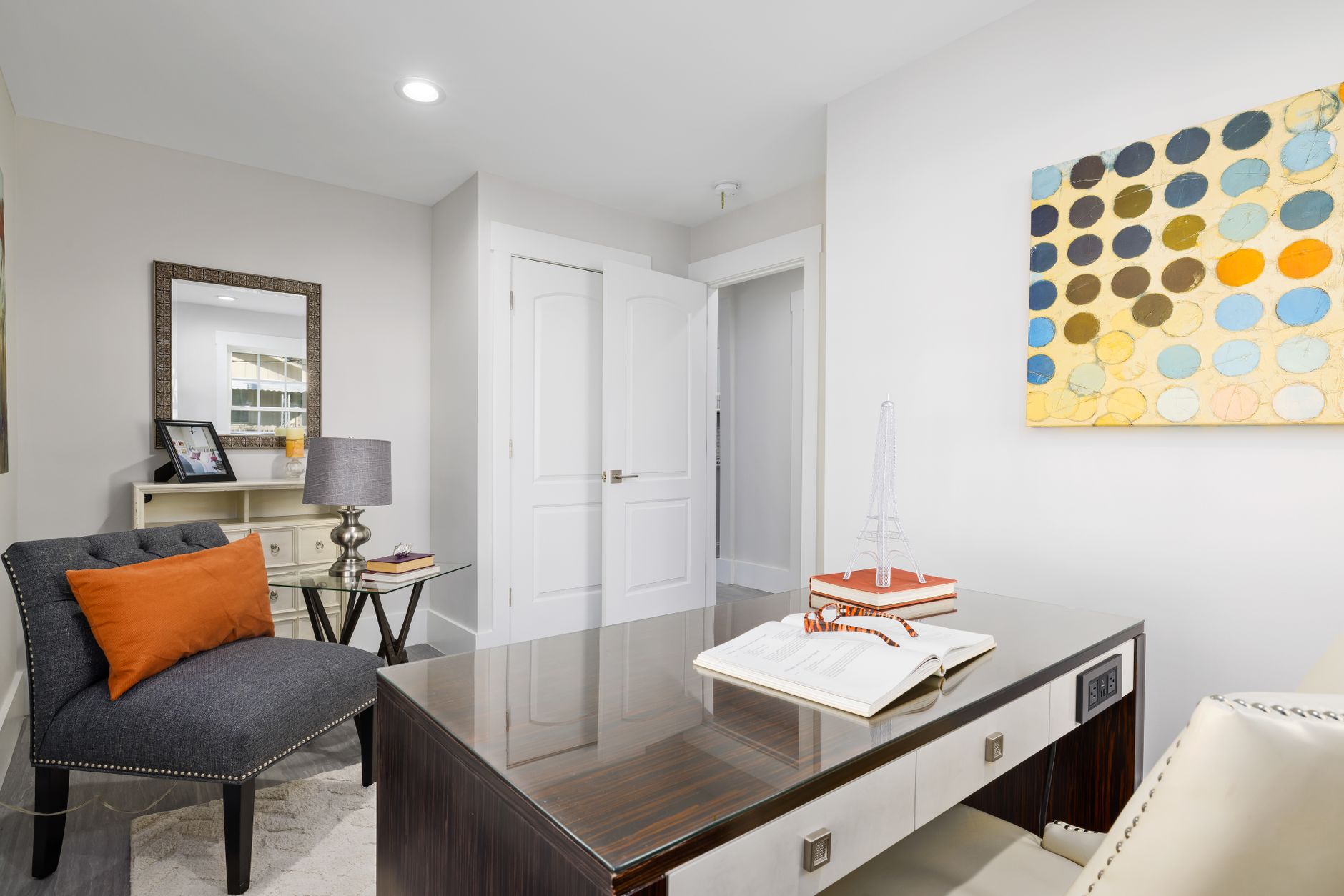
What if a shared bedroom-office is the only option?
Most current feng shui writing, including BTB sources, accepts that many households have no separate room to spare and focuses on damage limitation rather than prohibition. Common suggestions include:
- Placing the desk as far from the bed as the room allows, ideally with the desk chair’s back to a solid wall rather than an open stretch of room.
- Screening the desk with a curtain, folding screen, or furniture placement so it is not the first thing seen on waking — the same logic behind arranging a room that does two jobs.
- Closing laptops, covering monitors, or otherwise putting work “out of sight” at night, rather than leaving a lit screen or open notebook facing the bed.
- Avoiding a desk chair or office equipment directly at the foot of the bed, which several sources describe as an uncomfortable sightline on waking — no practical mechanism is given for this beyond the tradition itself, so it is worth treating as a stated preference rather than a demonstrated effect.
Where the room has a genuine second use — guest sleeping space, storage, a reading corner — the same separation principles apply; see the Room by Room archive for how other multi-use rooms are handled.
Does the desk’s position relative to the bed matter, or just its presence?
Sources differ, but a recurring theme is that a desk facing directly at the bed, or a chair with its back to the bed, is considered worse than a desk placed to the side or in a corner. The reasoning given is about attention and exposure — that working while facing a bed keeps a visual reminder of sleep in the eyeline, and that having one’s back to the bed while working removes the awareness of what’s “behind” a person, which Form School treats as unsettling regardless of the room’s use. A related and more commonly discussed version of this concern is covered in mirror facing the bed: is it actually a feng shui problem? — the underlying logic about sightlines and rest is similar.
A desk under a window has its own separate set of considerations, covered generally in bed under a window in feng shui, and daylight direction affects how usable a desk position is for work in the first place — see how daylight direction changes the way a room is used.
Is there evidence behind any of this?
There is no controlled evidence that a desk’s position relative to a bed affects sleep quality, mood or work output in the way feng shui sources claim. What does have supporting evidence, from sleep and workplace research rather than feng shui, is that strong light exposure, screen use and visual reminders of work near bedtime can interfere with winding down. Feng shui’s bed-versus-desk advice and that research point in a similar direction, but they are not the same claim, and readers should not treat one as proof of the other. For a broader look at what the tradition can and cannot demonstrate, see is there evidence for feng shui? and what does feng shui actually claim?
Where does this fit with other bedroom guidance?
A shared bedroom-office is one version of a broader question feng shui asks about any bedroom: what is in the room that isn’t sleep. The same logic applies to storage, artwork and shelving choices — see the most common feng shui mistake in a bedroom and what open shelving really means for how work-related objects like books and files are treated even outside a formal desk setup. For general layout principles that apply whether or not a room does double duty, the Layout & Furniture archive covers furniture placement, command position and floor space in more depth.
This article describes design and tradition-based reasoning, not medical or sleep advice. Anyone with a persistent sleep problem should raise it with a doctor rather than rely on room arrangement alone.
About this site. Feng Shui Pack explains what the feng shui tradition holds and which school holds it, from published sources. Feng shui is a tradition of placement and orientation, not a science: nothing here will bring you wealth, health, luck or a relationship, and we never claim otherwise. Where a suggestion has an ordinary practical reason — daylight, airflow, sightlines, less clutter — we say so; where it does not, we say that too. This is not medical, financial, legal or tenancy advice. If a decision matters, talk to a professional in that field.