“Buy this lucky object” is bad feng shui advice because feng shui, in every school that has produced written texts, describes relationships — between a building’s form, its openings, light, clutter and how people move through it — not a checklist of items. An object bought in isolation changes none of that, and no serious school of the tradition ever claimed it would.
What is actually wrong with treating feng shui as a shopping list?
The core error is substitution: replacing an assessment of a room with the purchase of a thing. Classical Form School (Xingshi) is concerned with the shape of land, the position of a building, and how a structure sits relative to what surrounds it. Compass School (Liqi) works with directions and the bagua map oriented to compass bearings taken from the building itself. Neither system is built around objects as a starting point. An object might be used within either framework, but only after the layout, orientation and condition of the space have already been considered.
A charm, a coin or a figurine bought and placed on a shelf does not alter a floor plan, a door’s alignment, or how much daylight a room receives. Those are the things both schools spend most of their attention on. For background on how the two traditions actually differ, see Form School vs Compass School.
Where does the “lucky object” idea come from?
Most English-language advice that centres on objects — a specific crystal, a particular coin, a figurine said to “attract” something — comes from the Black Sect (BTB) adaptation of feng shui, developed in the West in the late twentieth century. BTB simplifies the bagua into an eight-zone grid applied from the front door, which classical Compass School does not do, and it is more willing than the older schools to assign a fixed object to a fixed outcome.
That simplification is exactly what made feng shui exportable as a retail category. It is easier to sell a coin than to explain compass orientation. The commercial version of the tradition and the textual one have diverged, and most readers are never told which one they are getting. See Black Sect (BTB) Feng Shui Explained for how that adaptation came about.
What do the different schools actually say about objects?
Objects are not absent from the tradition — they are simply secondary to structure. In Compass School, an object might be chosen to represent one of the five elements and placed to support or temper another element already present in a room, based on directional analysis. In Form School, an object is far less discussed; the emphasis stays on the shape of the site and building. In BTB practice, an object is more often assigned directly to a life area of the bagua grid — wealth, relationships, career — without the compass calculation the older schools require.
This matters because a reader told to place “a wealth object” is often being given a BTB instruction dressed as universal tradition. Whether that instruction has any basis in Compass School depends on the actual compass direction of the room, which the seller of the object cannot know and rarely asks about. For how the five elements are meant to interact with each other, see the productive cycle and the destructive cycle — the logic objects are supposedly built on, when it is used correctly.
What does an object do, according to the tradition, without doing?
None of the schools describes an object as producing an outcome by itself. What they describe is an object as a marker, reminder or symbolic support within a room that has already been addressed structurally — its light, its clutter, its layout, its main door. A wind chime, for example, is traditionally discussed as something that marks or slightly disperses moving air near an entrance, not as a device that changes a household’s fortune on its own; see what wind chimes do in feng shui tradition. An aquarium is treated as a still or moving water feature with its own placement rules, not a stand-alone charm; see the feng shui guide to aquariums.
This site does not recommend buying a charm, crystal, coin, mirror or figurine to achieve a result, and no article here will. Where the tradition assigns meaning to an object, that meaning is explained, and the decision to buy or not buy is left to the reader.

Is there a practical reason for any of this?
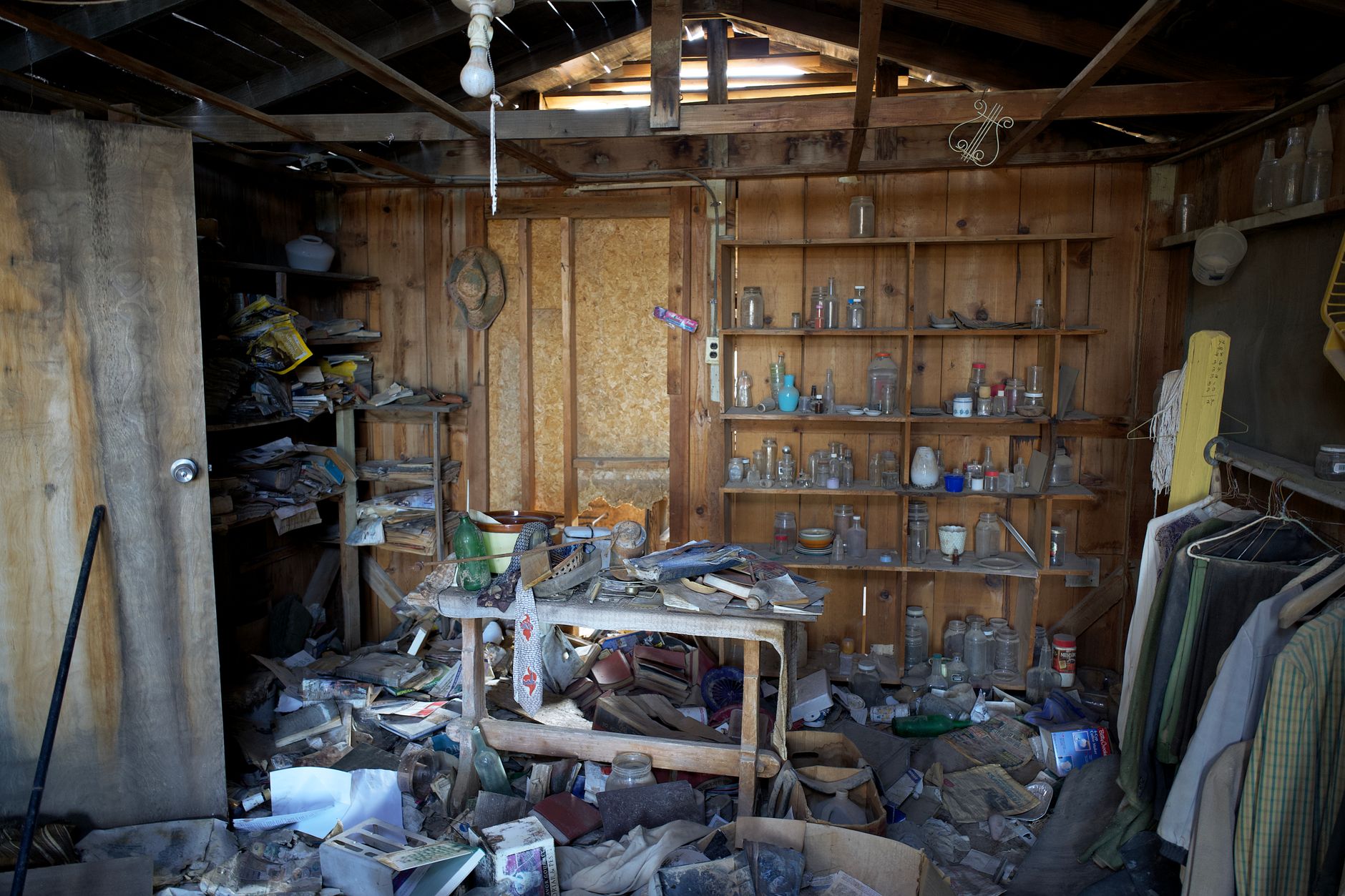
Sometimes, yes — and it is worth separating those cases from the ones with no stated rationale. A mirror placed to reflect a doorway can genuinely change how a small room reads, and mirrors are one of the few objects with a documented set of placement concerns across schools; see the general guide to feng shui mirrors. Clutter has a plain practical case against it regardless of school — a room that is easier to move through and clean is treated as sounder in Form School for reasons that need no metaphysics at all; see why clutter is the first problem in every feng shui school.
But a great deal of object-based advice has no stated practical rationale beyond the tradition itself, and the honest response to that is to say so plainly rather than invent a mechanism. A figurine in a corner does not improve airflow, daylight or the layout of furniture — the things this site treats as having a checkable, explainable logic. See the Light & Air and Layout & Furniture archives for the parts of the tradition that do connect to something observable.
What should someone do instead of buying something?
The tradition’s own priorities, across schools, point toward the structure of a room before anything placed inside it:
- Where the main door sits, and what it faces on opening — covered in the Entrances & Flow archive.
- How much daylight a room gets and from which direction, which changes how a space is used across the day; see how daylight direction changes the way a room is used.
- Whether the bed, desk or main seat has a clear view of the door — the “commanding position” discussed at what is the commanding position in feng shui.
- How much floor is left empty against how much is filled with furniture; see how much empty floor a room should have.
Addressing these costs nothing to diagnose and is where both Form and Compass School actually put their attention. An object considered afterward, with a stated reason, is a different matter from an object bought as a substitute for that work. The Basics archive covers how the schools are structured before any object enters the discussion.
Is this financial or medical advice?
No. This article, and this site generally, does not give financial, medical or legal advice. Feng shui traditions make claims about arrangement, symbolism and airflow; they do not substitute for a financial adviser, a doctor, a structural surveyor or a lawyer, and nothing here should be read as a promise of income, health, or any other outcome. Where a decision about a home involves money, tenancy or health, the appropriate step is to consult a licensed professional in that field, not an object.
The wider pattern — rules presented as universal when they belong to one school, and outcomes implied where none can be verified — is addressed directly at why feng shui rules contradict each other and at what feng shui actually claims. Both are worth reading before any purchase is made in the tradition’s name.
Related reading
What Does Feng Shui Say About Broken or Unused Objects?, The Basics, Flow, Light and Small Spaces, The Most Common Feng Shui Mistake in a Bedroom, What Mistakes Do People Make Applying the Bagua?
About this site. Feng Shui Pack explains what the feng shui tradition holds and which school holds it, from published sources. Feng shui is a tradition of placement and orientation, not a science: nothing here will bring you wealth, health, luck or a relationship, and we never claim otherwise. Where a suggestion has an ordinary practical reason — daylight, airflow, sightlines, less clutter — we say so; where it does not, we say that too. This is not medical, financial, legal or tenancy advice. If a decision matters, talk to a professional in that field.