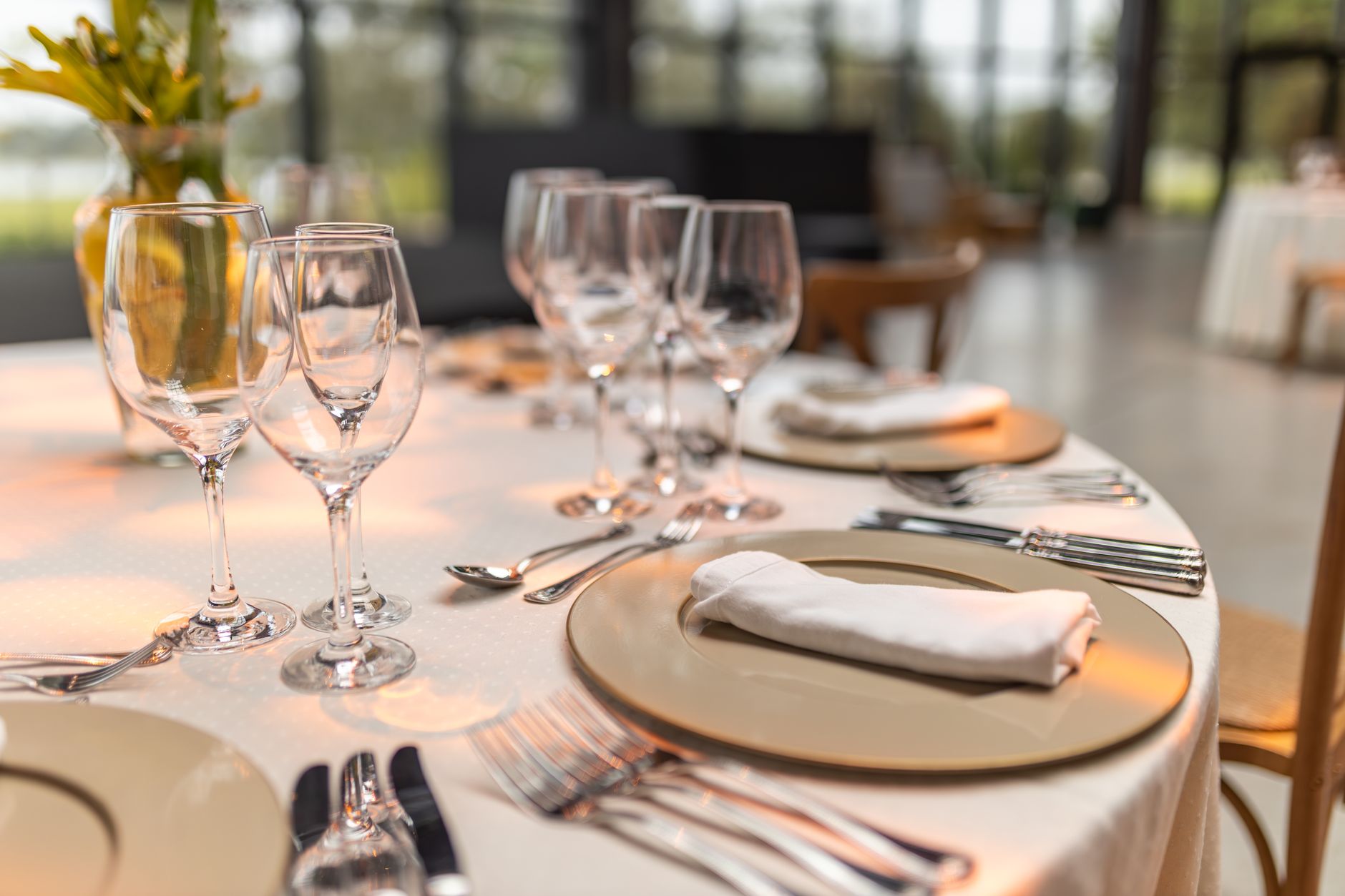
Feng shui traditions generally favour dining table shapes without sharp corners aimed at seated diners — round, oval or square with softened edges — because a corner pointing at a chair is treated as a “poison arrow.” Rectangular tables are not rejected; they are standard in Chinese dining halls historically and are treated as neutral by Compass School.
Why do round and oval tables get recommended so often?
The reasoning, most consistently stated in Form School (Xingshi) writing, is about corners rather than curves themselves. A table edge that comes to a point and sits level with someone’s torso or the walkway behind their chair is described as a poison arrow — a hard angle held to direct disruptive chi at whatever it faces. A round or oval table has no such angle, so this specific objection does not apply to it.
There is also an ordinary, checkable reason round tables suit shared meals: every seat is roughly equidistant from the centre, and nobody is boxed into a corner. That is a seating-geometry fact, not a metaphysical one, and it holds regardless of what school of feng shui a household follows.
What about square and rectangular tables?
Classical Chinese dining furniture includes plenty of square and rectangular tables — the eight-immortals table (baxianzhuo) is a documented square form used in traditional households for centuries. Compass School (Liqi) texts, which are concerned with orientation and the flying-star chart rather than furniture silhouette, do not single out rectangular tables as a problem.
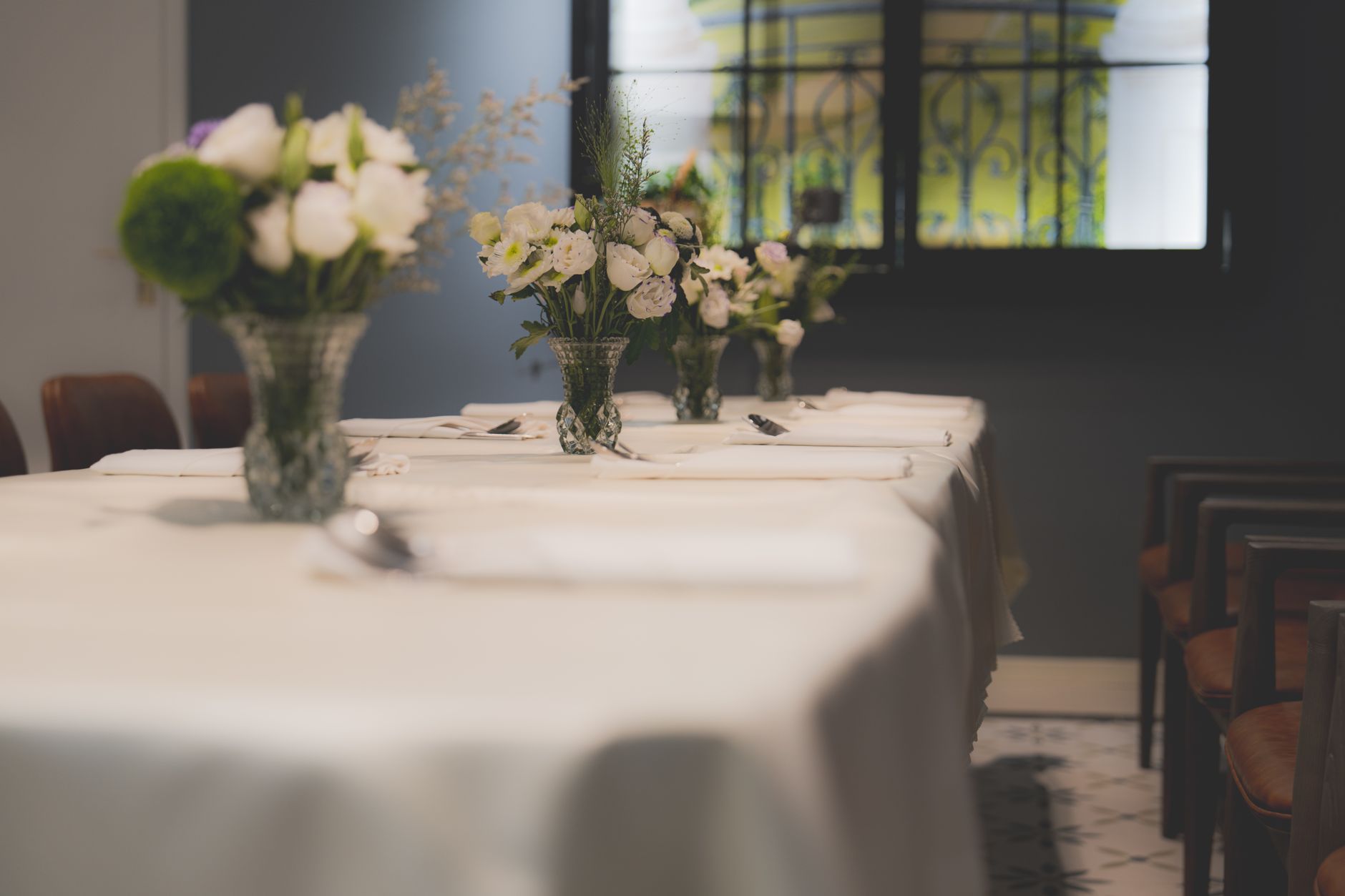
The practical case for a rectangular table is straightforward: it seats more people per metre of room length than a round table of comparable footprint, which is why it remains the default shape in narrow dining rooms and long kitchens. Feng shui commentary on rectangular tables mostly concerns corner placement relative to seats, not the rectangle itself.
Do the five elements attach to table shapes?
Many English-language guides — most of them working from the Black Sect (BTB) adaptation rather than classical Compass School — assign each basic shape to one of the five elements: round to Metal, square to Earth, rectangular to Wood, triangular to Fire, and irregular or wave-edged forms to Water. This is a correspondence system, not a measurement, and different BTB-influenced sources vary slightly in how they map it.
Where this correspondence is used at all, it is usually to match a shape to what a household is said to want more of, following the productive cycle of the five elements — for example, choosing a rectangular (Wood) table because Wood is said to feed Fire in that cycle. Practitioners who use the destructive cycle instead point out that Wood also cuts through Earth, which is why the same shape can be recommended by one source and avoided by another depending on which cycle they are reasoning from. Readers who want the underlying logic rather than the shopping conclusion can look at the destructive cycle explanation directly.
Do glass tops and sharp corners matter?
Two separate objections get conflated here and are worth separating. The first is about material: some feng shui writing associates glass with Water or with a lack of grounding, and prefers solid wood for a dining table on the reasoning that meals are a Yin-Yang balancing activity better served by a stable, opaque surface. No independent evidence supports glass being less “grounding” than wood; this is a stated preference within certain schools, not a measurable property of the material.
The second objection is about geometry and applies to glass and wood alike: a table corner that comes to a sharp point, especially one aimed at a doorway, a walkway, or directly at where someone sits, is the poison-arrow concern again. Rounding a corner, or seating people so the point faces a wall rather than a body, addresses that specific objection regardless of what the tabletop is made from.
Does the number of seats or sides matter?
Some popular guides suggest avoiding an odd number of chairs, or say a table should never have an empty seat left permanently in place at a family meal. These claims appear in folk and BTB-style writing but are not traceable to a documented rationale in classical Form or Compass texts. No practical reason is given for this beyond the tradition itself, and readers should treat it as a stated custom rather than a rule with a mechanism behind it.
Where seat counts do have a plain functional logic is circulation: a table with chairs on all four sides in a small room can trap the seat nearest the wall, which is a walking-space problem before it is a feng shui one.
Where should the table sit in the room, whatever its shape?
Feng shui writing on dining rooms borrows the same reasoning used for a bed or a desk: a seat with a clear view of the room’s entrance is preferred, and a seat with its back to a doorway or directly in the path between the door and the kitchen is not. This is the same logic behind the commanding position discussed for beds and desks, applied here to whoever is treated as the head of the table.
Practically, this usually means:
- Positioning the table so at least one seat faces the main entrance to the dining area, rather than every chair having its back to a doorway.
- Leaving enough clearance around all sides for chairs to be pulled out without blocking a walkway — a corridor-width gap is a common minimum cited in interior-design guidance generally, not a feng shui figure specifically.
- Avoiding a position directly under an exposed structural beam, a Form School concern that also has an ordinary explanation: a lowered beam over a seated head is a psychologically oppressive feature independent of any tradition.
Does shape matter more than the room around it?
Form School practitioners generally weight the room and its surroundings — doors, beams, sightlines, the shape of the space itself — well above the shape of any single piece of furniture inside it. A well-placed rectangular table in a room with good circulation is treated as sounder than a round table wedged awkwardly between a doorway and a wall. The difference between Form School and Compass School matters here because Compass School’s compass-direction and flying-star calculations for a dining room’s orientation are a separate layer of analysis that has little to do with tabletop geometry at all.
Much of the shape-specific advice circulating online — element correspondences, seat-count taboos, glass-versus-wood preferences — comes from the Black Sect (BTB) adaptation, a twentieth-century Western reworking of older material that is rarely labelled as such in general audience articles. The BTB explainer covers how that school diverges from classical Form and Compass practice, and why so much popular advice defaults to it without saying so.
What is the practical takeaway for choosing a table?
None of this is structural or safety advice, and a table’s shape has no bearing on load-bearing walls, fire egress or anything a qualified tradesperson would need to sign off — for genuine structural questions about a dining space, a licensed architect or building surveyor is the right source, not a feng shui guide.
Within feng shui itself, the load-bearing questions are simpler: does a corner point at a seated body or a walkway, can every chair be pulled back without hitting a wall, and does at least one seat have a clear line to the room’s entrance. Shape, element correspondence and seat-count customs sit on top of that, and different schools weight them differently — which is worth remembering the next time two feng shui sources on dining tables flatly contradict each other. That pattern is common enough across the tradition that it has its own explanation on this site, in the piece on why feng shui rules contradict each other so often.
Readers assembling a dining space alongside other rooms in the home may also find the broader Room by Room archive useful, and the Layout & Furniture hub covers furniture placement questions — tables, sofas, beds and desks — under the same commanding-position and poison-arrow reasoning discussed above.
About this site. Feng Shui Pack explains what the feng shui tradition holds and which school holds it, from published sources. Feng shui is a tradition of placement and orientation, not a science: nothing here will bring you wealth, health, luck or a relationship, and we never claim otherwise. Where a suggestion has an ordinary practical reason — daylight, airflow, sightlines, less clutter — we say so; where it does not, we say that too. This is not medical, financial, legal or tenancy advice. If a decision matters, talk to a professional in that field.