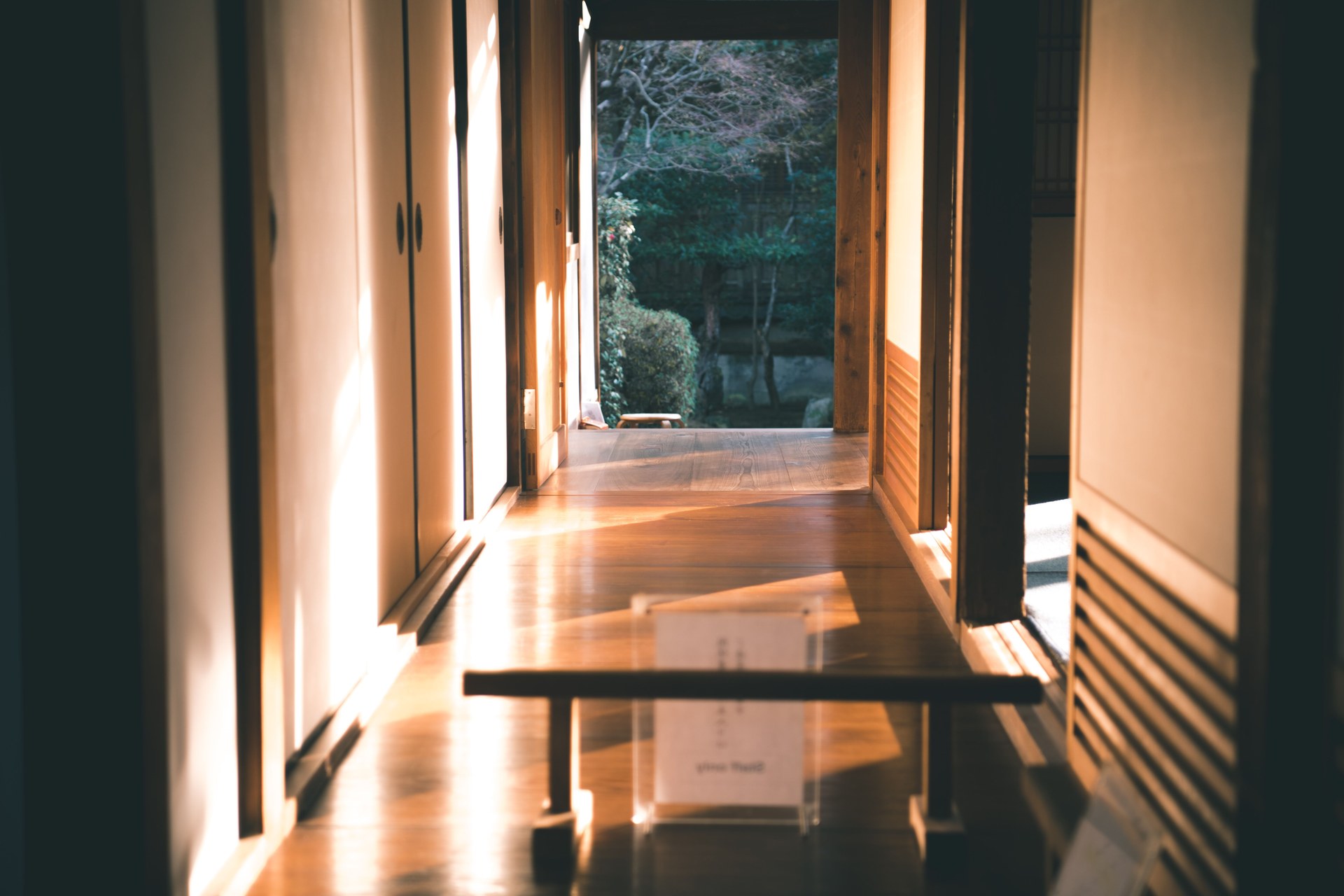
Chi (qi) is the term Chinese cosmology uses for a vital force or breath said to move through the body, the land and buildings alike. “Energy flow” is the English shorthand for how that force is said to circulate — smoothly and beneficially in some configurations, blocked or scattered in others. It is a concept from a specific intellectual tradition, not a measurable physical quantity.
What does the word “chi” actually mean?
Chi appears across much older Chinese thought than feng shui alone — in classical medicine, in martial arts theory, in philosophy going back over two thousand years. It is usually translated as “breath,” “vital energy” or “life force,” and it describes something animating: a body has chi when alive and loses it at death; a landscape has chi where water and landform combine in a way the tradition considers favourable.
Feng shui borrows this cosmological vocabulary and applies it to sites, buildings and rooms. The two literal words of “feng shui” — wind and water — refer to the natural forces classical texts treat as chi’s carriers: wind disperses it, water holds and gathers it. For the fuller background on where these ideas originate and how they developed over centuries, see What Is Feng Shui, and Where Does It Come From?

What is “energy flow” supposed to be, physically?
There is no physical mechanism described in classical texts, and no claim here that one exists. “Flow” is a metaphor drawn from water and wind — chi is described as moving the way a current moves, pooling in some places, rushing too fast through others, stagnating where it cannot circulate at all.
Practitioners in the tradition describe a site or room as having good chi flow when its layout allows for a supportive but not overly forceful movement — comparable to how a river is more productive meandering than either stagnant or in flood. This is a descriptive framework the tradition uses to evaluate space, not a physical process that has been measured or demonstrated in scientific literature.
Does every school of feng shui agree on how chi moves?
No, and this is one of the more consistently overlooked points in English-language writing on the subject. Feng shui is not one unified rulebook; it is several historically distinct schools that read chi and its movement differently.
- Form School (Xingshi) reads chi mainly from landscape and structure — the shape of hills, the direction a river bends, the mass of a building relative to what surrounds it. Good chi flow, in this reading, follows from good physical form: shelter at the back, an open aspect at the front, water that curves rather than rushes past.
- Compass School (Liqi) layers a system of directions, the bagua (pa kua) — an eight-sided diagram of trigrams — and a person’s birth data onto the same site, using a specialised compass (the luopan) to calculate favourable and unfavourable orientations. Chi flow here is assessed by direction and calculation as much as by visible form.
- The Western Black Sect (BTB) adaptation, developed and popularised in the United States from the late twentieth century, drops compass calculation almost entirely and maps the bagua from the building’s front door instead. It is the version behind most English-language feng shui advice, usually without saying so.
These schools disagree with each other on method, not just emphasis, and a rule stated as universal (“always face the door this way”) is very often one school’s rule presented as if it were the whole tradition. A fuller comparison is at Form School vs Compass School Feng Shui: The Difference, and the BTB adaptation specifically is covered at Black Sect (BTB) Feng Shui: What It Is, and Why It Spread.
How is chi flow assessed in a building or room, in practice?
Traditional practitioners look at a mix of factors, and different schools weight them differently:
- The relationship of a building to what is behind it (ideally solid, described in Form School as offering support) and what is in front of it (ideally open).
- The path a person walks on entering — a straight, unobstructed line from a front door to a back door, for instance, is traditionally described as letting chi “rush through” rather than circulate, because nothing slows or redirects it.
- Sharp corners, exposed beams and narrow, cluttered corridors, which the tradition describes as creating “cutting” or stagnant chi.
- In Compass School practice, the compass direction the building or a room faces, cross-referenced against calculated charts.
- In the BTB adaptation, the position of the front door as the starting point for mapping the bagua across the floor plan.
Where these readings converge with ordinary design sense — a hallway that is not an obstacle course, a bed positioned so a person can see the door rather than being startled by movement behind them, enough daylight and air movement that a room does not feel dead — there is a practical rationale worth naming plainly rather than dressing up as energy work. Where a rule has no such rationale (a particular colour assigned to a particular compass direction, for instance), the honest description is that no practical reason is given for it beyond the tradition itself.
What objects or features are said to affect chi flow?
Traditional and popular feng shui both describe certain features as altering the movement of chi: mirrors, said to redirect or double it; wind chimes and fountains, said to activate it in a stagnant corner; plants, said to soften a “sharp” corner; open shelving versus solid walls, affecting how visually and physically open a space feels.
This site does not recommend acquiring any object — charm, crystal, mirror or otherwise — to produce a particular outcome, because no outcome can be promised. Where an object appears in the tradition, the honest approach is to explain what practitioners say it is meant to do and leave the decision to the reader, rather than to sell the idea that a purchase changes a life circumstance.
Is there scientific evidence for chi?
No mainstream scientific body recognises chi as a measurable form of energy, and no peer-reviewed physical mechanism for “energy flow” through a room has been demonstrated. This is a matter of settled scientific consensus, not a live debate, and it is worth being direct about it rather than hedging.
What is measurable, and does affect how people feel and function in a space, is daylight, ventilation, noise, temperature, sightlines and clutter — all things the tradition also discusses, under its own vocabulary. Two explanations for the same recommendation — one architectural, one cosmological — can both be stated honestly as long as neither is dressed up as the other.
How does this apply to arranging a room?
Practitioners commonly suggest starting with the paths people actually walk and the sightlines they actually have, then checking those against whichever school’s framework is being followed — Form School’s reading of shape and shelter, Compass School’s directional charts, or the BTB adaptation’s door-based bagua map. These frameworks give different, sometimes contradictory, answers, so naming which one is in use matters more than following any single tip in isolation.
None of this is medical, structural or safety advice. Where a specific arrangement is proposed for reasons of sleep, air quality, structural change or tenancy (moving a wall, altering ventilation, changing a lock or a lease condition), that is a matter for a qualified professional — an architect, a building surveyor, a doctor for sleep concerns, or a solicitor for a tenancy question — not a feng shui guide.
For a wider grounding in the tradition’s history and its major branches before applying any specific rule, the archive at The Basics is the place to start.
About this site. Feng Shui Pack explains what the feng shui tradition holds and which school holds it, from published sources. Feng shui is a tradition of placement and orientation, not a science: nothing here will bring you wealth, health, luck or a relationship, and we never claim otherwise. Where a suggestion has an ordinary practical reason — daylight, airflow, sightlines, less clutter — we say so; where it does not, we say that too. This is not medical, financial, legal or tenancy advice. If a decision matters, talk to a professional in that field.