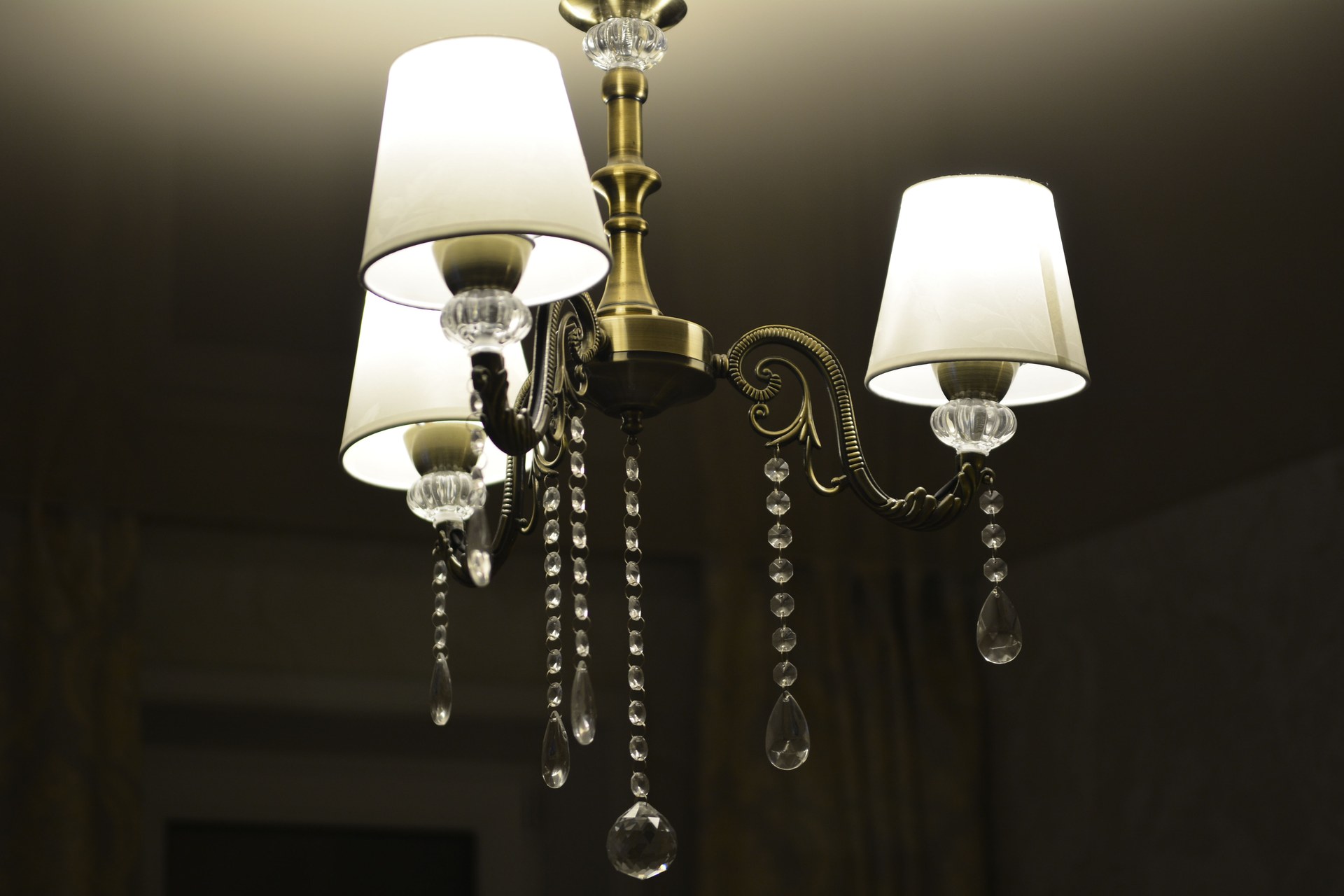
Overhead lighting is treated as only one layer of a room’s light, not the whole of it. Most feng shui guidance — largely from the BTB adaptation — warns against a single central fixture as the sole light source, especially one directly above a bed or desk, and recommends layering ceiling light with lamps at different heights instead.
That is the short version. The longer version depends on which tradition is doing the talking, because “feng shui” is not one rulebook, and lighting is an area where a fair amount of modern advice gets stated as timeless wisdom when it is really a 20th-century add-on.
Does classical feng shui say anything about ceiling lights at all?
Classical Form School and Compass School texts predate electric lighting entirely, so there is no historical ruling on pendant fixtures or downlights as such. What those older traditions do address, at length, is light itself — daylight, orientation, and the general presence or absence of brightness in a room.
Form School reasoning is built around landscape and structure: where a building sits, what surrounds it, how openings let air and light move through. Compass School (Liqi) layers directional calculation on top of that, using a compass reading of the home against a bagua map. Neither has much to say about a ceiling fixture specifically, because the object didn’t exist when the texts were written. Most of what circulates online about overhead lighting comes from later, largely Western-authored adaptations — chiefly the Black Sect Tantric Buddhist (BTB) school, developed in the late 20th century, which reasons more freely from symbolism and lifestyle advice than from the older compass-based systems. For more on how these schools diverge, see the overview of Form School versus Compass School and the separate account of what BTB actually is and where it came from.
Why does BTB feng shui object to a single overhead light?
The reasoning given is that one strong light source directly above a person creates uneven, harsh illumination — bright at the crown, shadowed elsewhere — which BTB writers describe as pressing down on a person seated or lying beneath it. The suggested fix is not to remove the ceiling fixture but to add light from other heights so no single source dominates.
This shows up most often in two specific placements: a pendant or downlight directly over a bed, and one directly over a desk chair. In both cases the objection is about a single hard light hitting one fixed spot in the room, rather than ceiling lighting as a category.
There is a workable practical reason underneath this, separate from the symbolic one. A single overhead source does produce harsh shadows across a face and uneven contrast across a room, which is a known lighting-design problem, not a feng shui invention. Interior lighting design generally recommends combining ceiling light with lamps at seated or task height for exactly this reason — better shadow control, more even light across the surfaces people actually use. Where feng shui and ordinary lighting design agree, it’s worth saying so plainly.
What does “layering” mean in practice?
Layering means combining at least two of three light types — ambient (general ceiling light), task (lamps aimed at a specific surface), and accent (smaller, decorative light) — so no single fixture is doing all the work in a room.
- Ambient light: the ceiling fixture, or a central pendant, providing overall brightness.
- Task light: a desk lamp, a reading lamp beside a chair, under-cabinet lighting in a kitchen.
- Accent light: a wall sconce, a floor lamp in a corner, light directed at artwork or a shelf.
BTB-influenced guidance treats a room with only ambient (ceiling) light as unbalanced, and suggests adding at least one lamp at a lower height to soften it. This is covered in more detail in the site’s dedicated guide to how artificial lighting should be layered in a room, which goes through the practical sequencing room by room.
Is overhead lighting over a bed treated differently?
Yes. A ceiling fixture directly above a mattress is one of the most consistently flagged placements in BTB-derived bedroom advice, on the reasoning that a person lying beneath it is in a fixed, exposed position under a hard downward light for hours at a time.
The suggested remedy is usually to reposition the bed away from directly under the fixture, or to rely on bedside lamps as the primary light source at night rather than a ceiling light switched from the doorway. No practical rationale beyond the tradition itself is given for the “pressing down” description, though the more grounded point — that harsh, undiffused light close to a sleeping surface is unpleasant and disruptive — has an ordinary basis in how people actually experience light at night. This overlaps with broader guidance on how a bed’s position relative to fixed features is treated and with the more detailed placement rules covered in where a bed should go in a bedroom. This is a comfort and design question, not a medical or sleep-health one; readers with genuine sleep concerns should consult a medical professional rather than a lighting guide.
What about overhead lighting over a desk?
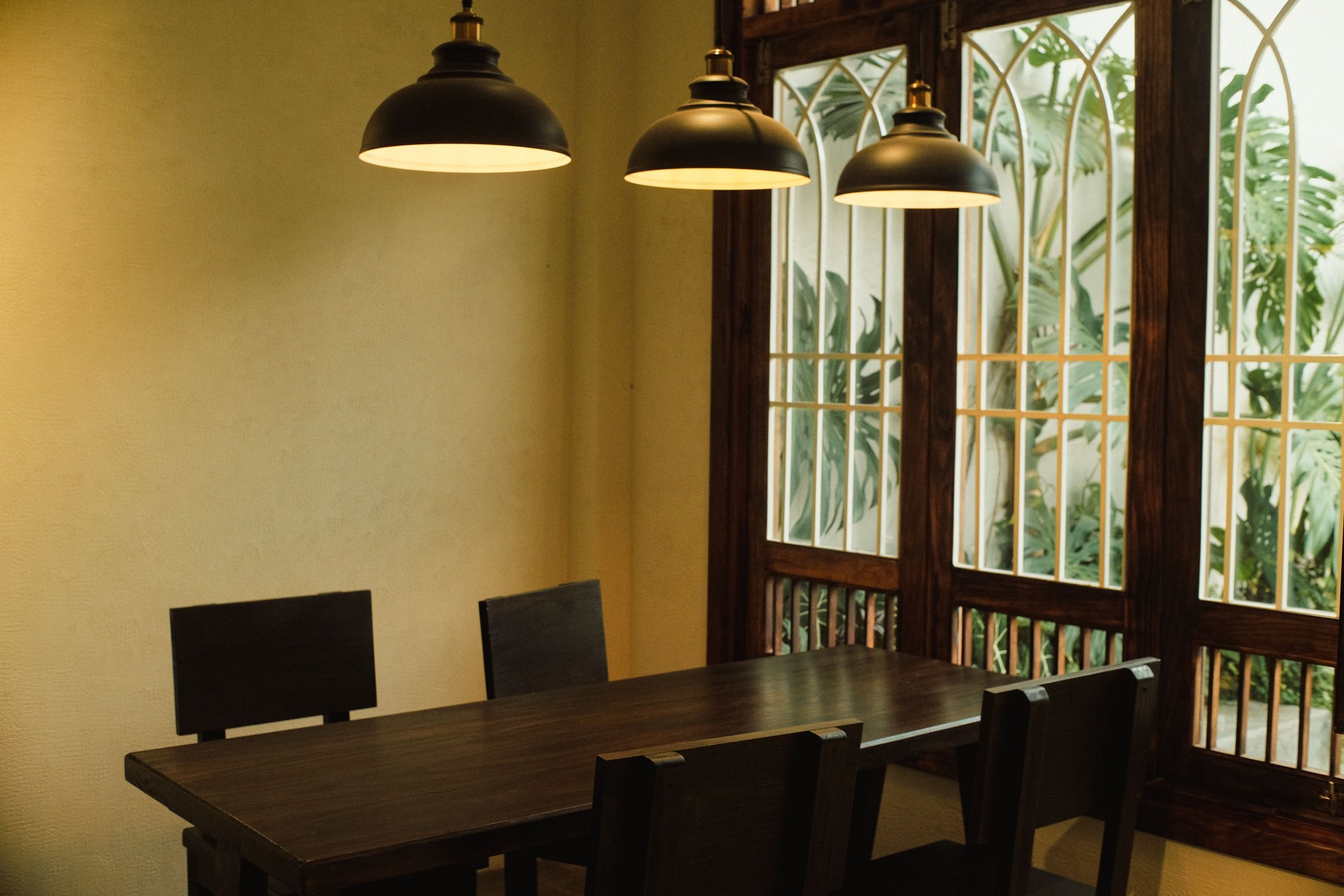
The same logic is applied to a desk positioned directly beneath a ceiling light or a beam carrying one: a single downward source is considered unbalancing, and a desk lamp is recommended as the primary task light rather than the ceiling fixture alone.
Desks sitting under a structural beam get a related but distinct objection in Form School reasoning, which treats a beam overhead as a specific structural feature to avoid working directly beneath, independent of any lighting fitted to it — covered in the site’s guide to beams and low ceilings. Desk placement more broadly, including the commanding-view reasoning behind where a desk faces, is addressed in the guide to home office desk direction.
Does the type or colour of the light matter?
Some BTB-influenced writing links warmer, dimmable light to a calmer, more yin quality suited to bedrooms, and brighter, cooler light to a more active, yang quality suited to kitchens and workspaces — but this is a general design preference echoed across ordinary interior lighting advice, not a fixed rule with a single attributed source.
Dimmable fixtures are commonly recommended in BTB-adjacent guidance specifically because they let one ceiling fixture serve multiple functions — bright for cleaning or working, low for evening — which reduces the “single hard light” problem without adding more fixtures. Whether a room reads as balanced or harsh in this sense also depends heavily on what light it gets during the day, which is why lighting advice in feng shui writing is rarely separated from a room’s daylight and window situation — a link explored in the site’s piece on why feng shui cares so much about natural light and, for rooms without a window at all, in what feng shui says about a windowless room.
Do ceiling fans with lights get a separate mention?
Yes — the reasoning applied to ceiling fixtures over beds and desks is often extended to ceiling fans with integrated lights, on the basis that a fan blade overhead is read the same way a beam is: a hard architectural line positioned directly above a person. Some BTB writers add the moving blades as a second, separate concern about air movement disturbing a sleeper. Neither point comes from classical Compass School or Form School material; both are later additions specific to the BTB adaptation, and no practical rationale beyond the tradition is offered for treating a fan differently from a still fixture.
How does this fit into decorating a room overall?
Lighting is one part of a wider set of layout questions feng shui writing addresses — what’s directly overhead, what a bed or desk faces, how much open floor a room keeps clear, and how furniture is arranged around fixed points like doors and windows.
Readers working through a full room, rather than a single fixture, may find it more useful to start from the broader category pages: the Light & Air section for daylight, windows and artificial light together, and the Layout & Furniture section for how furniture position interacts with all of it. The Basics section covers the underlying concepts — chi, the bagua, yin and yang — that this lighting guidance is drawn from, for readers who want the reasoning rather than just the rule.
Is any of this backed by evidence?
No controlled evidence supports the specific claim that an overhead light “presses down” on a person in a way that affects their wellbeing; this is a symbolic reading particular to the BTB tradition, not a finding from any field of lighting science. The separate, ordinary point — that a single overhead source produces harsher shadows and less even light than a layered arrangement — is supported by standard interior lighting design and is worth taking on its own terms.
Readers wanting a broader look at what feng shui can and cannot be said to demonstrate should see the site’s separate pieces on whether there is evidence for feng shui and what feng shui actually claims. This article is a guide to a decorating tradition, not lighting-safety, electrical, or health advice; questions about wiring, fixture installation or eye strain belong with a qualified electrician or an optometrist rather than a feng shui guide.
Related reading
How Should Artificial Lighting Be Layered in a Room?, What Does Feng Shui Say About a Room With No Window?, The Basics, Flow, Light and Small Spaces, How Daylight Direction Changes the Way a Room Is Used
About this site. Feng Shui Pack explains what the feng shui tradition holds and which school holds it, from published sources. Feng shui is a tradition of placement and orientation, not a science: nothing here will bring you wealth, health, luck or a relationship, and we never claim otherwise. Where a suggestion has an ordinary practical reason — daylight, airflow, sightlines, less clutter — we say so; where it does not, we say that too. This is not medical, financial, legal or tenancy advice. If a decision matters, talk to a professional in that field.