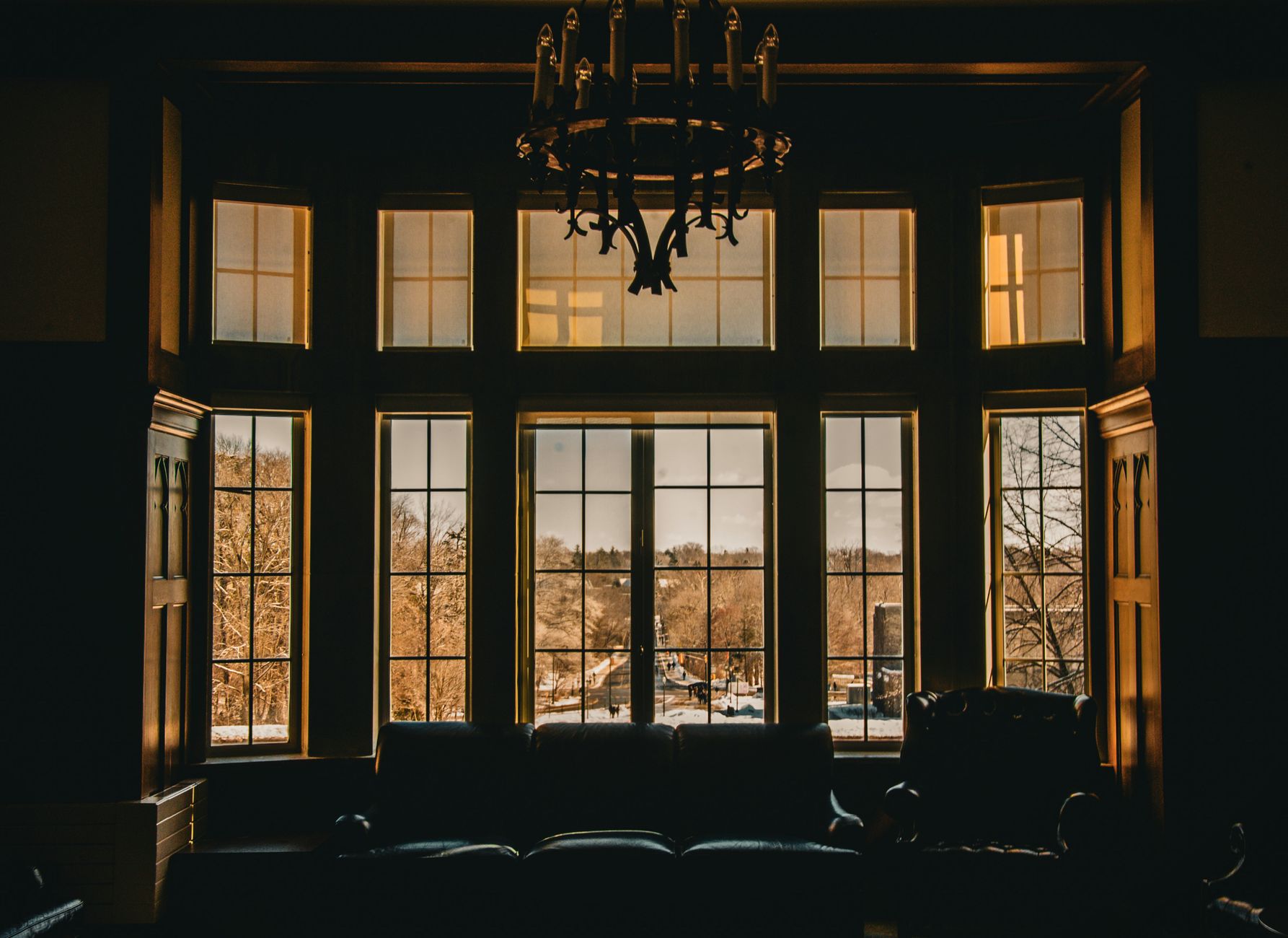
Feng shui treats a windowless room as a space with weak or stagnant chi (qi), because no school of the tradition, classical or modern, considers a closed box with only a door to be able to circulate air or light on its own. The practical suggestions that follow — mirrors, light, air movement, careful use — all address that one problem from different angles.
Why does feng shui care about windows at all?
In Form School (Xingshi) thinking, which reads a building’s shape and openings the way it reads a landscape, windows and doors are the points where a room exchanges air and light with the outside. A room that only opens onto a hallway or another interior room, with no route to outdoor air, is read as cut off from that exchange. Classical texts describe stagnant chi collecting in enclosed, poorly ventilated corners of a home, and a windowless room is an extreme case of that condition, not a special exception to it.
The Black Sect (BTB) adaptation, developed in the West in the twentieth century and covered in more detail on this site’s guide to BTB, tends to frame the same room more symbolically — as a space cut off from outside influence, sometimes an issue for whichever bagua area it falls into. Compass School (Liqi) practitioners, who work from directional readings taken with a luopan, are less concerned with the window itself and more with orientation; a windowless room simply cannot be assessed by the sun and compass-direction methods that depend on an actual opening to the outside. It’s worth naming which school is being invoked, because “a window matters” means something different in each.
What is actually said to happen inside a windowless room?
The claim, across schools, is some version of the same idea: air and chi are believed to enter and refresh a room mainly through its openings, and a room with only a door has one opening doing the work of two. Practitioners describe this as chi becoming stale, or as the room feeling cut off from the rest of the home’s circulation. There is no claim about a specific outcome — no promise of ill health or bad luck attached to it as fact. The claim is about the quality of the space, not a guaranteed consequence for the person using it.
It’s also worth separating this from the ordinary, checkable problem: a room with no window has no natural ventilation and no daylight, full stop. That’s not a feng shui claim, it’s a fact about the room, and it’s the reason the tradition’s concern and the practical concern point the same direction. The site’s longer explanation of why feng shui cares about natural light covers the daylight side of this in more detail.
Does it matter what the room is used for?
Feng shui writers generally treat the use of a windowless room as the more important question than the absence of the window itself.
- Bedroom: most feng shui guidance is more cautious here, since a bedroom is where chi is meant to settle and restore overnight, and this is also where legal building codes in many jurisdictions require an operable window or equivalent means of escape for a room to be classed as a legal bedroom at all — a fact worth checking with a local building authority or letting agent rather than assumed.
- Home office or study: treated more permissively, since a workspace is associated with active, outward-facing chi rather than rest. The site’s guide to desk direction in a home office covers how this kind of room is arranged even where a window is present.
- Bathroom: already a special case in feng shui writing regardless of windows, discussed separately in the guide to bathroom door placement.
- Storage or utility room: generally treated as low-stakes, since these are not spaces where people spend sustained time.
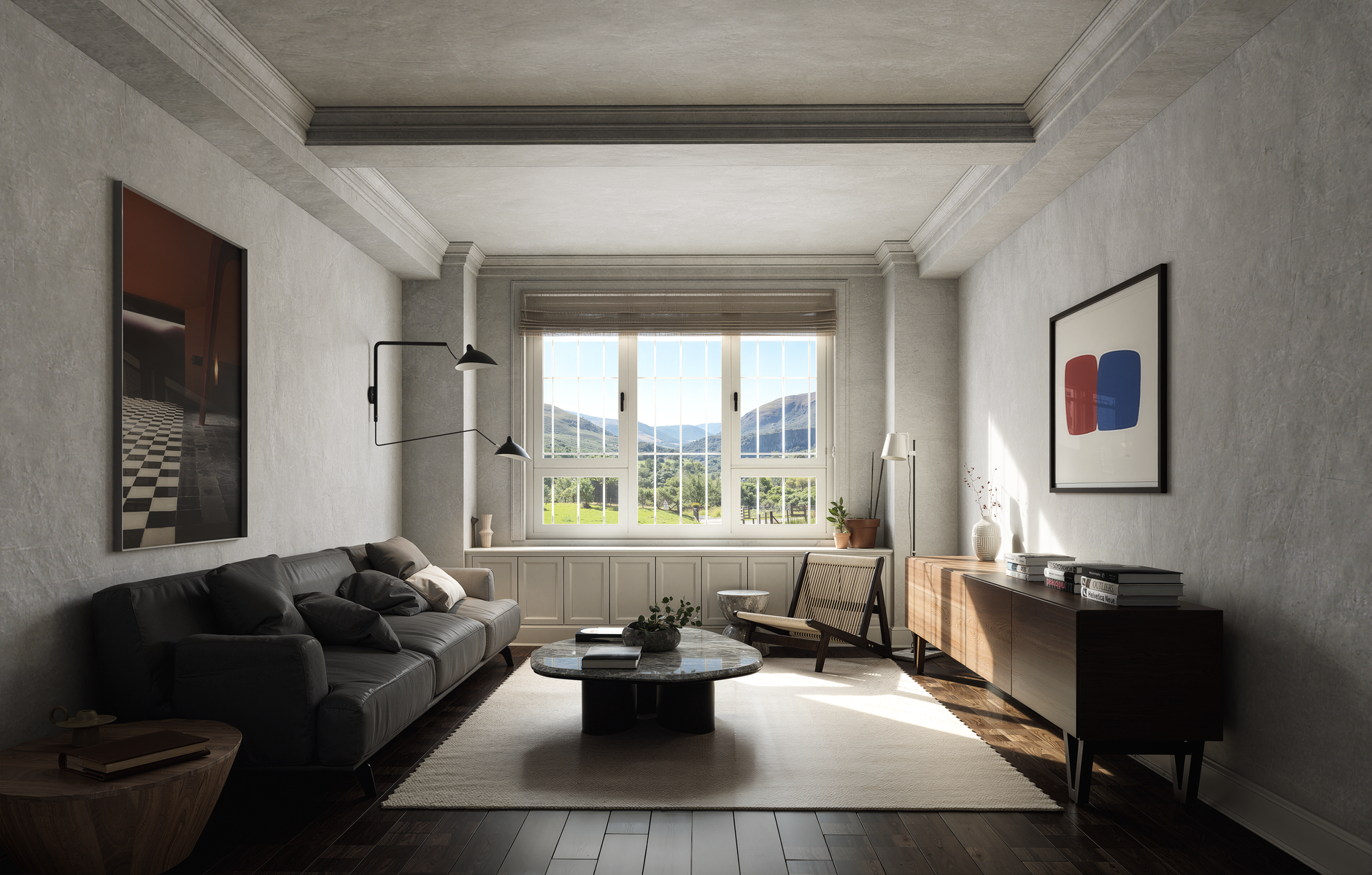
What remedies does feng shui suggest for a windowless room?
The suggestions found across feng shui writing are consistent enough to summarise, though none of them come with an evidence base — they follow from the tradition’s own internal logic about compensating for a missing opening.
- Mirrors, placed to reflect what light and depth there is, are a recurring suggestion. The general guide to mirrors in feng shui covers how they’re used and where the tradition advises against them, since a mirror facing a bed is treated differently from one placed to open up a hallway.
- Full-spectrum or layered artificial lighting, standing in for the daylight the room lacks. This overlaps with ordinary interior design advice, not just feng shui.
- Artwork depicting outdoor scenes — landscapes, skies, water — is suggested as a way to bring a sense of the outside into a room that has no literal view of it. The reasoning is discussed in the guide to what artwork depicts and why it matters in feng shui.
- Mechanical air movement — a fan, or simply keeping the door open when the room is in use — is recommended as a stand-in for the natural air exchange a window would provide.
- Keeping the room uncluttered, on the reasoning that a small, enclosed space with no air source is more affected by clutter than a room that can rely on airflow to disperse it. The archive on layout and furniture covers how much open floor a room needs generally.
None of this is presented by the tradition as a substitute for actual ventilation. Where a room genuinely has no air exchange, that’s a matter for a qualified tradesperson or building surveyor, not a design choice — this article is not building, safety or health advice.
What does practical design say, separate from feng shui?
Set the tradition aside and the room still has two ordinary problems: no daylight and no natural airflow. Interior designers and building professionals address both directly — mechanical ventilation, humidity control, and layered artificial lighting that mimics daylight’s colour temperature through the day are standard responses, and they solve the condition feng shui is describing regardless of which school’s account of chi someone finds convincing. The Light & Air archive covers daylight, ventilation and window treatments as a set, including the companion piece on what happens when a window is present but obstructed, which is the milder version of the same condition.
Is there evidence any of this changes how a room functions?
There’s no independent evidence that mirrors, artwork, or the feng shui remedies above change chi in any measurable sense, because chi as feng shui describes it isn’t a quantity that’s been measured. What is well established, outside feng shui entirely, is that daylight exposure and air quality affect sleep, mood and comfort — which is why the tradition’s instincts about windowless rooms and the practical design response to them tend to agree even though they start from different premises. The site’s separate piece on what evidence exists for feng shui more broadly goes into this distinction in more depth, and this article is not a substitute for medical advice on sleep or air quality — a doctor or occupational health professional is the right source for that.
What should someone actually do with a windowless room?
Match the room to a use that doesn’t depend on daylight or need to double as a legal bedroom — storage, a study, a media room, a walk-in closet. Add layered artificial light rather than one central fixture, keep some form of air movement running when the room is occupied, and use a mirror or an outdoor-themed piece of art if the aim is to soften the sense of enclosure. For a fuller sense of how a room’s basic openings are read as a set — doors, windows, and the paths between them — the Entrances & Flow archive and the Basics archive are the two starting points on this site for how those principles are built up from first assumptions rather than presented as fixed law.
About this site. Feng Shui Pack explains what the feng shui tradition holds and which school holds it, from published sources. Feng shui is a tradition of placement and orientation, not a science: nothing here will bring you wealth, health, luck or a relationship, and we never claim otherwise. Where a suggestion has an ordinary practical reason — daylight, airflow, sightlines, less clutter — we say so; where it does not, we say that too. This is not medical, financial, legal or tenancy advice. If a decision matters, talk to a professional in that field.