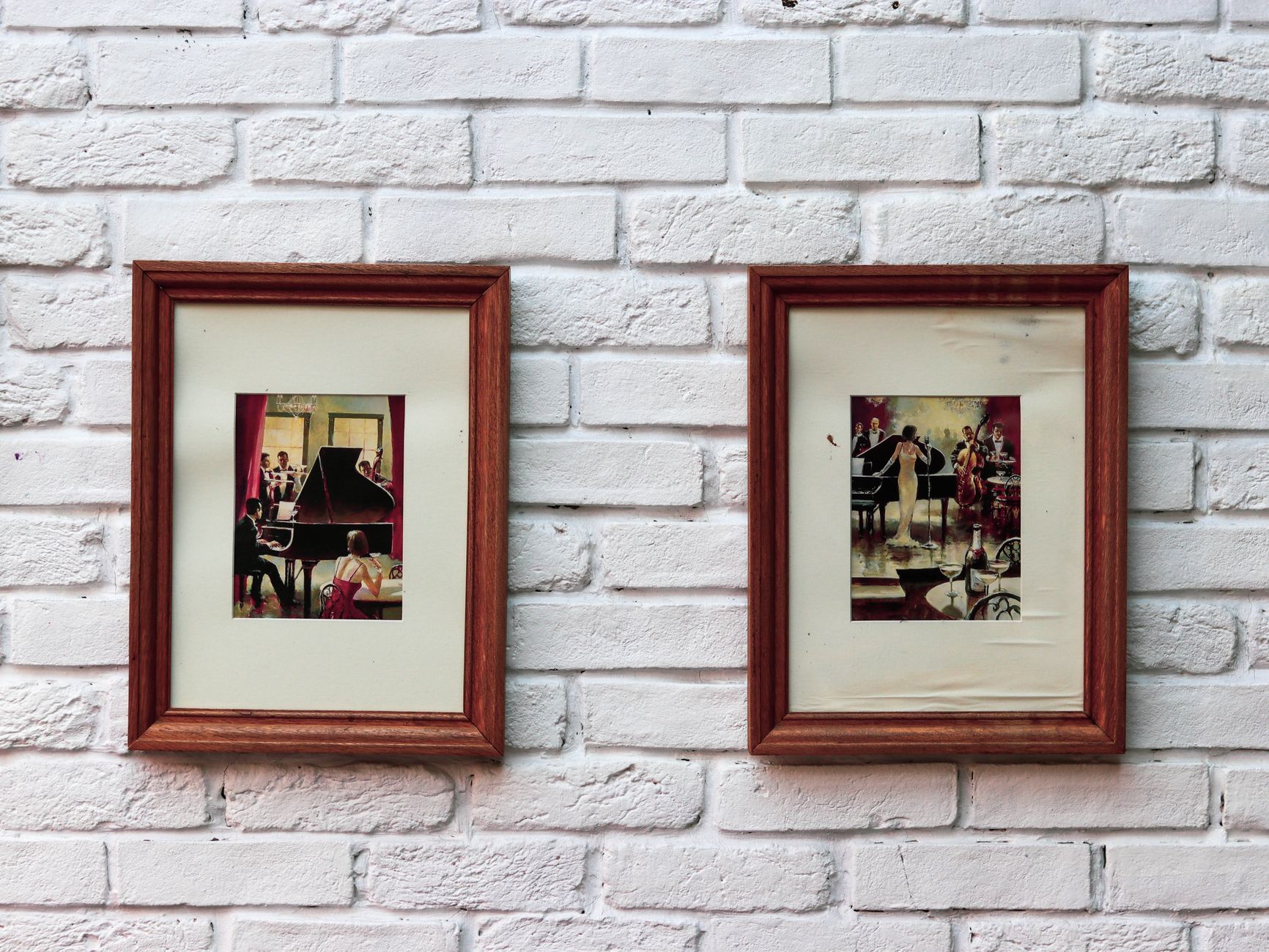
Feng shui traditions generally treat what a picture shows as more significant than how well it is painted. A calm landscape, a body of still water, or a pair of birds is read differently from a solitary figure, a wilting flower, or a scene of conflict — because the image is thought to set a tone the eye returns to every day. This is not one uniform rule; different schools give different reasons, and some of the strongest claims come from the modern Western Black Sect (BTB) adaptation rather than from classical Chinese texts.
Does the subject of a picture actually matter in feng shui?
Yes, according to most branches of the practice, though they disagree on why. Classical Form School (Xingshi) reasoning tends to focus on mood and association — a picture is a fixed presence in a room, and its content is thought to reinforce a feeling every time it is seen. BTB teaching goes further, treating specific images as symbolically active within a bagua map overlay. Compass School (Liqi) practitioners are typically more concerned with the picture’s placement relative to compass directions than with its subject.
None of these are testable claims, and the site does not present them as fact. What follows is a description of what each tradition says, attributed as such.
What imagery is generally considered supportive, and by which school?
Across most schools, recurring themes include:
- Still or slow-moving water — lakes, calm rivers — associated in Form School reasoning with accumulated, gentle chi (qi). Turbulent water, such as a waterfall crashing toward the viewer, is more often advised against; the logic given is that it depicts energy rushing away rather than settling.
- Mountains or solid landforms — read in classical Form School terms as a “backing” image, echoing the practical preference for a solid wall behind a seated person (see the discussion of the commanding position in a room).
- Pairs — two birds, two fish, two of anything — commonly cited in BTB material for a bedroom shared by a couple, on the reasoning that a single figure suggests solitude. This is a BTB emphasis; classical texts do not focus on pairing symbolism to the same degree.
- Fruit, abundant plants, or full baskets — associated in general BTB guidance with the idea of sufficiency, though the site does not repeat any claim that a picture produces a material outcome.
Where a rule has a plain practical basis — a calming scene versus a violent one, a picture that doesn’t dominate a small room — that basis is worth taking on its own terms, independent of any symbolic reading.
What imagery is generally discouraged, and why?
The imagery most consistently flagged across sources includes:
- Depictions of decay — wilting flowers, dead trees, ruins — on the reasoning, given mainly in BTB and popular Form School writing, that a household will absorb the mood of what it looks at daily.
- Violent or distressing scenes — battle imagery, predatory animals attacking prey, storms — discouraged on similar mood-based reasoning rather than any claim about energy fields.
- Lone, exposed figures, particularly in a bedroom shared by a couple, per the BTB pairing logic above.
- Empty vessels — a bowl with nothing in it, an empty boat — sometimes cited in BTB abundance symbolism as suggesting lack. No practical rationale is given for this beyond the tradition itself.
It is worth being direct here: none of this is a claim about physical safety or measurable wellbeing, and the site is not qualified to make one. Where mood and daily environment intersect with sleep or mental health, that is a matter for a medical professional, not a design tradition.
Does where the artwork hangs matter as much as what it shows?
In BTB practice, yes — placement is assessed against the bagua map overlaid on the room, with each zone associated with a life area (family, career, relationships, and so on). A picture of moving water, for instance, might be placed in the zone BTB associates with career, on the reasoning that water symbolism supports that area. Classical Compass School (Liqi) does not use this room-based bagua overlay at all; it works from compass readings taken against the whole building. The difference between these approaches is explained in more detail in the comparison of Form School and Compass School and in the dedicated piece on the BTB adaptation.
Because these systems genuinely conflict — a placement that satisfies a BTB bagua reading may mean nothing in classical Compass terms — readers researching a specific rule should check which school it comes from before assuming it is universal. The site’s explainer on why feng shui rules contradict each other covers this in more depth.
What about the five elements — does a picture’s colour or content need to match a wall’s element?
Some practitioners extend the five-element framework to artwork: a fire-associated image (bright red, a sunset, flame) is suggested for a wall or zone linked to the Fire element, a water scene for one linked to Water, and so on. This is an extension of five-element theory rather than a separate rule, and it is applied inconsistently between BTB and classical sources. Where it is used, the reasoning is symbolic association, not a physical property of the pigment or paper.
Do mirrors count as “artwork” in this context?
Mirrors are treated as a distinct category with their own body of rules — including specific guidance on facing a bed or a front door — covered separately in the general guide to mirrors in feng shui. A framed mirror hung as a decorative object still falls under that mirror-specific reasoning, not the artwork guidance above.
Does this apply to photographs of real people, such as family portraits?
BTB guidance on this is fairly specific: portraits of living family members are generally treated as acceptable and even encouraged in shared spaces, while images strongly associated with grief, absence, or a difficult period are more often advised against in a bedroom, on the same mood-reinforcement logic used for other distressing imagery. Photographs of deceased relatives are not treated as inherently negative in most sources, but some guidance suggests keeping them out of the bedroom specifically, reserving that room for restful associations. This is a matter of family and cultural practice as much as feng shui doctrine, and sources vary.
What about abstract art, or art with no clear subject at all?
This is an area where the tradition offers less specific guidance. Because most rules about artwork are built around identifiable subject matter — water, mountains, figures, decay — an abstract piece with no obvious representational content sits outside most of the published reasoning. Practitioners who address it at all tend to fall back on general colour and mood association (calm palettes versus jarring, chaotic ones) rather than any rule specific to abstraction.
Where should artwork generally not go?
Independent of subject matter, a few placement points recur across schools and have a straightforward practical basis:
- Not directly above a bed’s headboard in heavy frames or glass, for the ordinary safety reason that a wall-mounted object over a sleeping body is a genuine hazard if it comes loose — a matter of household safety, not feng shui symbolism.
- Not positioned so it is the first and only thing blocking a clear sightline from a seating position to the door, which runs against the general reasoning behind the commanding position.
- Not crowded onto every wall of a small room, which several sources link to the broader guidance on how much a room needs left open to avoid feeling cluttered.
A practical way to use this guidance
None of the reasoning above is falsifiable, and this site does not claim that a painting changes a household’s fortune, health, or finances. What is checkable is which school makes which claim, and whether a given rule has an ordinary practical basis (safety, sightlines, room proportion) or is purely symbolic. Readers assembling a room from scratch may find it more useful to start with the practical layout questions covered in the Layout & Furniture and Objects & Materials archives, then treat imagery choices as a matter of personal taste informed by, rather than dictated by, any one school’s symbolism.
About this site. Feng Shui Pack explains what the feng shui tradition holds and which school holds it, from published sources. Feng shui is a tradition of placement and orientation, not a science: nothing here will bring you wealth, health, luck or a relationship, and we never claim otherwise. Where a suggestion has an ordinary practical reason — daylight, airflow, sightlines, less clutter — we say so; where it does not, we say that too. This is not medical, financial, legal or tenancy advice. If a decision matters, talk to a professional in that field.