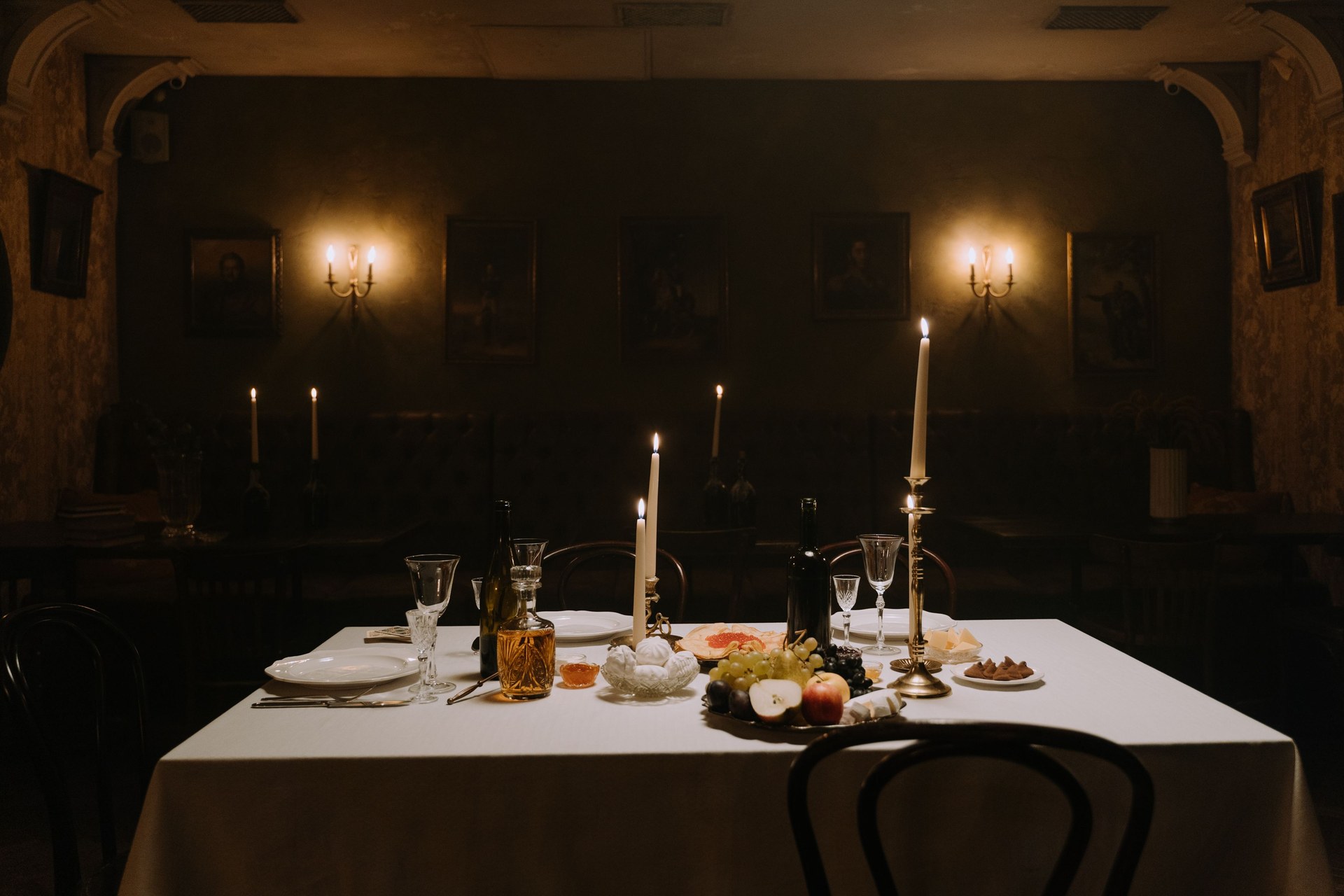
Feng shui treats a candle flame as a concentrated form of the fire element, one of the five elements (wu xing) that both classical and modern schools use to describe how a room behaves. Candles are generally treated as a useful way to add that element in small, controlled amounts — with specific cautions about bedrooms, water features, and certain zones of the bagua (pa kua) map.
What does feng shui actually say about candles and open flame?
There is no single feng shui rule about candles, because feng shui is not one body of rules. What exists is a shared framework — the five elements — that different schools apply differently. Fire (huo) is considered the most active and fastest-moving of the five, associated with visibility, passion, and transformation. A candle is a small, contained dose of that element, which is why it appears in feng shui writing as something to place deliberately rather than something to avoid outright.
Where schools diverge is on where fire belongs, how much of it is appropriate, and whether its placement should follow compass direction, the layout of the room, or the BTB bagua overlaid on the floor plan. None of this concerns whether flame itself is good or bad — only where and how much.
Why is fire treated as one of the five elements?
In the traditional five-element system, everything in a room is described as leaning toward wood, fire, earth, metal, or water, and each element is said to feed or restrain the others in a fixed order. This is explained more fully on the site’s five elements overview. Fire sits in a specific place in both the generating sequence, covered in the productive cycle, and the weakening sequence, covered in the destructive cycle. Practitioners use these cycles to reason about what should sit near what — for instance, that water is said to weaken fire, which is the logic behind cautions about placing candles very close to fountains or fish tanks.
Which schools actually address candles, and which don’t?
Classical Form School (Xingshi) and Compass School (Liqi) texts are concerned mainly with landscape, building orientation, and the compass directions tied to each element — they do not typically give room-by-room advice about tabletop objects like candles. Most of the specific, itemised guidance readers encounter online — “light a candle in the wealth corner,” “avoid candles in the bedroom” — comes from the Western Black Sect (BTB) adaptation, a twentieth-century American reworking of feng shui that maps the bagua from the front door rather than from compass direction. That distinction matters: a rule stated as if it were ancient and universal is very often BTB-specific. The site’s explanation of BTB and its overview of Form School versus Compass School cover how the two traditions differ and why they sometimes contradict each other.
Where do practitioners suggest candles should not go?
Several cautions recur across BTB-influenced writing. They are presented here as claims from that tradition, not as settled fact.
- Directly beside or above an indoor water feature or aquarium — reasoning cited is the water-weakens-fire relationship in the five-element cycle.
- In a child’s bedroom or a sleeping area generally, where some BTB writers argue that an “active” element works against rest — a claim with no cited mechanism beyond the tradition itself.
- Directly opposite a mirror, where the reflected flame is sometimes described as doubling the fire element beyond what a small room can balance. This overlaps with broader mirror guidance covered in the site’s general guide to mirrors.
None of these are safety warnings in the fire-hazard sense — they are element-balance arguments internal to the tradition. Where a genuine hazard exists — an unattended flame near fabric, paper, or a sleeping person — that is a matter for ordinary fire safety guidance, not feng shui, and this article is not a substitute for it. A local fire authority or the product’s own safety instructions are the right reference.
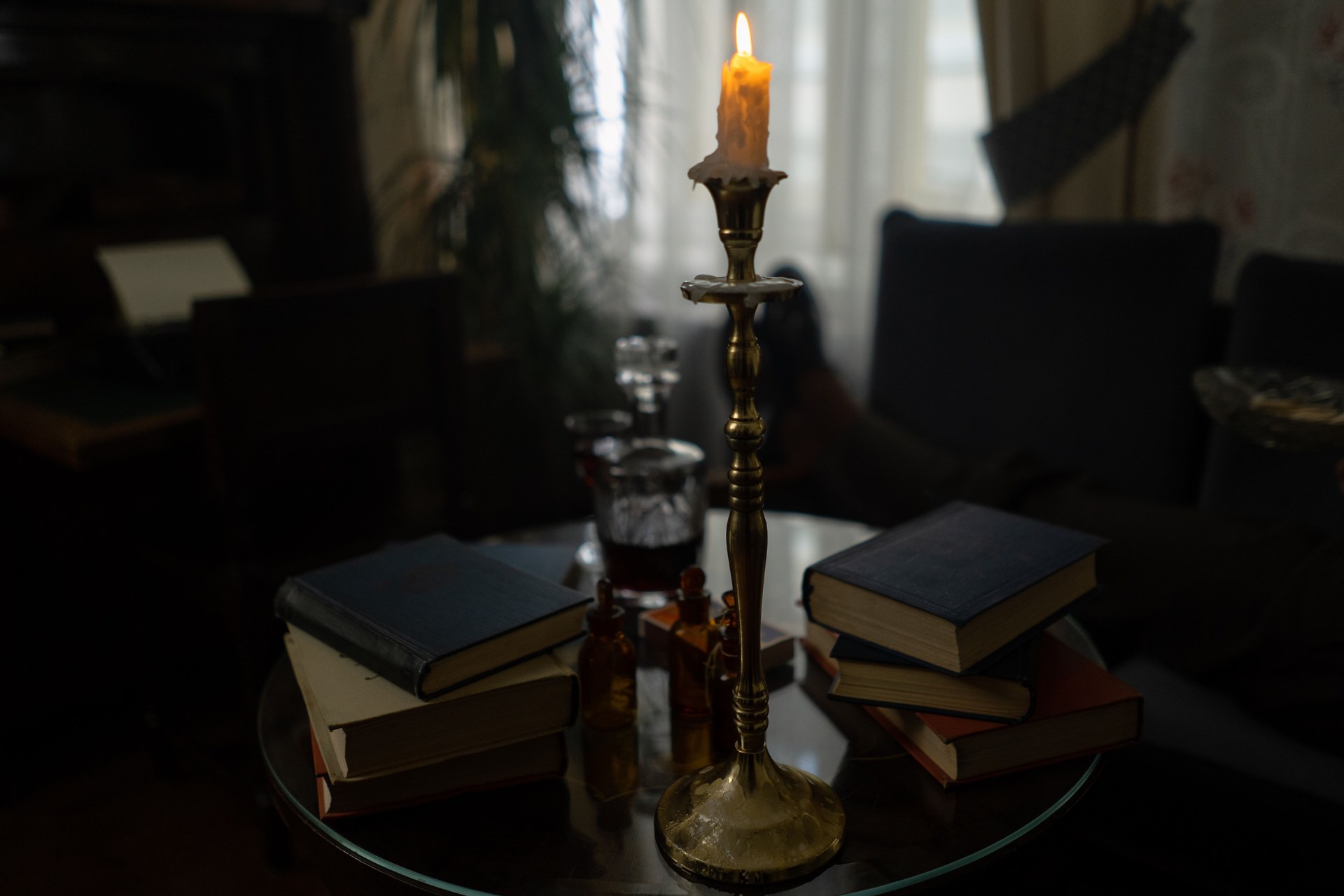
What about fireplaces and other open flame in a home?
A fireplace is treated in feng shui writing as a permanent, larger-scale version of the same fire element, and it carries its own layout questions distinct from a candle’s. Because a fireplace is usually a fixed architectural feature, most guidance is about how seating and the room’s main furniture relate to it rather than whether it “should” be there. The site’s guide to arranging seating around a fireplace covers that in more detail, including the practical point that a hearth is often already a room’s natural focal point regardless of any element theory attached to it. Stoves fall into a separate, more contested category — some schools treat the kitchen stove as governed by its own directional rules rather than simple fire-element logic, which is a different subject from candles.
Do candles fit into the bagua map?
In the BTB adaptation, the bagua map divides a floor plan into nine zones from the entrance, each tied to a life area and a dominant element. Candles are sometimes suggested in the zones BTB associates with fire or with areas said to benefit from added warmth or visibility — again, this is BTB-specific reasoning, not something found in classical Compass School texts, which build their zones from compass bearings taken with an instrument rather than from the position of a door. The site’s explainer on what the bagua is and how it’s used lays out where the two approaches part ways. No outcome is promised by either tradition for placing a candle in a given zone; the claim made is about balance, not results.
Is there a practical, non-mystical reason candles get this attention?
Yes, and it is worth separating from the element theory. A candle is genuinely the only common household object that produces a live flame, and it is genuinely true that flame draws the eye, changes light quality, and — unlike almost anything else placed in a room — carries a real, ordinary fire risk if left near curtains, papers, or bedding, or unattended. Feng shui’s caution about placement overlaps, by coincidence more than design, with plain household caution: away from soft furnishings, away from draughts, away from a sleeping person, and never left burning unwatched. That overlap is a fair reason to take the placement seriously, independent of any belief in the five-element system. This article does not offer fire-safety advice beyond that general observation, and readers should treat manufacturer instructions and local fire-safety guidance as the actual authority on the subject.
How does this connect to other objects associated with the fire element?
Feng shui writing typically lists candles alongside a handful of other objects said to carry fire-element qualities — items with strong red or orange colouring, triangular or pointed shapes, and artwork depicting flame, sun, or bright light. The site’s guide to what artwork depicts and what feng shui says about it covers the subject-matter side of that argument. Because candles are one entry in a broader system rather than a special case, they are best read alongside the site’s wider Objects & Materials coverage, which works through how the tradition treats mirrors, clocks, water features, and other common household items using the same element and school-specific logic applied here.
What’s the honest summary?
A candle is fire, feng shui treats fire as one of five elements with its own placement logic, and the specific rules readers encounter — wealth corners, bedroom bans, mirror-facing cautions — are almost always BTB adaptation rather than classical practice. No school promises an outcome from where a candle sits; the claim made is about balance, stated by the tradition and attributed as such. Ordinary fire safety sits entirely outside this system and should be treated as a separate, non-negotiable matter.
Related reading
What Does Feng Shui Say About Artwork and Its Subject?, What Does Feng Shui Say About Clocks? A Clear Guide, What Do Wind Chimes Do in Feng Shui Tradition?, What Does Feng Shui Say About Aquariums? A Clear Guide, The Basics, Flow, Light and Small Spaces
About this site. Feng Shui Pack explains what the feng shui tradition holds and which school holds it, from published sources. Feng shui is a tradition of placement and orientation, not a science: nothing here will bring you wealth, health, luck or a relationship, and we never claim otherwise. Where a suggestion has an ordinary practical reason — daylight, airflow, sightlines, less clutter — we say so; where it does not, we say that too. This is not medical, financial, legal or tenancy advice. If a decision matters, talk to a professional in that field.