
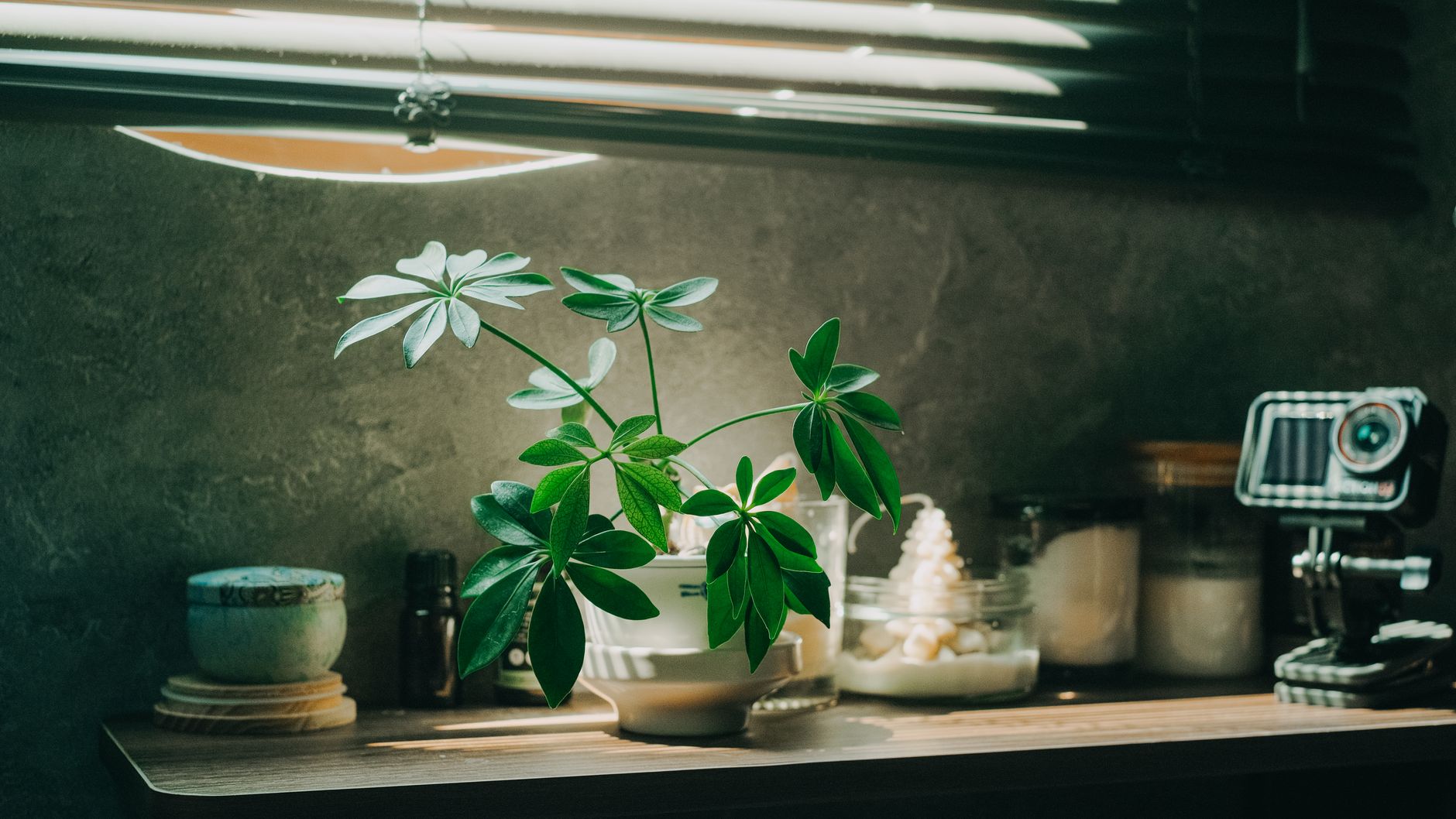
Feng shui treats natural light as a sign that a space is active and habitable — traditionally read as strong yang chi, the animating half of the yin-yang pair. A room that gets daylight is judged easier to live in and easier to keep well; a room that never does is treated as a problem worth solving, not decorating around.
What does “chi” have to do with light?
Chi (qi) is the term feng shui uses for the quality of movement and vitality in a space — not a measurable energy, but a way of describing whether a room feels used, aired, and alive versus stale and neglected. Classical texts associate strong daylight with yang: activity, warmth, the visible world. Deep shade is associated with yin: rest, stillness, withdrawal. Neither is “better” — a bedroom is traditionally allowed more yin, a living room more yang — but a home with no yang at all, meaning no natural light reaching its main rooms, reads in the tradition as stuck rather than restful.
This is one of the more consistent ideas across schools, and it’s worth understanding before getting into specific rules. The Basics category covers chi, yin-yang and the other foundational terms this site uses repeatedly.
Do Form School and BTB treat light the same way?
Both value it, but for different stated reasons, and it helps to know which is which. Classical Form School (Xingshi) reasoning ties light to landform logic: a site that catches the sun is a site with good exposure, drainage and orientation, and daylight is read as one visible marker of a well-sited building. Compass School (Liqi) reasoning layers this with directional calculation, weighing which compass sectors of a home should receive more or less light based on the occupants’ calculated directions.
The Western Black Sect (BTB) adaptation, which is what most English-language feng shui content actually draws on without saying so, simplifies this considerably. BTB tends to treat “more natural light, generally” as good practice across a home, without the compass-based nuance of classical Liqi. None of this is a universal rule with one single justification — it is three overlapping traditions that happen to agree on the general value of daylight while disagreeing on the details. Readers wanting the fuller picture can see how these schools diverge in Form School vs Compass School and in what the BTB adaptation actually is.
What’s the practical reason daylight matters in a room?
Setting the tradition aside, there is an ordinary, checkable case for daylight that doesn’t need feng shui to make it. Daylight is how people judge the true colour of a room, read a space’s proportions, and see clutter or dirt that artificial light hides. It marks time of day, which affects circadian rhythm and sleep quality — though that is a matter for sleep science and a doctor, not for this site, and nothing here should be read as medical advice. A room with some access to daylight is also usually a room with a working window, which matters for ventilation, a separate but related concern covered across the Light & Air category.
Feng shui’s contribution here is less about inventing new facts and more about giving people a vocabulary — yang, chi, “stuck” versus “active” — for a set of observations most people already make about a gloomy room without knowing why it bothers them.
What happens with rooms that get no natural light at all?
Interior rooms, converted basements and windowless studies come up often in feng shui writing, and the tradition treats them as a genuine problem rather than a minor style note. The typical advice is to compensate with full-spectrum artificial lighting, mirrors placed to bounce whatever light does reach the room, and pale, reflective surfaces — not because these substitute for daylight in any measurable sense, but because the tradition’s stated goal is to avoid a room that reads as permanently yin. No practical study is cited for the specific compensations beyond the tradition itself; the underlying case for daylight and airflow, however, is ordinary building physics rather than feng shui.
Windows that exist but don’t function well as light sources — because they’re blocked, painted shut, or obstructed from outside — get their own treatment in the tradition. See what feng shui says about blocked windows for how this is usually approached.
How does this relate to curtains, blinds and window treatments?
Because light is treated as chi entering the room, what covers the window matters almost as much as the window itself. Heavy, permanently drawn curtains are generally discouraged in main living spaces for the same reason a blocked window is: they’re read as choking off yang chi that could otherwise enter. Sheer or easily opened treatments are usually preferred for exactly this reason, while heavier fabric is considered more appropriate for bedrooms, where some dimming is wanted. The specifics — fabric weight, colour, how curtains are hung — are covered in curtains and window coverings in feng shui.
Does feng shui prefer very bright rooms, or is there such a thing as too much light?
The tradition is not simply “more light is always better.” Excess glare, especially direct sun on a bed or desk for long hours, is generally treated as an imbalance toward yang rather than a benefit — the same principle that says a windowless room is too yin says a room in constant harsh light is unbalanced the other way. The practical concern that sits underneath this — glare, heat buildup, fading of fabric and furniture — is one any homeowner would recognise without reference to feng shui at all. Rooms designed to do two things at once, like a home office that’s also a guest room, often need this balance considered more carefully; see arranging a room that does two jobs for how that interacts with layout generally.
Is there evidence behind any of this?
The link between yang chi and daylight is a traditional, symbolic framework, not a scientific claim, and this site does not present it as one. What can be checked independently is the general research on daylight, mood and building design, which is a matter for architecture and environmental psychology literature rather than feng shui texts. For a broader look at where feng shui claims stand up to outside scrutiny and where they don’t, see is there evidence for feng shui and what feng shui actually claims.
Where does this fit with the rest of a room’s layout?
Light doesn’t operate alone in feng shui reasoning — it interacts with furniture placement, sightlines and the position of a bed or desk relative to a window. A desk or bed placed directly under a window, for instance, is treated differently from one placed to receive light without sitting in the glare or draught, a distinction explained in bed under a window in feng shui. More generally, how a room is furnished around its light sources is part of the wider layout logic covered in the Layout & Furniture category and the Room by Room category, which apply these same light and chi principles differently depending on whether the room is a bedroom, kitchen or home office.
None of this is a substitute for professional advice on lighting design, energy efficiency or building alterations, all of which fall outside what this site covers. Where structural changes to windows or light wells are involved, that’s a matter for a qualified architect or builder, not a feng shui text.
Related reading
What Does Feng Shui Say About Family Photographs?, The Basics, Flow, Light and Small Spaces, What Does Feng Shui Say About North-Facing Rooms?, How Daylight Direction Changes the Way a Room Is Used
About this site. Feng Shui Pack explains what the feng shui tradition holds and which school holds it, from published sources. Feng shui is a tradition of placement and orientation, not a science: nothing here will bring you wealth, health, luck or a relationship, and we never claim otherwise. Where a suggestion has an ordinary practical reason — daylight, airflow, sightlines, less clutter — we say so; where it does not, we say that too. This is not medical, financial, legal or tenancy advice. If a decision matters, talk to a professional in that field.
Featured image: Photo by Mario Hains, source, CC BY-SA 3.0
