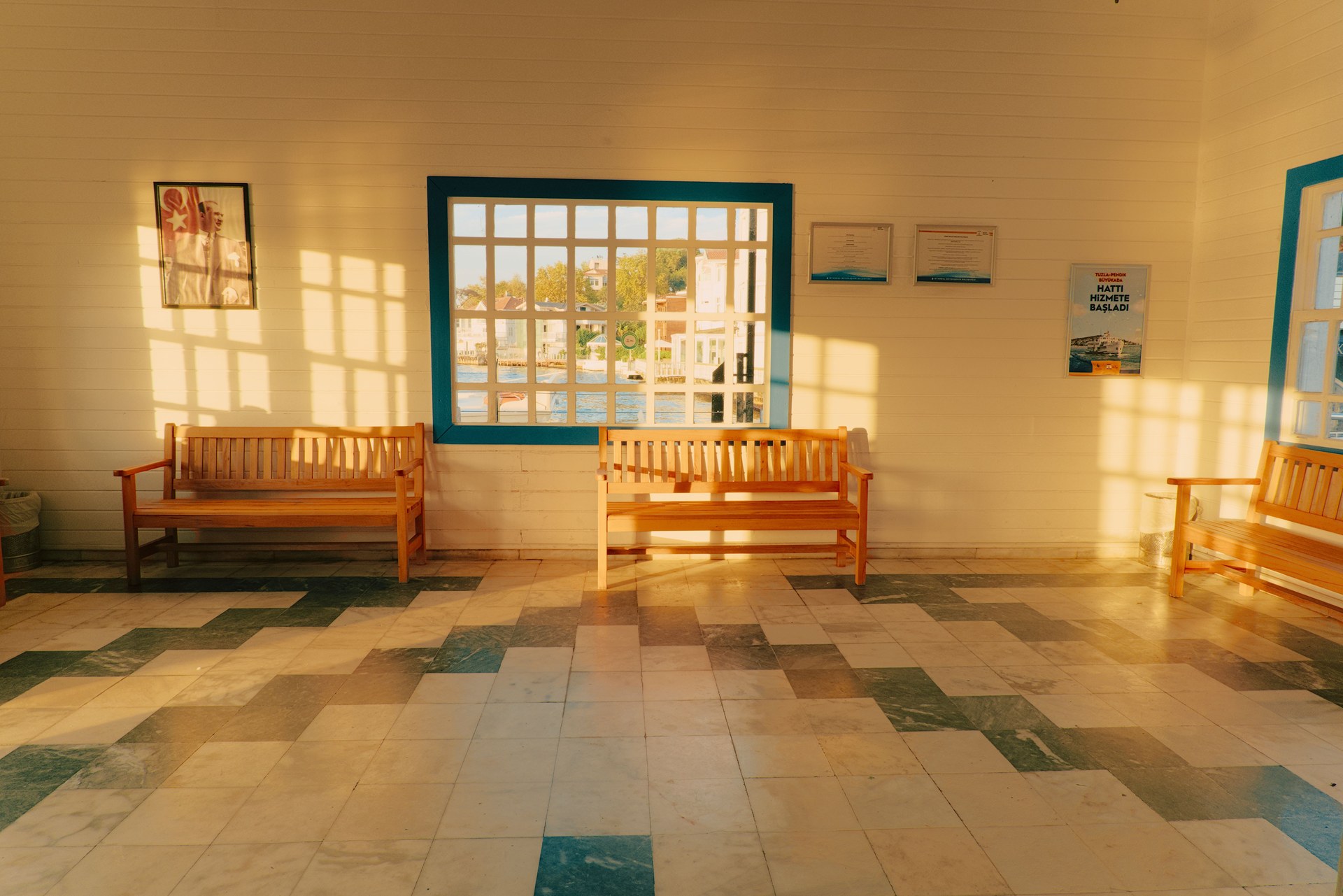
The direction a room’s main window faces determines when it gets light, how strong and how warm that light is, and how long it lasts — and rooms tend to work best when their use matches that pattern. An east-facing room is bright and cool in the morning and dim by afternoon; a west-facing one is the reverse. Feng shui traditions add a layer of symbolic reading on top of this, but the underlying physics is the same everywhere.
Why does the direction of a window matter so much?
A window’s compass orientation sets the daily rhythm of light entering a room, independent of the room’s size or décor. This is simple solar geometry, not a claim specific to any one tradition, and it holds in any building on any street.
In the northern hemisphere, a room with its main window facing east receives direct sun mainly in the morning; one facing west receives it mainly in the late afternoon and evening. South-facing rooms (in the northern hemisphere) get the longest and strongest exposure across the day, while north-facing rooms get comparatively even, diffuse light with little or no direct sun. South of the equator, these patterns are mirrored — a north-facing room there behaves like a south-facing one in London or New York.
This is worth establishing before any symbolic reading, because it is the part that is checkable on a map and a compass, and it does not change between schools of feng shui.
What does feng shui tradition say about facing direction?
Classical Compass School (Liqi) feng shui assigns significance to the eight compass directions and calculates a building’s orientation and a person’s most favourable directions using a formula tied to the structure’s construction date and facing. This is a technical, calculation-based system, not a simple “south is good” rule.
The BTB (Black Sect) adaptation, which is common in English-language feng shui writing, instead maps the bagua — a set of eight life areas plus a centre — from the front door of a home or room, regardless of true compass direction. This is a meaningfully different method from classical Compass School, and most consumer feng shui content does not say which one it is using. Readers comparing sources should notice which method is actually being applied, since the two can give contradictory instructions for the same room. The Basics archive covers this divide in more detail.
Because the schools disagree on method, this article treats the compass-direction question as a design and daylight question first, and notes where a specific school adds a further symbolic layer.
How does morning light change how a room is used?
An east-facing room is naturally suited to activities that happen early — waking, dressing, breakfast, a home office shift that starts before noon — because its light is strongest exactly then and has faded by evening.
This is one reason east-facing bedrooms are often reported as easy to wake in: direct light arrives with the day’s start rather than in the middle of an afternoon nap. The same room used as an evening living space will need to work with artificial light for most of its actual hours of use, which is a case where layering lamps well matters more than in a room that gets even natural light later in the day. The guide to curtains and window coverings covers how covering choice interacts with this — a sheer layer that softens strong morning glare without blocking the light entirely is a common practical compromise, independent of any symbolic reading.
How does afternoon and evening light change how a room is used?
A west-facing room is dim through the morning and gets its strongest, warmest light from mid-afternoon into evening — which suits living rooms, dining rooms and anywhere used mainly after a working day, but can bring low-angle glare directly into a seated eyeline at exactly the hours people are trying to relax or work at a screen.
That low, direct glare is a genuine design problem rather than a symbolic one: a television or monitor facing a west window will show reflection and washout in late afternoon regardless of any furniture arrangement. This is a case where the room’s actual function should be checked against its window direction before furniture goes in, not after. The piece on the television and living room — if a set is placed in a west-facing room, screen orientation relative to the window is worth solving before anything else.
South-facing rooms combine both patterns across a long day and tend to run warm; north-facing rooms avoid the glare problem entirely but need more consistent artificial lighting because they never get strong direct sun.
What about rooms with little or no direct daylight?
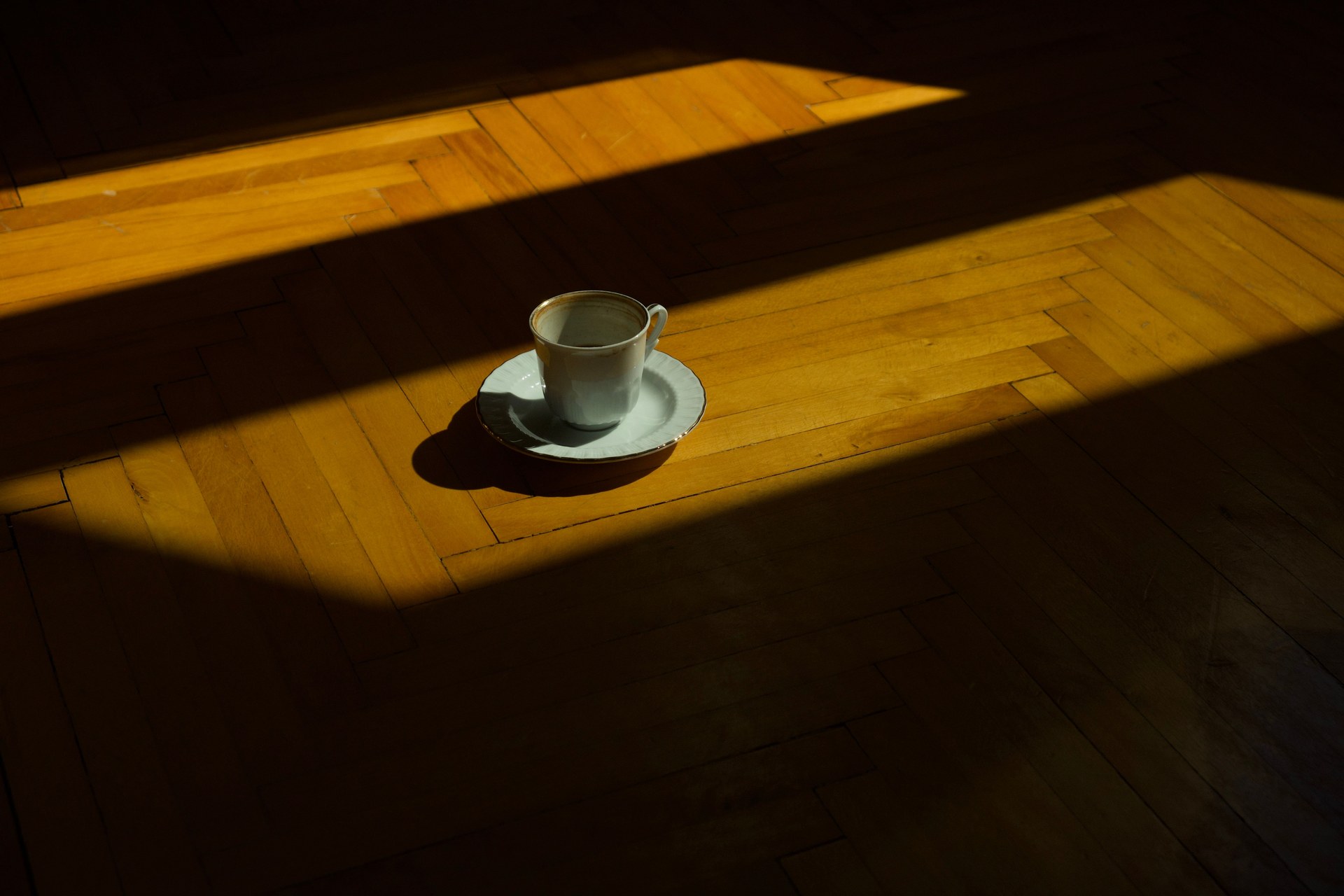
A north-facing room, an internal room, or one with a small or obstructed window will have flatter, cooler light all day and depend more heavily on artificial lighting layered well rather than left as a single overhead fixture. This is a lighting design problem with an ordinary practical answer, not a fault that needs a symbolic fix.
Feng shui traditions across schools generally treat natural light as something a room should have enough of, and treat its absence as worth compensating for rather than as an unfixable flaw. The article on why feng shui cares about natural light sets out that reasoning in more detail, and the guide to a room with no window covers windowless rooms specifically. Where a window exists but is obstructed by a wall, a tree or a neighbouring structure, the piece on blocked windows is the more relevant one.
None of this is medical advice. Where low natural light is genuinely affecting sleep or mood, that is a matter for a doctor, not a room layout — feng shui reasoning here is about comfort and daily rhythm, not treatment.
Does direction affect where furniture should sit within the room?
Direction changes where glare and heat fall across a day, which affects where a desk, a sofa, or a bed should sit relative to the window rather than which wall the room is entered from.
- In an east- or south-facing room, a desk or reading chair placed facing directly into the window will face into strong morning or midday light — better to sit side-on to the window than opposite it.
- In a west-facing room, the same problem shifts to late afternoon, which matters for anyone working from home into the evening.
- A bed placed directly under a window, in any direction, has its own separate set of considerations covered in the guide to a bed under a window, distinct from which way that window faces.
The Light & Air archive covers window treatment, ventilation and artificial lighting layering together, since they are usually solved as one problem rather than separately.
Is any of this backed by evidence, or is it a tradition-only claim?
The daylight physics — which direction gets sun and when — is straightforward and checkable with a compass and a calendar; it is not specific to feng shui and holds regardless of which tradition, if any, a reader follows. The symbolic layer feng shui adds on top of it — that a given direction is auspicious for a given room, or corresponds to a particular life area — is a claim made by specific schools and is not independently verified outside those traditions.
This site treats the two as separate: it explains the daylight pattern as a fact, and attributes the symbolic reading to whichever school makes it. Readers wanting the broader question of what feng shui claims and what evidence exists for it can start with the Basics archive rather than any single room-by-room article.
What does this mean in practical terms for choosing a room’s use?
Where a household has a choice, matching a room’s use to its window direction — mornings in an east-facing room, evenings in a west-facing one, steady work in a north-facing room with good artificial light — tends to need less compensating decor and lighting than fighting the pattern.
Where there is no choice, because a home’s layout is fixed, the fix is usually in window covering, artificial light layering and furniture orientation rather than in the room’s assigned use. The Room by Room archive and Layout & Furniture archive both cover how specific rooms — bedrooms, kitchens, home offices — are usually arranged once daylight direction is taken into account.
About this site. Feng Shui Pack explains what the feng shui tradition holds and which school holds it, from published sources. Feng shui is a tradition of placement and orientation, not a science: nothing here will bring you wealth, health, luck or a relationship, and we never claim otherwise. Where a suggestion has an ordinary practical reason — daylight, airflow, sightlines, less clutter — we say so; where it does not, we say that too. This is not medical, financial, legal or tenancy advice. If a decision matters, talk to a professional in that field.