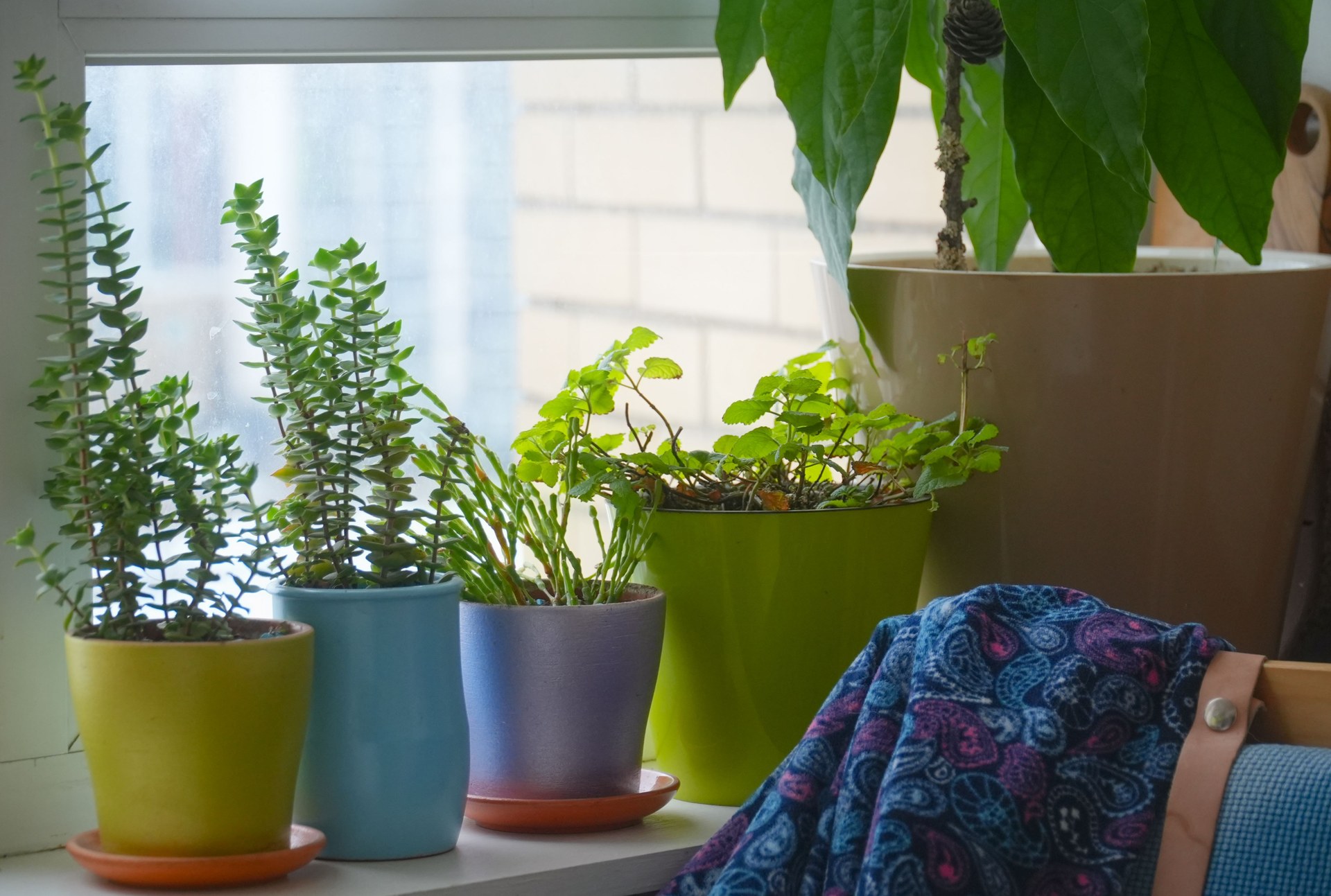
Feng shui treats houseplants as living chi — a sign of growth, health and attention in a room — rather than as air-filtration equipment. Claims that houseplants meaningfully clean indoor air come from a specific, often misread scientific study, not from feng shui texts. The two ideas point in a similar direction but come from separate traditions, and this article keeps them separate.
What does feng shui actually say about plants in a room?
Living plants are one of the few objects that most schools of feng shui treat consistently well, though the reasoning differs by school. In Form School, which reads a room by shape, mass and movement rather than by compass direction, a healthy plant is read as a marker that a space gets enough light and air to sustain something alive. A thriving plant is treated as circumstantial evidence that the room itself is workable; a dying one is read as evidence of the opposite, not as a cause of misfortune.
Compass School (Liqi), which assigns directions and elements using the bagua and a compass reading tied to the building’s construction, treats plants primarily as Wood element objects. Wood is associated with the east and southeast sectors of the classical compass-based bagua, and placing plants there is said to reinforce whatever the Wood element is thought to govern in that system — growth and expansion, in most readings. This is a compass-based rule, not a universal one, and it does not apply the same way in the popularized bagua map used by Western Black Sect practice.
Where does the “plants clean the air” claim come from?
The claim traces to a single, specific 1989 study run by NASA, testing sealed chambers with potted plants for their ability to absorb certain volatile organic compounds. It is widely cited in home and lifestyle writing, almost always without the chamber conditions attached. The U.S. Environmental Protection Agency’s own indoor air quality guidance is more cautious: it states that the available research does not support ordinary houseplants, at typical household density, producing a measurable improvement in air quality in a real, ventilated room. Readers weighing air quality as a health matter should treat this as a question for that guidance and for a qualified professional, not as something feng shui or a plant purchase resolves; this article is not health advice.
Feng shui, for its part, has never claimed plants purify air in a laboratory sense. The tradition’s interest in plants and air is older and less specific than the NASA study, and runs in a different direction: toward visible signs of freshness — daylight, movement of air, absence of stagnant corners — rather than toward measured chemistry. The overlap between the two ideas is coincidental, not causal.
Do Form School and BTB treat houseplants the same way?
No, and the difference is worth stating plainly. Form School’s interest is in the plant as an observable object: its health, its placement relative to light and walking paths, whether it blocks a doorway. The Western Black Sect (BTB) adaptation, a twentieth-century American reworking of feng shui that maps the bagua from the front door rather than from compass direction, tends to assign plants to specific bagua “life areas” — wealth, family, health — and treats a well-tended plant there as reinforcing that area’s meaning. Classical Compass School texts do not use this door-based bagua at all. A reader following BTB guidance on where to put a plant is following a distinct, modern system, and should know that before assuming it is a shared, ancient rule.
Read more on how these systems diverge in the BTB adaptation explained and in Form School versus Compass School.
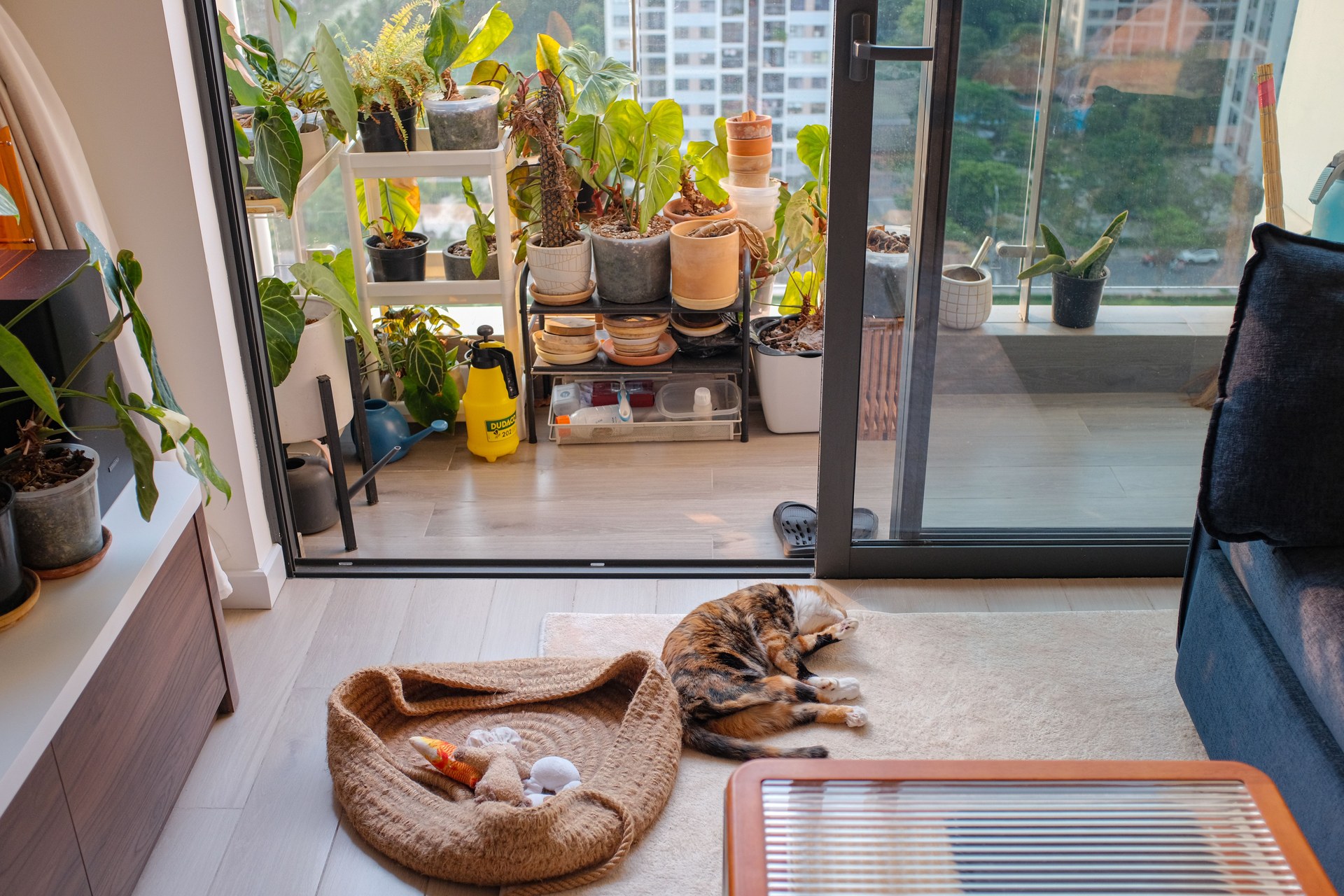
Which houseplants does feng shui suggest, and why?
Broad, rounded, upward-growing leaves are generally preferred across the tradition’s more common guidance, on the reasoning that they read as vigorous and untroubled; spiky or drooping leaves are more often discouraged, with the stated concern being that a sharp leaf edge functions like a small poison arrow (a pointed form read as aggressive rather than calm) pointed at nearby seating. No practical rationale is offered for the leaf-shape rule beyond the tradition itself — it is a visual reading, not a claim about the plant’s chemistry or growth habit. A fuller list of commonly suggested varieties and the stated reasoning for each is set out in which houseplants are suggested indoors, and why.
Are dried or artificial plants treated the same way?
Not usually. Most schools distinguish sharply between a living plant and a dried or artificial one, because the living plant is doing the symbolic work of active, growing chi — something a silk replica or a dried arrangement cannot represent in the same terms. Some practitioners accept high-quality artificial plants as better than no greenery at all in a room with too little light to keep anything alive; others discourage dried plants specifically, on the reasoning that a dead or dehydrated plant reads as stalled or spent chi rather than neutral decor. The differences between these positions, and which practitioners hold them, are covered in what feng shui says about dried or artificial plants.
Does a plant help a windowless or poorly ventilated room?
Feng shui’s traditional answer is symbolic rather than mechanical: a plant is said to introduce a sense of life and growth into a room that otherwise feels closed off, addressing the room’s felt quality rather than its measured air exchange. It is not a substitute for a working extractor fan, an openable window, or mechanical ventilation, and no school of feng shui claims that it is. Rooms with no natural light or airflow raise their own set of design questions, covered separately in what feng shui says about a room with no window and in what feng shui says about ventilation and stale air. Where stale air is a genuine concern for comfort or health, that is a matter for a qualified tradesperson or the relevant building guidance, not a plant.
Where do practitioners place plants, and where do they avoid them?
Common living-room and hallway placement follows ordinary practical sense as much as symbolic reasoning: near a light source the plant can actually survive on, clear of a walking path, and not directly beside a stove or heat source that will dry it out. Bedrooms are more contested. Some practitioners advise against plants in a bedroom on the reasoning that Wood-element, actively growing energy is too stimulating for a room meant for rest; others place no restriction on it at all. Neither position is universal, and where a rule has no stated practical basis, this site says so rather than presenting it as settled.
What does this mean for someone actually furnishing a room?
A healthy, well-placed plant is inexpensive to get right and does no harm under any school’s reasoning: it needs adequate light, a container proportioned to the space, and a spot that does not obstruct a doorway or a chair. Beyond that, feng shui offers a symbolic account of what a plant represents in a room — not a mechanism for cleaning the air a household actually breathes. Readers interested in genuine indoor air quality should follow guidance from a national health or environmental authority rather than décor advice of any kind.
For the wider set of choices that shape how a room reads — materials, light, and what sits on a shelf — see the Objects & Materials archive and Light & Air archive, and for how natural light is treated more broadly, why feng shui cares so much about natural light.
Related reading
What Does Feng Shui Say About Ventilation and Stale Air?, What Does Feng Shui Say About Overhead Lighting?, How Should Artificial Lighting Be Layered in a Room?, The Basics, Flow, Light and Small Spaces
About this site. Feng Shui Pack explains what the feng shui tradition holds and which school holds it, from published sources. Feng shui is a tradition of placement and orientation, not a science: nothing here will bring you wealth, health, luck or a relationship, and we never claim otherwise. Where a suggestion has an ordinary practical reason — daylight, airflow, sightlines, less clutter — we say so; where it does not, we say that too. This is not medical, financial, legal or tenancy advice. If a decision matters, talk to a professional in that field.