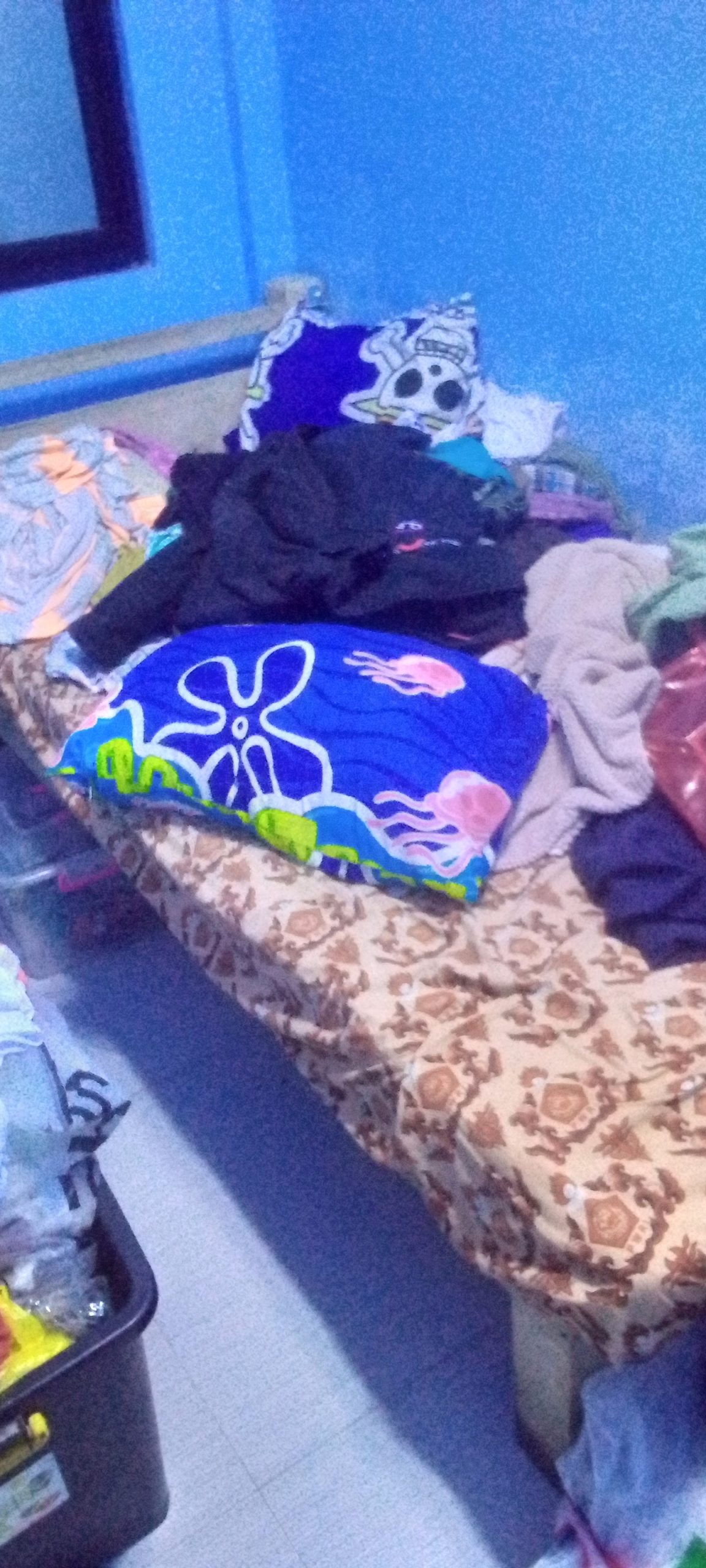
Feng shui does not treat a small bedroom as a problem to be solved by size. The guidance across Form School and the BTB (Black Sect) adaptation focuses on what the room does — where the bed sits relative to the door, how much floor stays clear, whether air and light move through it — not on square metres. A small room that is arranged with those priorities in mind is not considered disadvantaged.
Why does room size matter in feng shui at all?
Classical feng shui texts are largely silent on minimum room dimensions. Size becomes relevant only through its effects: a small room fills with clutter faster, has fewer wall options for the bed, and is more likely to have the bed too close to the door or under a window. These are the actual concerns — size is just what makes them more likely to happen, not a flaw in itself.
Form School, which developed around landscape and building shape long before it was applied to apartment interiors, is concerned with sightlines and the flow of movement through a space. Applied to a bedroom, that becomes a question of whether the door, the bed, and the walkway between them work together or fight each other. A small room raises the stakes on getting that right, because there is less slack to work with.
Where should the bed go in a small bedroom?
Practitioners across schools generally agree the bed should be placed so the sleeper can see the door from it, without the bed being directly in line with the door or jammed against it. In a small room, this usually means the bed against the wall that is diagonally opposite the door, even if that means giving up a wall that seems more obviously “central.”
This is one of the few pieces of advice with a stated practical rationale rather than a purely symbolic one: a sleeper who cannot see who or what enters a room is said to sleep less securely. Whether or not one accepts the traditional framing, the underlying design point — not being surprised from an unseen doorway — is not exclusive to feng shui. For the layout logic behind this in more detail, see where the bed should go in a bedroom and, where the room genuinely has no other option, what feng shui actually suggests when you can’t move the bed.
A small room often forces trade-offs no larger room would require — the only usable wall might be a window wall, or the door might open directly onto the bed frame. These situations are covered separately for a reason: the tradition offers workarounds rather than the ideal it describes for larger rooms. See what feng shui says about a bed placed under a window and how bedroom door alignment is treated for the specific fixes suggested when the ideal isn’t physically available.
Does a small bedroom still need a “commanding position”?
The commanding position — a term from Form School reasoning, later carried into BTB practice — describes a spot in the room where the bed’s occupant can see the door without being directly in its path. It does not require distance or a large floor area, only the correct angle.
This matters for small rooms specifically because it means the advice is not about having enough space, but about using the space that exists correctly. A single-wall option can still satisfy the commanding position if it’s angled away from the direct door-to-bed line. Details on how this is actually assessed, rather than assumed, are set out at what the commanding position actually means.
What about mirrors in a small bedroom?
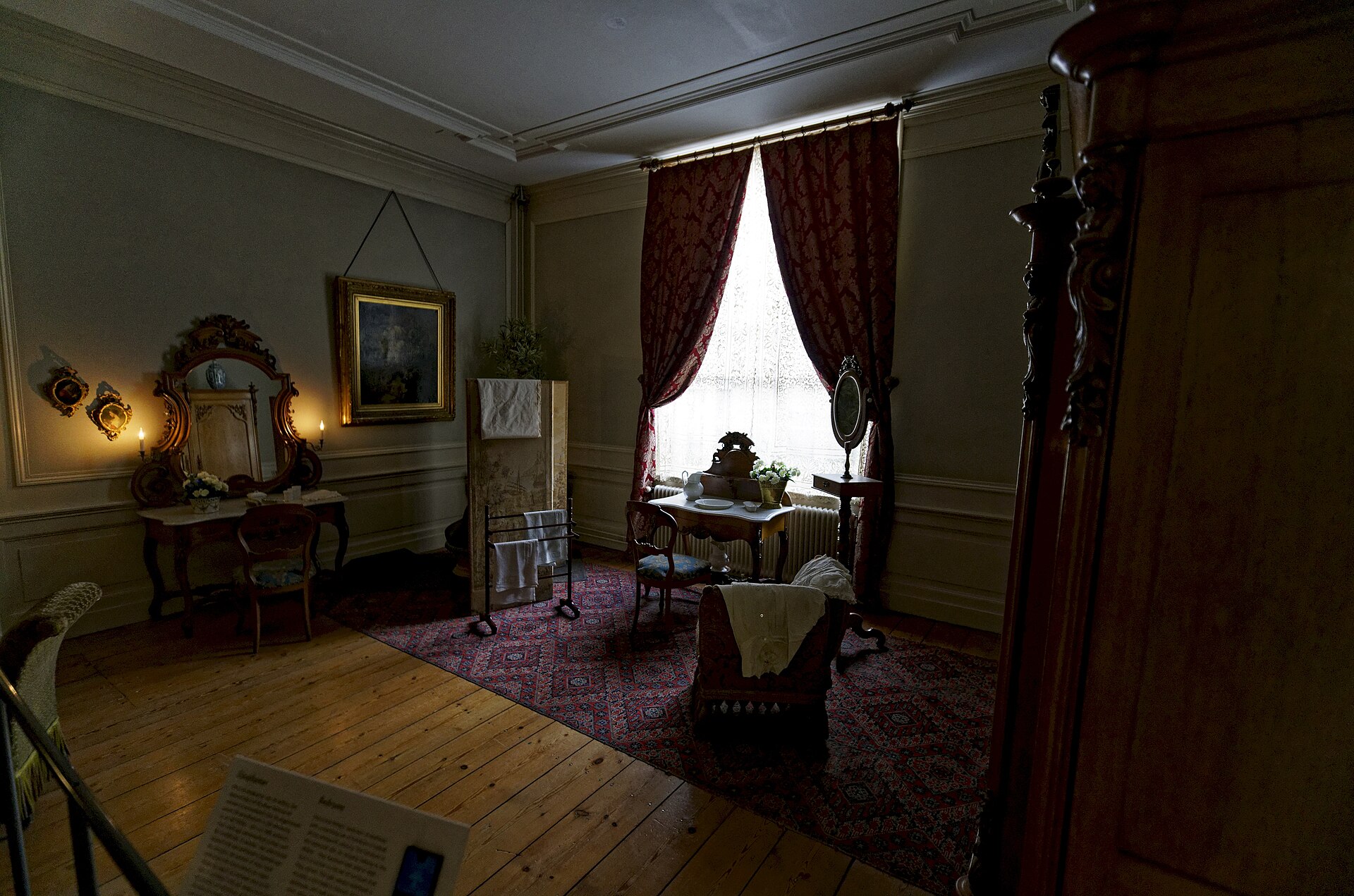
Small bedrooms are the room most often fitted with a mirror to make the space feel larger, and this is exactly where feng shui guidance and interior design instinct diverge. In BTB practice, a mirror facing the bed is commonly advised against; the stated reasoning involves disrupted rest, not a claim that has been independently tested. Form School commentary is less concerned with mirrors specifically and more with any reflective surface that doubles a sharp angle or a cluttered view.
Where a mirror is genuinely useful for light or the perception of space in a small room, the practical middle ground offered by most sources is positioning: not directly opposite the bed, and not positioned to reflect the door in a way that competes with it. The reasoning and the disagreement between sources are laid out at mirror facing the bed: is it actually a feng shui problem and, for mirrors generally, feng shui and mirrors: a general guide.

Does clutter matter more in a small bedroom?
Clutter is treated as the first problem in every school of feng shui, and a small room simply has less capacity to absorb it before it becomes visually and functionally dominant. A stack of boxes that would be a minor feature of a large bedroom can occupy the only clear floor path in a small one.
This is also where under-bed storage becomes relevant. In a small room, storing items under the bed is often the only realistic option, and the tradition’s concerns about this — mainly around what is stored and whether air can circulate — are addressed directly rather than dismissed outright. See what feng shui says about storing things under the bed and what should and shouldn’t be kept under the bed. The broader case for treating clutter as a structural issue rather than a cosmetic one is made at why clutter is the first problem in every feng shui school.
What if the small bedroom also has to be an office or a wardrobe room?
Many small bedrooms are not just bedrooms — they hold a desk, a wardrobe rail, or double as guest space. Feng shui sources generally treat dual-purpose rooms as a matter of clear division rather than something to avoid, since a room with an undefined function is harder to keep calm regardless of size.
Where a desk shares the room with the bed, the concern raised — again with a stated practical basis, since a desk is a workspace and work associations are considered unhelpful to rest — is proximity and sightline overlap between the two zones. This is covered at what feng shui says about a home office in a bedroom. For studio and single-room living specifically, where the bedroom and living space are the same footprint, see how to apply feng shui in a studio apartment and how to separate sleeping and living areas in one room.
Does the size of the bed matter relative to the room?
Feng shui sources do not specify a bed-to-room ratio, but the reasoning that does appear consistently is about clearance: a bed that leaves no walking space on either side, or that has to be climbed over from the foot, is treated as a poor arrangement regardless of the room’s overall size. This overlaps with ordinary practical furnishing advice more than with anything specifically metaphysical.
Furniture height is one factor worth checking directly, since low platform beds and tall bed frames change how a small room reads and how easily air moves around the sleeper. See what feng shui says about furniture height for how this is reasoned through.
What can actually be changed in a rented small bedroom?
Rented small bedrooms come with fixed constraints — a single usable wall, a window that can’t be relocated, a landlord’s furniture. Feng shui advice aimed at renters generally accepts these limits rather than insisting on an ideal that isn’t achievable, and focuses on the handful of things that are within a tenant’s control: bed position within the available walls, lighting, what’s stored where, and how much is left out on visible surfaces.
This is a distinct enough situation that it’s worth treating separately rather than folding into general bedroom advice. See what feng shui says about renting and things you can’t change, and the broader category at Buying & Renting for related questions about fixed layouts.
None of this is a substitute for advice on tenancy rights, structural issues, or building safety — those questions belong with a solicitor, a letting agent, or the relevant local housing authority, not with feng shui guidance.
What does this add up to for a small bedroom?
Across the schools that address it, a small bedroom is not described as inherently worse for sleep or wellbeing — it’s described as less forgiving of the same mistakes that matter in any bedroom: a bed in line with the door, a mirror facing the sleeper, clutter with nowhere to go, air that doesn’t move. Getting the placement and the clearing right matters more in a small room simply because there’s less room for error, not because the room itself is at a disadvantage.
For the layout principles that apply regardless of room size, the Layout & Furniture archive and the Small Spaces archive both cover related ground, including rooms that are narrow, oddly shaped, or have to serve more than one function.
This article describes what various feng shui traditions claim and how they reason about a room; it is not advice on sleep health, structural safety, or tenancy matters, and readers with concerns in those areas should consult the relevant professional directly.
Related reading
How to Separate Sleeping and Living Areas in One Room, How to Apply Feng Shui in a Studio Apartment, The Basics, Flow, Light and Small Spaces, How Do You Apply Feng Shui in a Dorm Room?
About this site. Feng Shui Pack explains what the feng shui tradition holds and which school holds it, from published sources. Feng shui is a tradition of placement and orientation, not a science: nothing here will bring you wealth, health, luck or a relationship, and we never claim otherwise. Where a suggestion has an ordinary practical reason — daylight, airflow, sightlines, less clutter — we say so; where it does not, we say that too. This is not medical, financial, legal or tenancy advice. If a decision matters, talk to a professional in that field.