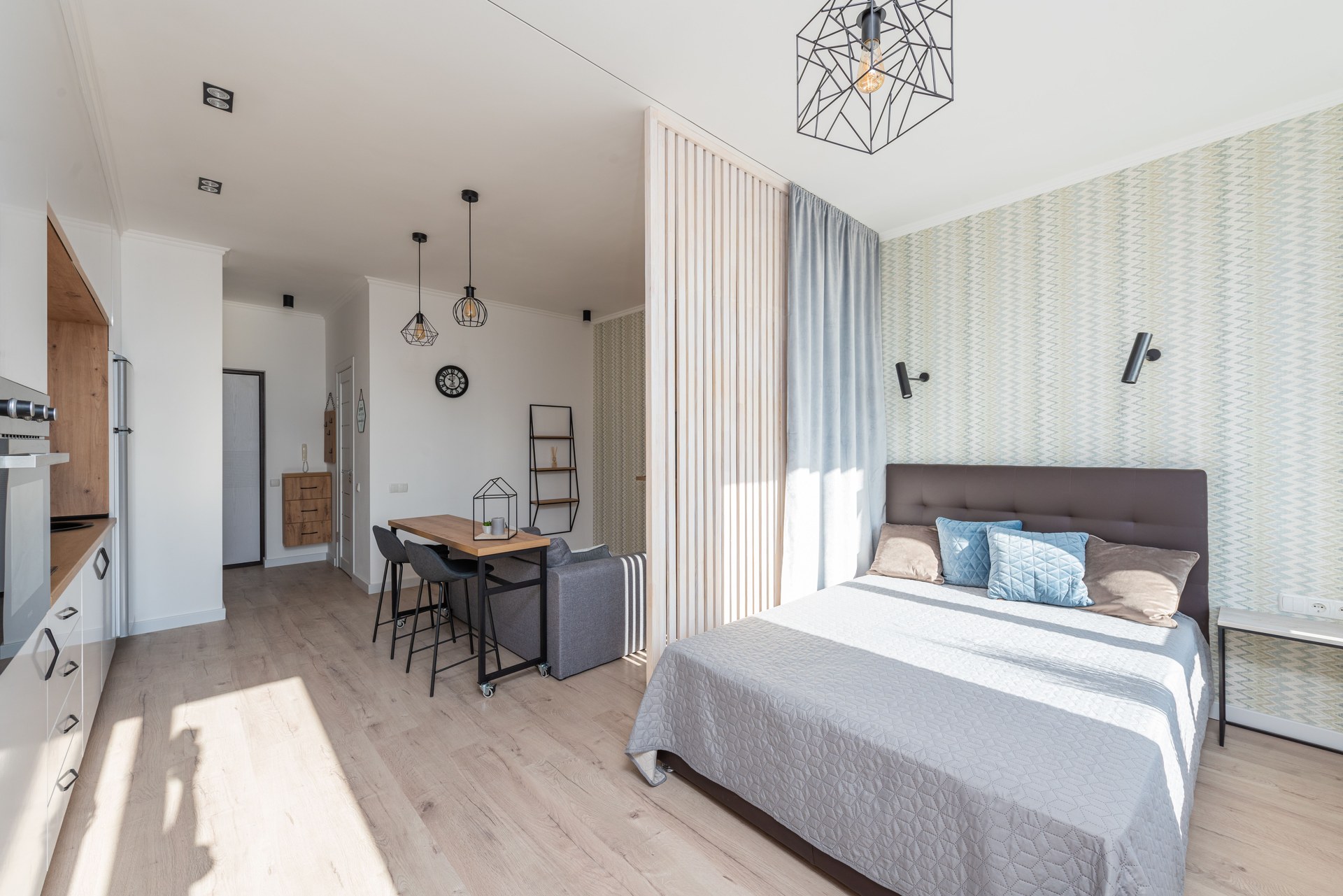
Feng shui in a studio apartment means applying the same principles used in a full house — commanding position for the bed, clear sightlines, controlled clutter, good ventilation — but negotiating the fact that sleeping, working, cooking and sitting all happen in one room, often within sight of each other. The tradition has ready answers for dual-purpose rooms; a studio just applies them to everything at once.
What makes a studio different from any other room?
A studio has one set of walls doing the work of a bedroom, living room, office and sometimes a kitchen. In Form School (Xingshi) terms, this means several activities compete for the same sightlines and the same command position — the spot from which a person can see the door without being directly in line with it. In a house, each room gets its own version of that position. In a studio, choices in one corner affect every other corner, because there usually isn’t a second wall to retreat to.
This is not a flaw the tradition treats as unfixable. Advice on arranging a room that does two or more jobs already assumes limited space and asks the same underlying questions — what does this room see, what can it hide, what circulates through it — just applied to more functions in a smaller footprint. The guide to arranging a room that does two jobs covers the underlying logic in more detail than a studio-specific piece can repeat.
Where should the bed go in a one-room apartment?
The bed should be placed where the sleeper can see the entry door without lying directly in line with it, and ideally with a solid wall behind the headboard rather than a window. This is the commanding position, and in a studio it usually decides the layout of everything else, because the bed is the largest single object in the room.
Classical Form School reasoning is practical rather than symbolic here: a sleeper who cannot see who is entering a room is said to sleep less easily, whatever the underlying reason. The explanation of the commanding position covers how this is worked out when a room’s shape makes the “ideal” spot impossible — which is the normal condition in a studio, not the exception. Where the only available wall for the bed sits under a window, that specific problem is addressed separately in the piece on a bed placed under a window.
Storage is the other constraint a studio forces. With no spare room for a wardrobe or a shed, storing things under the bed becomes close to unavoidable. The tradition has a specific view on this, covered in the article on what feng shui says about storing things under the bed — the short version is that what’s stored, and whether it’s sealed and inactive, matters more than the fact of storage itself.
How do you divide zones without walls?
Zones in an open studio are usually separated using furniture height, rugs, lighting, or a single low divider — not a full partition, which most tenancies won’t permit anyway. The aim is a visual break that tells the eye “this is the sleeping area” without blocking air or light from the rest of the room.
This is the same problem addressed in open-plan living rooms and kitchens, just compressed further. The piece on dividing an open-plan space goes through the practical options — a bookcase used as a room divider, a change in rug, a bed positioned so its headboard functions as a soft wall — and notes which of these are supported by ordinary sightline and airflow reasoning versus which are simply traditional preference with no stated mechanism.
A frequent studio compromise is a curtain or a folding screen between the sleeping area and the rest of the room. There is no classical requirement for this; it is a modern solution to a modern housing type, and the tradition has nothing specific to say about screens beyond the general preference for a sleeper not to face a busy, visually active part of the room while lying down.
Does the bagua map even work on a single room?
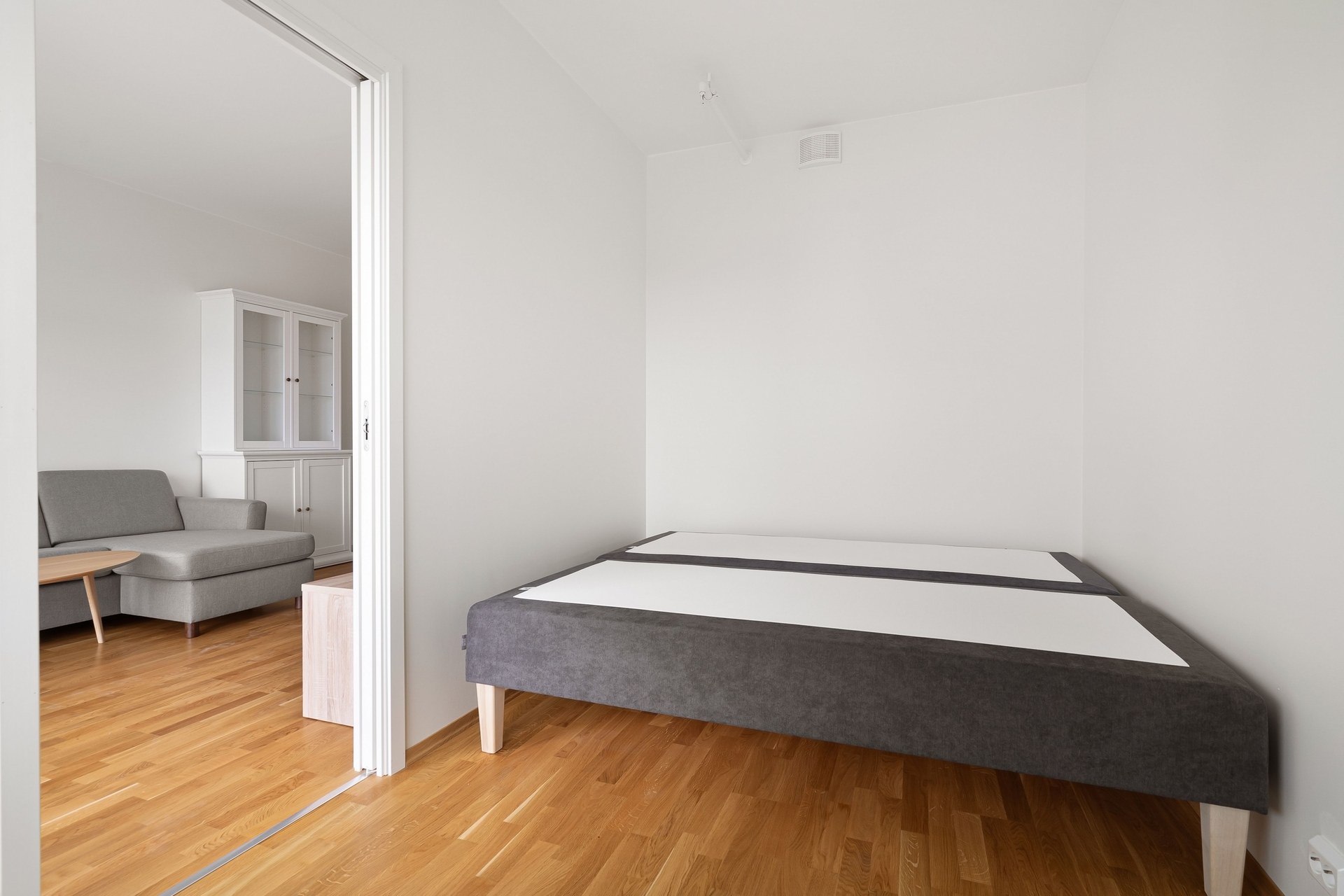
The BTB (Black Sect) adaptation of the bagua can be overlaid on a single room exactly as it would be on a whole apartment, using the main entry wall as the starting edge. Classical Compass School (Liqi), by contrast, calculates its bagua from compass direction and the building’s construction period, not from where the door happens to be — and would not treat a studio any differently from a large house in this respect.
This distinction matters more in a studio than a house, because with one room there’s a temptation to divide it into nine tidy squares and assign a life area to each. Most of the common errors people make doing this are covered in what mistakes people make applying the bagua — a small room amplifies these mistakes because there is so little floor area to spare for symbolic assignment. The wider explanation of how the two systems disagree is in how the BTB adaptation is explained.
What about the kitchen being a few steps from the bed?
A kitchenette within view of the bed is common in studios and is treated in the tradition mainly as a matter of screening the stove from direct sightline, not as an unworkable combination. Where a full separation isn’t possible, options include an angled counter, a low shelf, or simply the fridge or a cabinet acting as a visual break.
The reasoning given for keeping a stove out of a sleeper’s direct line of sight is about the stove representing an active, “fire” element that unsettles a room meant for rest — a symbolic account, not a fire-safety one, and this site is not a substitute for actual kitchen safety guidance, which belongs to a qualified tradesperson or the appliance manufacturer, not a feng shui article.
What should be avoided rather than solved?
- Overfurnishing. A studio has less floor area to lose to furniture that isn’t used daily. Clutter is treated as the first problem in every school of feng shui for a reason explained in why clutter is the first problem in every feng shui school, and a small room shows the effects of clutter faster than a large one.
- A desk facing the bed. Combining a home office with a bedroom is one of the more specific dual-purpose situations the tradition addresses, covered in what feng shui says about a home office in a bedroom — the concern is a workspace that keeps the sleeping brain “on,” not a claim about productivity or income.
- Sealed windows and no cross-ventilation. A studio with a single window has fewer air paths than a multi-room flat, and stale air is a recurring concern across the tradition, addressed in the Light & Air archive generally.
Does any of this depend on the lease?
Most studio tenants cannot move plumbing, repaint without permission, or install a permanent partition, and the tradition’s rental-specific advice assumes exactly this kind of constraint. What can and can’t be changed under a typical tenancy is covered separately in what feng shui says about renting and things you can’t change, and the general furniture and layout logic used throughout this piece is expanded further in the Layout & Furniture archive.
None of this is tenancy law or building-safety guidance. Questions about what a lease actually permits — repainting, drilling into walls, altering fixed kitchen or bathroom fittings — should go to the landlord, letting agent, or a local tenancy advice service, not a feng shui site.
A short, honest summary
A studio doesn’t need a separate feng shui system. It needs the same commanding-position, clutter, airflow and sightline principles applied more carefully, because there’s no second room to absorb a bad decision made in the first one. Where a rule has a stated practical reason — seeing the door, breathing clean air, not sleeping under a beam — it’s worth taking seriously regardless of school. Where it doesn’t, the honest approach is to say so and let the reader weigh a symbolic tradition on its own terms, not as a guaranteed outcome.
About this site. Feng Shui Pack explains what the feng shui tradition holds and which school holds it, from published sources. Feng shui is a tradition of placement and orientation, not a science: nothing here will bring you wealth, health, luck or a relationship, and we never claim otherwise. Where a suggestion has an ordinary practical reason — daylight, airflow, sightlines, less clutter — we say so; where it does not, we say that too. This is not medical, financial, legal or tenancy advice. If a decision matters, talk to a professional in that field.