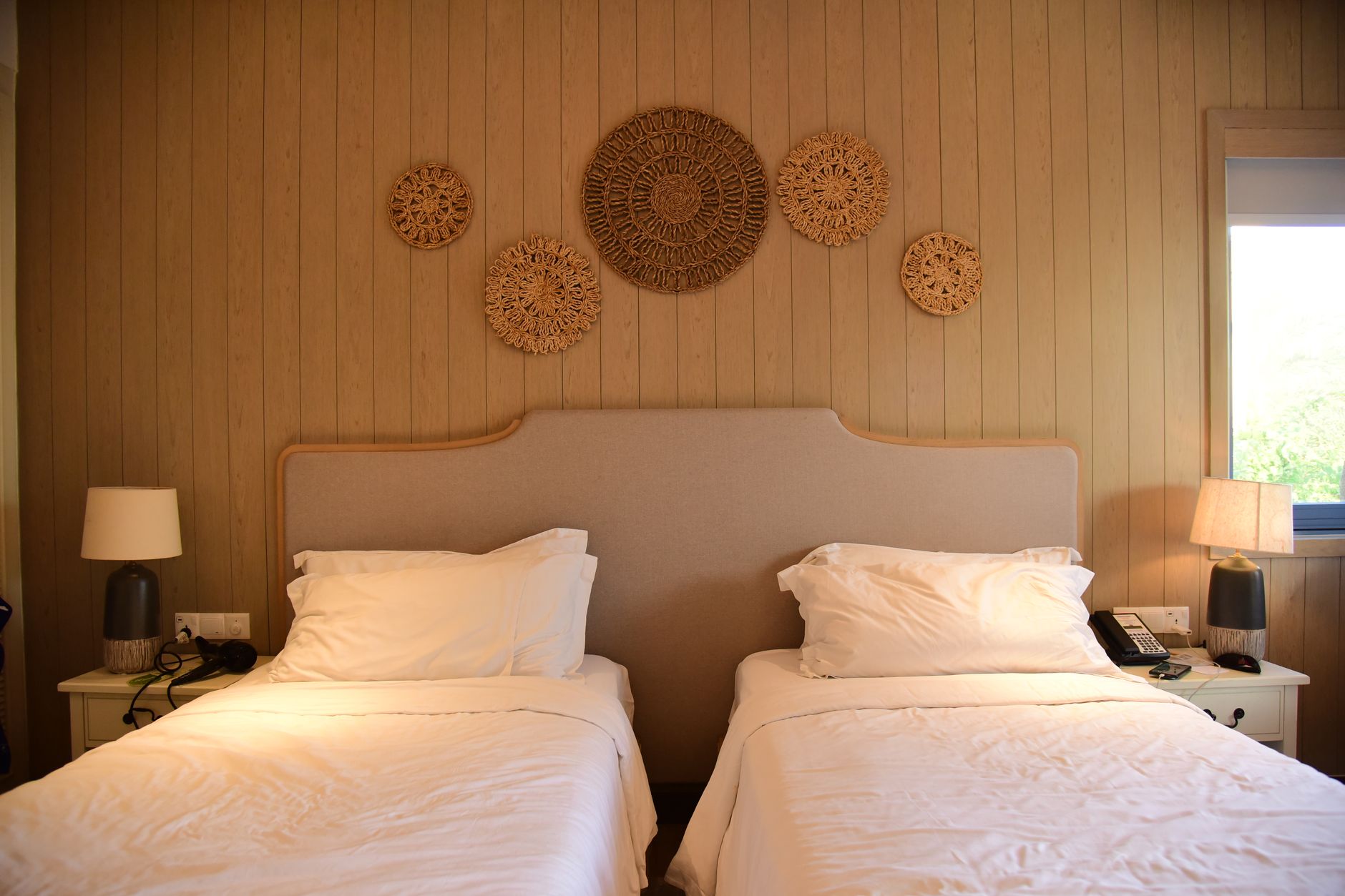
Feng shui traditions generally advise against storing things under the bed, on the reasoning that it blocks the free movement of chi (qi) around a sleeping body. The concern is strongest in the BTB adaptation; classical Form School and Compass School texts say less about it directly and focus more on airflow and what is stored.
What does feng shui actually say about under-bed storage?
The rule most people repeat — clear the space under the bed entirely — comes largely from the Western Black Sect (BTB) adaptation of feng shui, which treats the area beneath a sleeper as part of the body’s immediate energetic field. In BTB teaching, objects stored there are said to interrupt chi as it circulates around a resting person, and the type of object matters: anything associated with work, unfinished business or strong emotion is considered worse than plain linen.
Older Form School material, which is more concerned with the physical logic of a room than with chi circulation around a body, focuses instead on airflow, dust and the practical difficulty of keeping an enclosed space clean. Classical Compass School texts, built around directional calculation rather than object placement, have little to say about under-bed storage at all. Treat the strict “nothing underneath, ever” rule as a BTB position, not a universal one.
Why does the tradition object to storing things under the bed?
The stated reasoning is that a sleeping person is at their most passive and receptive, and that chi should move freely around them through the night. Boxes, cases and stored items are said to create a kind of pressure or stagnation directly beneath the sleeper, denser the more tightly packed the space is.
This is a claim about energy, not measurable air quality, and it should be read as such. No practical mechanism is offered for why chi specifically would behave this way; the tradition asserts it and asks the reader to act on it or not.
Does it matter what is stored there?
Within BTB teaching, yes — some objects are treated as more disruptive than others. Practitioners commonly distinguish between:
- Seasonal or spare linen, considered relatively neutral
- Books, papers or unfinished work, considered active and unrestful
- Old shoes, luggage or anything tied to travel and departure, considered symbolically unsettled
- Anything sharp-edged or metal, which some practitioners link to the same caution given to sharp corners on furniture elsewhere in a room
These distinctions are symbolic associations, not physical findings, and different teachers rank them differently. The consistent thread across BTB sources is that anything connected to unresolved activity — work, ex-partners’ belongings, unfinished projects — is discouraged more strongly than plain storage.
Is there a practical reason, not just a traditional one?
There is a genuine practical case, separate from the energetic one. A bed with the space beneath it packed with boxes is harder to clean under, collects more dust, and can restrict airflow in a room that already has limited ventilation. This connects to a point made elsewhere on ventilation: a room that cannot exchange air properly tends to feel close and stale regardless of what tradition one follows.
There is also a simpler layout argument. A bedroom where under-bed space is treated as unlimited storage often accumulates items the rest of the room has no place for — which is a version of the clutter problem this site covers as the first issue in nearly every school of feng shui, before any talk of direction or symbolism.
What do Form School and BTB actually disagree on here?
Form School’s caution is about the physical room: a cluttered underside of a bed is harder to keep clean, ventilated and free of dust, and dense storage in a small bedroom eats into the open floor a room needs to function, a point covered in more detail in the piece on how much empty floor a room should have.
BTB’s caution is about the body of the sleeper directly above. It treats the space under the bed as an extension of personal energetic space, closer in reasoning to why BTB is strict about a commanding position for the bed relative to the door, or to concerns about symmetry in a bedroom affecting rest.
Both schools land on similar advice in practice — keep the space clear or nearly so — but for different stated reasons. Worth knowing if a reader wants to follow the logic rather than just the rule.
What about beds built with drawers underneath?
Divan-style and ottoman beds with built-in storage are common in many markets, and most feng shui writers treat them as a middle ground rather than a violation. The distinction usually drawn is between an enclosed, fitted drawer — sealed, flush with the frame, holding a modest and defined amount — and loose boxes shoved underneath with no containment.
Some BTB practitioners still prefer a bed with open space beneath it, including a frame raised on legs, on the reasoning that chi should be able to pass under the sleeper rather than around a solid base. Others accept a storage bed as long as it is not overfilled. No classical text settles this either way, since fitted storage furniture of this kind is a modern addition to bedroom design, not something the older schools were writing about.
What should go under a bed, if anything?
Where a bed has no reasonable alternative for storage — common in small bedrooms, box rooms or flats without built-in wardrobes — the guidance most consistently repeated across sources is:
- Keep the space no more than about half full, leaving visible air gap
- Use flat, closed containers rather than loose or stacked items
- Avoid anything connected to unfinished work, past relationships or strong unresolved feeling
- Choose soft goods — linen, seasonal clothing — over hard, sharp-edged, or metal objects
- Clean the space out on a regular schedule rather than letting it become permanent storage
This is closer to the practical, checkable version of the rule than a strict prohibition — a way to manage a real space constraint without ignoring the tradition’s reasoning entirely.
Does this connect to other bedroom layout rules?
It does. Under-bed storage sits alongside a wider set of bedroom concerns this site covers separately, including the most commonly cited layout mistake in a bedroom, which is often about what surrounds the bed rather than what is beneath it, and general guidance on keeping furniture height and mass proportionate to the room. Readers weighing where the bed itself should sit relative to windows and doors will find more on that in the broader room-by-room material.
A note on what this article is, and isn’t
This article describes feng shui reasoning as it is written by named schools and traditions; it is not sleep, health or safety advice. Where storage under a bed raises a genuine question about dust, allergens, ventilation or fire safety in a specific home, that is a matter for a home safety professional or the relevant building guidance, not a feng shui source. For general layout thinking beyond the bedroom, the Layout & Furniture and Room by Room archives cover related questions in more detail.
About this site. Feng Shui Pack explains what the feng shui tradition holds and which school holds it, from published sources. Feng shui is a tradition of placement and orientation, not a science: nothing here will bring you wealth, health, luck or a relationship, and we never claim otherwise. Where a suggestion has an ordinary practical reason — daylight, airflow, sightlines, less clutter — we say so; where it does not, we say that too. This is not medical, financial, legal or tenancy advice. If a decision matters, talk to a professional in that field.