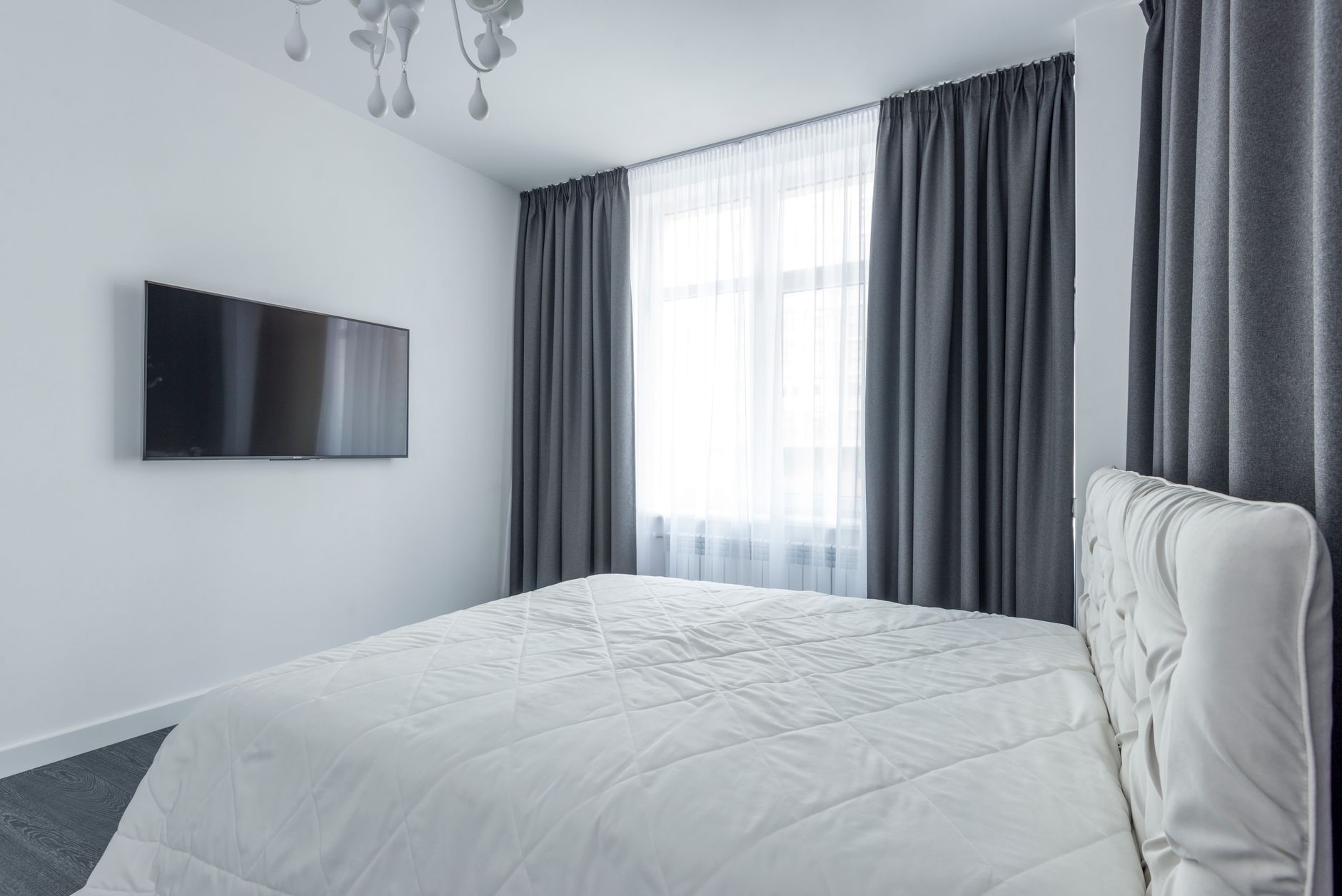
Feng shui treats symmetry in a bedroom as a way of expressing balance between two people sharing a bed — typically shown as a matching nightstand and lamp on each side — but it is not a rule that a bedroom must be symmetrical. Classical schools focus on the bed’s position and view of the door far more than on visual mirroring.
Why is symmetry associated with a “good” bedroom in feng shui?
The association comes from yin and yang, the paired opposites — dark and light, still and active, receptive and assertive — that feng shui uses to describe balance in a space. A bedroom shared by a couple is often read as a space that should reflect two people equally: two ways onto the bed, two nightstands, two lamps. The visual symmetry is a stand-in for a claim about equal footing between occupants, not a rule about geometry for its own sake. Readers wanting the fuller concept can see how it is defined in what yin and yang mean in a room.
This is the version of feng shui most commonly given in English-language interiors advice, and it draws heavily on the Black Sect, or BTB, adaptation developed in the West in the late twentieth century — a simplified system that does not always match classical Chinese practice. What BTB frames as a near-universal preference, older material treats as one option among several. The distinction is explained in more detail in the guide to the BTB adaptation.
Does classical feng shui actually require a symmetrical bedroom?
No. Neither Form School nor Compass School treats symmetry as a requirement. Form School (Xingshi) is concerned with the shape of the land and the building around a room — what sits behind it, what approaches it, what it faces. Compass School (Liqi) is concerned with the compass direction the room and its openings face, calculated from a practitioner’s own natal chart in some versions. Neither system has a rule that says a bedroom’s furniture must mirror itself left to right. The difference between the two older schools, and where BTB departs from both, is set out in Form School versus Compass School.
Where classical texts do converge with the popular symmetry advice is indirectly: a bed reachable and usable from both sides, with a nightstand within reach on each side, is also a practical bedroom for two people. The feng shui reasoning and the ordinary furnishing logic happen to point the same way, which is likely why the guidance persists even outside BTB circles.
What does a symmetrical bed setup look like in practice?
In practice, the advice usually comes down to a short, specific list rather than a general instruction to “make the room symmetrical”:
- The bed centred on a wall rather than pushed into a corner, so both sides are accessible.
- A nightstand on each side, ideally matching in height so neither side reads as an afterthought.
- A lamp on each side, allowing each occupant to control their own light without reaching across the other.
- A headboard against a solid wall rather than a window, discussed further in the guide to a bed placed under a window.
Beyond this list, there is little agreement on how far symmetry should extend — whether curtains, art, or wall colour need to match on each side. Most sources that go further into decor symmetry are giving design opinion rather than citing a school of feng shui, and the article should say so plainly where it applies.
Does symmetry matter more than the bed’s position relative to the door?
No — across every school, the bed’s relationship to the door is treated as the more significant factor. This is the idea of the commanding position: a bed placed so the sleeper can see the door without lying directly in line with it. A perfectly symmetrical bedroom with the bed facing straight down the length of the door is generally considered a weaker layout than an asymmetrical one where the bed sits in a strong commanding spot.
This hierarchy — position and sightline before decorative balance — is consistent enough across sources that it is worth treating as the more load-bearing rule. The reasoning is explained in what a command view of a room means and, specific to sleeping, in how a headboard should be positioned. Door alignment specifically is covered in bedroom door alignment in feng shui.
What if the room itself isn’t symmetrical?
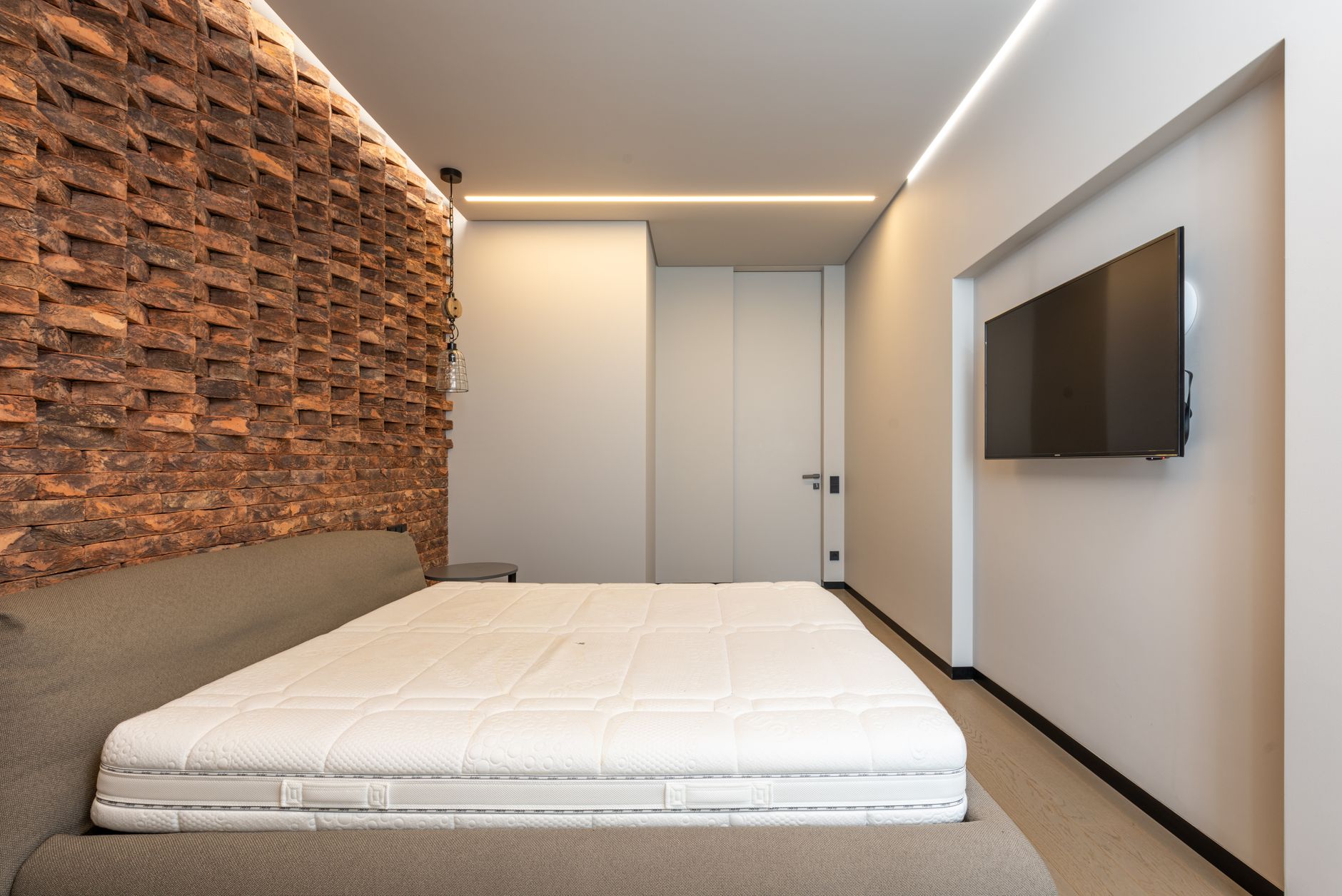
Most real bedrooms are not architecturally symmetrical — a window off-centre, a closet on one side only, a radiator or chimney breast interrupting one wall. Feng shui sources generally treat this as normal and do not ask a reader to rebuild a room to force symmetry. The advice usually shifts to achieving balance through furniture rather than through the architecture itself: if one side of the bed backs onto a wall and the other onto open floor, adding a nightstand or a floor lamp on the open side is the typical suggestion, rather than treating the mismatch as a flaw that needs structural correction.
Long, narrow, or oddly proportioned bedrooms raise this question more often than square ones. The general approach to working with an unbalanced footprint is covered in how to arrange a long, narrow room, and the same logic — furniture correcting what the architecture does not offer — applies to bedrooms specifically.
Is asymmetry ever recommended on purpose?
Yes, in specific cases. A single sleeper’s bedroom is one example: BTB material sometimes suggests that a single occupant does not need the paired setup associated with a couple, and that a single nightstand or an asymmetrical arrangement is acceptable, even expected. A nursery or a child’s room is another case where the paired-nightstand logic simply does not apply, since the room is not organised around two adults sharing a bed; see what feng shui says about a children’s bedroom for how that room is treated differently.
No school of feng shui claims that asymmetry causes harm on its own. Where a source implies that an unmatched pair of nightstands is actively bad, rather than simply less expressive of balance, that claim is not coming from classical material and should be read with some skepticism.
Does symmetry apply to other bedroom furniture too?
The symmetry discussion in feng shui sources is almost always about the bed and its immediate flanking furniture — it rarely extends with the same weight to a dresser, a wardrobe, or seating in the room. Other bedroom placement questions are usually governed by separate rules: what belongs under a bed is addressed in what should be under the bed, and mirrors — often discussed as something to keep away from direct sightlines of a sleeping person — are covered in feng shui and mirrors in a bedroom. Neither of those rules is about symmetry; both are about what the object does or reflects.
For furniture placement generally, including where symmetry is and isn’t the operative concern, the Layout & Furniture section covers the broader set of rules room by room.
What’s the practical takeaway?
A workable summary: symmetry around the bed is a reasonable, low-cost way to arrange furniture for two people, and it is the piece of advice most consistently repeated across BTB-influenced sources. It is not a classical requirement, it does not override the bed’s position relative to the door, and it is not something to force onto an architecturally lopsided room at the expense of a stronger command position.
None of this is medical or safety advice — sleep quality has genuine physical causes that a room layout does not address, and a reader with ongoing sleep problems should speak to a doctor rather than rearrange furniture. For the wider set of principles this section draws on, including where the schools disagree more broadly, see why feng shui rules contradict each other so often and the Basics archive.
About this site. Feng Shui Pack explains what the feng shui tradition holds and which school holds it, from published sources. Feng shui is a tradition of placement and orientation, not a science: nothing here will bring you wealth, health, luck or a relationship, and we never claim otherwise. Where a suggestion has an ordinary practical reason — daylight, airflow, sightlines, less clutter — we say so; where it does not, we say that too. This is not medical, financial, legal or tenancy advice. If a decision matters, talk to a professional in that field.