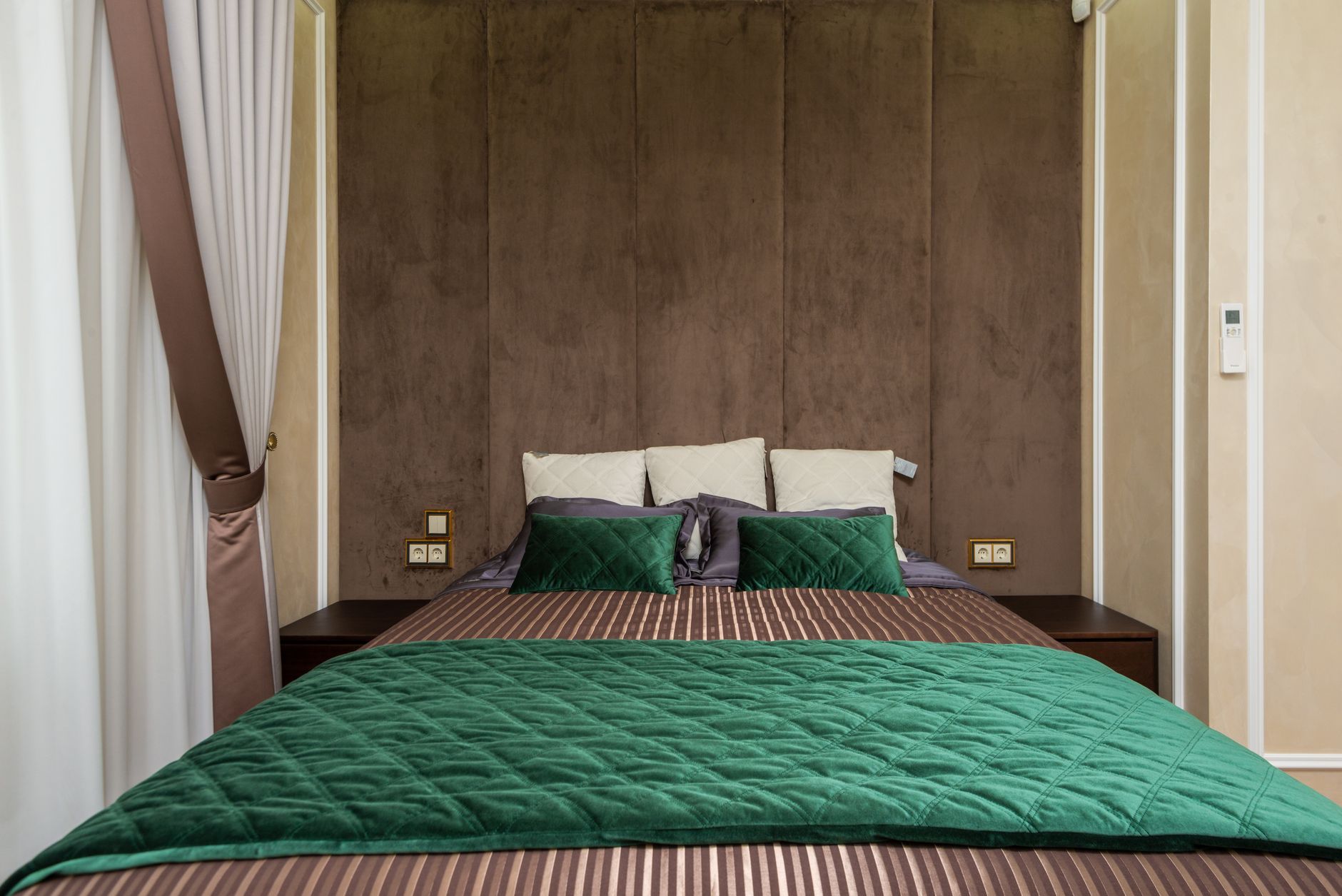
The most common guidance is that a mirror should not directly face the bed, because the Black Sect (BTB) adaptation of feng shui holds that a mirror doubles whatever disturbance exists in a room, including the disturbance of a sleeping body. Classical Form School sources are far less concerned with mirrors specifically and focus instead on the bed’s relationship to the door. Neither claim is verifiable; both are reported here as tradition, not fact.
What is the core rule about mirrors facing the bed?
The rule stated most often in English-language feng shui writing is simple: do not place a mirror where it directly reflects a person lying in bed, and especially not at the foot of the bed facing the sleeper. This is a BTB-era formulation, detailed on this site’s explainer on Black Sect (BTB) feng shui, which reorganised much older material into a small set of memorable, room-specific rules aimed at a Western domestic audience in the twentieth century.
The stated reasoning, as it appears in BTB-influenced sources, is that a mirror facing the bed reflects and “doubles” the sleeper’s chi (qi) while they are at their most vulnerable and unguarded — asleep, defences down. Some versions of this reasoning add that a sudden reflected movement (a sleeper shifting, a nightlight catching the glass) can startle a person awake, and that waking startled is considered disruptive to rest. That second version edges into something with an ordinary, testable basis: an unexpected reflection in a dark room can genuinely register as movement to a half-asleep brain. The first version — chi being “doubled” — has no equivalent outside the tradition and is not offered here as anything other than a belief some practitioners hold.
Where does this rule come from, and is it universal?
No. This is one of the clearest cases on the site of a rule being treated as universal feng shui when it is really one school’s emphasis. Classical Form School (Xingshi) texts, which predate BTB by many centuries, are concerned with landscape, structure, and the shape of a room relative to doors, beams, and sharp edges — not with the modern, mass-produced wall mirror as a category of object. Compass School (Liqi) material is oriented around directional calculations tied to a compass reading and a person’s birth data, and mirrors do not feature as a standard fixture of that method either.
The mirror-facing-the-bed rule as commonly quoted online is a BTB simplification that has since been repeated so widely it is often presented without any attribution at all. The general pattern — English-language feng shui advice defaulting to BTB without naming it — is covered in more depth in why feng shui rules contradict each other so often, which is useful background before treating any single rule as settled.
Does it matter where the mirror sits relative to the door?
Some practitioners say yes: a mirror placed so that it reflects the bedroom door, rather than the bed itself, carries the same caution in BTB-derived guidance, on the reasoning that it repeats or “reflects back” whatever enters the room. This is presented as an extension of the same doubling logic rather than a separate concern.
Door position matters more concretely, and for reasons that don’t depend on any particular school. A bed positioned so the sleeper can see the door without being directly in line with it is the basis of what feng shui calls the commanding position — a concept that recurs across Form School and BTB alike, for the practical reason that not being able to see who enters a room you are sleeping in is a genuinely disorienting arrangement, mirror or no mirror. The site’s dedicated guide to where the bed should go in a bedroom covers this in full and is the more load-bearing rule of the two.
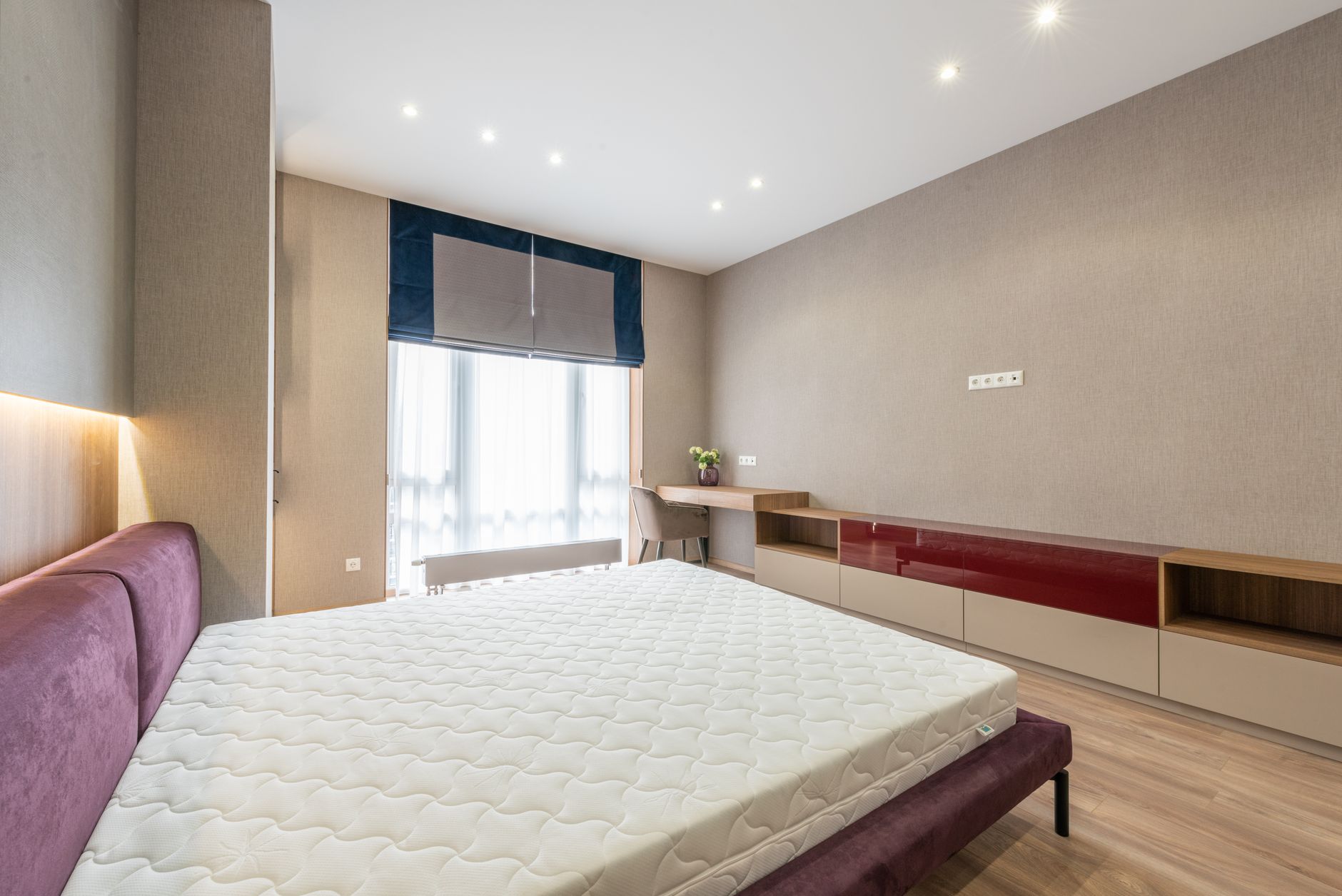
What about mirrored wardrobes and closet doors?
Built-in wardrobes with mirrored sliding doors are common in smaller flats and rented rooms, and this is where the rule most often collides with a fixed feature that can’t simply be removed. BTB-influenced guidance treats a mirrored wardrobe facing the bed the same as any other bedroom mirror facing the bed, and the workarounds suggested are practical rather than structural:
- Keeping wardrobe doors closed at night rather than left ajar, so the reflective surface is not angled toward the bed.
- Hanging a curtain, fabric panel, or removable cover over the mirrored section during sleeping hours.
- Repositioning the bed itself, where the room’s layout allows it, so it is no longer in the direct line of the reflection.
None of these are presented in the tradition as fixes with a guaranteed outcome — only as ways to bring the room in line with the stated rule for readers who want to follow it. No practical reason beyond the tradition itself is given for why a closed wardrobe door should matter more than an open one, beyond the reflection no longer being aimed at the bed.
Is there a practical reason behind the mirror rule, or only tradition?
Both, depending on which version of the claim is being made. The “doubling of chi” explanation is not a claim this site can verify or refute — chi (qi) is a concept from within the tradition, explained on this site’s explainer on chi and energy flow, and it does not map onto a physical measurement.
The startle-reflection explanation has a more ordinary basis. A large reflective surface in a bedroom can catch ambient light — from a hallway, a streetlight through curtains, a phone screen — and produce movement in peripheral vision that disturbs sleep onset or wakes a light sleeper. That is a plausible, low-stakes design consideration independent of any school of feng shui, and it is one reason some sleep-focused interior guidance also advises against a mirror directly opposite a bed, entirely separately from feng shui. This article is not sleep or medical advice; a reader with a genuine sleep disturbance should raise it with a doctor rather than treat mirror placement as a remedy.
Do mirrors have any accepted place in a bedroom, according to the tradition?
Yes — the rule is specifically about the bed’s exposure to the reflection, not a ban on mirrors in bedrooms altogether. Common suggestions in BTB-derived material include:
- Placing a mirror on a wall perpendicular to the bed rather than facing it directly.
- Using a mirror to reflect a window, a plant, or open floor space rather than the sleeping area.
- Positioning a dressing mirror on the inside of a closet door, so it is only visible when the door is open and the person is standing in front of it.
These are presented as ways to keep a mirror’s ordinary function — checking an outfit, letting light bounce into a dim room — while avoiding the specific configuration the tradition flags. None of this is a recommendation to buy a particular object; it concerns placement of a mirror a reader already owns or is already planning to have in the room regardless of feng shui.
Does the same rule apply to every bedroom, everywhere?
Not evenly. Compass School practitioners calculating a room’s orientation against a reading taken with an actual instrument — the subject of this site’s explainer on feng shui compasses — are working from a different framework than BTB’s bagua (pa kua) map anchored to the front door, described in how a bagua map is oriented to a home. A mirror rule generated within a compass-directional system is not automatically the same rule generated within a door-anchored one, even where both traditions land on similar advice about the bed and a facing mirror.
The honest summary is that “feng shui says no mirrors facing the bed” is really “the BTB adaptation of feng shui says this, and it has become the version most repeated online.” Readers wanting the wider context — how one popular, twentieth-century adaptation came to stand in for the whole tradition in English — can look at Form School versus Compass School feng shui for the older, structural end of the practice, and at the site’s broader Room by Room section for how similar rules are handled in kitchens, living rooms and entryways. For readers asking what, if anything, has been formally studied about feng shui claims generally, this site’s overview of the evidence question covers where research exists and where it does not — and mirror placement, specifically, has not been the subject of any such study identified in that overview.
About this site. Feng Shui Pack explains what the feng shui tradition holds and which school holds it, from published sources. Feng shui is a tradition of placement and orientation, not a science: nothing here will bring you wealth, health, luck or a relationship, and we never claim otherwise. Where a suggestion has an ordinary practical reason — daylight, airflow, sightlines, less clutter — we say so; where it does not, we say that too. This is not medical, financial, legal or tenancy advice. If a decision matters, talk to a professional in that field.