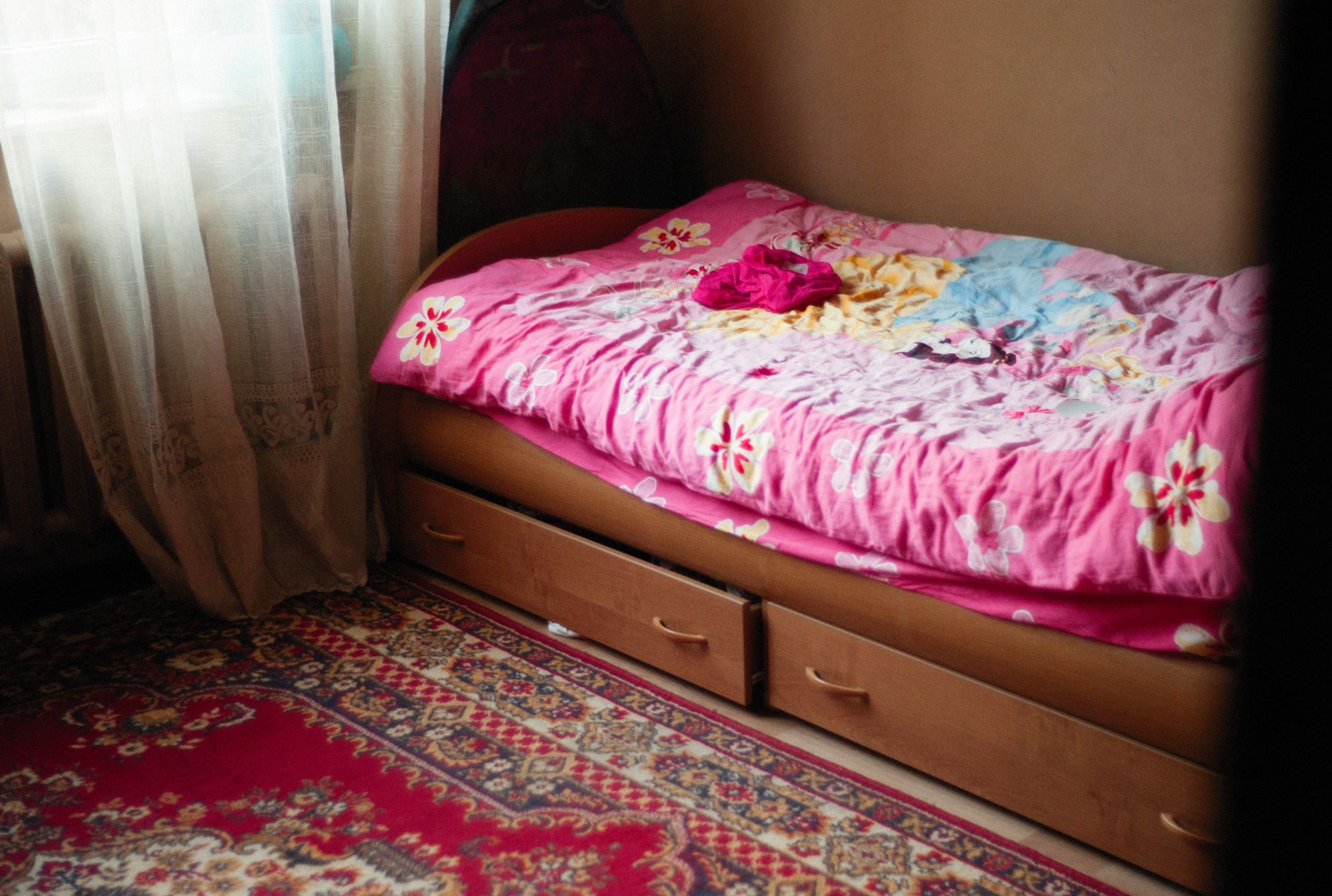
Most feng shui guidance says the space under a bed should be empty, or nearly so — no piles of shoes, no boxes of paperwork, nothing sharp, and never anything electrical. Where storage is unavoidable, the tradition prefers soft, folded items like linens over hard or broken objects. The reasoning given is about undisturbed rest, not about the objects themselves having any inherent power.
What should not go under the bed?
Across most English-language feng shui writing, the same short list of exclusions recurs: broken or unused items, sharp objects, shoes, books and paper, and anything electronic or battery-powered. The stated concern is that these either represent stagnation (an object no longer in use) or disturb sleep (a device, however inert it looks, is treated as a source of restlessness in the BTB adaptation in particular).
- Broken, chipped or unused items — associated in the tradition with stagnant chi (qi), the term for circulating energy explained in more detail on this site’s explainer on chi and energy flow.
- Shoes — commonly excluded on the grounds that they carry the dirt and activity of the outside world into the one room meant for rest.
- Sharp or pointed objects, including tools, scissors or exercise equipment with edges.
- Books, papers and work materials — treated as carrying mental activity into a space meant to be restful.
- Electronics, chargers and anything with a battery — this is a strong BTB-era concern and appears far less in classical Chinese texts, which predate household electricity entirely.
None of this is universal. It is worth being direct about which school is speaking, because the reasoning differs. Classical Form School (Xingshi) writing is concerned mainly with the visible shape of a room and the position of solid objects — a chest under a bed is a chest under a bed, judged on whether it obstructs or crowds the sleeper. The electronics rule, and much of the “restless energy” language, belongs to the Western Black Sect (BTB) adaptation that developed in the United States in the late twentieth century, discussed at length on this site’s page on Black Sect (BTB) feng shui.
What is allowed to be stored under a bed?
Where storage under the bed is treated as acceptable at all, most modern guidance limits it to soft, folded, currently-used items — spare linens, blankets, out-of-season clothing — kept in closed boxes rather than loose. The idea is containment and order rather than concealment.
This is a much softer position than a blanket ban, and it reflects a practical compromise: in a small bedroom, under-bed storage is often the only storage available, and few writers in this tradition argue that a reader should sacrifice a workable bedroom layout entirely to satisfy the rule. Where the two conflict, most guidance in this vein prioritises a clear, closed, minimal footprint over strict emptiness.
Some Form School-adjacent writing goes further and says the base of the bed itself matters more than what is inside it — a solid, low platform is treated as more stable and grounding than a bed raised on thin legs with open space and loose boxes visible beneath. That is a claim about visual and structural stability, not about hidden objects, and it is worth separating from the more object-specific BTB rules above.
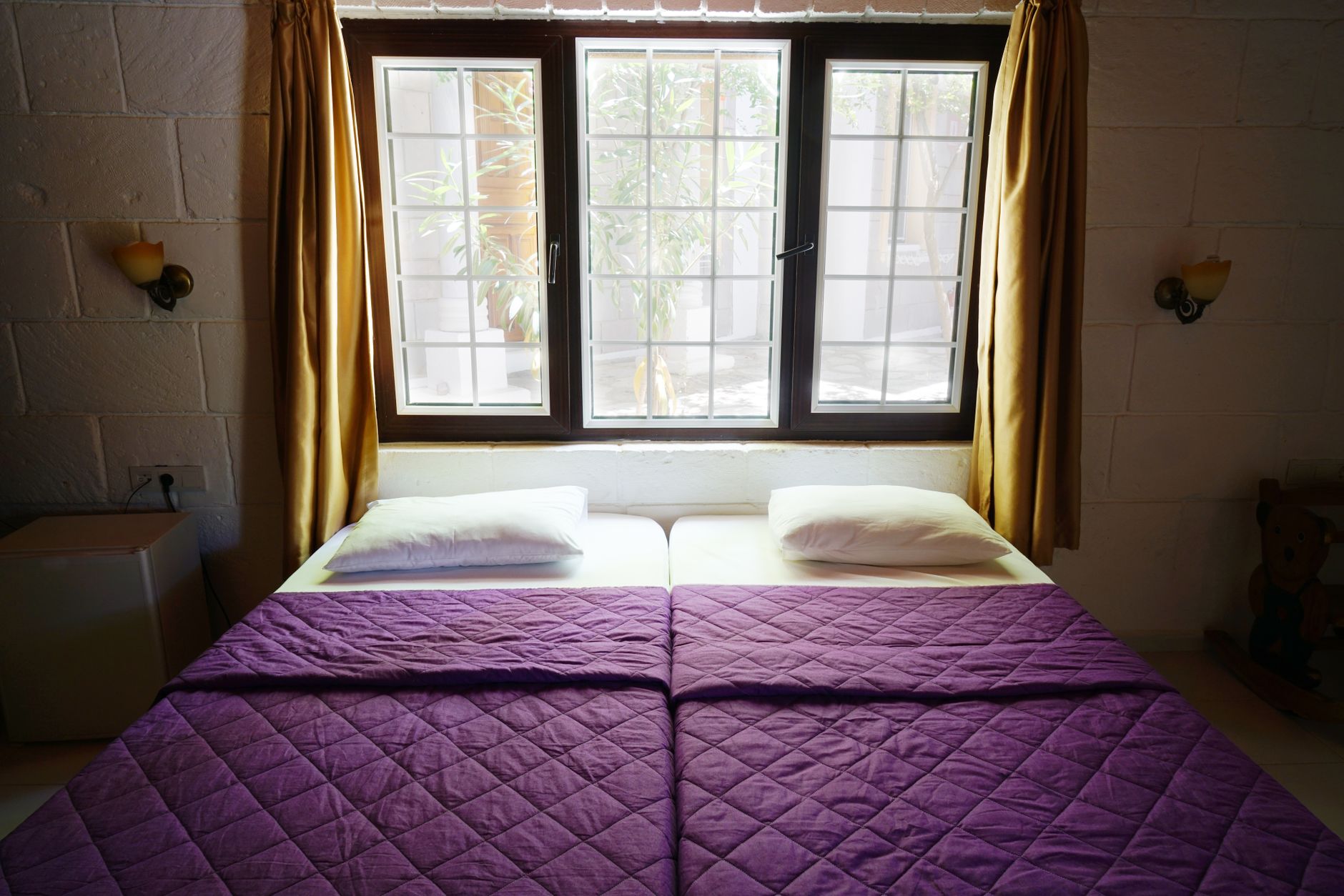
Why does the tradition object to storage under the bed at all?
The stated reason is almost always continuity of chi (qi) around the sleeper. In Form School terms, an object under a bed is a solid mass sitting directly beneath a place of rest, interrupting the open, level space the tradition associates with settled, undisturbed sleep. In BTB terms, the language shifts to the object’s own “energy” — a broken appliance or an old pair of shoes is treated as carrying stagnant or agitated chi into direct contact with the sleeping body for hours at a stretch.
No practical mechanism is offered for either version of this claim, and none should be assumed. This site does not present feng shui claims about chi as established physical facts; the background reasoning behind the term, and why it resists a single agreed translation, is covered in the piece on what chi is said to mean. Readers who want the evidentiary picture for feng shui claims generally, rather than this rule specifically, can also see this site’s summary of what evidence exists for feng shui and what kind of claim it actually is.
Is there a practical reason as well as a traditional one?
There is a genuine practical case for keeping the space under a bed clear, separate from anything to do with chi. Under-bed clutter collects dust, restricts airflow around the mattress base, and is one of the more common places household dust mites accumulate in a bedroom, since it is rarely disturbed by cleaning. None of that is a feng shui claim — it is basic household hygiene, and it happens to point in the same direction as the tradition’s rule.
Sleep specialists and allergy guidance generally recommend keeping bedding areas free of unnecessary storage and vacuuming underneath a bed regularly, particularly for anyone with dust or allergen sensitivities. That is a health matter, not a feng shui one, and this article is not medical advice — a reader with ongoing sleep or allergy issues should raise them with a doctor or a qualified sleep specialist rather than treat a room layout as the fix.
The electronics rule sits in a similar overlap zone. Sleep hygiene guidance from health bodies commonly recommends keeping phones, tablets and other screens out of the bedroom, or at least away from the bed, because of light and notification disruption — again, an ordinary practical concern that happens to land on the same object BTB warns against, for a completely different stated reason.
Does this connect to where the bed itself is placed?
Most feng shui writing treats what is under the bed as secondary to where the bed is positioned in the room — the base and its contents matter less than whether the bed itself sits in what the tradition calls the commanding position, with a solid wall behind it and a clear view of the door. That larger question is covered in full on this site’s guide to where a bed should go in a bedroom, and the commanding position concept itself, which recurs across several unrelated rooms and rules, has its own explainer at what the commanding position is and why it recurs.
The logic given for bed placement is more grounded in Form School’s visible-shape reasoning — a person facing a door can see who enters, a person with their back to open space cannot — and it is one of the few feng shui bedroom rules with a clearly stated, non-mystical rationale attached.
Why do sources disagree about this so often?
Because feng shui is not a single fixed rulebook, and the under-bed storage rule is a clean example of why. Classical Compass School (Liqi) texts are concerned with directional orientation and largely silent on household clutter as a category. Form School focuses on shape, mass and sightlines. BTB, the version most common in Western books, blogs and apps, is the source of most “no electronics, no shoes, no clutter” style lists, and it developed in a different country and century from either classical school.
This site’s comparison of Form School and Compass School and its separate piece on why feng shui rules contradict each other so often both go into this in more depth. The short version: when a rule about a bed conflicts with another source, the disagreement is very often not an error but two different traditions, unnamed, sitting on the same page.
What is the simplest reasonable approach?
Nothing here is advice about what a reader must do — the tradition offers reasoning, not obligation, and this site does not promise an outcome from following it. For readers who want a position that satisfies most versions of the rule at once, the recurring pattern across sources is: keep the space under the bed empty where the room allows it; where it doesn’t, use closed containers holding soft, currently-used items only; and treat electronics, shoes, and anything broken as the first things to move elsewhere regardless of which school’s reasoning is cited.
Bedroom layout more broadly — including mirror placement, headboard choice and door sightlines — is covered across this site’s Room by Room section, and the underlying yin-yang balance that much bedroom guidance draws on is explained separately in what yin and yang mean in a room.
About this site. Feng Shui Pack explains what the feng shui tradition holds and which school holds it, from published sources. Feng shui is a tradition of placement and orientation, not a science: nothing here will bring you wealth, health, luck or a relationship, and we never claim otherwise. Where a suggestion has an ordinary practical reason — daylight, airflow, sightlines, less clutter — we say so; where it does not, we say that too. This is not medical, financial, legal or tenancy advice. If a decision matters, talk to a professional in that field.