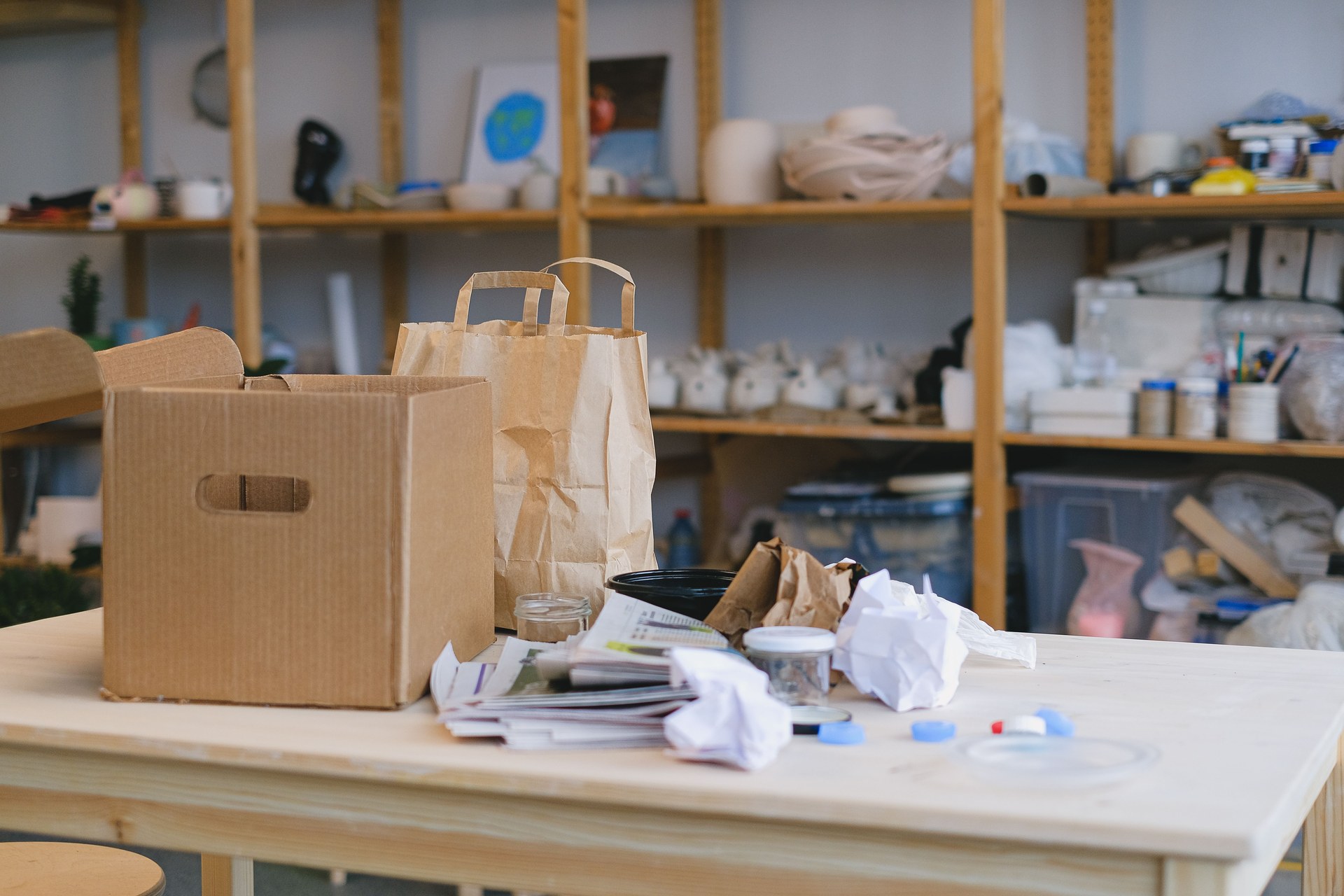
Clutter is treated as the first problem because every major branch of feng shui — Form School, Compass School and the modern Western Black Sect (BTB) adaptation — agrees that a home cannot be assessed, corrected or read until the physical space is clear enough to see and move through. Whatever else the schools disagree on, they start here.
What does “clutter” mean in feng shui terms?
The tradition uses the word more narrowly than everyday speech does. Clutter is not simply “having things” — it is specifically things that block a doorway, sit in a walking path, pile up faster than they are used, or make it impossible to see a room’s exits and furniture at a glance. A bookshelf is not clutter. Boxes stacked in front of a bookshelf, or a bookshelf blocking a window, is.
This distinction matters because it is the difference between a design principle with an ordinary explanation and a rule that only makes sense inside the tradition’s own logic. Clutter sits mostly in the first category — practitioners across schools give reasons for objecting to it that hold up outside the belief system as well as inside it.
Why does every school treat clutter as a starting point?
Form School (Xingshi) developed around reading landscape and the shape of a building before anything else — its oldest concern is whether a structure sits well against hills, water and roads. Applied indoors, that same instinct becomes: read the shape of the room before assigning meaning to it. A room full of stacked boxes cannot be read at all. Its actual shape, its doors, its natural paths are hidden.
Compass School (Liqi) works from directional calculation — the bagua map oriented by compass bearing, sector by sector. But a directional reading is only useful if a practitioner can actually stand in each sector and assess what is there. Clutter obscures the sector as thoroughly as it obscures the room.
The BTB adaptation, which orients the bagua map from the front door rather than by compass direction, is the version most home feng shui guides describe without naming it. BTB teaching is often explicit that clearing clutter is step one, ahead of any placement advice, because its practitioners hold that stagnant chi (qi) collects in clutter and that no other adjustment functions until it is addressed.
Three different methods, three different reasons for consulting the room — and all three need an uncluttered room to do their work. That is the actual answer to why clutter comes first: not because one authority declared it, but because every method depends on being able to see and move through the space before applying its own logic to it.
Is there a practical reason, or is it purely traditional?
Both, depending on which claim is being made. Where clutter blocks a doorway, sits in a hallway, or covers a window, the practical case stands on its own: circulation, light and ventilation are physically reduced. Those are covered in more detail in the guides to entrances and flow and light and air.
Where the claim shifts to clutter blocking the movement of chi through a home, that is a tradition-specific claim, not a measurable one, and it should be read as such: practitioners hold that chi needs a clear path in the same way a person does, and that a blocked path stagnates rather than circulates. No instrument measures this. It is a belief about how a home works, and readers should treat it as one.
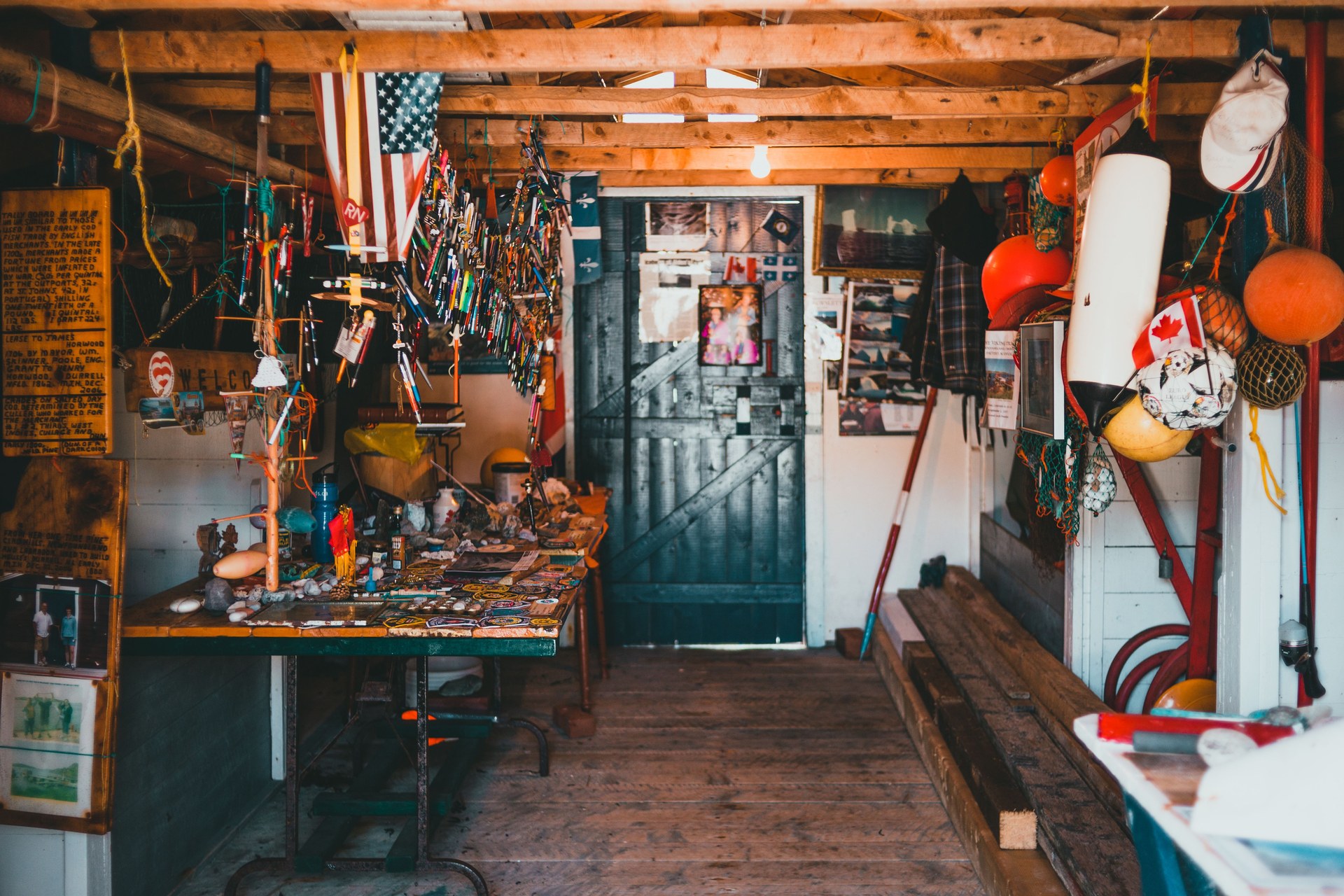
Does Form School treat clutter differently from Compass School?
The emphasis differs even if the concern is shared. Form School’s oldest texts are concerned with the shape and flow of a site as a whole — a cluttered room is a site whose shape cannot be judged, so the assessment stalls before it starts. Compass School’s concern is more granular: clutter in a specific bagua sector is read as clutter in whatever life area that sector is said to correspond to, sector by sector, rather than as a general obstruction. Readers can compare the two approaches directly in the guide to Form School versus Compass School, though note that this specific comparison guide is not yet published on this site and should be checked before linking further.
Because the two schools use different logic, they can reach different conclusions about the same cluttered corner — one school treating it as a general problem, the other as a problem for one particular sector. This is one of many places the tradition contradicts itself depending on which lineage is being followed, a subject covered on its own terms in the basics section.
How does the BTB adaptation handle clutter?
BTB teaching, which is the source of most English-language feng shui advice even when it is not labelled as such, generally treats decluttering as the precondition for everything else in the practice — before furniture placement, before colour, before objects are introduced. The reasoning given is that stagnant chi accumulates in unused, unmoved possessions, and that no placement advice “works” while that stagnation is present.
This is a claim of the BTB tradition specifically, not a universal feng shui law, and classical Chinese sources do not frame it in these terms. It is included here because it is the version most readers will already have encountered, and because naming which school makes a claim is more useful than repeating the claim as if it were settled.
Where does clutter matter most in a home?
Across schools, three locations get disproportionate attention:
- The entrance, sometimes called the “mouth of chi” in BTB material — an entryway blocked by shoes, bags or bins is treated as restricting whatever enters the home first, and is covered in the guide to why feng shui objects to a cluttered entrance.
- Under the bed, where stored boxes are commonly discussed as interfering with rest, a claim examined in the guide to the most common feng shui mistake in a bedroom.
- Open shelving, where books and objects left in disordered piles are treated differently from the same items kept in order — the distinction is explained in the guide to books and open shelving.
The floor itself is a recurring measure across the tradition: how much of a room’s floor is left genuinely empty is treated as a rough proxy for how “clear” the whole room is, a question addressed directly in how much empty floor a room should have.
What does the tradition say clutter does to chi?
The claim, most fully developed in BTB material, is that chi moves through a home the way air or water moves through a space — needing a path, slowing where the path narrows, stagnating where it is blocked entirely. Clutter is treated as the most literal form of blockage: a physical obstacle in the physical path chi is said to travel.
This is presented here as a claim, attributed to the tradition, not as a demonstrated mechanism. There is no independent evidence for chi as a measurable force, a point discussed directly in the site’s separate examination of what feng shui actually claims and what evidence exists for it. What is measurable is the room’s circulation, light and air — and that is where the practical case for clearing clutter actually rests, as covered in the guide to how furniture placement affects circulation.
Is decluttering itself considered a form of feng shui?
In BTB circles it often is presented that way — as the single most commonly given piece of advice, ahead of any object, direction or colour recommendation. In classical Form and Compass practice it is closer to a precondition for reading the space correctly than a remedy in its own right. Either way, it is the one recommendation that appears, in some form, in every account of the tradition, which is why it functions as the effective starting point regardless of which school a given guide is following.
Readers arranging a room from scratch will get more practical use from the site’s guide to arranging furniture so a room feels calm and from the broader common mistakes archive than from any single object or cure — clutter is the recurring theme running underneath most of the specific advice found there.
What should a reader actually check first?
Before applying any bagua map, compass reading or object placement, the practical starting point common to every school is the same: can a person walk the room’s normal paths without moving something out of the way first, and can the main door open fully. That question is covered from the layout side in the guide to what a commanding view of a room means and, more broadly, in the basics archive, which sets out where the different schools agree and where they do not before any specific room-by-room advice is applied.
None of this is a claim about health, safety or property value, and nothing here should be read as such. Where clutter genuinely affects safe movement through a home — trip hazards, blocked fire exits, obstructed stairs — that is a matter for ordinary household safety judgement, not feng shui advice.
About this site. Feng Shui Pack explains what the feng shui tradition holds and which school holds it, from published sources. Feng shui is a tradition of placement and orientation, not a science: nothing here will bring you wealth, health, luck or a relationship, and we never claim otherwise. Where a suggestion has an ordinary practical reason — daylight, airflow, sightlines, less clutter — we say so; where it does not, we say that too. This is not medical, financial, legal or tenancy advice. If a decision matters, talk to a professional in that field.