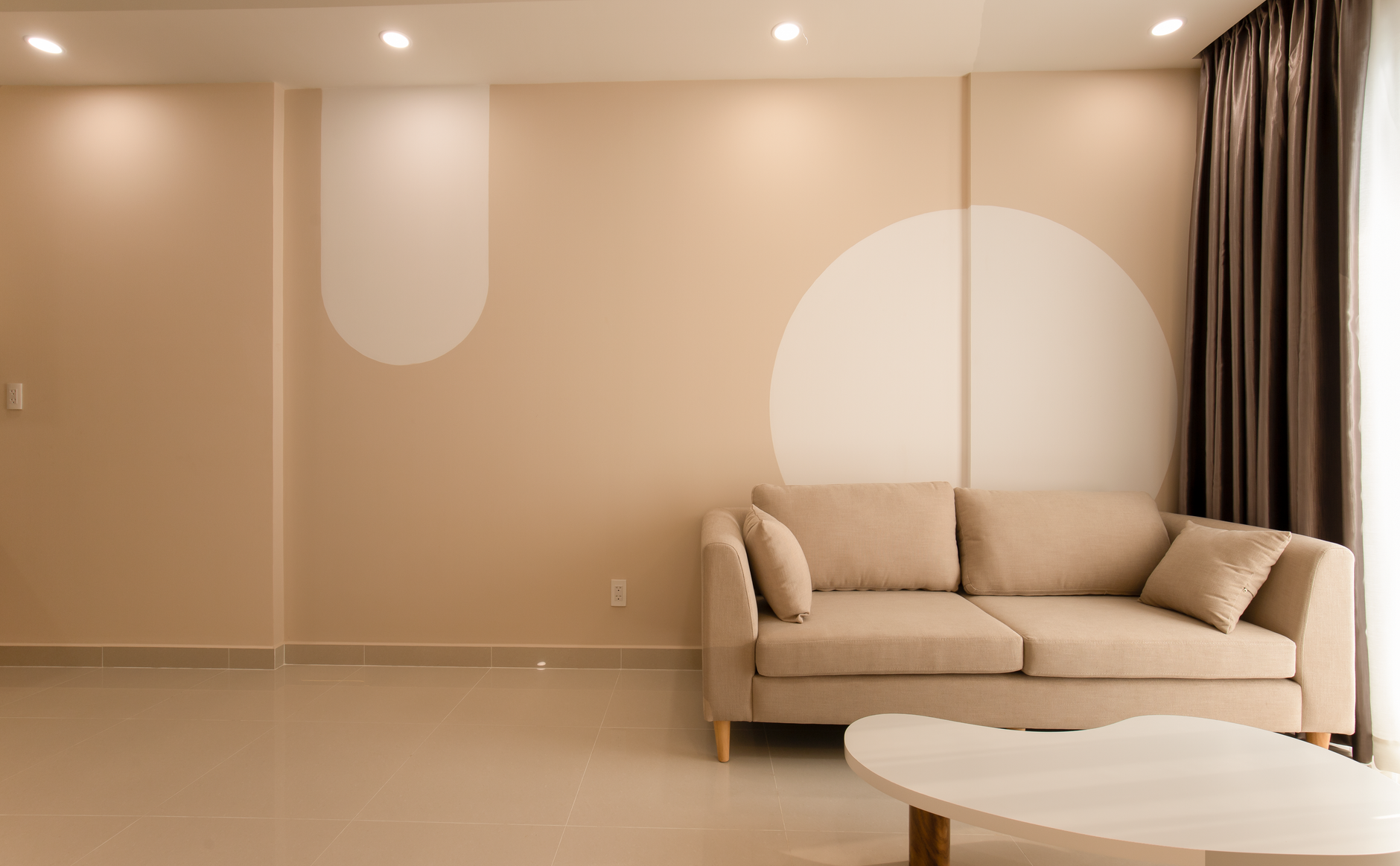
Arrange furniture so that the main seat, sofa or bed has a clear view of the room’s entrance, is not directly in line with the door, and has solid support — a wall or headboard — behind it. Keep the path between doorway and window open. That combination is what feng shui calls a calm room, and it maps closely onto how people actually experience a space.
What is the “commanding position,” and why does it keep coming up?
The commanding position means placing a bed, desk or main seat so the occupant can see the door without being directly in front of it or with their back to it. It recurs across Form School and BTB advice because it describes a genuine, checkable physical relationship, not a symbolic one.
In Form School (Xingshi) thinking, which reasons from landscape and sightlines rather than compass direction, this comes down to being able to see who or what is entering a space before they are on top of you. There’s an ordinary explanation for why this feels calmer: a chair or bed facing a door, but off to one side of it, lets the eye register movement early rather than being startled by it. A separate article on this site sets out what the commanding position is and why it recurs across different schools, and another looks specifically at what a “command view” of a room means in practice, room by room.
Does furniture placement really change how a room feels to move through?
Yes, in a way that has nothing to do with symbolism. A sofa, table or cabinet placed across a natural walking line forces people to detour around it every time they cross the room, and that friction accumulates. Feng shui treats this as blocked chi (qi) — energy or flow, in the broadest translation of the term — but the practical version of the claim doesn’t need the vocabulary: furniture that interrupts the shortest path between a room’s doorways and its windows makes the room harder to use and, over time, more irritating to be in.
This is covered in more depth in a piece on how furniture placement affects circulation in a home, which looks at pinch points, dead-end arrangements and rooms where every route runs through the middle of the seating.
Where should the main seating go in a living room?
Seating typically works best against a solid wall, angled so each seat has a view of the room’s main entrance, with a low table or rug used to anchor the group rather than leaving furniture floating at the room’s edges. The goal, in both practical and feng shui terms, is a cluster people can talk across rather than a row facing a screen.
Conversation-based living room layouts are the subject of a dedicated guide on how a living room should be arranged for conversation, and there is a separate, narrower piece on where a sofa should go in a living room specifically — including why a sofa with its back to an open doorway is one of the most consistently flagged arrangements across schools.
Does the same logic apply to the bedroom?
The bed is treated as the single most important piece of furniture in the home across nearly every branch of feng shui, and the reasoning given is consistent: it should be placed so the sleeper can see the door from bed, without being directly aligned with it or wedged into a corner with no clear sightline at all. Headboards against a solid wall are preferred over a bed floating with its head toward a window.
Bed placement is covered in detail in where the bed should go in a bedroom, and headboard support specifically in how a headboard should be positioned. None of this is medical advice on sleep — for concerns about sleep quality or insomnia, that’s a matter for a doctor, not a layout guide.
Does it matter which school of feng shui you’re following?
It matters more than most English-language advice admits. Form School reasons from the physical shape of a room and its sightlines; classical Compass School (Liqi) adds directional calculation tied to a compass reading and a person’s or building’s specific orientation; the Western Black Sect (BTB) adaptation, which is where most Western “sofa against the wall” advice actually comes from, drops the compass work almost entirely and maps a bagua — a symbolic eight-sided diagram — from the front door instead.
These systems agree on some things — the commanding position among them — and disagree on plenty of others, including which wall is significant and why. A room can satisfy Form School’s sightline logic and fail a Compass School direction test, or the reverse. That contradiction is explored directly in why feng shui rules contradict each other so often, and in Form School versus Compass School, which lays out where the two traditions actually part ways.
What about open-plan rooms, where there isn’t one clear “layout” to begin with?
Open-plan spaces are harder to calm precisely because they lack the walls that would otherwise define seating, sleeping and working zones. Feng shui’s usual response — used across most schools, regardless of the underlying disagreement on direction — is to use furniture itself, rugs, or partial screens to mark out separate functional areas rather than leaving one undifferentiated floor.
This is set out at length in how an open-plan space should be divided, which covers where a sofa back, a bookcase or a change of rug can do the job a wall would otherwise do.
How much does light and air matter, separate from furniture position?
Considerably — and this is one area where the practical and the traditional case for calm overlap almost completely. A room with blocked natural light, poor airflow or furniture stacked in front of a window reads as heavy and stagnant in feng shui terms, and is also, on ordinary grounds, harder to live in day to day.
What to do about a window that’s obstructed by furniture, a tree, or a neighbouring structure is covered separately in what feng shui says about blocked windows. The wider question of daylight, ventilation and how furniture should sit relative to a room’s light sources is the subject of the site’s Light & Air section as a whole.
What is yin and yang doing in a discussion about furniture?
Yin and yang, in this context, describe a balance between stillness and activity, soft and hard, dark and light — and a room arranged entirely one way (all hard edges, all bright light, all activity) tends to feel less restful than one with some contrast. It’s a framework for balance rather than a set of measurements.
A fuller explanation of the concept, and how it’s applied to a single room rather than a whole building, is set out in what yin and yang means in a room.
Is there actual evidence any of this produces a calmer room?
There is no controlled evidence that furniture placement affects fortune, health or relationships, and this site does not claim there is. What can be said with more confidence is narrower: clear walking paths, visible doorways, solid backing for seating, and unobstructed windows are also recommendations found in ordinary interior design and environmental psychology, for reasons that have nothing to do with chi.
Where feng shui and practical design overlap, the case for a layout is strong regardless of which tradition you credit. Where they diverge — a directional rule with no sightline logic behind it, for instance — it’s worth saying so plainly rather than dressing up a preference as a law. A broader look at what can and can’t be verified about the practice sits in is there evidence for feng shui. For a room-by-room breakdown of specific placement questions — bedroom, kitchen, home office, nursery — the Room by Room archive and the Layout & Furniture archive cover each in turn.
None of the above is medical, structural or tenancy advice. Where a layout question intersects with a lease, a renovation, or a genuine sleep or health concern, that’s a matter for a qualified professional rather than a feng shui guide.
About this site. Feng Shui Pack explains what the feng shui tradition holds and which school holds it, from published sources. Feng shui is a tradition of placement and orientation, not a science: nothing here will bring you wealth, health, luck or a relationship, and we never claim otherwise. Where a suggestion has an ordinary practical reason — daylight, airflow, sightlines, less clutter — we say so; where it does not, we say that too. This is not medical, financial, legal or tenancy advice. If a decision matters, talk to a professional in that field.