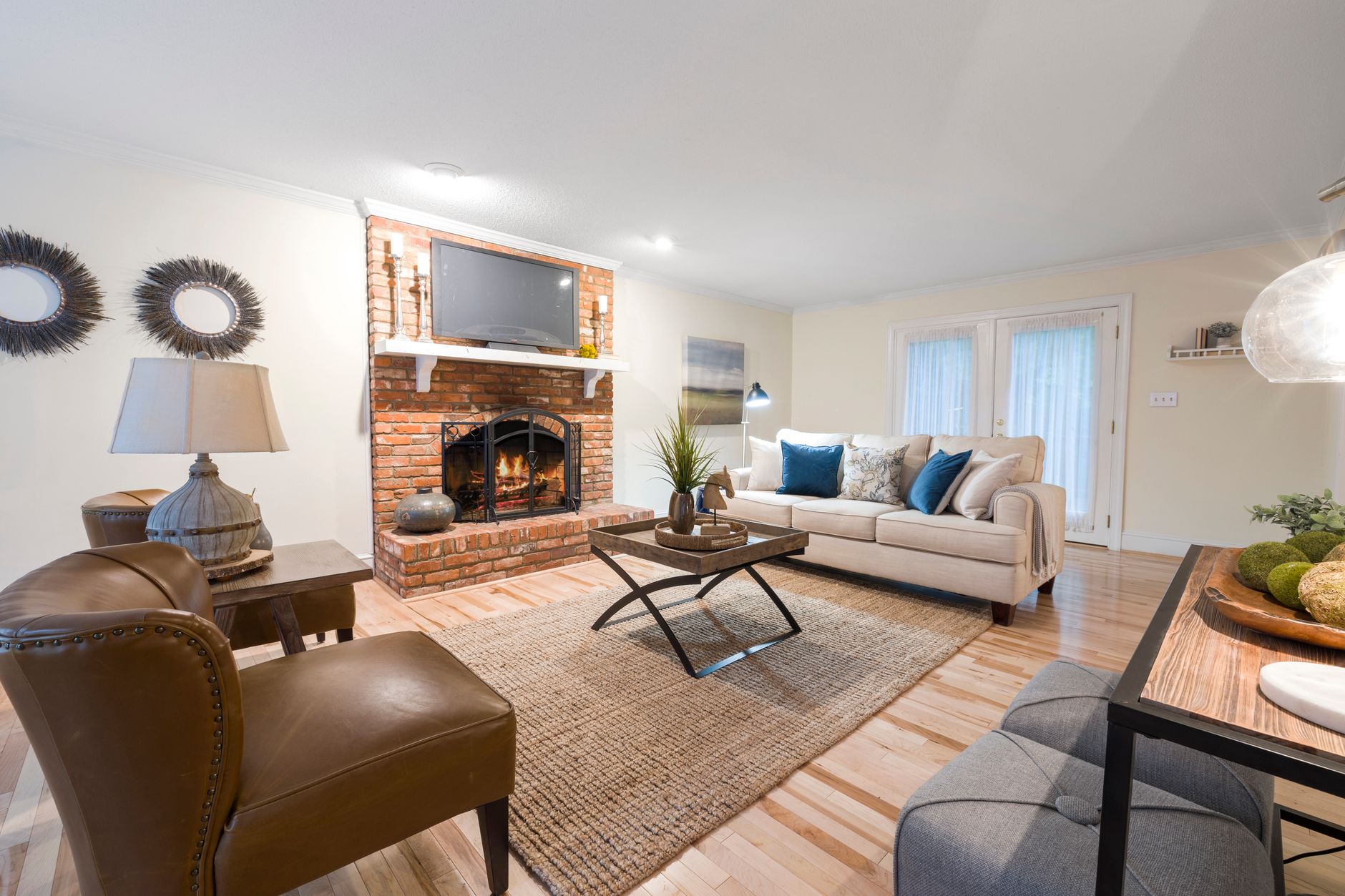
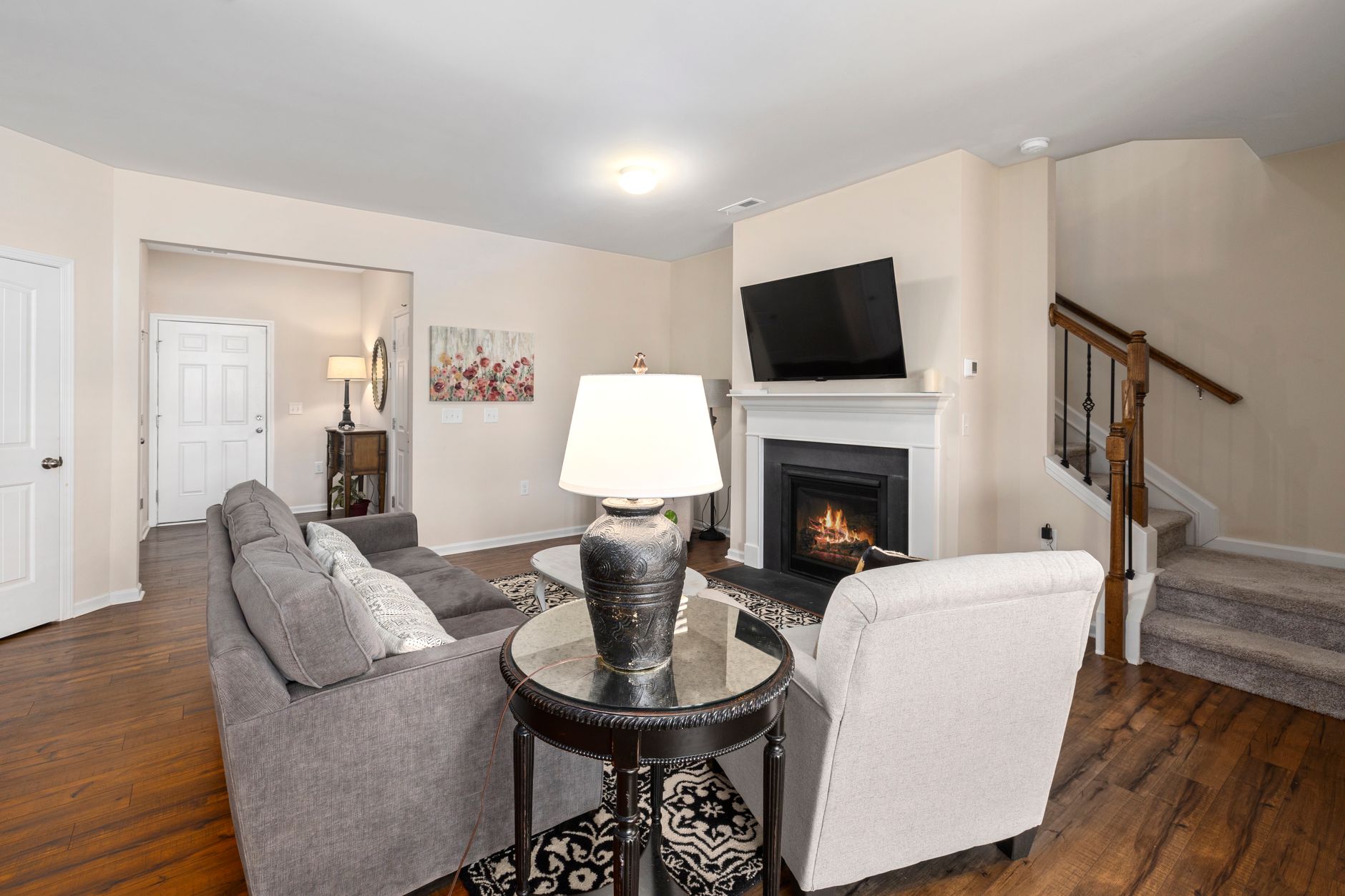
A living room arranged for conversation puts seating in a closed loop facing inward, not lined against walls facing a screen, with at least one seat able to see the door. This is standard interior design as much as feng shui — the tradition simply gives that layout a name and a rationale.
What does feng shui actually say about seating arrangement?
The recurring principle is the commanding position: a seat placed so the person in it can see the main entrance to the room without being directly in line with it, ideally with a solid wall behind rather than a window or open doorway. This idea appears across Form School (Xingshi) reasoning and has been carried into the BTB (Black Sect) adaptation that dominates most English-language feng shui writing. The two schools disagree on plenty, but not on this. A fuller account of the concept is on the site’s page on the commanding position.
Applied to a living room, this usually means the main sofa is not backed onto a window or set with its back to the doorway. Practitioners commonly suggest treating the sofa the way Form School treats a chair at a desk or a bed against a wall: anchored, with a clear sightline to who enters. The site’s dedicated guide to where a sofa should go in a living room covers this specific placement question in more detail.
Why does facing seating matter for conversation specifically?
Furniture arranged in a closed shape — a square, a rough circle, an L — keeps people within easy speaking distance and eye contact without anyone having to turn or raise their voice. This is ordinary spatial reasoning, not exclusive to feng shui: interior designers describe the same layout as a “conversation area” or “seating cluster.”
Feng shui frames the same outcome differently. In Form School terms, an open, circulating arrangement is said to let chi move through the room rather than stall in a corner or dead-end behind a piece of furniture turned away from the group. Whether or not the energy language is accepted, the physical claim underneath it — that a room with furniture facing outward toward walls discourages people from talking to each other — holds up as ordinary observation.
Rows of seating facing a single point, such as a television, are common in modern living rooms and are not treated as wrong in feng shui writing; they are simply described as arranged for viewing rather than for conversation. The tradition does not claim one layout is universally correct — it distinguishes what a room is being arranged to do.
What counts as a poison arrow in a seating layout?
In feng shui, a poison arrow (sha chi) is a straight, sharp line — often the edge of a wall, a shelf corner, or a beam — pointed directly at where someone regularly sits. The concern is specific to prolonged exposure at close range, such as a dining chair or a favourite armchair.
In a living room, this typically means avoiding a seat positioned so it faces the sharp corner of a bookshelf or a structural column head-on for long stretches. The reasoning given is psychological and postural rather than energetic in any measurable sense: a visible, angular edge pointed at a seated body is said to keep the nervous system subtly alert rather than at ease, which runs against the point of a conversation area. The site’s longer explainer, what a poison arrow is in feng shui, sets out where this idea comes from and how literally different schools take it.
How does the coffee table figure into this?
A coffee table sits at the centre of most conversation layouts, and feng shui treatment of it is fairly practical: not too large for the room, not so low or so large that it becomes an obstacle rather than a surface, and not blocking the main walking path between the door and the seating.
Rounded or softened corners are sometimes preferred over sharp rectangular edges for tables positioned close to where people sit or walk past regularly, again on the poison-arrow logic above rather than as a fixed rule. No classical text mandates a table shape; this is a preference some contemporary practitioners state and others don’t.
Does the front door matter for a living room used for conversation?
Yes, in one specific and checkable way: a straight, unbroken line from the front door directly to the seating area is generally discouraged, because it means guests are seen and can see in before either party has settled. This is the same logic feng shui applies to two doors directly facing each other, discussed on the site’s page about two doors facing each other.
Practically, this argues for a sofa or the main seating cluster set slightly off the direct sightline from the entrance, or for a piece of furniture, screen or plant breaking that line without blocking the doorway itself. The broader question of how entrances shape the rest of a floor plan is covered across the site’s Entrances & Flow section.
Does the bagua map apply to a living room?
It can, but only within the BTB (Black Sect) framework, which overlays the bagua onto a home’s floor plan starting from the front door — a method classical Compass School (Liqi) does not use, since Compass School orients the bagua by compass direction from the building itself, not from where the door happens to sit.
Under BTB, a living room’s position within the whole home is mapped to different life areas — career, relationships, and so on — and furniture arrangement is sometimes adjusted accordingly. Readers who want the mechanics of this, and where it diverges from older Compass practice, should see how a bagua map is oriented to a home and what BTB feng shui is and why it spread. This site does not present the BTB reading as older or more authoritative than Compass School — the two are different systems with different starting points, and conflating them is one of the most common errors in English-language feng shui writing.
What about yin and yang balance in a room used for talking?
Feng shui describes yin as still, quiet and soft, and yang as active, bright and stimulating — a living room used for conversation is generally treated as needing a working balance of both rather than a tilt to either extreme.
Too much yang — hard surfaces, bright uninterrupted light, no soft textiles — is described as restless; too much yin — heavy curtains, dim lighting, very soft everything — is described as making a room feel sluggish for a group gathering. This is covered in more general terms on the site’s page on yin and yang in a room. In practical terms, a mix of hard and upholstered surfaces, adjustable lighting, and at least one element of texture or plant life is the usual suggestion — again with ordinary interior-design logic sitting directly underneath the yin-yang language.
Are there five-element considerations for a conversation area?
Some practitioners apply the five elements — wood, fire, earth, metal, water — to a living room’s colour palette and materials, aiming for a mix rather than a single element dominating. This draws on the productive cycle, where each element is said to support the next, detailed on the site’s productive cycle page, and avoids combinations from the destructive cycle, explained separately on the destructive cycle page.
For a living room this typically means not decorating entirely in one element’s associated colours and materials — for instance, an all-metal, all-monochrome room with no wood, plant life or warm tone. The site’s overview of the five elements in feng shui explains how the system is used more broadly, including where it has no claimed practical basis beyond the tradition itself.
What isn’t feng shui claiming here?
Feng shui guidance on a living room does not claim that any particular layout will improve relationships, resolve conflict, or make gatherings more successful. Practitioners describe the reasoning as making a room more comfortable to sit in and easier to speak across — nothing more specific than that is claimed by the schools this site draws on, and no version of this reasoning should be read as counselling or relationship advice, which is a matter for a qualified professional rather than furniture placement.
For readers weighing how much of any of this rests on evidence versus tradition, the site’s separate pages on what evidence exists for feng shui and what feng shui actually claims address that question directly, without folding it into room-by-room advice.
Where to read next
For the sofa’s specific placement rules, see where a sofa should go in a living room. For the broader logic behind commanding-position seating across a whole home, the Layout & Furniture archive covers bedrooms, desks and dining tables using the same underlying principle. Readers new to the subject may want to start with the The Basics hub, and those specifically comparing schools of thought can go to Form School vs Compass School.
About this site. Feng Shui Pack explains what the feng shui tradition holds and which school holds it, from published sources. Feng shui is a tradition of placement and orientation, not a science: nothing here will bring you wealth, health, luck or a relationship, and we never claim otherwise. Where a suggestion has an ordinary practical reason — daylight, airflow, sightlines, less clutter — we say so; where it does not, we say that too. This is not medical, financial, legal or tenancy advice. If a decision matters, talk to a professional in that field.