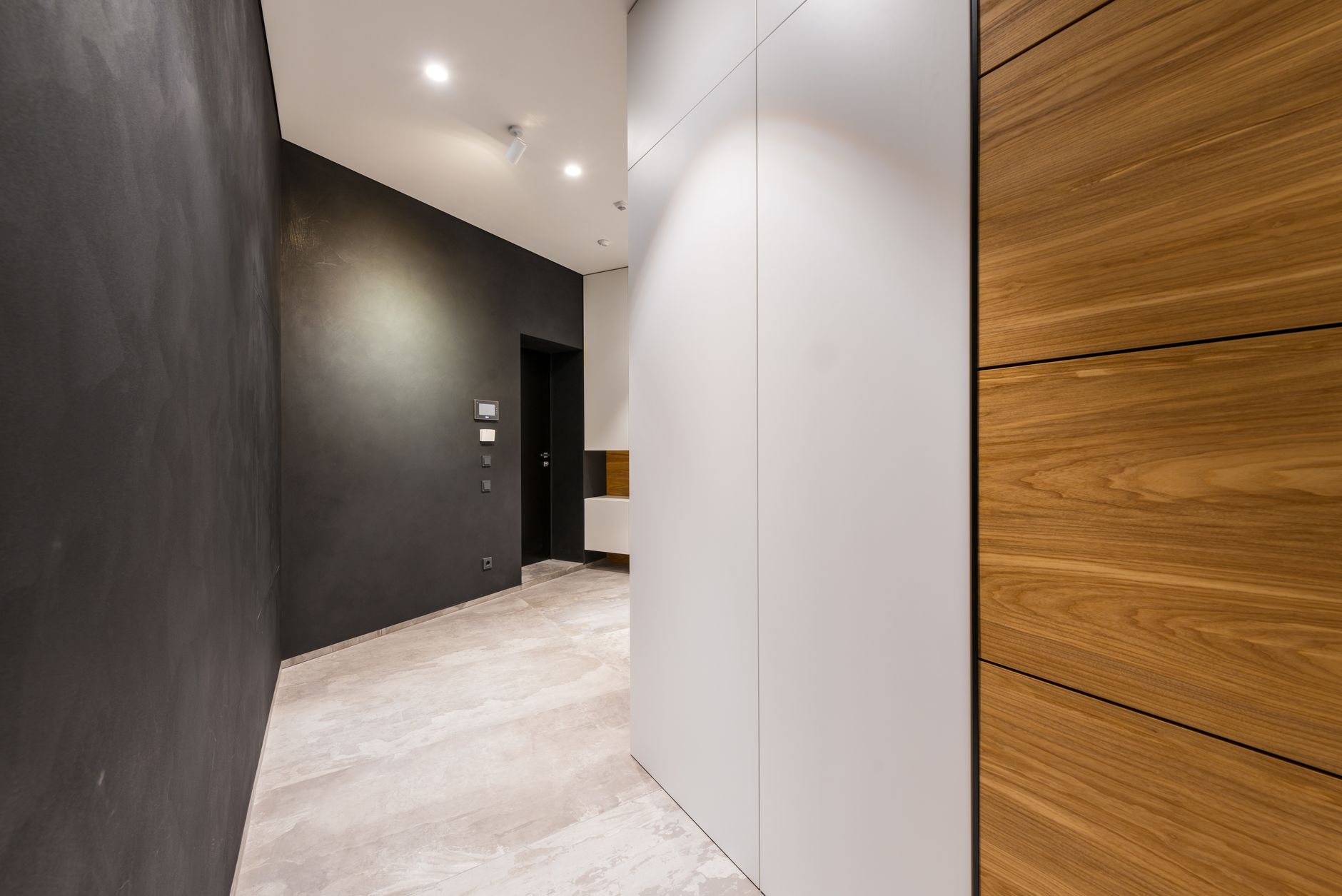
Two doors facing each other — directly opposite, on the same axis — is treated in feng shui as a point where chi (qi, commonly translated as energy or flow) is said to move too fast between the two openings, without settling in the room on either side. The concern is about movement, not about the doors themselves being flawed.
This is one of the most commonly repeated feng shui rules in English-language sources, and it is also one of the least consistently attributed. It shows up in Form School commentary on building layout, in Compass School discussions of doors and directions, and heavily in the Black Sect (BTB) adaptation that dominates most Western feng shui writing. The three don’t give identical reasons, and a reader is better served knowing which is which.
What does feng shui say about two doors facing each other?
The core claim, found across schools in slightly different forms, is that when two doors align directly across a hallway or a room, chi is thought to rush from one into the other rather than circulating through the space. In Form School reasoning, which is built on the physical shape and flow of a building, this is described using the same logic applied to any straight, unobstructed channel — a long corridor, a straight staircase facing a door, a road running directly at a building’s entrance. The concern is speed and directness, not the doors as objects.
The BTB adaptation, which layers a symbolic bagua map onto a home from the front door inward, tends to frame the same arrangement in terms of conflict — two doors “arguing,” or energy being pulled in two directions before it can settle. This is a different vocabulary from Form School’s, and conflating the two obscures where the idea actually comes from. For background on how the BTB bagua placement differs from the classical Compass School version, see Black Sect (BTB) Feng Shui: What It Is, and Why It Spread and How Do You Orient a Bagua Map to a Home?.
Why is this arrangement considered a problem at all?
The reasoning given, across schools, centres on the idea that a room needs a door to be an entry point that chi can enter and gather in, not simply pass through on a straight line to another opening. Two doors directly opposite each other are treated as turning a room, or a stretch of corridor, into a through-channel rather than a place.
There is a genuine architectural observation buried in this, separate from the symbolic reading. A corridor with doors aligned at both ends does behave differently to walk through than one with an offset door — sound, draught and sightlines all travel straight through it. Whether that constitutes a problem depends on what the corridor and rooms are for. No practical rationale is offered in classical texts beyond the tradition’s own logic about chi movement; where a physical effect exists (draught, noise transmission, lack of privacy from one room into another), it’s worth naming separately from the symbolic claim.
Does it matter which doors are involved?
Yes — the tradition draws real distinctions depending on which rooms the doors serve, and these distinctions are worth more than the general rule.
- Front door facing a back door directly: This is the version most consistently flagged across Form School and BTB sources, on the reasoning that chi entering the home exits immediately rather than circulating through it.
- Front door facing a bedroom door: Raised more often in BTB material, on the reasoning that a bedroom is meant to be a more enclosed, settled space, and a direct sightline into it from the entry undermines that.
- Bathroom door facing a bedroom or kitchen door: A recurring concern in both schools, though the stated reasoning differs — Form School commentary is more likely to reference the bathroom’s plumbing and drainage as a Water-element concern (see What Are the Five Elements in Feng Shui, and How Are They Used?), while BTB framing leans on the symbolic clash between the two rooms’ functions.
- Two bedroom doors facing each other: Discussed less often, and with less consistency — some sources treat it the same as any aligned pair, others don’t flag it specifically.
Classical Compass School treatments generally fold the question of doors into broader directional and formational analysis rather than issuing a blanket “two doors facing” rule at all — for a fuller sense of how the two systems diverge, see Form School vs Compass School Feng Shui: The Difference.
What do practitioners suggest doing about it?
Common suggestions across both major traditions include softening the direct line of sight rather than removing or moving the doors themselves, which is rarely practical in an existing building.
- Keeping one of the two doors closed more of the time, particularly where a bedroom or bathroom door faces a more public door.
- Hanging a curtain, bead screen or similbest soft divider just inside one doorway, to break the straight sightline without blocking passage.
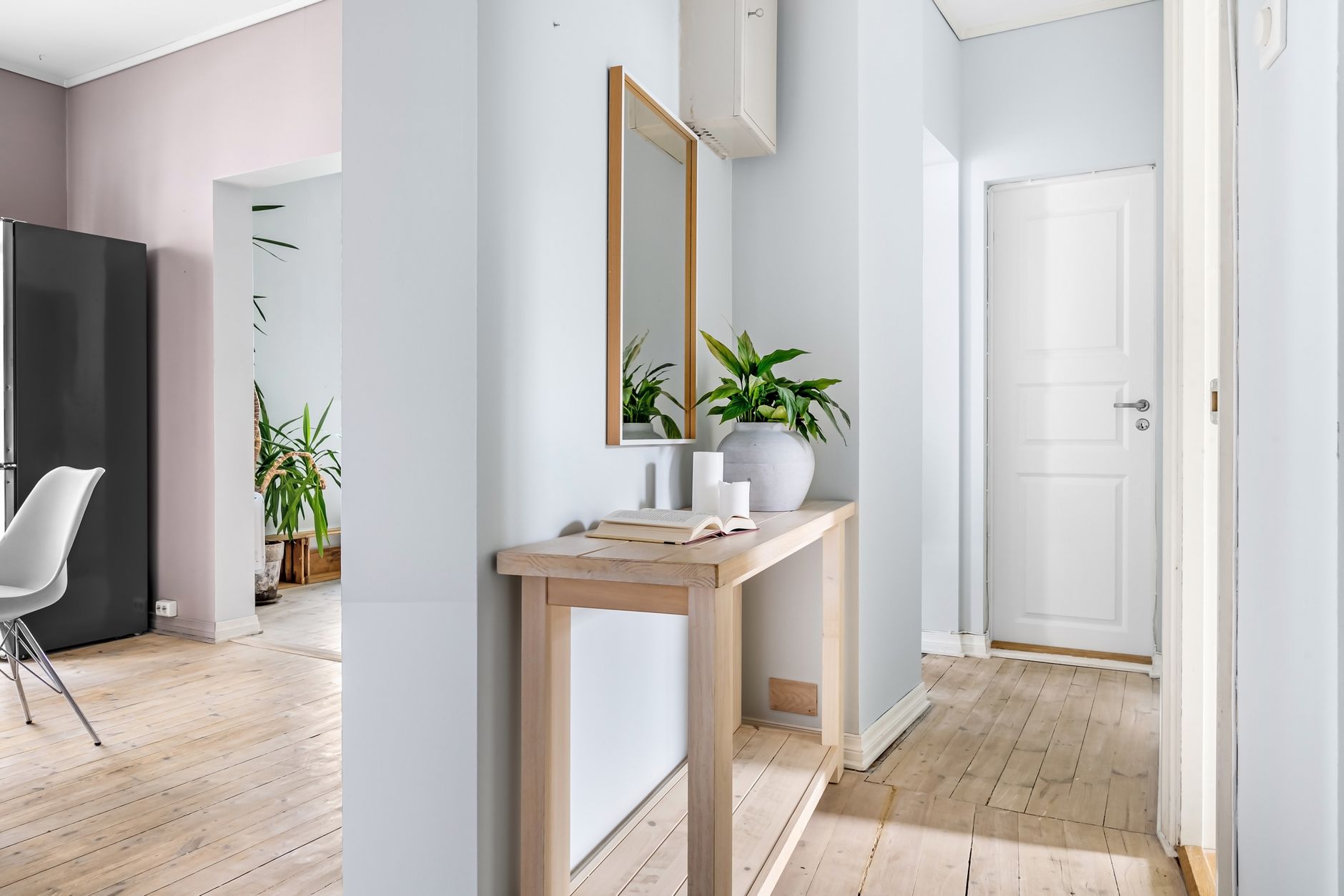
- Placing furniture — a console table, a bench, a plant — to interrupt the direct visual line between the two openings, where the corridor or room width allows it.
- In BTB practice specifically, hanging a faceted crystal or wind chime between the two doors is a frequently cited suggestion. This site does not recommend buying any particular object toward an outcome; the tradition’s own explanation is that the object is meant to slow or disperse the direct movement of chi, and readers can weigh that explanation against the alternative — furniture, layout and closed doors — on its own terms.
None of these changes are described in the sourced literature as fixing a problem in the sense of guaranteeing an outcome. They are described as adjustments intended to slow or redirect movement through a space — that is the limit of the claim, and this site won’t extend it further.
Is there a practical reason, or is this purely traditional?
Both, depending on the specific case, and it’s worth separating them.
Where two doors face each other across a short hallway, there’s an ordinary, checkable effect: less privacy between the two rooms, direct draught and noise transmission, and a corridor that reads as a pass-through rather than a place to pause. These are physical facts about how air, sound and sightlines move through a building, and they hold regardless of which feng shui school is consulted.
Where the concern shifts to symbolic descriptions — chi “rushing,” doors “arguing,” energy failing to “settle” — that is squarely inside the tradition’s own vocabulary, not a physical description of anything measurable. The two registers get blended constantly in popular writing, and this site treats them as separate claims: one checkable against how the room actually functions, the other attributable only to the school making it.
Does this apply to apartment building corridors too?
Some BTB-influenced sources extend the same concern to a front door facing a neighbour’s front door directly across a shared apartment corridor, treating it as an entry-level version of the same alignment problem. Classical Form School material is more focused on a building’s own internal layout and the approach to its main entrance than on corridor arrangements between separate dwellings, so this extension is not universal across the tradition.
Where it’s raised, the suggested approaches are the same softening measures — a door mat, a small threshold marker, keeping the door itself closed — rather than anything structural, since a resident in a shared building has no ability to alter a neighbour’s door or the corridor itself.
What about two doors in the same room that aren’t directly aligned?
A room with two doors on adjacent or perpendicular walls, rather than directly opposite each other, is treated very differently across the literature — the “facing” concern specifically describes a straight, direct line between two openings, not merely a room having more than one door.
Where a room has two entry points, the more consistently cited concern across schools is less about the doors and more about furniture placement relative to both of them — specifically, whether a bed, desk or main seating position can be arranged so a person using it can see both doors without sitting in the direct line of either. That’s the same reasoning behind the commanding position, covered in What Is the Commanding Position, and Why Does It Recur?.
How does this fit into a wider room layout?
Doors facing each other is one instance of a broader category of concern in feng shui about directness and speed through a space — the same logic applied to straight staircases facing front doors, long unbroken hallways, and beds placed in direct line with a door. Readers working through a full room or apartment are better served treating it as part of that pattern rather than an isolated rule to apply to one hallway. The relationship between open, moving chi and the calmer, settled qualities associated with yin is discussed in What Is Yin and Yang in a Room? A Feng Shui Explainer, and the underlying concept of energy movement itself is covered in What Is Chi, and What Does Energy Flow Mean in Feng Shui?.
For a broader grounding in how these schools formed and diverged before applying any single rule to a specific home, see What Is Feng Shui, and Where Does It Come From?, and for layout questions room by room, the Room by Room archive and the Layout & Furniture archive cover specific spaces in more detail than a single doorway rule can.
This article describes feng shui reasoning as reported by named schools and traditions. It is not structural, safety or tenancy advice; a hallway’s ventilation, fire egress or a door’s function within a lease should be assessed by a qualified professional or checked against local building regulations, not by feng shui guidance.
About this site. Feng Shui Pack explains what the feng shui tradition holds and which school holds it, from published sources. Feng shui is a tradition of placement and orientation, not a science: nothing here will bring you wealth, health, luck or a relationship, and we never claim otherwise. Where a suggestion has an ordinary practical reason — daylight, airflow, sightlines, less clutter — we say so; where it does not, we say that too. This is not medical, financial, legal or tenancy advice. If a decision matters, talk to a professional in that field.