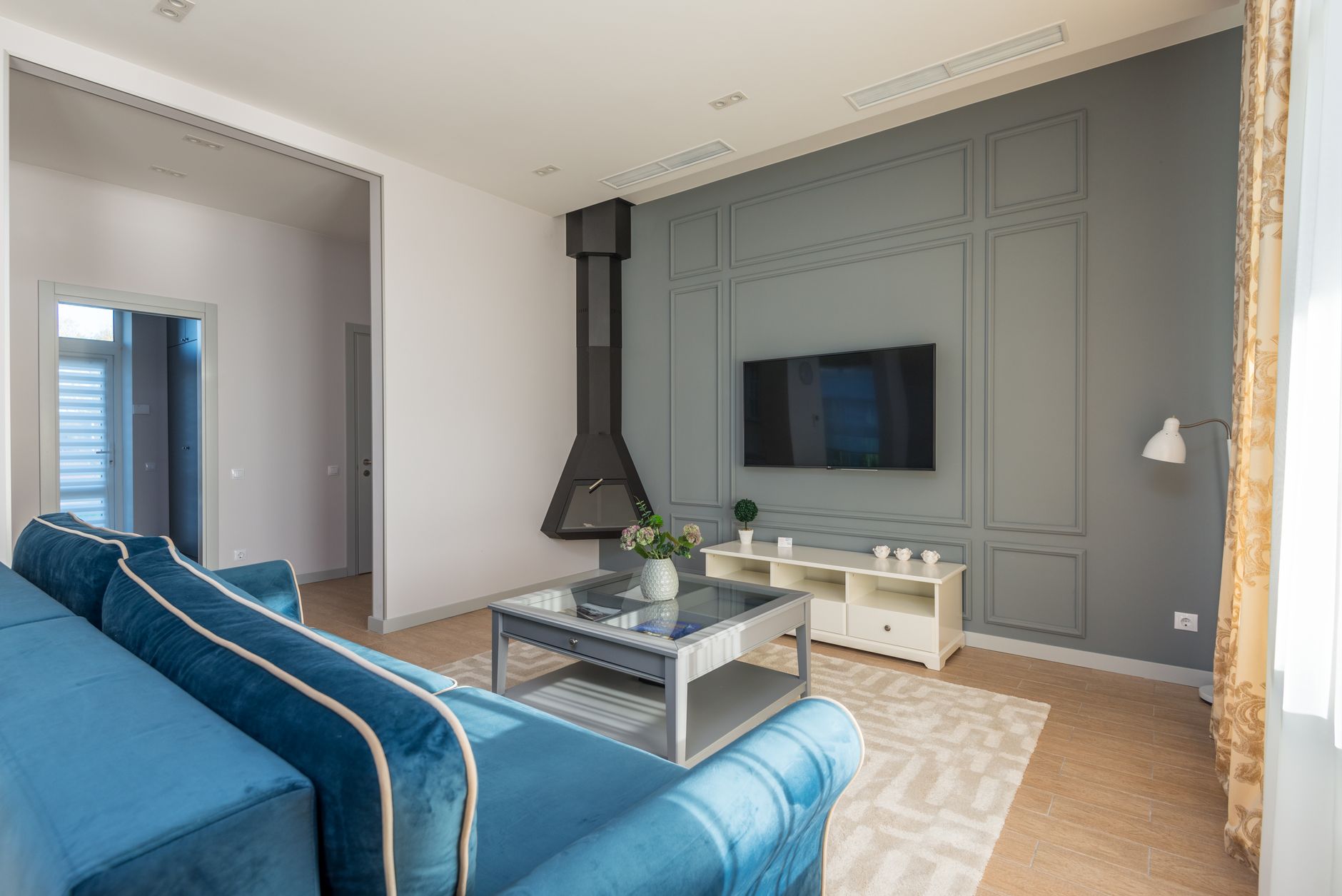
Most feng shui guidance places the sofa against a solid wall, positioned so that whoever sits on it can see the room’s main door without being directly in line with it. This is called the commanding position. Where a solid wall isn’t available, the tradition offers workarounds rather than treating the layout as broken.
What is the commanding position for a sofa?
The commanding position means the sofa is placed so a seated person has a clear view of the door into the room, but is not positioned directly opposite it, in the direct path of anyone entering. This concept appears across most schools of feng shui and is discussed at length on this site’s own explainer on the commanding position.
The reasoning given is straightforward: a person who cannot see who is entering a room is described, in Form School terms, as being in a vulnerable position. Whether or not that vulnerability is meaningful in a modern living room is a separate question — but the logic of the placement is consistent and easy to state, which is more than can be said for some feng shui rules.
Should the sofa face the front door directly?
Most schools advise against lining the sofa up directly with the door on a straight axis, and instead suggest an angled view of it. A sofa facing the door head-on, especially at some distance down a straight sightline, is sometimes discussed using the same logic applied to two doors facing each other — the concern is a fast, straight path of movement (and, in the language of the tradition, of chi, or qi, meaning the flow of energy through a space) running directly at the seating.
Practically, a sofa set at an angle to a doorway, rather than dead ahead of it, tends to also break up a long, narrow sightline through a room — which is one of the few feng shui recommendations that overlaps cleanly with ordinary interior design sense.
What does it mean for a sofa to have “support” behind it?
“Support” refers to a solid wall directly behind the sofa, rather than a window, an open doorway, or empty space. The idea, again from Form School, is that a solid surface behind seating provides a stable backdrop, while an open space behind a sofa is read as unsupported and exposed.
Where a solid wall genuinely isn’t available — an open-plan living room, a sofa that has to sit in the middle of a large space — the tradition doesn’t simply call the room unfixable. A tall bookcase, a low cabinet, or even a substantial piece of furniture positioned behind the sofa is commonly suggested as a stand-in for a wall. No mystical property is claimed for the furniture itself; it is offered purely as a physical backing.
Where does Compass School direction come into it?
Compass School (Liqi) feng shui adds a layer that Form School does not use on its own: the compass direction the sofa faces, calculated against the occupants’ personal “kua” numbers or the building’s construction period, depending on the specific method. This is a genuinely different system from the commanding-position logic above, and the two are sometimes blended in Western books without saying so.
Readers who want the actual mechanics of a compass reading — and whether a physical compass is required at all, or whether a phone app is close enough — can look at the site’s explainer on what a feng shui compass is and whether one is needed. Directional calculation is a separate exercise from simply choosing a wall to back the sofa against, and conflating the two is one of the more common sources of confusion in popular advice.
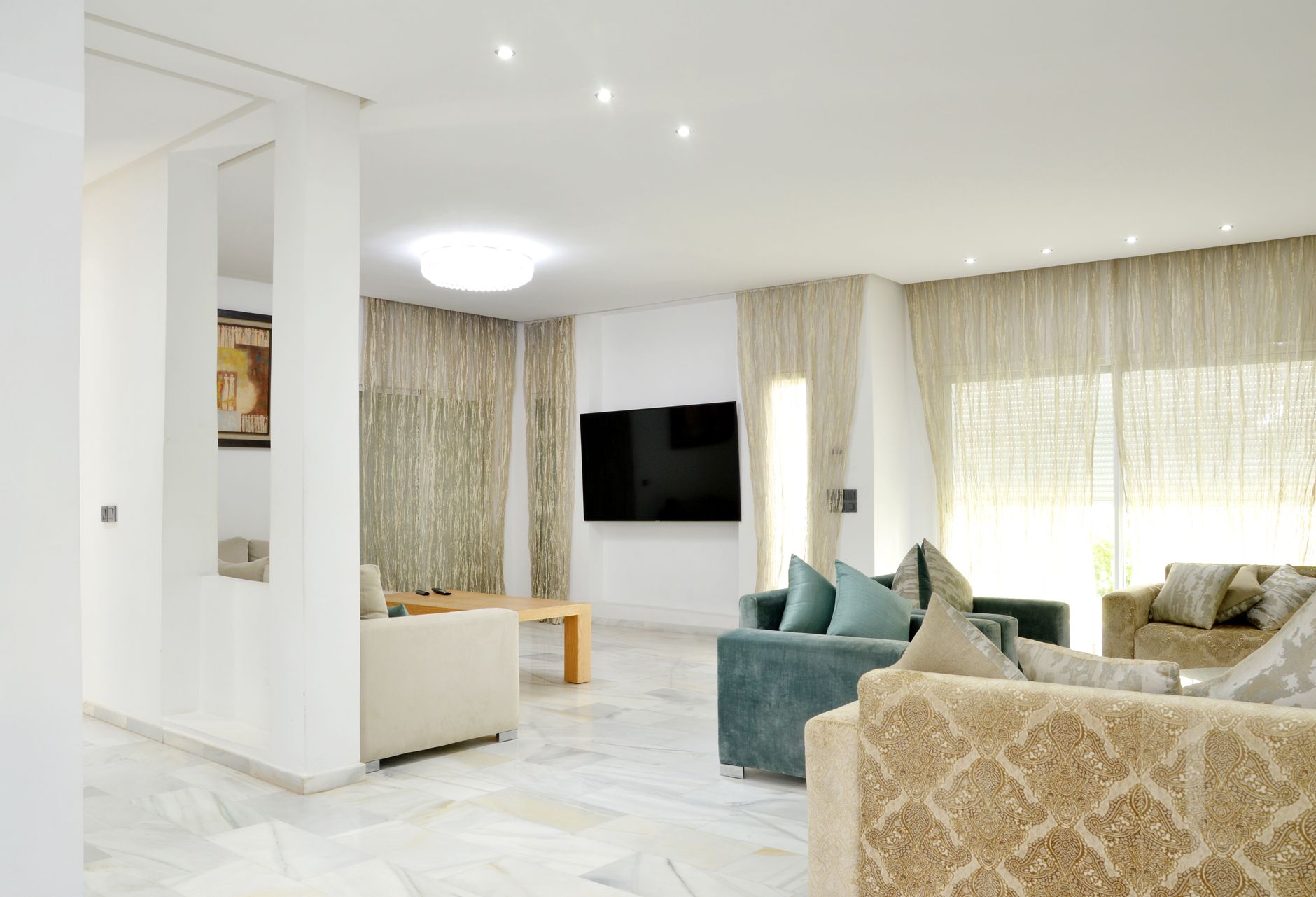
What if the sofa has to sit under a window, or in the middle of the room?
Two situations come up constantly in real living rooms, and the tradition addresses both directly rather than treating them as failures.
- Sofa under a window: commonly discussed as a weaker version of “no support,” since glass is treated as an unstable backing compared with a solid wall. Some practitioners suggest heavier curtains or a solid headrest strip along the top of the sofa as a partial fix; others simply note the room’s constraints and leave it there.
- Sofa floating in the middle of a room, with no wall behind it at all: this comes up in large open-plan spaces. The usual suggestion is a substantial piece of furniture — a console table, a bookcase, a sideboard — placed directly behind the sofa to stand in for the missing wall.
In both cases, no practical mechanism beyond the tradition itself is offered for why glass or open space specifically weakens the arrangement; it is presented as a matter of feel and precedent within Form School rather than something that follows from physics.
Does the sofa need to avoid “poison arrows”?
A poison arrow, in Form School terms, is a straight, sharp line pointed at a seating or sleeping position — commonly a corner edge, an exposed structural beam, or the corner of another piece of furniture aimed directly at where someone sits. The full explanation of the concept, including where it comes from and how seriously different practitioners take it, is covered separately in what a poison arrow is in feng shui.
Applied to a sofa specifically, the advice is usually to avoid positioning it so that a sharp corner — a fireplace edge, a bookshelf corner, an exposed beam overhead — points directly at where people’s heads or backs would be while seated. As with several rules above, this is stated as tradition rather than as a claim with a demonstrated physical effect.
How does yin and yang apply to a living room sofa?
Yin and yang describe complementary qualities of a space — yin toward stillness, softness and rest; yang toward activity, brightness and movement. A living room built around conversation and shared activity is generally read as needing more yang qualities than a bedroom does, which is one reason feng shui writers tend to recommend brighter lighting, harder edges and more circulation space around a sofa than they would around a bed. The concept itself is explained more fully in what yin and yang mean in a room.
This has a genuine overlap with ordinary living-room design: a sofa arrangement that allows people to face each other, with enough open floor for movement and enough light to read a room’s mood, functions socially in a way that a sofa jammed into a dark corner facing a wall does not. Feng shui gives that arrangement a vocabulary; it does not invent the underlying need for it.
Is there a practical reason for any of this?
Some of it, yes. A sofa with a solid wall behind it and a view of the door is also, in plain terms, easier to hold a conversation from, less exposed to draughts from an open doorway, and less likely to have someone startled by a person entering behind them. A room where the sofa doesn’t sit directly in a walking path is also simply easier to move through.
Other parts of the guidance — the specific claim that a window weakens the arrangement, or that a corner “aims” something harmful at a person sitting nearby — are not supported by a stated mechanism beyond the tradition’s own internal logic. That doesn’t make the placement wrong to follow; it means the reasoning is aesthetic and traditional rather than physical, and it’s worth being clear about which is which. The wider question of what feng shui does and doesn’t claim to demonstrate is addressed directly in whether there is evidence for feng shui, and what kind exists.
Where does the advice come from — which school?
Most of the commanding-position and “support” reasoning discussed here comes from Form School (Xingshi), which reads a room primarily through the physical shape of a space and the placement of solid objects within it. Directional calculation belongs to Compass School (Liqi). A third stream, the Black Sect or BTB adaptation developed in the West in the twentieth century, tends to skip compass calculation altogether and orients everything from the entrance door — a method described in Black Sect (BTB) feng shui, and why it spread.
Popular sofa-placement advice online is very often BTB without saying so, which is one reason the same room can get contradictory instructions from different sources. The differences between the schools, and why they persist rather than converging on one answer, are laid out in Form School versus Compass School and in the site’s broader piece on why feng shui rules contradict each other so often.
Readers working through a full room rather than a single piece of furniture may also find it useful to look at the bagua as a whole — covered in how to orient a bagua map to a home — and the broader collection of layout guidance in the site’s Layout & Furniture archive, alongside room-specific advice in Room by Room. None of this constitutes structural, electrical or safety advice about a home; for anything involving load-bearing walls, wiring, or a tenancy agreement, the relevant professional or landlord is the correct source, not a feng shui guide.
About this site. Feng Shui Pack explains what the feng shui tradition holds and which school holds it, from published sources. Feng shui is a tradition of placement and orientation, not a science: nothing here will bring you wealth, health, luck or a relationship, and we never claim otherwise. Where a suggestion has an ordinary practical reason — daylight, airflow, sightlines, less clutter — we say so; where it does not, we say that too. This is not medical, financial, legal or tenancy advice. If a decision matters, talk to a professional in that field.