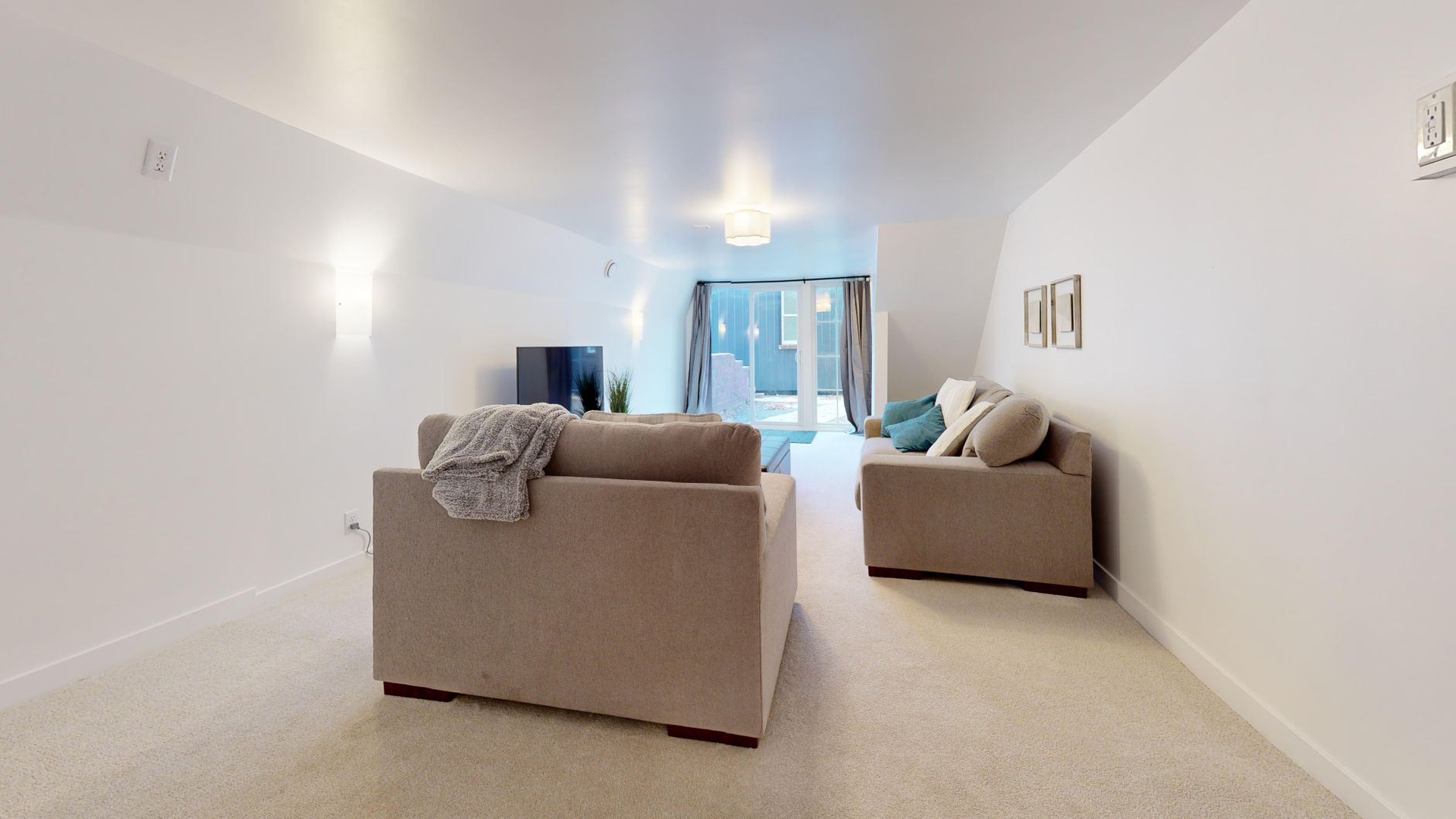
Feng shui does not forbid a television in the living room. What it offers is a set of arguments — not always consistent with each other — about where the screen should sit relative to the seating, the door, and the room’s main “commanding” spot. Form School treats it as a large reflective object to be managed like a mirror; the BTB adaptation treats it as an element sitting inside a bagua zone. Neither tradition is unanimous, and neither is a settled body of engineering.
Why is a television treated as a “fire” object?
In the five-element framework used across most feng shui schools, a television is usually classed under Fire — a source of light, heat, and activity, similar to a lit candle or a working fireplace. This is a classification exercise more than a technical one: screens generate warmth and a flicker of light, and traditional element sorting groups anything bright, active, or heat-producing under Fire rather than under Water or Metal.
The classification matters because of how the five elements are said to interact. In the productive cycle, Wood feeds Fire; in the destructive cycle, Water dampens it. A practitioner working through the productive cycle of the five elements might suggest a wooden console table under a TV supports the “fire” object it holds; one thinking about the destructive cycle might avoid placing the same screen directly beside an aquarium or a water feature, since Water is said to weaken Fire. This is symbolic reasoning drawn from the five-element system as a whole, not a testable claim about the object itself.
Does the TV wall matter more than where the sofa faces?
In Form School terms, the sofa’s position is treated as more important than the television’s. The classical concern is the seating, not the screen — specifically whether the main seat occupies what is called the commanding position.
The reasoning behind the commanding position is architectural, not supernatural: a seat with a solid wall behind it and a clear view of the room’s entrance is easier to relax in than a seat with its back to a doorway, because nobody can approach unseen. Once the sofa is fixed in that position, the television is usually placed on the wall it faces — which in most living rooms is simply the wall opposite the door, for the same reason the seating is there. The TV wall, in other words, is often decided as a side effect of seating logic rather than as its own rule. The sofa placement guide and the piece on arranging a living room for conversation both work from that same starting point.
Should the TV sit directly opposite the seating, or to the side?
Both arrangements appear in feng shui writing, and the two schools of thought do not fully agree.
- Some Form School guidance treats a TV directly facing the main sofa, at close range, as a minor version of a “poison arrow” — a fixed, hard-edged object aimed straight at where people sit for long periods. The concept of a poison arrow is usually applied to sharp corners and exposed beams; applying it to a flat screen is a looser extension of the same idea, and some practitioners do not apply it here at all.
- Other guidance is unconcerned with the angle and focuses only on comfortable sightlines and screen glare — arguing that a TV should sit where it can be viewed without neck strain and without a window throwing reflections onto it, which is a straightforwardly practical concern rather than a feng shui-specific one.
Where the two views converge is on distance and scale: an oversized screen crowding a small room is generally discouraged in both practical design advice and feng shui writing, for the same reason — it dominates a space meant for conversation.
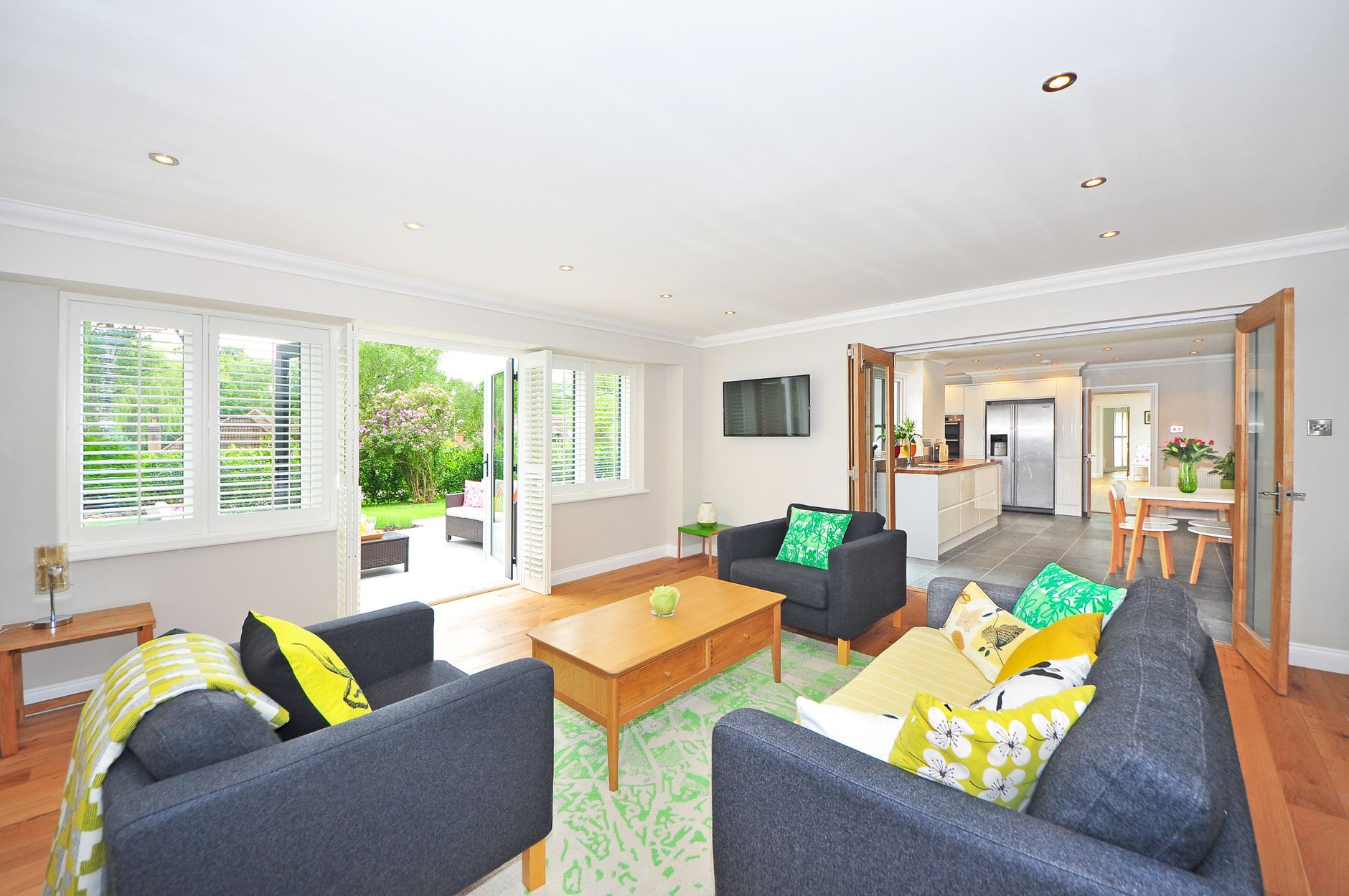
What about the television as a “black mirror” when it is switched off?
A screen that has gone dark behaves, briefly, like a mirror — it holds a faint reflection of the room. Some feng shui writing extends the tradition’s caution around mirrors to this surface, on the reasoning that a reflective black panel can “double” the activity of a room or unsettle a seating area much as a mirror facing a bed is said to do in bedroom guidance. This concern is far more developed for bedrooms than for living rooms; the parallel with mirrors in a bedroom is the source most writers borrow from, and it is worth noting explicitly that this is an extension of an existing rule rather than a separate rule of its own. No classical text addresses screens directly, for the obvious reason that they postdate the texts.
Where does the bagua map come into this?
In the BTB adaptation, the living room is often mapped onto the bagua grid to identify its Career, Fame, Relationships or other zones, and a television is then discussed in terms of which zone it happens to occupy — a TV in the “Fame” area, for instance, might be read as reinforcing that zone’s fire association, since Fame is itself linked to Fire in the BTB scheme. Classical Compass School feng shui does not use the bagua this way at all; it ties directions to a compass reading of the building rather than to the position of the front door. The difference between the two methods is explained in the piece on orienting a bagua map to a home, and the broader split between the two approaches is covered in Form School vs Compass School. Readers who want the BTB system’s own history and reasoning can see it laid out in Black Sect (BTB) feng shui explained.
Is there a practical, non-mystical reason for any of this?
Some of it, yes. A television that faces a window will pick up glare, which is a straightforward viewing problem rather than a feng shui one. A screen mounted with visible cable clutter running across the floor creates the kind of visual disorder that most design guidance — feng shui included — treats as unwelcome, on the reasonable basis that a tidier room is easier to relax in and safer to walk through. A television sized to the room rather than the wall avoids the space feeling dominated by one appliance.
Where there is no practical rationale — the fire classification, the poison-arrow reading of a flat screen, the black-mirror concern — the honest description is that these are symbolic extensions of older rules, offered without an engineering or safety basis. That does not make them meaningless to someone who finds the framework useful; it means they should not be mistaken for facts about the room.
Do Form School and BTB actually disagree here?
Yes, and plainly. Form School’s attention stays on the physical logic of the room — sightlines, solid walls at the back of seating, distance from sharp angles. BTB’s attention moves to symbolic zones drawn from the bagua and to elemental associations layered onto the object itself. A reader following one system alone will get a consistent answer; a reader mixing both, as most popular English-language advice does without saying so, will find contradictions. That pattern is not unique to televisions — it is addressed directly in why feng shui rules contradict each other so often, and readers new to the subject may find an explainer on feng shui’s origins useful before applying any single rule as though it were universal.
A note on what this article is not
This is not electrical, structural or interior-design advice. Mounting a television safely, managing weight on a wall, and wiring an outlet are matters for a qualified installer or electrician, not a feng shui guide. For the wider furniture logic a living room is built from, see the Layout & Furniture archive; for how feng shui treats each room of a home in turn, the Room by Room archive covers the rest of the house.
About this site. Feng Shui Pack explains what the feng shui tradition holds and which school holds it, from published sources. Feng shui is a tradition of placement and orientation, not a science: nothing here will bring you wealth, health, luck or a relationship, and we never claim otherwise. Where a suggestion has an ordinary practical reason — daylight, airflow, sightlines, less clutter — we say so; where it does not, we say that too. This is not medical, financial, legal or tenancy advice. If a decision matters, talk to a professional in that field.