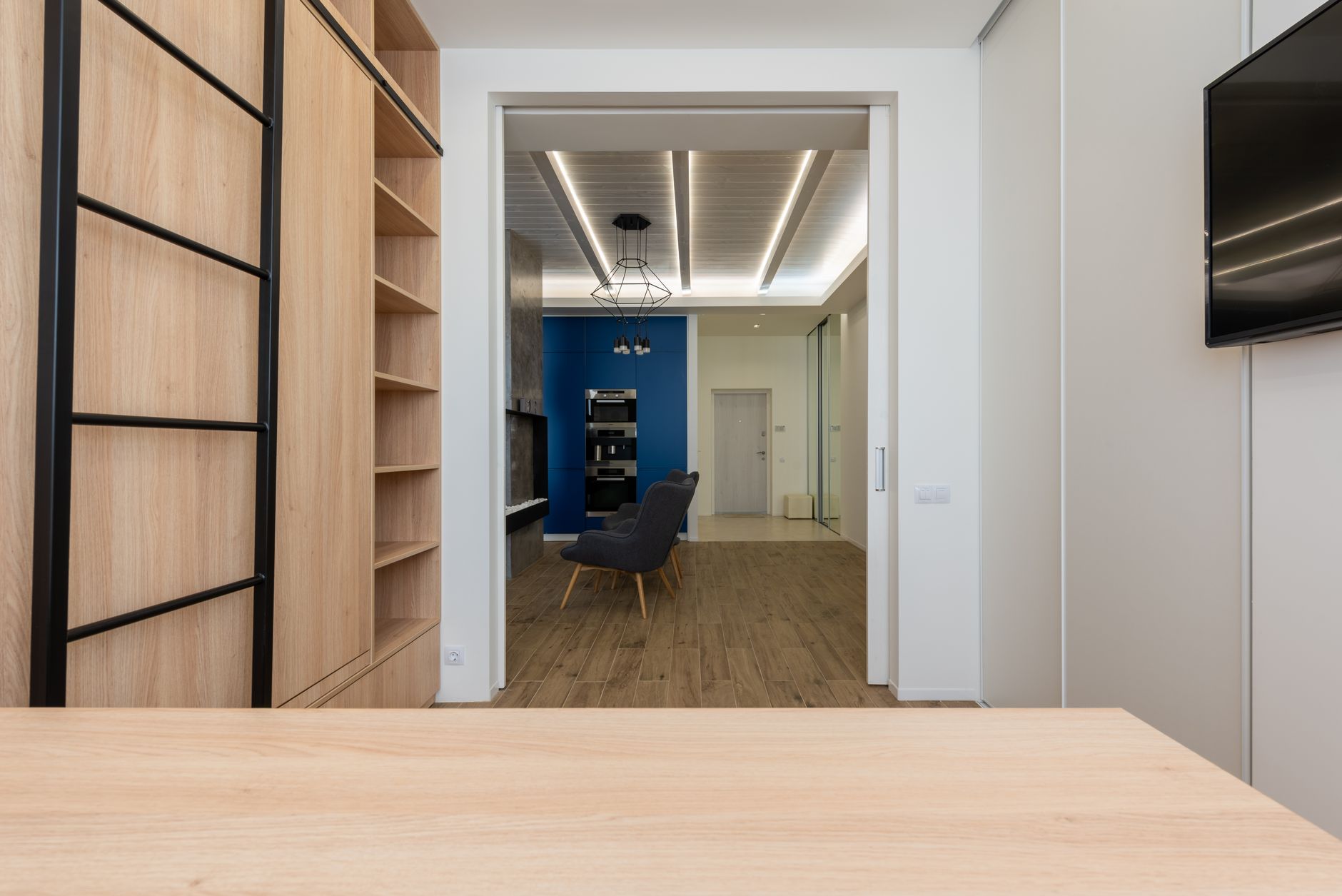
You separate the two zones by breaking the sightline and the floor plane between them — a screen, a bookcase, a change in rug, or a half-height partition — and by treating the bed as the more protected, more enclosed of the two areas. Feng shui frames this as a yin-yang distinction: sleep is a low-activity, restorative state and needs a quieter, more enclosed setting than a sofa or desk does.
What is actually being separated here?
Not the room’s square footage — its two functions. A bed is used for something passive and vulnerable (sleep); a sofa, desk or dining table is used for something active and alert. In feng shui’s yin-yang framework, sleep is classified as yin and daytime activity as yang. Mixing the two in a single undivided space is thought to unsettle the yin function more than the yang one, because sleep is more sensitive to visibility, movement and light than sitting or working is. That reasoning is a matter of tradition, not measurement — but the underlying practical point, that people sleep better in a space that feels enclosed and separate from daytime traffic, has ordinary support outside feng shui too.
Why does the bed need more separation than the sofa?
Because Form School practice treats the bed as the single most important piece of furniture in a home, and gives it the strictest placement rules of anything in a room. The core one is the commanding position: a bed placed so the sleeper can see the door without lying directly in line with it, with solid wall behind the headboard rather than open space. A sofa is not held to the same standard in any school of feng shui — it is a daytime seat, not a nightly resting place, and the tradition is far less prescriptive about it.
This is also why, in a one-room layout, the bed is usually the anchor you place first and build the division around, not the last thing you fit in. The site’s guide to where the bed should go in a bedroom covers the commanding position in more detail, and it applies just as much to a studio as to a dedicated bedroom.
How is a single room actually divided in practice?
None of the following require structural work, and all of them are common in studio and one-room layouts specifically because they create a visual and functional break without a wall:
- A bookcase, low cabinet or open shelving unit set at a right angle to a wall, back facing the living side.
- A folding screen — a genuinely traditional object in Chinese interiors, not a feng shui invention, and one of the few dividers that can be moved or removed entirely.
- A change of rug defining the sleeping zone’s floor area, discussed further in the guide to rugs and floor coverings.
- A curtain or hanging panel, which also affects how light and sound move between the two zones — see the piece on curtains and window coverings.
- A change in ceiling or floor lighting layer, so the sleeping side reads visually darker and calmer than the living side after dark.
Whichever method is used, the practical test is the same one Form School applies to any layout: does it break the direct sightline from the entry or the living area straight onto the bed. If someone standing at the front door can see the whole bed at a glance, the two zones are functioning as one, whatever furniture sits between them.
Does the divider need to be solid?
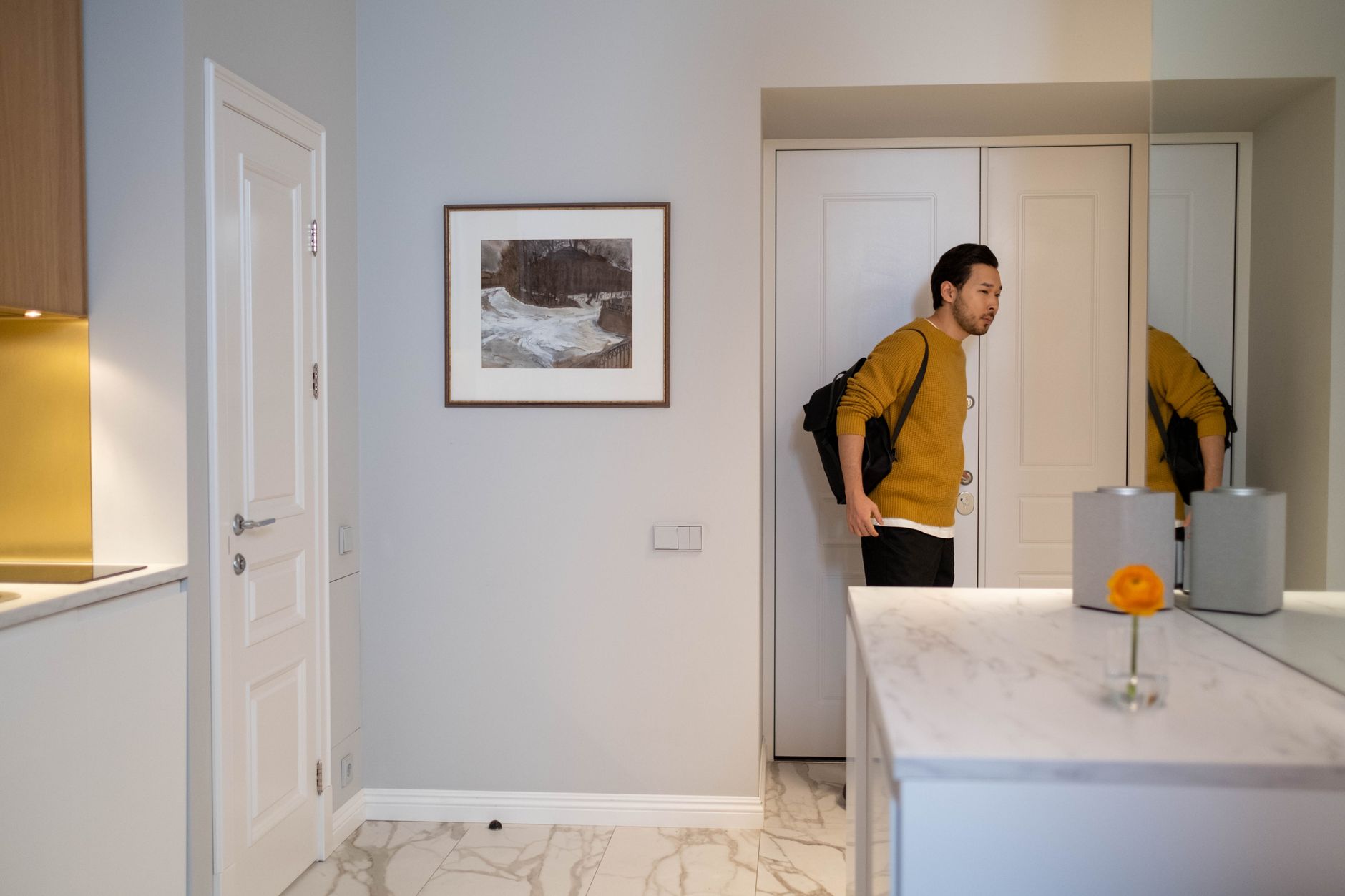
No — and this is a point of disagreement between practitioners. Some argue a divider only works if it is opaque and roughly torso-height or taller, fully blocking sightlines; others, more associated with the Western Black Sect (BTB) adaptation of feng shui, are satisfied with a symbolic break — a rug edge, a change of lighting, an open shelf you can partly see through. Classical Form School texts are concerned with sightlines and enclosure specifically, so a shelving unit that still lets the bed be seen from the sofa does less, in that framework, than a taller screen does. There is no single ruling here; the honest position is that schools differ and it’s worth knowing which one a piece of advice is drawing from — the article on why feng shui consultants disagree with each other goes into why this happens so often.
What if the room genuinely can’t be divided?
This is the ordinary condition of a studio apartment, and feng shui has a fairly consistent answer to it: where you cannot build a wall, work with orientation, furniture height and lighting instead. Keep the bed against the most solid wall available, out of the direct line of the entry door where possible, and use a lower piece of furniture — rather than nothing at all — as the boundary marker even if it doesn’t fully block the view. The dedicated guide to applying feng shui in a studio apartment covers this specific case at length, and the broader Small Spaces archive deals with the general problem of rooms that have to do more than one job. The wider Layout & Furniture hub is the place to start on furniture placement more generally.
Does the desk or dining table count as part of the “living” side?
Yes, and it raises its own version of this same problem. A desk or dining table set up inside a room that also contains the bed is functionally a second activity zone, and the tradition treats work and rest as needing separation for the same yin-yang reasons already described. Where a desk has to sit in a bedroom because there is nowhere else to put it, the site’s piece on a home office in a bedroom addresses that overlap directly, and it is worth reading alongside this one if the one-room layout in question includes both a bed and a workspace, not just a bed and a sofa.
Is there a bagua approach to this, and does it apply here?
The bagua — a grid of eight (pa kua) life areas overlaid on a floor plan — is sometimes used to argue that sleeping and living zones should sit in particular compass or entry-based positions. This is a BTB-school tool; classical Compass School feng shui uses a very different, direction-based method, and the two should not be blended without saying which one is being used. For the specific problem of dividing one physical room into two functions, the bagua adds very little — the more directly useful frameworks are the commanding position and yin-yang zoning covered above. The article on mistakes people make applying the bagua explains where this tool is overused.
What isn’t feng shui here?
Sleep quality has a large body of research behind it that has nothing to do with feng shui — light exposure, noise, room temperature and screen use before bed all measurably affect sleep, and where those factors are a real concern this article is not a substitute for advice from a sleep specialist, doctor or occupational therapist. Feng shui’s contribution to a one-room layout is a way of thinking about enclosure, visibility and zoning that happens to overlap with some of that practical reasoning — not a replacement for it. For a general sense of where this site treats tradition and where it treats plain design logic, see the Basics archive and what to ignore in most online feng shui advice.
About this site. Feng Shui Pack explains what the feng shui tradition holds and which school holds it, from published sources. Feng shui is a tradition of placement and orientation, not a science: nothing here will bring you wealth, health, luck or a relationship, and we never claim otherwise. Where a suggestion has an ordinary practical reason — daylight, airflow, sightlines, less clutter — we say so; where it does not, we say that too. This is not medical, financial, legal or tenancy advice. If a decision matters, talk to a professional in that field.