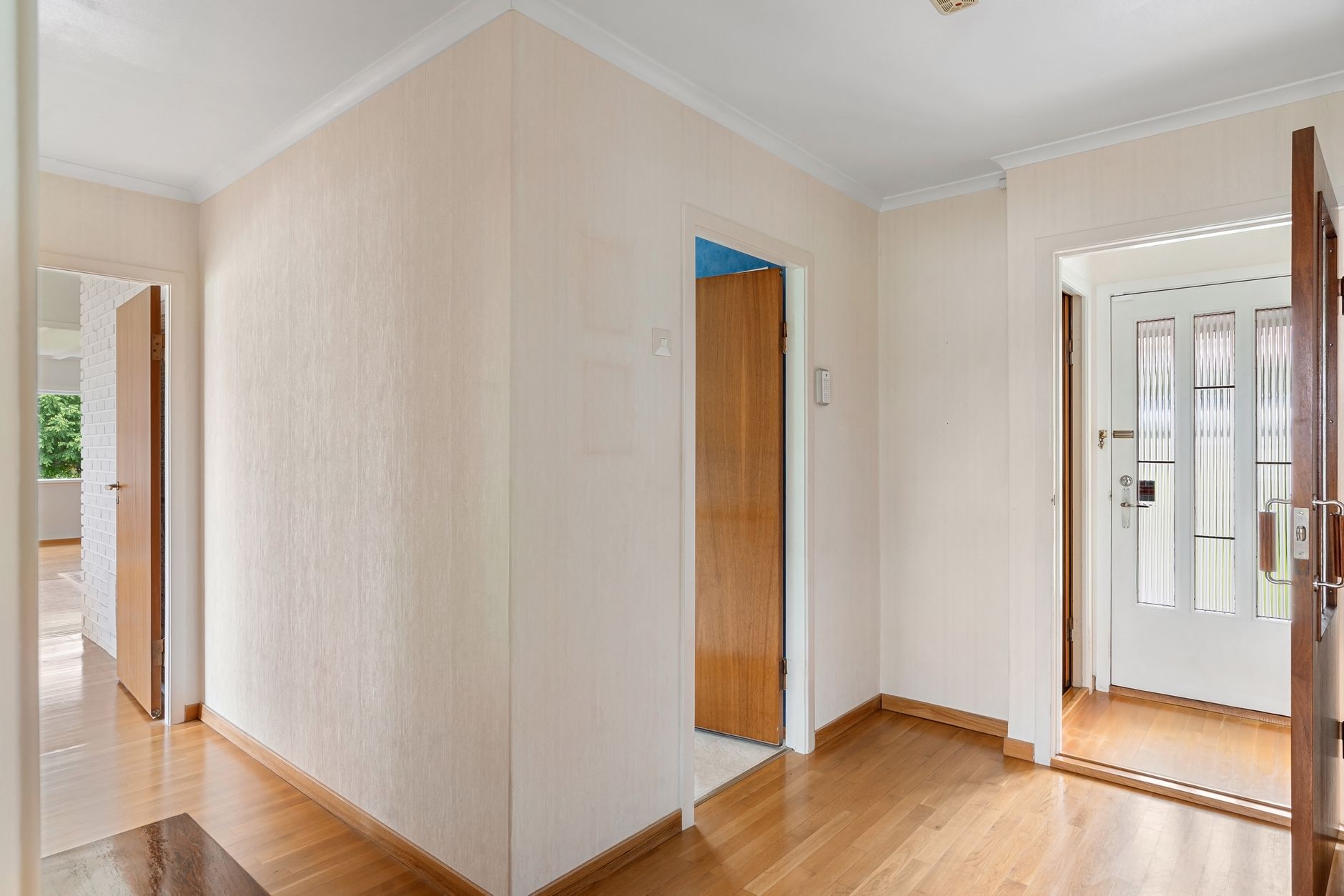
Feng shui treats the approach to a house — the path, driveway or street a person walks or drives before reaching the front door — as the first place chi is read and directed. Classical Form School reasons about the shape and speed of that approach; Compass School adds the compass direction it faces. Neither treats the front door as separate from the ground leading to it.
What does “the approach” actually mean in feng shui terms?
It means everything between the street or property line and the threshold: the front path, a driveway, steps, a gate, and the immediate view a person has of the house as they arrive. Classical Form School texts describe reading a site’s landform and the movement of chi across it before ever discussing interior rooms. The approach is the first stretch of that reading, not an afterthought to it.
This is a different scale of question from what belongs just inside the door, which is covered in the entryway articles on this site, or how a hallway behaves once someone is inside, covered in the Entrances & Flow hub. The approach is external: what happens before the door is reached at all.
Why does Form School focus on the shape of the path?
Form School’s central concern is how chi moves across a landscape or a lot — and its long-standing preference is for movement that curves and slows rather than rushes in a straight line. A path that bends slightly, or approaches the door at an angle rather than dead-on, is described in Form School reasoning as allowing chi to “gather” near the entrance rather than travelling straight through it.
There is a plain, non-mystical version of this reasoning too. A path that curves gives a visual pause before arrival; a completely straight, uninterrupted run from street to door reads, to most eyes, as a corridor rather than a threshold. Whether or not a reader accepts the chi framing, the design instinct — soften a straight approach, avoid a channel that funnels straight at the front door — has an ordinary explanation as well as a traditional one.
Does the direction the house faces change anything?
Only in Compass School (Liqi), which layers a house’s facing direction, calculated with a Chinese luopan or a standard compass, against a chart tied to the building’s construction period. Compass School practitioners assign different qualities to a house facing north, south, east or west, and further refine this by “flying star” charts specific to when the building was completed.
Form School generally does not use compass direction at all; it reasons from what is physically visible — hills, water, roads, slopes. The BTB (Black Sect Tantric Buddhist) adaptation, common in Western feng shui writing, drops compass direction almost entirely and instead maps a bagua grid from the front door inward regardless of which way the house faces. These three approaches genuinely disagree with each other on this point, which is one reason feng shui consultants give contradictory advice — they are frequently working from different schools without naming which one.
What is the “mouth of chi” and why does the front door get so much attention?
The front door is traditionally called the “mouth of chi” — the point through which chi is said to enter a building, in the same way food and air enter through a mouth. Because of this, the door and the ground leading to it are treated as more consequential than a comparable stretch of path elsewhere on the property.
The reasoning given, across schools, is less about the door as an object and more about what the door controls: how much can arrive, how it arrives, and whether anything blocks or redirects it before it reaches the house. That is explored in detail in the article on the mouth of chi and the front door, and separately in the piece on what feng shui says about front door colour, a Compass School and BTB topic rather than a Form School one.
What is a “poison arrow” on an approach, and is it a real structural risk?
A “poison arrow” (sha chi) is the traditional term for a straight, fast line aimed directly at a door or window — a straight driveway running dead-on to the entrance, a road that ends in a T-junction facing the house, or a sharp building edge across the street pointing at it. Form School treats these as concentrating chi too forcefully at a single point rather than letting it disperse.
The full range of what counts as a poison arrow, and how different practitioners respond to one, is set out in the dedicated article on poison arrows. It is worth being clear here that a T-junction or a straight driveway is not a structural or safety hazard in any engineering sense — feng shui’s objection is symbolic and traditional, not a claim about the physical building. Anyone with a genuine concern about a driveway, road proximity or drainage on an approach should raise it with a surveyor or structural engineer, not treat this article as that kind of advice.
Does a staircase or road facing the front door matter?
In several strands of the tradition, yes — a staircase running straight down toward the front door from inside the house is treated the same way as a straight external path: chi is said to run too quickly out through the door rather than settling into the home. This is a matter of internal layout rather than the external approach, and is covered fully in the article on a staircase facing the front door.
Where the concern is external — a road, driveway or path running straight at the door from outside — that is the poison arrow reasoning above, distinct from the internal staircase case even though both use the same underlying logic about straight-line speed.
What if the front door and back door line up directly?
This is a specific, commonly cited configuration: a front door and back door positioned so a person can see straight through the house from one to the other. The traditional objection is that chi entering at the front travels straight through and exits at the back without circulating through the rest of the home — again, the same straight-versus-curved reasoning applied to the interior rather than the street. This case has its own dedicated treatment in the article on a front door and back door in line, including what practitioners commonly suggest as a response.
Does a cluttered or overgrown approach actually matter?
Practically, yes, for reasons that need no traditional framing at all: an approach blocked by bins, overgrown planting, broken paving or poor lighting is harder to walk, harder to see at night, and gives an unclear first view of the building. Feng shui’s traditional framing adds that a blocked approach is read as restricting how much chi can reach the door at all, treating obstruction at the entrance the same way it treats clutter inside a room.
This is discussed at length in why feng shui objects to a cluttered entrance, and the underlying principle — that clutter is the first problem addressed in every school of feng shui, before compass direction, before the bagua, before any object — is common ground across Form, Compass and BTB approaches, even where they disagree about almost everything else.
What can someone actually change about a house’s approach?
Most people do not choose the direction a house faces, the shape of the street outside it, or where a driveway was originally laid. What is genuinely adjustable tends to be smaller:
- Keeping the path clear of bins, tools, and overgrown planting.
- Improving lighting along the approach, particularly where it is currently dark or uneven.
- Softening a hard, straight sightline with planting positioned beside — not across — the path.
- Maintaining the door itself: paint, hardware, and a door that opens fully and closes properly.
A sticking or squeaking front door is treated in more than one school as a small but real obstruction to chi entering smoothly, which happens to be a case where the traditional advice and an ordinary maintenance job point to exactly the same fix — covered in the article on sticking and squeaking doors. For anyone renting rather than owning, changes to a shared entrance, communal driveway or building exterior are usually not available at all, which is addressed directly in what feng shui says about renting and things you can’t change.
Is there research behind any of this?
Not in the sense of controlled evidence for chi as a measurable force — no such evidence exists in the scientific literature, and this site does not claim otherwise. What can be said with more confidence is that a clear, well-lit, unobstructed approach with a working front door is easier to navigate, safer to walk at night, and gives a calmer first impression of a home — outcomes that stand on their own, independent of any traditional framework. Readers wanting the broader question of what the tradition can and cannot claim addressed directly can see the article on evidence for feng shui.
None of the above is legal or safety advice about roads, driveways, tenancy agreements or structural features of a property; a surveyor, structural engineer or the relevant local authority is the correct source for any of those.
Related reading
How Do You Apply Feng Shui in a Dorm Room?, What Feng Shui Says About a Bed That Faces the Door, No Entryway at Home: What Feng Shui Actually Says
About this site. Feng Shui Pack explains what the feng shui tradition holds and which school holds it, from published sources. Feng shui is a tradition of placement and orientation, not a science: nothing here will bring you wealth, health, luck or a relationship, and we never claim otherwise. Where a suggestion has an ordinary practical reason — daylight, airflow, sightlines, less clutter — we say so; where it does not, we say that too. This is not medical, financial, legal or tenancy advice. If a decision matters, talk to a professional in that field.