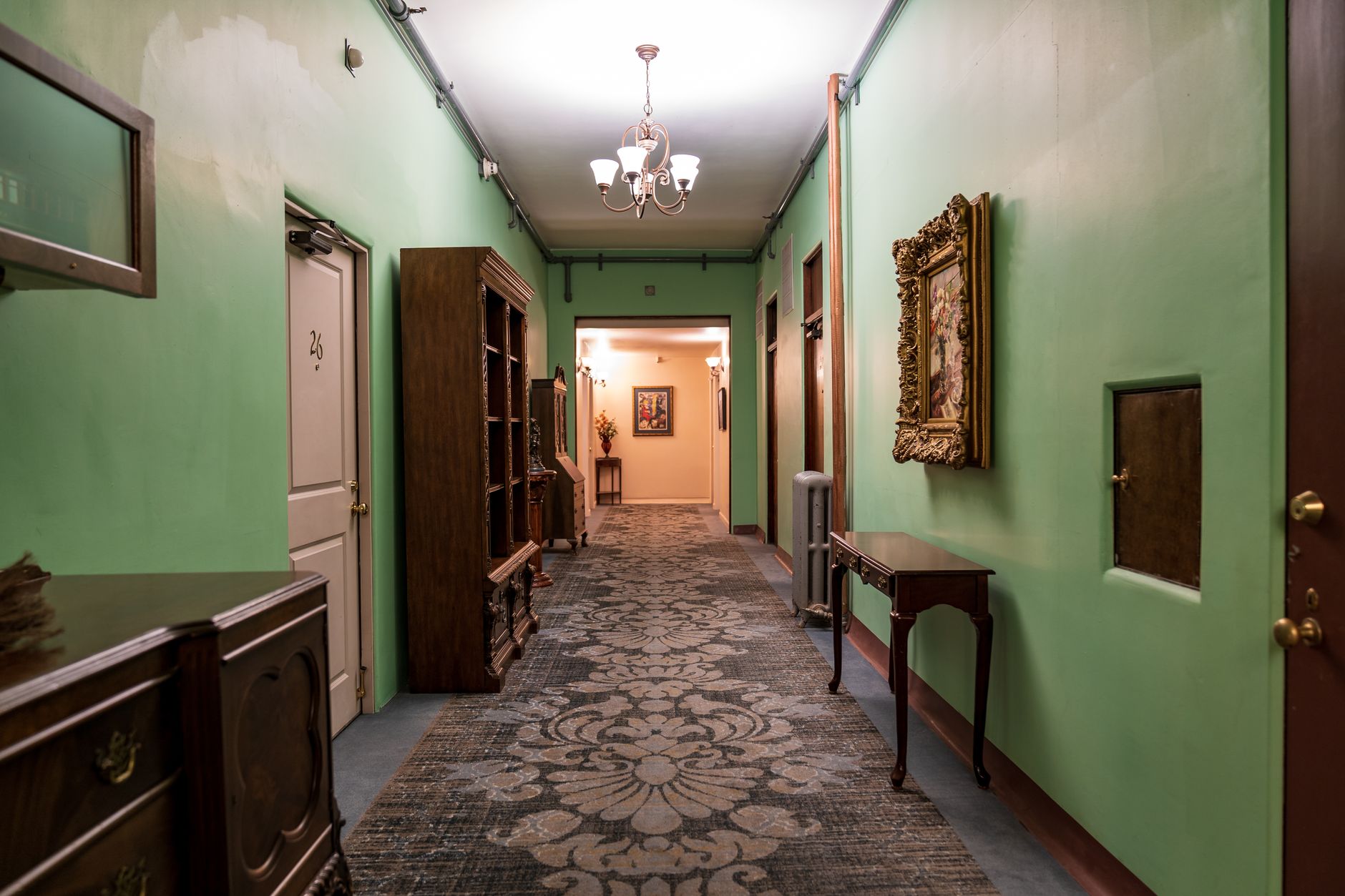
A hallway is treated as a passage for chi (qi), not a room to fill. The general guidance across schools is to keep it clear, well lit and unobstructed, avoid sharp turns and dead ends where possible, and be deliberate about what doors and mirrors it connects — though the reasoning and the specific rules differ by tradition, and it is worth knowing which one is being cited before applying it.
What is a hallway actually meant to do, in feng shui terms?
In both Form School (Xingshi) and Compass School (Liqi) thinking, a hallway is a channel. Rooms are where chi is meant to gather and settle; corridors are where it moves. The practical version of this idea is straightforward: a hallway is a circulation space, and circulation spaces work better when nothing interrupts them. The feng shui framing gives that ordinary observation a vocabulary, not a different set of physics.
This is also why hallway advice tends to be phrased in terms of movement rather than in terms of individual objects the way bedroom or kitchen advice often is. For the underlying concept, see what chi and energy flow are said to mean in feng shui writing generally.
Does a hallway need to be straight?
Form School texts favour hallways that run in a reasonably direct line from one point to another, without sharp jogs, and without ending abruptly at a blank wall. A hallway that dead-ends is described in this tradition as trapping chi at that point; a hallway with a sharp right-angle turn is described as forcing it to slow or double back.
No school claims a homeowner should demolish a wall to straighten an existing corridor. The practical advice that follows from this reasoning is more modest:
- Keep the far end of a dead-end hallway lit, rather than dark, since a dark termination is treated as the more pronounced version of the problem.
- Where a corridor turns sharply, keep the corner itself clear of furniture, since Form School treats an obstructed corner as compounding the effect of the turn.
- Avoid stacking storage at a hallway’s end wall if that wall also faces a bedroom or the front door directly.
What does the front-door-to-hallway relationship involve?
The Black Sect (BTB) adaptation of feng shui, developed in the West from the 1980s onward, places particular weight on the hallway that leads away from the front door, because BTB orients its whole bagua map from that entrance. Classical Compass School, by contrast, orients the bagua using compass direction and the building’s construction date, not the door.
Because of that difference, a BTB-derived guide may describe a long, straight entrance hallway leading directly to a rear window as a problem — the idea being that incoming chi runs straight through and out again without dispersing into the rooms of the house. Compass School practitioners working from directional charts would not frame the same hallway this way at all. For the mechanics of how BTB constructs its map, see this explanation of Black Sect (BTB) feng shui and why it spread, and for the general method, what the bagua is and how it is actually used.
What is a “poison arrow” hallway?
A poison arrow, in Form School language, is a straight, fast line of chi aimed at a person or a doorway — commonly created by a long corridor pointed directly at a bed, a desk, or the edge of an interior wall. The term describes the geometry, not a separate category of danger.
The practical reading of this idea is about sightlines and abruptness: a hallway that ends by pointing straight at a bedroom door, with nothing to soften the approach, is treated differently from one that opens into a room at an angle or with a doorway offset. For the fuller definition and its variants across schools, see what a poison arrow is in feng shui, explained.
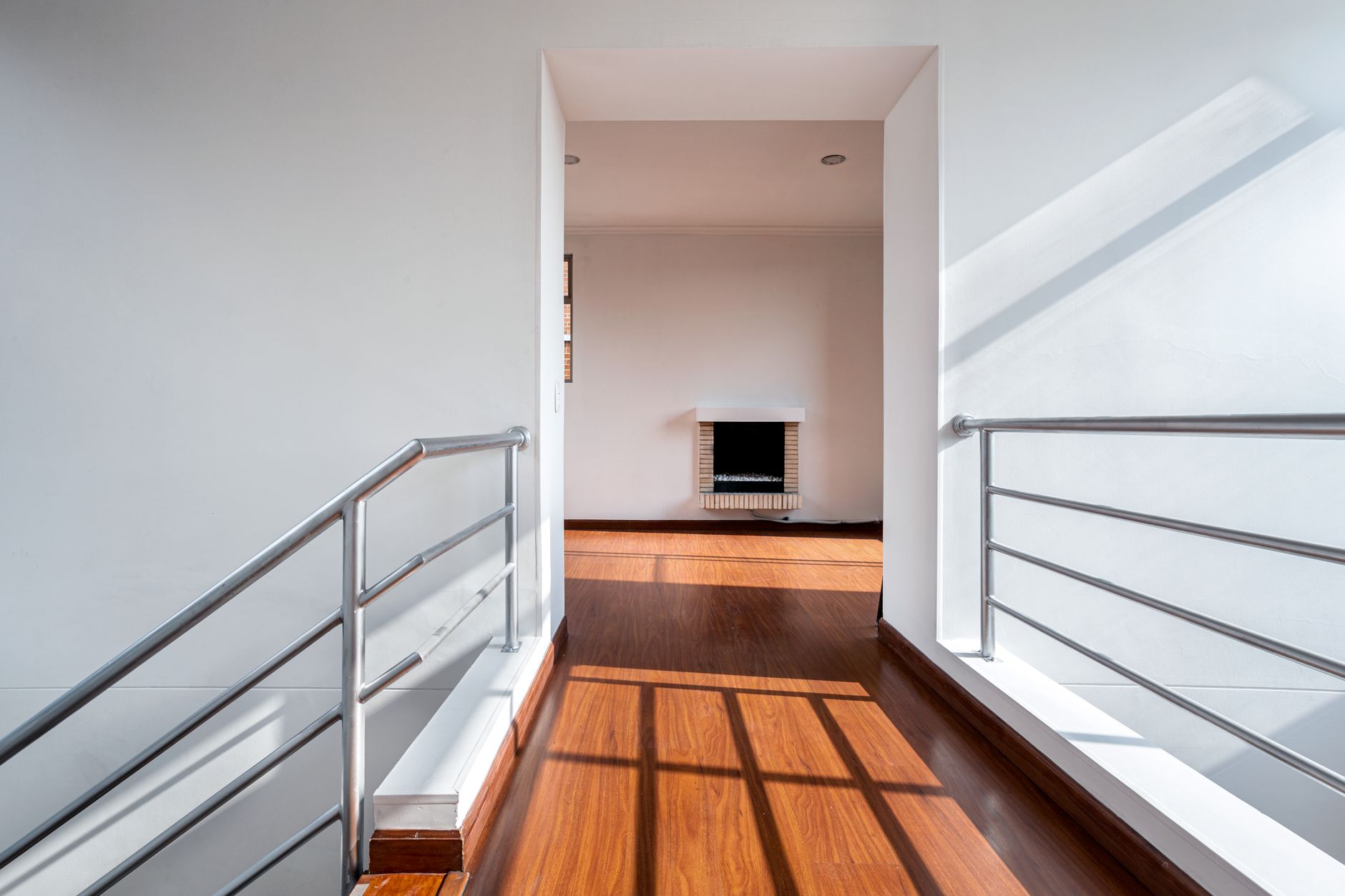
Do doors facing each other across a hallway matter?
Two doors directly opposite one another along a hallway are a recurring subject in feng shui writing, most often around bedroom and bathroom doors. The stated concern is usually about chi (or, in more literal terms, noise, sightlines and privacy) passing directly from one room into another with nothing to interrupt it.
Suggested treatments — a rug placed between the thresholds, staggering furniture just inside each door, or simply keeping both doors mostly closed — are practical adjustments rather than fixed rules, and different sources disagree on how serious the issue is held to be. See what feng shui actually says about two doors facing each other for how the various schools treat this specific configuration.
What about mirrors placed in a hallway?
Mirrors are one of the most commonly recommended hallway additions across feng shui writing, generally on the reasoning that they widen a narrow space visually and, in BTB terms, are said to help redirect or “expand” chi moving through a tight corridor. The consistent practical caution, repeated across sources regardless of school, is not to hang a mirror directly opposite a bed visible from a hallway, and not to hang one facing the front door head-on, since that configuration is described as sending incoming chi straight back out. No school claims a mirror changes the physical dimensions of a hallway — the reasoning given is about the visual and, in BTB’s account, energetic effect, not a structural one.
What is the practical case for keeping a hallway clear and lit?
Separate from any feng shui reasoning, there is an ordinary design case for treating a hallway this way, and it is worth stating plainly rather than folding it into tradition:
- A cluttered hallway is a hazard in the dark and a bottleneck in daily use — this is true regardless of any belief system.
- Adequate lighting at turns and at the ends of a corridor reduces the chance of a trip or a missed step, particularly relevant in households with children or older residents.
- A hallway that also functions as storage overflow tends to get worse over time rather than better, since it has no other use to compete for the space.
Where feng shui recommends keeping a hallway clear, lit and unobstructed, this is a case where the practical reasoning and the traditional reasoning point the same direction, which is part of why the advice appears so consistently across otherwise disagreeing schools.
Is there evidence that hallway treatments have any measurable effect?
No controlled evidence supports the claim that a hallway’s shape, mirror placement or lighting influences a resident’s health, finances or relationships. What can be said with more confidence is that clutter and poor lighting in a circulation space are established, ordinary safety and usability concerns, independent of feng shui. For how the broader claims of the discipline have and have not been studied, see what kind of evidence exists for feng shui, and what does not. This article is not medical, safety or structural advice; for lighting adequacy, trip hazards or renovation questions, consult a qualified electrician, occupational therapist or building professional as appropriate.
How does hallway treatment fit with the rest of a home’s layout?
A hallway rarely functions in isolation — it connects to bedroom doors, a front entrance, sometimes a kitchen or living room threshold, and each of those junctions carries its own set of considerations in feng shui writing. The Entrances & Flow archive covers front doors, thresholds and the routes chi is said to take through a floor plan in more depth, while the Basics archive lays out the underlying concepts — chi, the bagua, yin and yang — that hallway-specific advice draws on. Because so much hallway guidance in English-language sources comes from BTB without saying so, it is also worth reading why feng shui rules contradict each other so often before treating any single rule as settled across the whole tradition.
About this site. Feng Shui Pack explains what the feng shui tradition holds and which school holds it, from published sources. Feng shui is a tradition of placement and orientation, not a science: nothing here will bring you wealth, health, luck or a relationship, and we never claim otherwise. Where a suggestion has an ordinary practical reason — daylight, airflow, sightlines, less clutter — we say so; where it does not, we say that too. This is not medical, financial, legal or tenancy advice. If a decision matters, talk to a professional in that field.