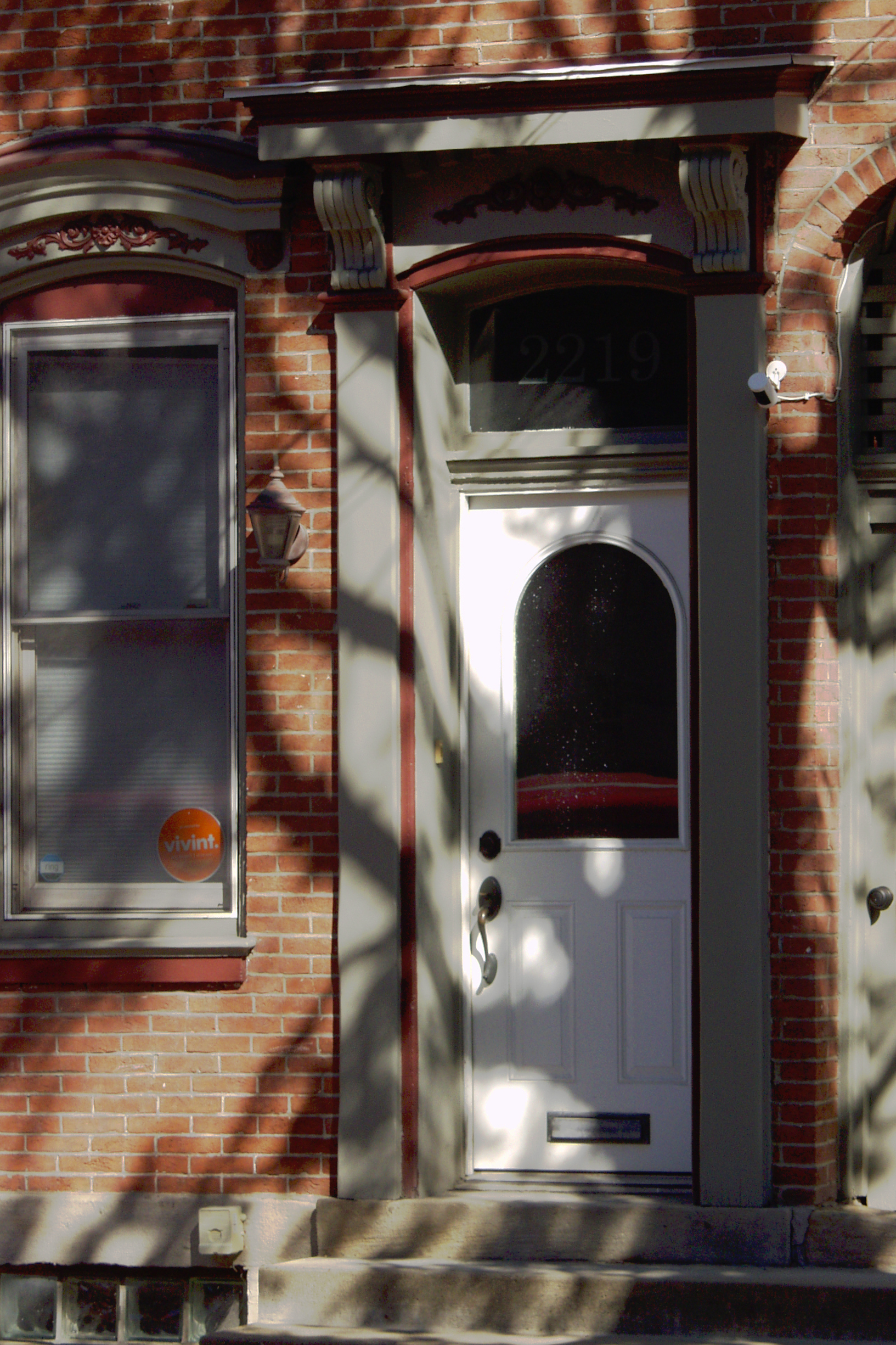
Feng shui traditions generally hold that the path to the front door should be visible, unobstructed, and not aimed at the door in a straight, fast line. Practitioners describe a path that curves gently, is kept clear of clutter, and is lit well enough to find at night as one that lets chi move into the home at a settled pace rather than a rushed one.
Why does the path to the door matter in feng shui?
In Form School (Xingshi), which reads the land and built structures around a home, the front door is called the mouth of chi — the main point through which energy is said to enter a building. The path leading to it is treated as the first stretch of that route, so its shape, condition and surroundings are considered part of how energy arrives, not just how a visitor arrives.
This is a claim of the tradition, not a measurable property of a walkway. There is no independent way to verify that chi moves along a path in any physical sense. What can be said plainly is that the reasoning given echoes a much older and more ordinary idea: a clear, legible approach to a home is easier to use, easier to see, and less likely to startle someone stepping outside. The mouth of chi concept sits behind most of what feng shui says about entrances generally, and the path is usually discussed as an extension of it.
Should the path go straight to the door?
Form School commonly advises against a perfectly straight path running directly from a gate or street to the door, especially a long one with no curve or break. The concern given is that chi moving too directly and too fast does not have a chance to gather near the entrance before it either enters the home or is deflected.
The suggested alternative in most Form School writing is a path with a gentle curve, or one broken by a change in material, a step, or planting along its edge, so movement toward the door slows visually before it reaches the threshold. No practical rationale is claimed for the “chi” language itself, but the underlying design point is a familiar one in landscape architecture more broadly: a path with some variation reads as considered rather than utilitarian, and a straight, narrow, featureless run to a door can feel more like a service corridor than an approach.
Where a straight path is unavoidable — a fixed council pavement, a shared driveway, a narrow urban plot — feng shui writers generally suggest softening it with planting rather than replacing it, since a path itself is rarely something a resident can reroute. This overlaps with what the site’s guide to the approach to a house covers in more detail, including what happens where a path meets a road at a sharp angle.
What is a “secret arrow” and does it apply to a path?
A secret arrow (in Chinese, sha chi carried along a straight line) is the term Form School uses for any straight, direct line of movement — a road, a corridor, or a path — pointed at a door or window. The path itself is not the arrow; it becomes one when it runs dead straight at the entrance with nothing to interrupt it.
This is discussed at length on the site’s dedicated page on the secret arrow from outside a home, and it is worth noting there that the term is specific to Form School’s reading of built and natural forms — it is not a Compass School (Liqi) calculation, which works instead from compass directions and the year a building was constructed. The two schools can look at the same straight path and reach it from entirely different reasoning.
A related and frequently asked version of this question concerns homes positioned where a road runs straight at the property before the path even begins. That situation — a house facing directly down a T-junction — is treated separately in the site’s guide to a house at a T-junction, since the road itself, not the garden path, is doing the pointing.
Does the path need to be kept clear of clutter?
Yes, and on this point Form School, Compass School and the Western Black Sect (BTB) adaptation are unusually aligned. All three treat a cluttered, overgrown, or obstructed path as a problem, though the reasoning given differs slightly between them — Form School frames it as blocked chi, BTB more often frames it as a stagnant first impression that sets the tone for the whole home.
Common recommendations include:
- Keeping bins, recycling boxes and bicycles off the direct path rather than lining it
- Cutting back overgrown planting that narrows the walkable width
- Repairing broken paving, loose gravel or trip hazards rather than routing around them indefinitely
- Making sure the path is lit adequately after dark
The practical case for most of these needs no feng shui framing at all — a path someone can actually walk without stepping around a bin or catching a broken slab is simply a better-functioning entrance. The site’s broader piece on why feng shui treats a cluttered entrance as a first problem covers this overlap between the traditional reasoning and the ordinary one in more depth.
What about plants, gates and boundary markers along the path?
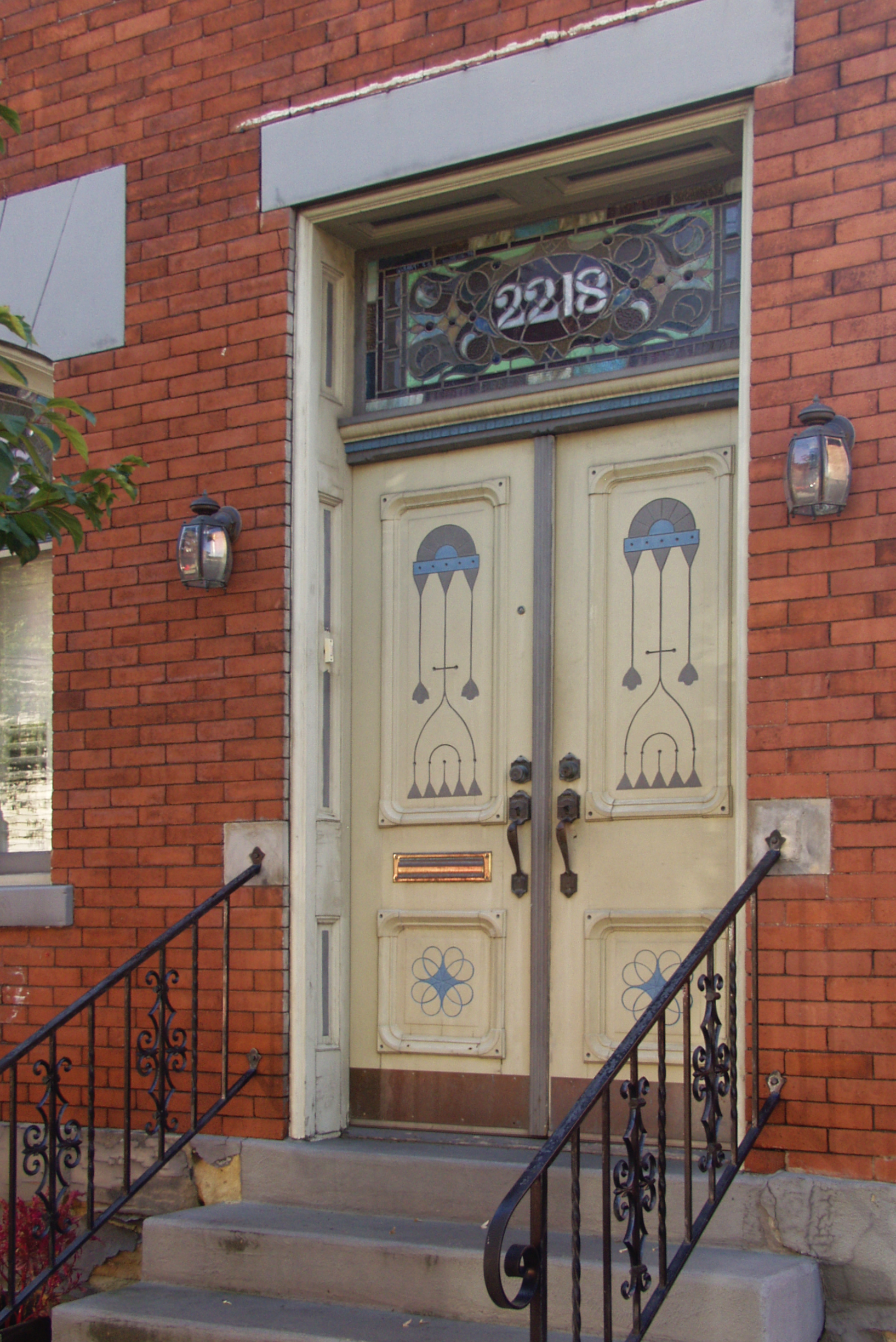
Form School generally favours planting that is healthy, appropriately scaled to the path, and not overhanging or thorny right at the edge of the walkway — thorny plants close to a path are sometimes singled out specifically, again with no mechanism given beyond the tradition’s own terms. Dead, dying or artificial plants along an entrance path are treated the same way they are treated indoors: as a marker of neglect rather than of anything more specific. The site’s page on dried and artificial plants covers that reasoning in a room context, and it applies to an entrance in the same terms.
Gates and low walls along a path are discussed mainly in terms of proportion — a gate too small for the plot, or a wall high enough to fully block the door from the street, is generally advised against on the basis that the entrance should be visible and welcoming rather than hidden. This is a Form School reading of scale and visibility, not a fixed rule with a numeric threshold, and no school offers a specific height or width figure that applies universally.
Does this apply the same way to an apartment with no private path?
Most of it does not translate directly, and this is one of the more common gaps in generic feng shui advice aimed at readers in flats, shared buildings or dense cities. Where there is no private garden path at all, the shared corridor, stairwell or lobby is generally treated as playing a similar role — the stretch a resident and their guests cross just before the door.
Readers in that situation are better served by material written for shared and dense housing specifically. The site’s guides on applying feng shui in a shared house and on a home with no hallway deal with the entrance sequence where there is no private outdoor path to work with, and the Entrances & Flow section covers what belongs directly inside the door once the path ends.
Where do the schools disagree on this?
Compass School calculations are based on the compass orientation of the door itself and the construction period of the building — they do not evaluate the shape of an approach path as a factor in the same way Form School does. BTB, which developed in the West from Tibetan Buddhist and folk practice rather than from either classical Chinese school, tends to fold the path into general “entrance energy” advice without distinguishing it from the door or the immediate threshold at all.
This means a reader consulting three different sources on the same front path can be given three different frameworks with three different vocabularies, none of which is simply “feng shui” in the singular. The site’s explainer on why feng shui consultants disagree with each other sets out this pattern in more general terms, and the broader Basics section is the place to start for readers encountering the different schools for the first time.
What should a reader actually take from this?
Where a path can be changed — planting, lighting, clearing obstructions, breaking up a long straight run — feng shui traditions give reasons that overlap comfortably with ordinary good design sense, and acting on them costs nothing beyond the gardening itself. Where a path cannot be changed, because it is fixed, shared, or governed by a landlord or council, no school treats the underlying situation as unmanageable; most simply suggest lighting, planting at the margins, or a doormat and threshold treatment as smaller-scale adjustments. Readers renting rather than owning may find the site’s page on feng shui and things you can’t change more directly useful than path-specific advice aimed at homeowners with a garden to redesign. None of this is landscaping, structural or safety advice, and any actual trip hazard, drainage issue or lighting fault along a path is a matter for a qualified tradesperson, not a feng shui adjustment.
Related reading
What Feng Shui Says About a House at a T-Junction, What Is a “Secret Arrow” From Outside a Home?, What Feng Shui Says About the Approach to a House, The Basics, Flow, Light and Small Spaces
About this site. Feng Shui Pack explains what the feng shui tradition holds and which school holds it, from published sources. Feng shui is a tradition of placement and orientation, not a science: nothing here will bring you wealth, health, luck or a relationship, and we never claim otherwise. Where a suggestion has an ordinary practical reason — daylight, airflow, sightlines, less clutter — we say so; where it does not, we say that too. This is not medical, financial, legal or tenancy advice. If a decision matters, talk to a professional in that field.