Feng shui treats a sharp, protruding corner of furniture — a table edge, a shelf unit, a countertop — as a small “poison arrow” (sha qi) when it points directly at where someone sits, sleeps, or lingers. The concern is about a line of sight and a line of movement, not the object itself. A rounded edge or a corner turned away from a seat is considered neutral.
What does feng shui actually say about sharp corners on furniture?
The core claim, found across Form School (Xingshi) writing on interiors, is that a 90-degree edge aimed at a person’s head, back, or the space where they sit is a source of disruptive energy. It is described using the same language applied to exposed structural beams, the edge of a wall, or a column corner: something rigid and angular sending “cutting” chi toward a body at rest.
Why are sharp corners considered a problem in feng shui?
The reasoning is symbolic before it is anything else. A sharp corner is read as an arrow — a fixed line of force aimed outward from a point. In Form School thinking, chi is meant to move in curves and gentle currents through a room, the way air or water does. A hard right angle interrupts that, and if it happens to line up with a chair, a desk, or a bed, the tradition holds that the person occupying that spot is under a quiet, ongoing strain.
This is a symbolic claim, not a physical one. No school of feng shui measures a force coming off a table edge. What is being described is a visual and psychological pattern: a person repeatedly seated in the path of something angular and fixed, whether or not they consciously notice it.
Is this a Form School idea, or does every tradition agree?
Sharp corners as poison arrows are squarely a Form School concern, built on landscape and shape logic that predates compass-direction calculation. Compass School (Liqi) practice, which works from the eight trigrams and a building’s facing direction, does not center its analysis on furniture edges at all — its concerns are directional and time-based. The BTB (Black Sect Tantric Buddhist) adaptation common in Western books inherits the poison-arrow idea from Form School and applies it freely to interiors, often without naming the source. When an article says simply “feng shui says,” it is almost always this Form-School-via-BTB reading being invoked.
What is a “poison arrow,” exactly?
A poison arrow is any straight, sharp line — an edge, a corner, an exposed beam, even the corner of a neighboring building seen through a window — that is said to direct chi in a concentrated, unbroken path at a fixed point. The concept is explained in more general terms on this site’s poison arrow explainer, which covers architectural examples beyond furniture. Furniture corners are simply the version of this idea that shows up at close range, inside a room a person actually occupies for hours at a time.
Does this apply to every corner in a room?
No. The tradition is specific about geometry and proximity, not about banning right angles from a home.
- A corner pointed into open floor space, away from any seat or bed, is not treated as a problem.
- A corner that is close and directly aligned with where a person’s head, back, or torso regularly sits is the case the tradition flags.
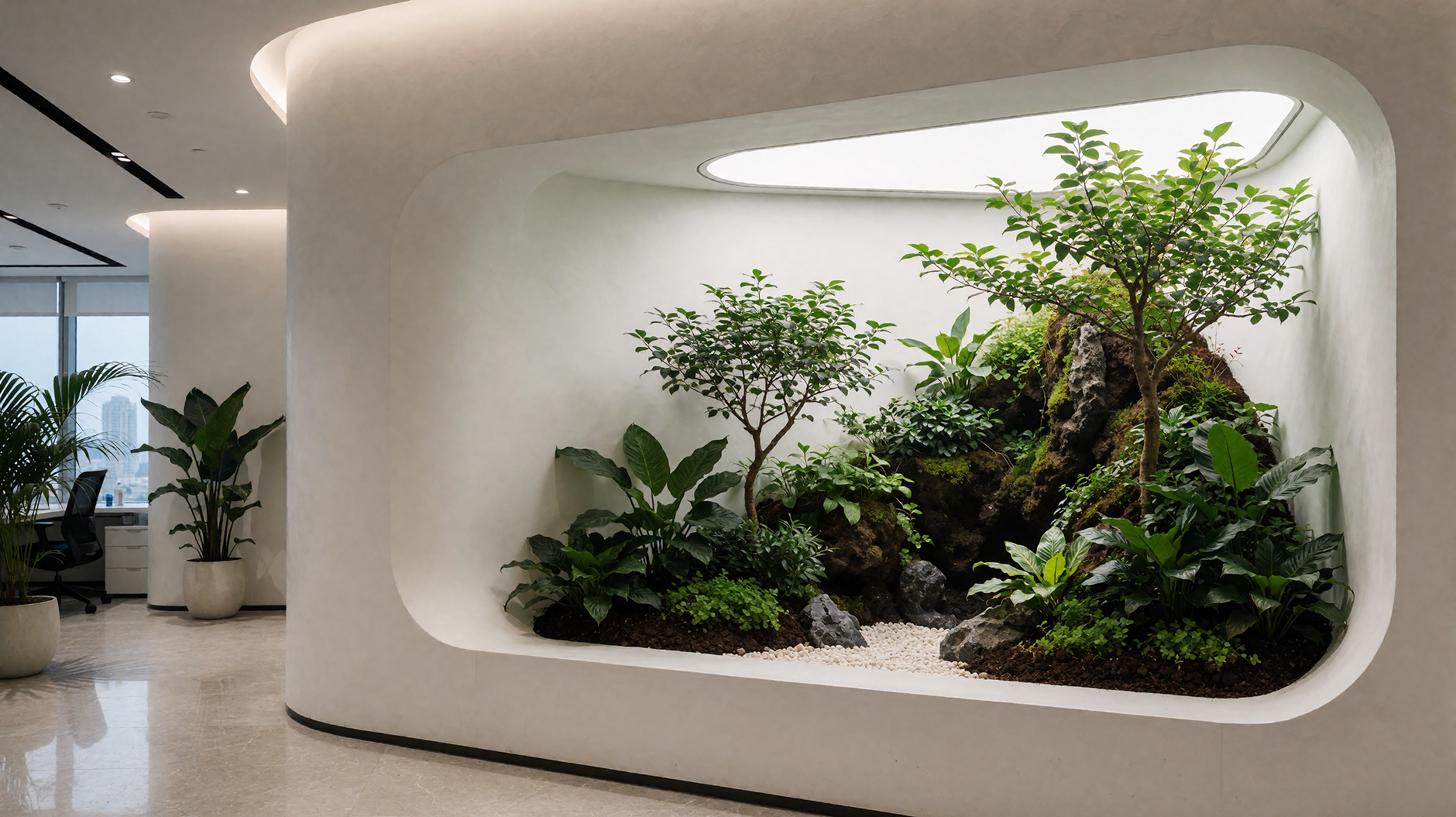
- Rounded, chamfered, or waterfall-edge furniture is considered to resolve the concern regardless of placement, because there is no longer a point for the “arrow” to form.
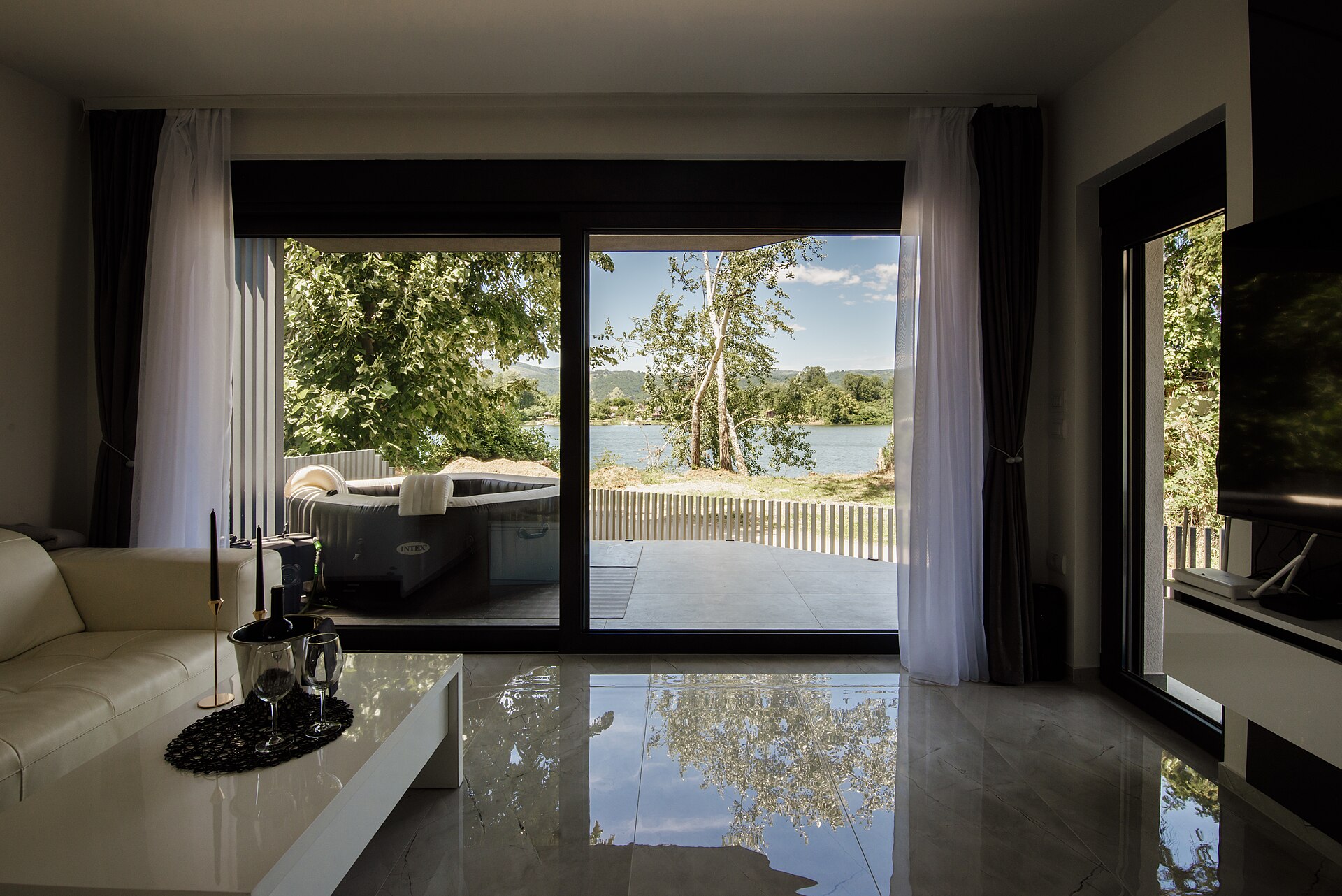
- A glass-topped or low table with sharp corners is treated the same as a solid one — the material is irrelevant, the shape is what matters.
Are there practical reasons to be careful of sharp furniture corners, apart from feng shui?
Yes, and they are worth separating clearly from the symbolic claim. A hard, angular corner at hip or shin height in a walkway is an ordinary bump-and-bruise hazard, especially in a home with small children, older residents, or anyone with limited mobility or vision. That is a matter of household safety, not feng shui, and this article is not offering safety, medical, or childproofing advice — a reader with specific concerns about a household member’s safety should consult standard childproofing or occupational safety guidance rather than a feng shui source.
Separately from safety, there is a design point that has nothing to do with symbolism: a room where every seat has a hard edge jutting toward it tends to read as visually busy and hard to settle into. This overlaps with, but is distinct from, the feng shui claim — one is about how a room is perceived, the other is a claim about chi.

How do people address sharp furniture corners without buying anything new?
The traditional responses are almost all about placement and angle rather than acquisition:
- Rotate the piece. Turning a table or desk slightly so its corner points into open space rather than at a seat is the most commonly cited fix, and it costs nothing.
- Reposition the seat or bed. Moving a chair, sofa, or bed a short distance out of a corner’s direct line achieves the same result from the other side.
- Add a plant or soft object in the path. Some practitioners suggest placing something rounded and living — a plant, a floor cushion — between the corner and the seat to interrupt the line, though no practical mechanism is given for this beyond the tradition itself.
- Choose rounded furniture at the point of buying. Round or oval dining tables, and furniture with eased or radiused edges, sidestep the issue permanently. This site does not recommend a specific product line — the shape is the relevant feature, not a brand.
None of these is presented as a fix for anything measurable. They are the tradition’s own suggested responses, offered here as description of practice, not as instruction to follow.
Does this matter more in a small or open-plan room?
The concern scales with proximity, so it becomes more relevant wherever furniture sits closer together — a studio apartment, a small home office, or a densely furnished open-plan living and dining area. In an open-plan layout, a dining table’s corner and a sofa’s armrest end up sharing the same stretch of floor more often than in separate rooms, which is one reason furniture angle gets more attention in compact plans. The same logic that governs where a sofa or desk sits in relation to a door — covered in this site’s discussion of command view — extends naturally to what that piece of furniture is pointing at.
Where does this fit next to other furniture-arrangement rules?
Sharp corners are one item in a broader Form School vocabulary about shape, line, and movement through a room, alongside ideas about clutter, pathways, and where a piece of furniture sits relative to a door. Readers working through a full room can find the general placement logic in this site’s guide to arranging furniture so a room feels calm, and the movement-specific version in how furniture placement affects circulation. Both cover the same underlying concern — that a room should not force a body or a sightline into a hard stop — from angles beyond the single case of a table edge.
What does the evidence say about any of this?
There is no physical evidence that a furniture corner emits anything, and no study demonstrating an effect on wellbeing tied specifically to corner geometry. What can be said with more confidence is that visual clutter and hard obstacles in frequently used space are commonly cited in design and ergonomics literature as sources of low-grade friction in daily use — a different and much narrower claim than the traditional one. Readers interested in how this site treats the broader question of proof and feng shui generally can see what evidence exists for feng shui for the fuller picture. For general reading on interior layout, the Layout & Furniture section covers related questions room by room.
About this site. Feng Shui Pack explains what the feng shui tradition holds and which school holds it, from published sources. Feng shui is a tradition of placement and orientation, not a science: nothing here will bring you wealth, health, luck or a relationship, and we never claim otherwise. Where a suggestion has an ordinary practical reason — daylight, airflow, sightlines, less clutter — we say so; where it does not, we say that too. This is not medical, financial, legal or tenancy advice. If a decision matters, talk to a professional in that field.