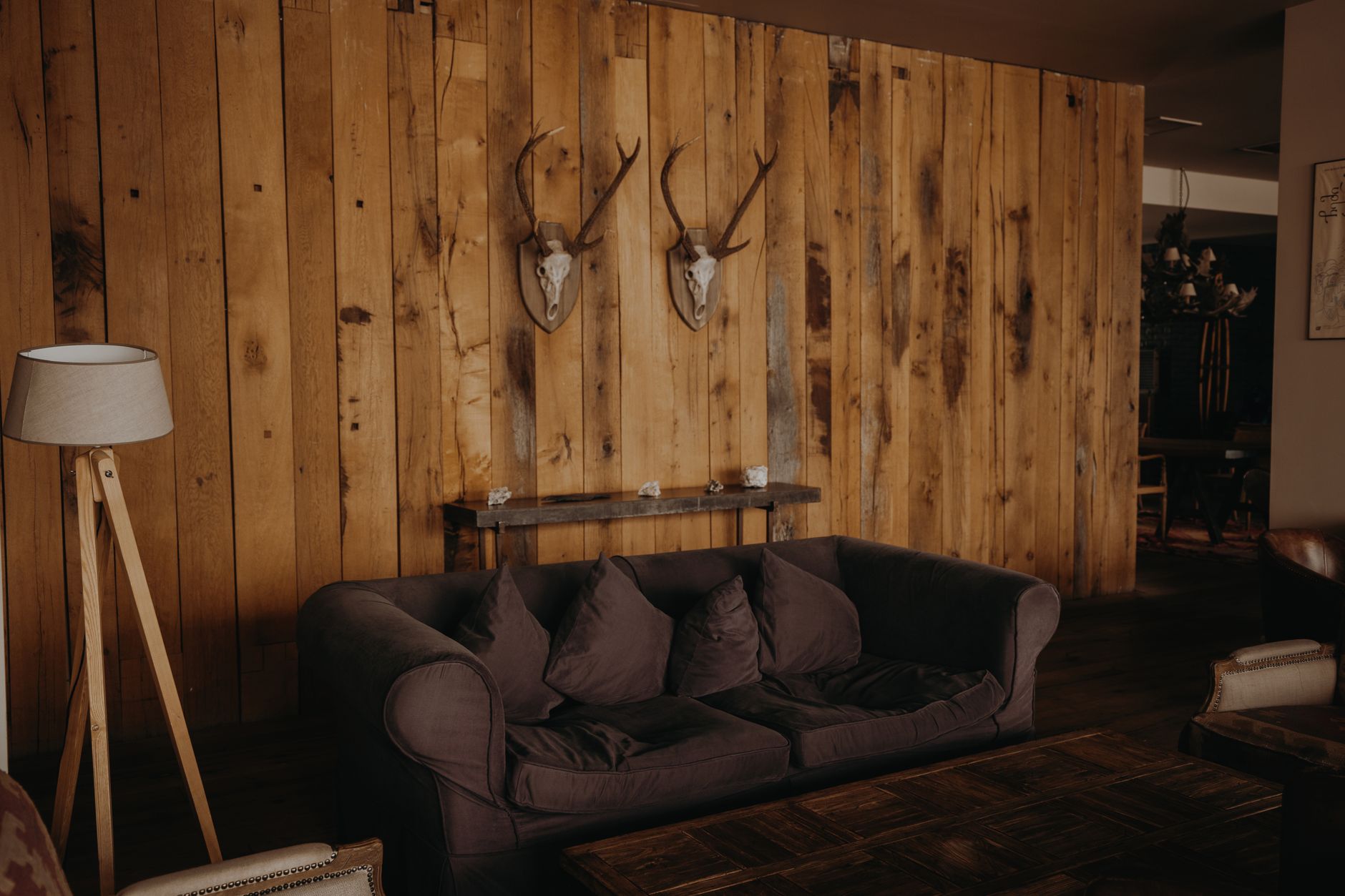
Feng shui treats wooden furniture as a carrier of the Wood element, associated with growth, flexibility and upward energy. In practice this means the tradition favours solid wood with visible grain over painted or heavily lacquered pieces, and it pays close attention to shape, placement and what material sits next to it — not to the furniture as decoration alone.
Why does wood matter as a material in feng shui?
Wood is one of five elements in the classical system, alongside Fire, Earth, Metal and Water. Each is said to generate or restrain the others in a fixed sequence, and furniture made from a given material is treated as carrying that element into a room.
The reasoning given for Wood specifically is that it is a living material — it grew, it has grain, and older pieces often show the marks of that growth. Practitioners commonly describe Wood as associated with the east and southeast of a room, and with qualities of expansion and flexibility rather than stillness. This is a symbolic reading, not a claim about the physical properties of timber, and the site’s broader explanation of the system is at what the five elements actually are.
How elements interact with each other — which one is said to feed another and which one is said to drain it — is covered separately in the pieces on the productive cycle and the destructive cycle. Wooden furniture is not read in isolation; it is read against whatever else is in the room.
Does feng shui prefer solid wood over veneer or painted furniture?
Generally yes, within the tradition, though the reasoning differs by school. Form School emphasis falls on physical qualities — weight, stability, how a piece sits on the floor. BTB and popular Western guides emphasise “authenticity” of material, treating solid wood as a truer carrier of the element than veneer over particleboard.
No practical building-science claim is made here beyond the tradition itself: a properly finished veneer or engineered board performs the same structural job as solid timber, and feng shui writers do not generally argue otherwise. The distinction is symbolic — solid wood is treated as an unbroken expression of the element, while a thin wood veneer over MDF or chipboard is treated as a weaker or diluted one. A full breakdown of which materials correspond to which element, and how mixed materials are read, is at which materials are associated with which element.
Does the wood’s colour or finish change its meaning?
Yes, according to most English-language guides. A pale, light-toned wood is generally read as closer to pure Wood energy, while a dark-stained or black-lacquered piece is sometimes read as leaning toward Water, since black and very dark tones are associated with that element in the same five-element system.
This is a convention rather than a fixed rule, and different authors apply it inconsistently — one reason this site repeatedly notes that feng shui rules contradict each other across sources. Where a specific colour matters to a reader’s own scheme, the more useful question is usually what element a wood tone is being used to support in that particular room, not a universal ranking of finishes.
What shapes of wooden furniture does feng shui favour?
Rounded edges and tapered or curved legs are generally preferred over sharp square corners, particularly where a piece sits at head height or points toward a seating or sleeping position. This preference has a practical root as well as a symbolic one.
- A hard corner at eye level or shin level is a genuine bump hazard, which is a plain design reason independent of any tradition.
- In feng shui terms, a sharp corner aimed at a person is called a “poison arrow” — a directional line of aggressive energy said to be created by any straight edge or point.
The concept is explained fully at what a poison arrow is in feng shui, and the furniture-specific version of the rule is covered at what feng shui says about sharp corners on furniture. Coffee tables, desks and bed frames are the pieces most often discussed in this context, since they sit closest to where people spend still time.
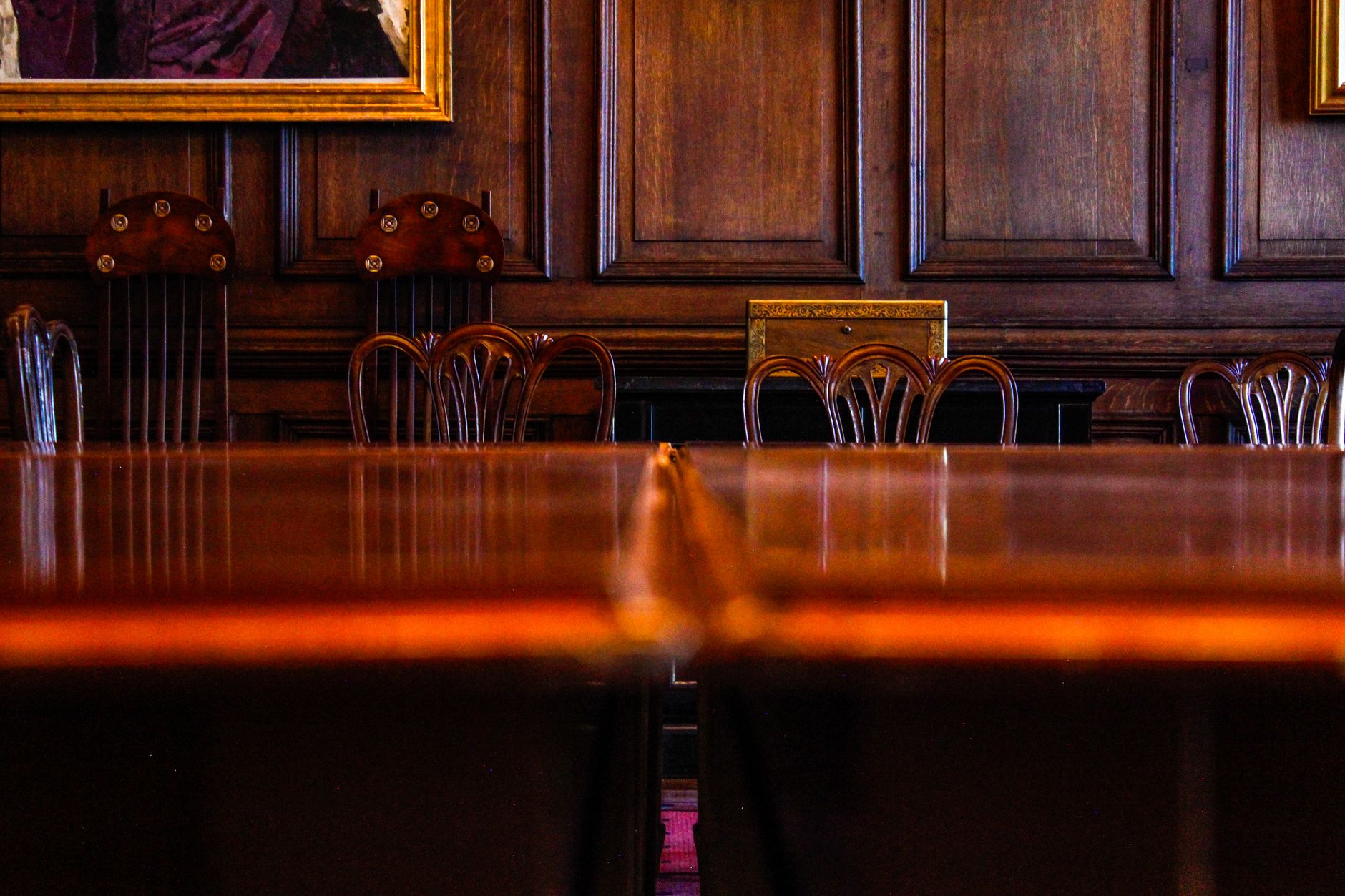
Does the height of wooden furniture matter?
Yes, in most schools’ reasoning, though for slightly different stated reasons. A very tall wardrobe or bookcase near a bed is generally discouraged because it is said to loom over the sleeper, and a low table in front of a sofa is generally preferred over a tall one because it does not block sightlines across a room.
There is an ordinary design logic underneath both claims: a large object close to where someone sleeps genuinely dominates a small room visually, and low furniture genuinely keeps a shared space feeling open and lets people see each other while seated. The tradition adds a symbolic layer — that towering furniture is oppressive to the qi of a resting body — but the plain version of the argument stands on its own. A fuller treatment is at what feng shui says about furniture height.
Where should wooden furniture be placed in a room?
Both Form School and BTB place heavy weight on being able to see the room’s entrance from a piece of furniture where a person sits or sleeps for long periods — a desk, a sofa, a bed. This is called the commanding position, and it applies regardless of what material the furniture is made from.
The practical logic given is straightforward: not being startled by someone entering behind you is a real, non-mystical comfort, and it is one of the few feng shui claims that maps directly onto an ordinary behavioural preference. The concept is explained in full at what a command view of a room means and what the commanding position is.
Separately, whether furniture should sit flush against a wall or be pulled forward is a live disagreement between schools, covered at furniture against walls: what feng shui actually says. Wood furniture is not treated differently from other materials on this specific question — placement rules apply to the piece’s function, not its element.
Does the direction a wooden piece faces matter?
In classical Compass School (Liqi), yes — directions correspond to specific trigrams and family members, and a wooden desk or bed is sometimes oriented according to a resident’s personal “kua” number, calculated from birth year and gender. This is a distinct and more technical system than the BTB adaptation, which instead maps a bagua grid from the front door and does not require compass calculation at all.
The two approaches are frequently blended in popular advice without saying so, which is part of why this site treats naming the school as essential. The difference is laid out at Form School versus Compass School and what BTB feng shui actually is. A reader trying to apply a directional rule to a wooden desk should know which system that rule came from before using it.
What about wood combined with other materials?
Mixed-material furniture — a wood-framed sofa, a table with a metal base, a wooden chair with glass inserts — is read according to which element dominates visually and structurally, not by an exact percentage. A wood table with thin metal legs is still generally treated as a Wood piece; a glass-topped wood table is sometimes read as combining Wood and Water, since glass and clear surfaces are conventionally assigned to Water in some guides.
This kind of layered reading is inherently more subjective than a single-material judgement, and different practitioners will genuinely disagree. Where the tradition has no firm consensus, it is worth saying so plainly rather than presenting one author’s preference as settled doctrine.
Is any of this backed by evidence?
No controlled evidence links a wooden coffee table’s shape or a wardrobe’s height to outcomes in health, finances or relationships, and this article makes no such claim. What can be said honestly is that many feng shui furniture rules — rounded corners, low sightlines, a wall-facing or unobstructed sitting position — overlap with ordinary comfort, safety and room-flow reasoning that stands regardless of the tradition behind it. The site’s broader look at what the discipline claims, and what can and cannot be checked, is at is there evidence for feng shui and what feng shui actually claims.
This article is not structural, safety or medical advice. Questions about a piece of furniture’s stability, fire rating or suitability for a child’s room are best directed to the manufacturer or a qualified professional, not to a feng shui guide.
Where to read next
For the wider material system behind wood, see the Objects & Materials section. For how furniture choices interact with a room’s overall layout, the Layout & Furniture archive covers arrangement questions room by room, and the foundational concepts referenced throughout this piece are gathered in The Basics.
About this site. Feng Shui Pack explains what the feng shui tradition holds and which school holds it, from published sources. Feng shui is a tradition of placement and orientation, not a science: nothing here will bring you wealth, health, luck or a relationship, and we never claim otherwise. Where a suggestion has an ordinary practical reason — daylight, airflow, sightlines, less clutter — we say so; where it does not, we say that too. This is not medical, financial, legal or tenancy advice. If a decision matters, talk to a professional in that field.