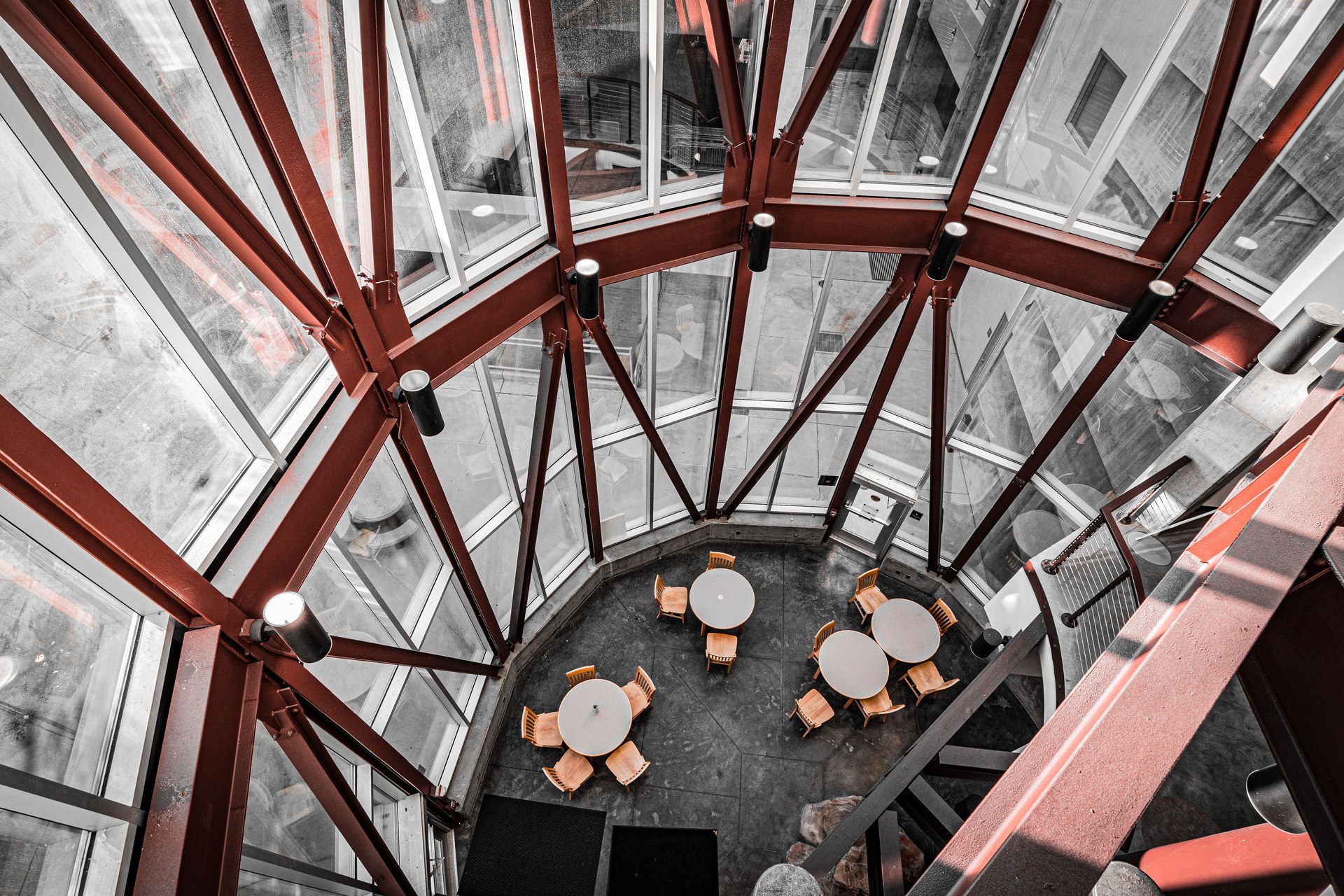
Feng shui treats metal as one of the five classical elements (wu xing), linked to white and metallic colours, rounded shapes, and qualities like precision and clarity. Glass is not one of the five elements at all — it is a modern material, and different practitioners assign it to metal, to water, or to no element, without agreement.
Where does metal fit in the five-element system?
In the Chinese five-element framework, metal (jin) sits alongside wood, fire, earth and water. Each element is said to generate the next and control another, in what’s called the productive cycle and the destructive cycle. Metal is generated by earth and, in turn, is said to generate water; it is controlled by fire and controls wood. This is a classical structure used across Form School and Compass School reasoning, not an invention of any single modern author.
Metal is conventionally associated with autumn, with the colours white, grey and metallic tones, and with round or oval shapes — a coin, a dome, a curved chair back. Practitioners describe its qualities as clarity, precision and contraction, as opposed to wood’s growth or fire’s expansion. The mechanics of this system are laid out in more detail in the site’s overview of the five elements, and how they interact in the productive cycle and the destructive cycle.
What counts as “metal” in a room, beyond literal metal objects?
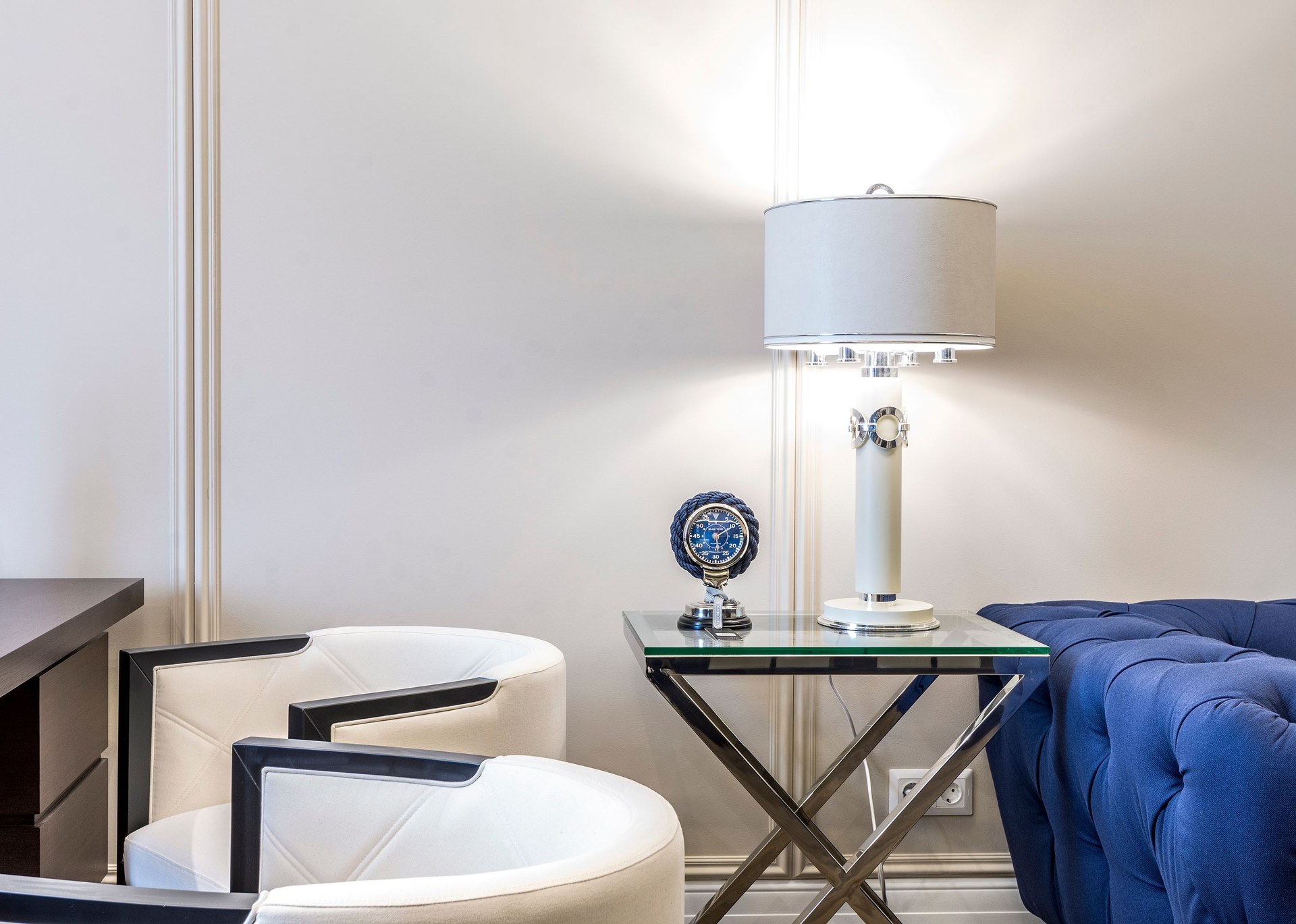
Feng shui readings of a room rarely stop at the literal material. A metal element is said to be present through colour and shape as much as through substance — a white lamp, a chrome-legged table, a circular mirror frame. This is why an all-plaster room with rounded white furniture can be read as “metal-heavy” even without a scrap of actual steel in it. The site’s broader guide to which materials are associated with which element covers how this extends to wood, stone, ceramic and fabric as well.
Does glass belong to an element at all?
No single answer exists, and that disagreement itself is worth naming. Some practitioners class glass with metal, on the basis that it is mineral in origin and often set in metal frames. Others class it with water, because it is clear, cool and reflective in the way still water is described in classical texts. Some English-language guides simply skip the question. There is no classical Chinese source that resolves this, because glass was not a household material when the five-element correspondences were set down.
What this means practically: a claim that “glass is a water feature” or “glass is a metal object” should be read as one author’s interpretation, not settled doctrine. Readers who want the underlying logic of the element system, rather than a single writer’s extension of it, are better served starting from the materials-and-elements guide directly.
What does Compass School say about direction and metal?
Classical Compass School (Liqi) ties the eight directions to trigrams and elements using a compass reading taken from the home’s actual orientation, often refined further with flying-star charts tied to construction date. In this system, west and northwest are conventionally linked to metal. The Western Black Sect (BTB) adaptation, which is the version behind most English-language “bagua map” content, keeps a similar association — west and northwest are treated as metal zones — but it derives its map from the position of the front door rather than compass direction, which classical Compass School practitioners do not accept as valid. Readers unfamiliar with this split should see Form School versus Compass School and how the BTB bagua is actually built before treating any bagua-based furniture rule as universal.
Why does glass get singled out in feng shui writing?
Three things come up repeatedly: reflectivity, transparency and edges. Glass surfaces bounce light and reflect the room back at itself, which some practitioners treat the way they treat mirrors — as something that can double an object’s presence, for better or worse depending on what it faces. The site’s general guide to mirror placement covers that reasoning in more depth, since much of it was developed for mirrors first and extended to glass afterward.
Transparency raises a separate concern in some Form School writing: a glass desk or glass-fronted cabinet is said to leave the user feeling exposed, without the sense of solid support a desk or storage piece is meant to provide. No practical mechanism is offered for this beyond the visual impression of unsupported weight — it is a stated association, not a measured effect.
Edges are the one area with an ordinary, checkable rationale. A glass coffee table with sharp square corners at shin or knee height is a common source of minor household injury regardless of any feng shui framework, and Form School’s objection to “poison arrows” — hard, straight edges pointed at a seating position — maps onto that same practical hazard. The site’s dedicated piece on sharp corners on furniture sets out both the symbolic and the practical version of that argument side by side.
What do practitioners say about metal furniture specifically?
Metal chairs, shelving units and bed frames are treated as strong, literal expressions of the metal element — valued in the tradition for the same qualities as the element itself: precision, coolness, structure. The concern raised most often is one of balance rather than prohibition. A room built almost entirely from metal and glass, with no wood, textile or plant material to soften it, is described in Form School terms as unbalanced rather than as harmful, and yin-yang language is often used for this: too much hard, cool, reflective surface without any soft, warm, absorbent one. The site’s explainer on yin and yang in a room goes into how that balance is usually assessed.
Some popular guides also caution against metal bed frames near the head of the sleeper, citing electromagnetic reasoning. That claim is not established by any scientific body and this article does not repeat it as fact — it is presented here only as something that circulates in the tradition, and readers with health or sleep concerns should raise them with a medical professional rather than treat this as guidance of that kind.
Is any of this backed by a practical reason, or is it purely symbolic?
Both, depending on the specific claim. The practical layer is genuine: hard surfaces reflect sound and can make a room noisier; smooth cool materials can make a space feel sparse if unrelieved by anything soft; sharp glass corners at low height are a real hazard; reflective surfaces bounce daylight usefully or distractingly depending on where they sit relative to windows, which connects to the broader question of how light and air move through a room.
The symbolic layer — that a white lamp “is” metal, that a round mirror carries metal qualities, that west “is” a metal direction — rests on resemblance and correspondence within the five-element system, not on a physical mechanism. The tradition states this plainly through its own logic of association; it is not disguising a scientific claim, and this article does not treat it as one.
Where does metal and glass usually concentrate in a home, and what follows from that?
Kitchens are heavy with stainless steel by necessity — appliances, sinks, worktops — and some Form School writing notes a tension here, since the kitchen and stove are conventionally read through fire, which the destructive cycle has metal weakening. This is discussed in more detail in the guide to stove placement, which sets out how practitioners typically address that specific overlap. Bathrooms often carry glass shower enclosures, offices carry glass desks, and living rooms often carry a glass coffee table paired with a metal-framed television stand — the pairing covered in the guide to arranging a television in the living room. In each case, the pattern in the literature is the same: metal and glass are not treated as wrong in any of these rooms, only as elements to be balanced against wood, plants or textile rather than left to dominate.
What this means for arranging an actual room
The practical takeaway that most schools converge on, despite disagreeing on direction and terminology, is balance rather than avoidance. A room can hold metal furniture and glass surfaces without conflict, provided it also holds something to soften them — a wood table, an upholstered chair, a plant. Readers assembling a full material palette for a room may find it useful to read this alongside the guide to wooden furniture’s place in feng shui, since wood and metal are treated as a paired contrast throughout the tradition, and the broader Objects & Materials section, which covers how individual materials and items are read across the different schools.
None of this amounts to a rule that any specific school treats as fixed across all situations — Compass School, Form School and BTB differ on direction, on the status of glass, and on how strictly balance should be enforced. Where this article states a rule, it names which tradition holds it; where none of them offers a mechanism, that has been said plainly rather than dressed up as consensus.
About this site. Feng Shui Pack explains what the feng shui tradition holds and which school holds it, from published sources. Feng shui is a tradition of placement and orientation, not a science: nothing here will bring you wealth, health, luck or a relationship, and we never claim otherwise. Where a suggestion has an ordinary practical reason — daylight, airflow, sightlines, less clutter — we say so; where it does not, we say that too. This is not medical, financial, legal or tenancy advice. If a decision matters, talk to a professional in that field.