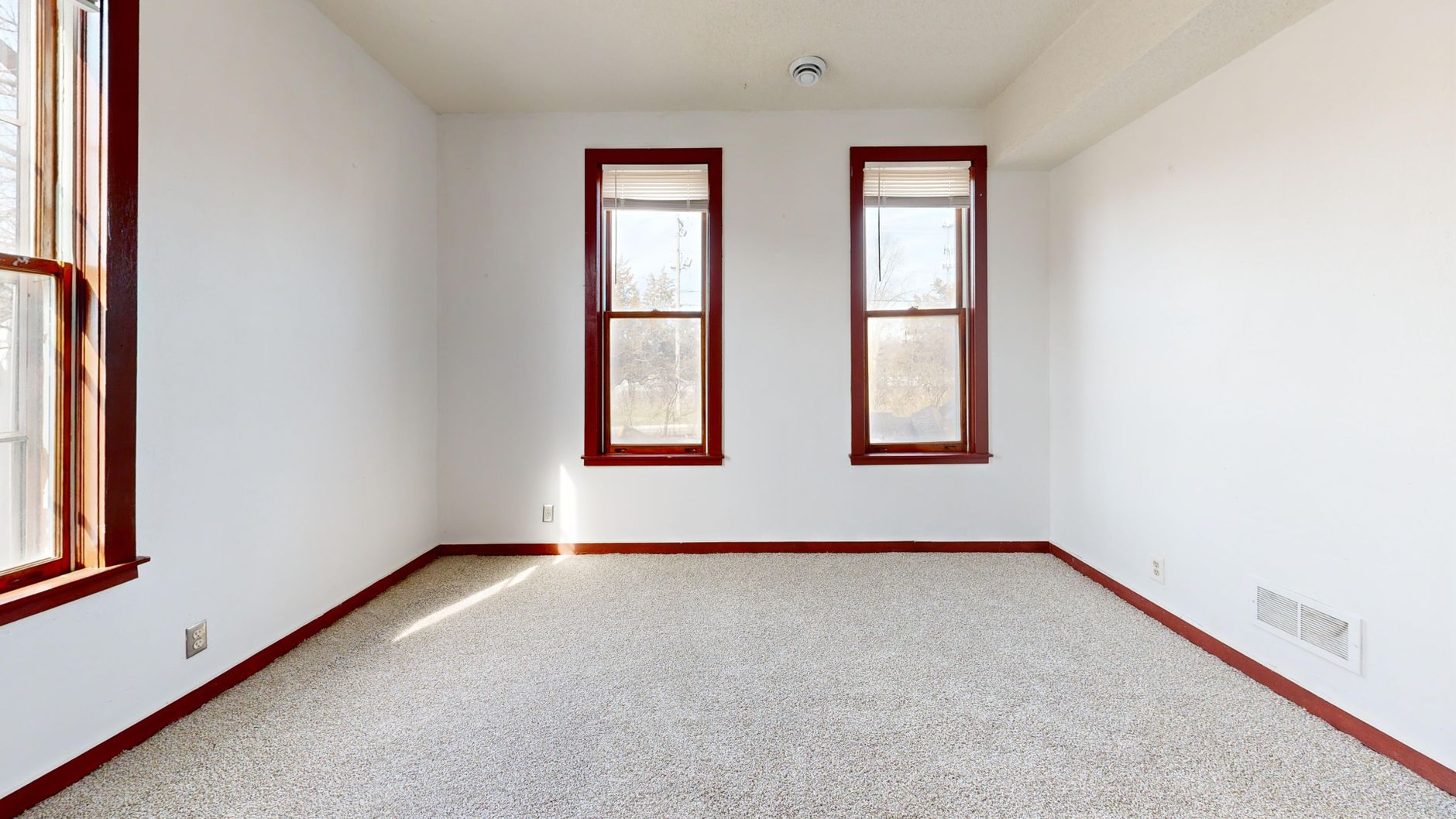
Feng shui treats curtains as a control on how much light, air and view move through a window — not as decoration first. Practitioners generally suggest coverings that can be fully opened during the day and closed at night, in fabric and colour matched to the room’s function, rather than anything left permanently shut or permanently bare.
This is one of the few areas of feng shui where the practical reasoning and the traditional reasoning point the same direction. A window is functionally an opening in the wall — it is where light, air and, in Form School terms, chi enter a room. What covers it affects all three, and the tradition’s advice tracks fairly closely with what an architect or lighting designer would also say, though the vocabulary differs.
Why does feng shui care about window coverings at all?
Windows are treated as a secondary opening for chi, after the front door. Classical Form School texts describe good chi as needing to circulate — to enter, move through a space, and leave — rather than pool or stagnate. A window that is blocked, jammed, or covered so heavily that no light passes is thought to restrict this movement.
The practical version of this claim is uncontroversial: a room with no adjustable light or air control feels stale and is harder to use for anything except sleeping. Feng shui gives that ordinary observation a name and a framework. For how this plays out when a window itself is obstructed by something outside it, see the site’s separate discussion of blocked windows.
Should curtains be kept open or closed?
The general guidance across most schools is that curtains should be opened during daylight hours and closed at night, functioning as a switch rather than a fixed state. Practitioners commonly suggest that curtains left drawn all day, even in a rarely-used room, are read as a sign of stagnant or “dead” chi.
This matches ordinary building physics: a room that never receives daylight tends to feel colder in tone, and mould or damp risk is a genuine, separate, practical concern — not a feng shui one. Readers with condensation or ventilation problems should consult a builder or damp specialist rather than treat curtain choice as a fix; that is a maintenance issue, not a design one. The broader question of how a room is lit and aired is covered across the site’s Light & Air section.
What fabric or weight does feng shui recommend?
There is no single rule here, and the tradition is explicit that fabric choice should follow the room’s use rather than a fixed formula. Heavier, lined curtains are generally suggested for bedrooms, where the aim is to block outside light and street activity for sleep. Lighter, sheer fabrics are more often suggested for living rooms and kitchens, where daylight and a sense of connection to outside are considered more useful than full blackout.
This is again a case where the design logic is plain: a bedroom facing a street or a sunrise-facing window benefits practically from a blackout or heavy lining, independent of any feng shui reasoning. Readers researching curtain weight for a bedroom specifically may find the site’s notes on the bed positioned under a window useful, since the two issues — window covering and bed placement — are often discussed together in the same room.
Does the colour of curtains matter in feng shui?
In the BTB (Black Sect Tantric Buddhist) adaptation of feng shui, colour is often mapped to the bagua areas of a room and to the five elements — wood, fire, earth, metal and water — each associated with a colour family. Classical Compass School texts are far less interested in curtain colour specifically and focus instead on the compass direction a window faces relative to the building’s construction date and orientation.
Because these two systems don’t agree on method, any colour recommendation should be read as belonging to whichever school is making it, not as a universal rule. For readers who want the underlying framework before applying it to curtains, the site’s guides to the five elements and to Form School versus Compass School lay out where the two traditions diverge.
What about sheer curtains, blinds, or no covering at all?
Sheers and blinds are treated as acceptable alternatives to fabric curtains in most feng shui writing, since the tradition’s concern is with the function — control over light and privacy — rather than the specific material. A window with adjustable blinds that can be opened fully during the day satisfies the same reasoning as an open curtain.
A window with no covering at all is more debated. Some practitioners suggest it leaves the room “too exposed,” reasoning drawn more from a sense of psychological privacy than from any documented chi mechanic; no practical reason is given for this beyond the tradition itself in most sources. Others note that an uncovered window in a location with no direct overlook — a top-floor flat, a garden-facing pane — raises no such objection. Readers weighing curtains against blinds for material reasons, rather than symbolic ones, may also find it useful to compare glass and metal fittings in the site’s guide to metal and glass in a room.
Do curtains matter more in some rooms than others?
Yes, according to most schools, though the emphasis differs. Bedroom curtains receive the most attention because sleep is treated as the activity most sensitive to light and to a sense of enclosure. A guest bedroom or a child’s room is often discussed with the same logic; see the site’s separate guides to the guest bedroom and to arranging a child’s bedroom for how window treatment fits into those specific rooms.
Living rooms and dining rooms are typically treated with lighter coverings, on the reasoning that these are shared, daytime spaces where daylight and outward view support conversation and activity. Kitchens are treated similarly, with the added practical note — outside feng shui altogether — that fabric near a stove is a fire-safety consideration, which is a matter for building codes and manufacturer guidance, not for this site.
Do curtains connect to any other feng shui object or rule?
Curtains are frequently discussed alongside a handful of related fixtures. Where a window sits directly opposite a mirror, some practitioners raise the same concerns covered in the site’s general guide to mirrors, since a mirror can amplify or redirect whatever light a curtain lets through. Where a room combines heavy curtains with other soft furnishing, the overall balance of soft and hard surfaces is part of what the site’s Objects & Materials section addresses more broadly, including the parallel case of rugs and floor coverings, which raise a similar question about texture and material choice underfoot rather than at the window.
None of this amounts to a claim that curtain fabric or colour changes a room’s fortune, health, or finances, and no source cited here makes that claim credibly. The most defensible version of the guidance is functional: coverings that can be opened and closed as needed, in a weight suited to the room, support the ordinary business of light, privacy and airflow that any room needs regardless of which tradition is consulted.
Is any of this backed by evidence?
Feng shui’s claims about chi movement are not scientific claims and are not tested as such; they belong to a design and philosophical tradition with its own internal logic, not to physics. Where this article notes a practical benefit — daylight, privacy, airflow — that benefit stands on ordinary observation, independent of feng shui. Readers wanting a fuller treatment of what feng shui does and doesn’t claim to demonstrate can see the site’s separate pieces on evidence for feng shui and what feng shui actually claims.
This article is a description of design tradition and is not medical, structural or tenancy advice. Damp, mould, insulation and window-safety concerns should be directed to a qualified builder, surveyor or the relevant local authority rather than addressed through curtain choice alone.
About this site. Feng Shui Pack explains what the feng shui tradition holds and which school holds it, from published sources. Feng shui is a tradition of placement and orientation, not a science: nothing here will bring you wealth, health, luck or a relationship, and we never claim otherwise. Where a suggestion has an ordinary practical reason — daylight, airflow, sightlines, less clutter — we say so; where it does not, we say that too. This is not medical, financial, legal or tenancy advice. If a decision matters, talk to a professional in that field.