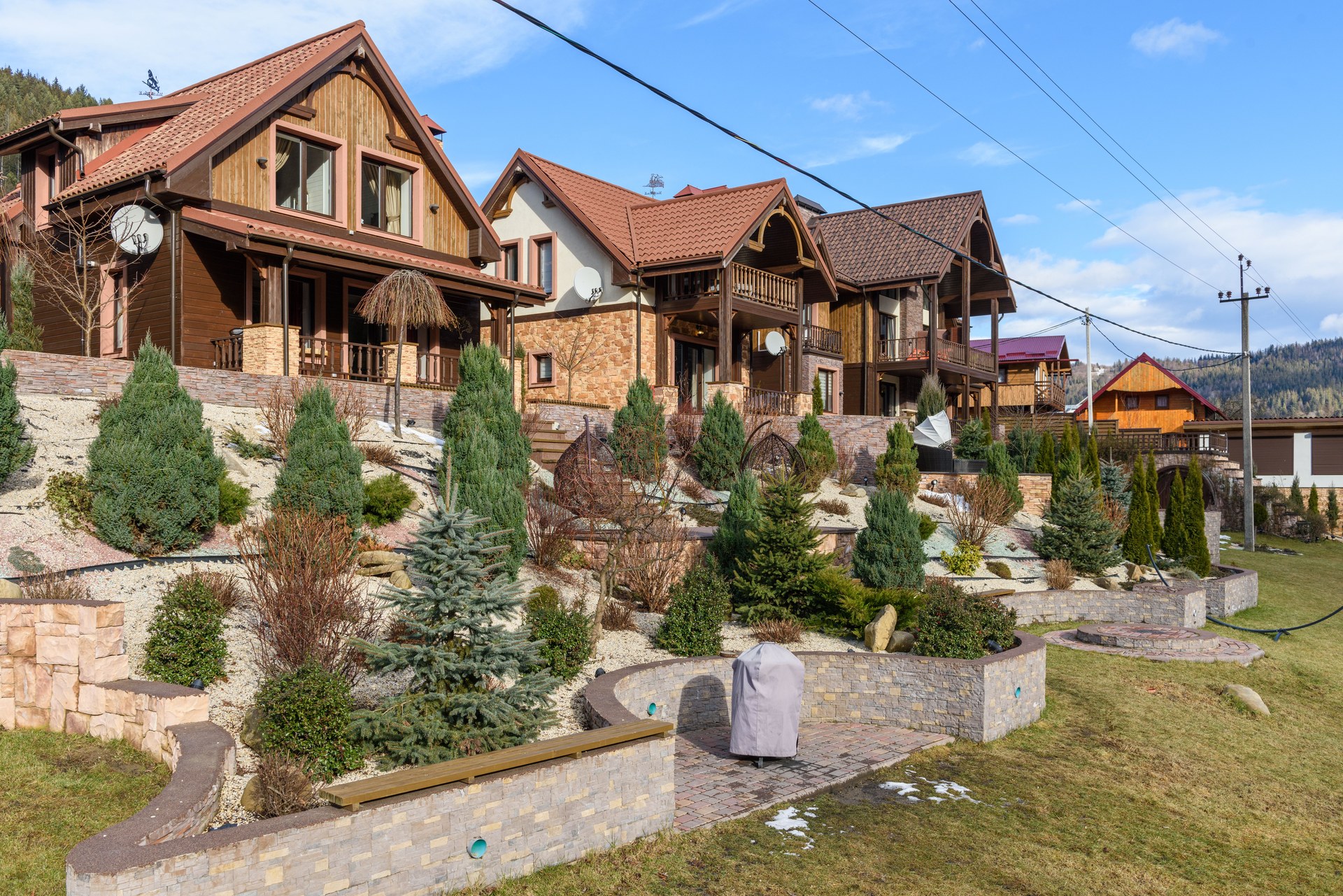
In Form School (Xingshi) feng shui, a house on a slope is judged by what is behind it and what is in front of it, not by the slope itself. Land rising behind the house is traditionally read as support; land falling away steeply in front, or a house perched with nothing behind it, is read as exposed. Compass School and modern practitioners add direction and detail, and they do not always agree with each other.
Why does the direction of the slope matter?
Classical Form School describes an ideal site using the image of an armchair: a rise at the back, lower ground in front, and gentler support to either side. This comes from writings on landform (often grouped under the term “dragon” formations) that predate any specific building and were originally used for siting graves and settlements alike. A slope is not automatically good or bad in this system — its position relative to the house is what gets read.
A house with the ground rising behind it and falling gently away in front matches the armchair shape reasonably well. A house with the slope running the other way — falling away sharply behind the building, or rising steeply and closely in front of it — does not, and traditional commentary treats that arrangement as offering less protection at the back and less room to “breathe” at the front.
What if the slope rises behind the house?
This is the configuration Form School treats most favourably. The rise behind is described as a backing landform, sometimes discussed in the same terms as a tall building, hedge or hill used deliberately as the “support” at the rear of a plot. The reasoning given is symbolic rather than structural: something solid behind the house, something open in front.
Practically, land rising behind a house also does ordinary, checkable things: it can shelter the rear elevation from prevailing wind, and depending on aspect it may shade or expose the back rooms at different times of day. None of that is feng shui — it is basic siting — but it is worth separating from the tradition rather than folding the two together.
What if the ground falls away steeply in front?
Form School commentary is more cautious here. A very steep drop directly in front of the main entrance is sometimes discussed in similar language to a house facing straight down a hill or a fast road — the concern is with chi (qi) supposedly moving too quickly past or away from the entrance rather than settling near it. This is a metaphor, not a measurable claim, and readers should treat it as one interpretation, not a rule with a single accepted meaning.
Separately, and this is genuinely checkable: a steep drop in front of a house is a real drainage and access consideration. Water runs downhill. A front approach on a slope needs its own drainage, and steps, ramps or a driveway on a gradient are covered by ordinary building and safety standards, not by feng shui. For anything structural — retaining walls, foundations, slope stability — the relevant professional is a structural engineer or a chartered surveyor, and this article is not a substitute for that advice.
What about a house cut into a hillside, or raised on stilts above a drop?
A house dug into a hillside, with the slope rising close on more than one side, is discussed in Form School terms similar to being “hemmed in” — commentary here again reads the site by how much open ground is left in front, since a house with rock or earth pressing close on several sides is thought to leave little room for the front approach to function as the described “bright hall” in front of an entrance.
A house raised on stilts or a platform over a steep drop, common on hillside sites, is read differently by different practitioners: some treat the open space beneath as a loss of grounding at the rear or base of the building, others say the same principle used for backing landform simply does not apply once a slope is this steep and the building has to be engineered around it. Readers researching a specific hillside property will find real disagreement among consultants on this point, which is itself worth knowing before paying for a one-line verdict.
Does the compass direction of the slope matter?
Compass School (Liqi) feng shui adds direction to the landform reading — where the rise sits relative to the compass, and how that interacts with the specific formula being used for the building’s facing direction. This is a separate, more technical layer of the tradition, and it produces different answers for different formulas and different practitioners. The BTB (Black Sect Tantric Buddhist) adaptation common in Western books generally skips this compass layer altogether and works instead from the front door inward, which is one of several reasons BTB advice and classical Compass School advice can look entirely different for the same house. For how the front approach itself is read once you’re past the slope question, see what feng shui says about the approach to a house.
What are the ordinary, non-feng-shui concerns with a sloped site?
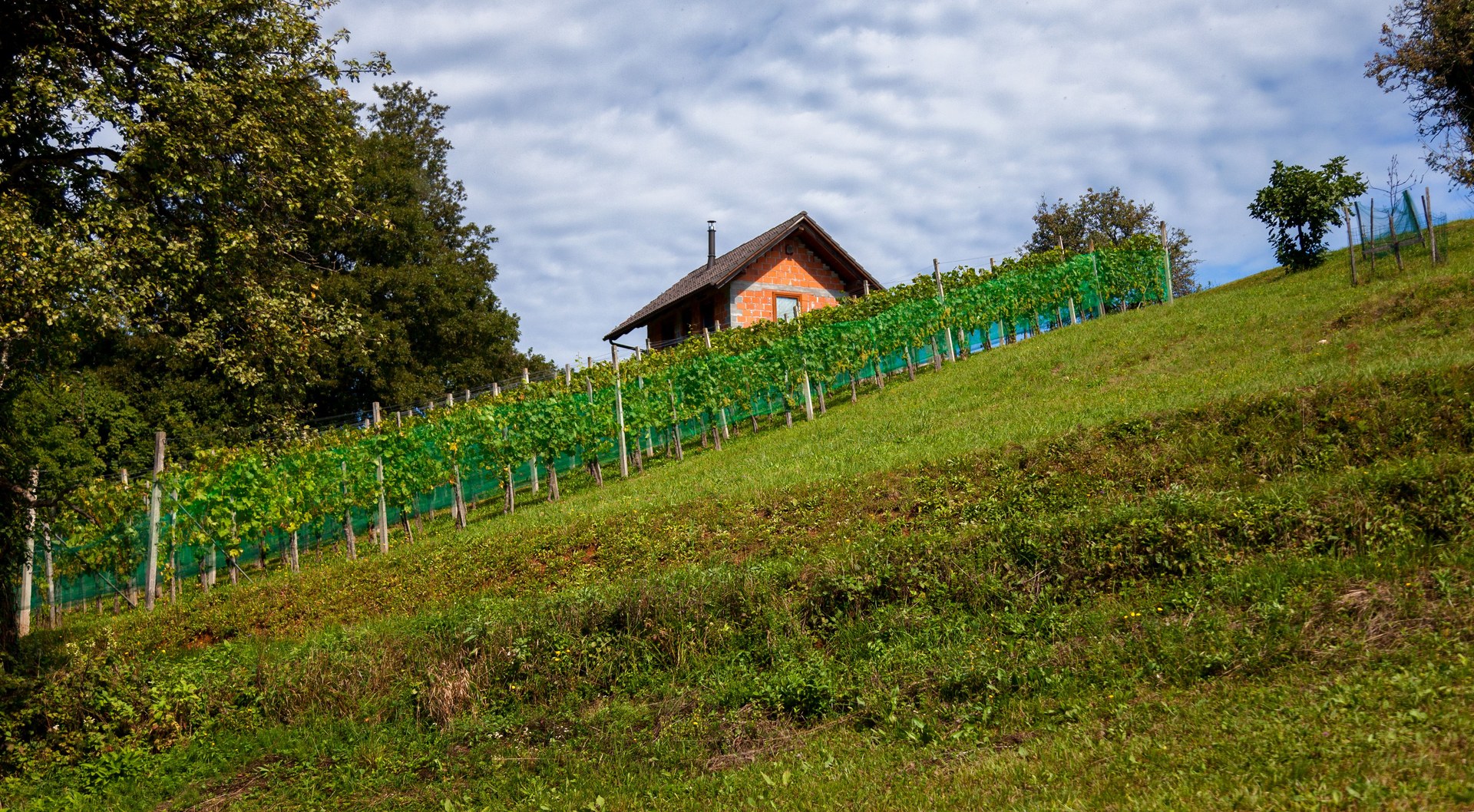
Independent of any school of feng shui, a number of practical issues recur with sloped building sites and are worth checking through the appropriate professional or the property’s own survey, not through feng shui:
- Drainage and water runoff, particularly for a house with the slope rising behind or beside it
- Retaining wall condition, age and maintenance responsibility
- Foundation type and any history of subsidence or underpinning
- Access — steps, ramps or driveway gradient — for daily use and in poor weather
- Insurance and mortgage lender requirements specific to sloped or “non-standard” sites
None of this is feng shui advice, and none of it is financial, legal or structural advice either — it is a list of the kind of question a surveyor, structural engineer or conveyancer answers, and readers evaluating a specific property on a slope should go to those professionals directly.
Does the slope affect how the front door and garden should be treated?
A sloped site changes some of the usual site-reading questions without changing the underlying logic. A path that switches back across a slope, rather than running straight up to the door, is discussed in the same terms used for any front approach — see what feng shui says about the path to the front door for how a straight versus indirect approach is treated. Where a sloped driveway meets a road at an angle, or the house sits at a junction shaped by the terrain, the reasoning overlaps with what’s discussed for a house at a T-junction. Retaining walls, terraced planting and boundary gates on a slope are also covered by the general logic in the site’s Outdoors & Approach hub, and mature trees on a sloped garden raise their own separate questions — see what feng shui says about trees near a house.
What should someone buying or renting a sloped house actually do with this?
Anyone assessing a specific property on a slope is dealing with two entirely different questions at once: the feng shui reading, which is one school’s interpretation among several, and the structural and drainage reality, which is checkable and matters regardless of any tradition. The Buying & Renting hub covers how to weigh feng shui findings against a property’s fixed features you cannot change — see Buying & Renting and, more specifically, what feng shui says about renting and features you can’t change. Because consultants routinely disagree on landform and Compass School readings for the same site, it is worth reading why feng shui consultants disagree with each other before treating any single verdict on a sloped house as settled, and what to ignore in most online feng shui advice before acting on a generic checklist found online.
This article describes what different schools of feng shui say about sloped sites. It is not structural, drainage, legal or financial advice, and any concern about the safety or condition of a specific sloped property should go to a qualified surveyor, structural engineer or conveyancer rather than to this or any feng shui source.
About this site. Feng Shui Pack explains what the feng shui tradition holds and which school holds it, from published sources. Feng shui is a tradition of placement and orientation, not a science: nothing here will bring you wealth, health, luck or a relationship, and we never claim otherwise. Where a suggestion has an ordinary practical reason — daylight, airflow, sightlines, less clutter — we say so; where it does not, we say that too. This is not medical, financial, legal or tenancy advice. If a decision matters, talk to a professional in that field.