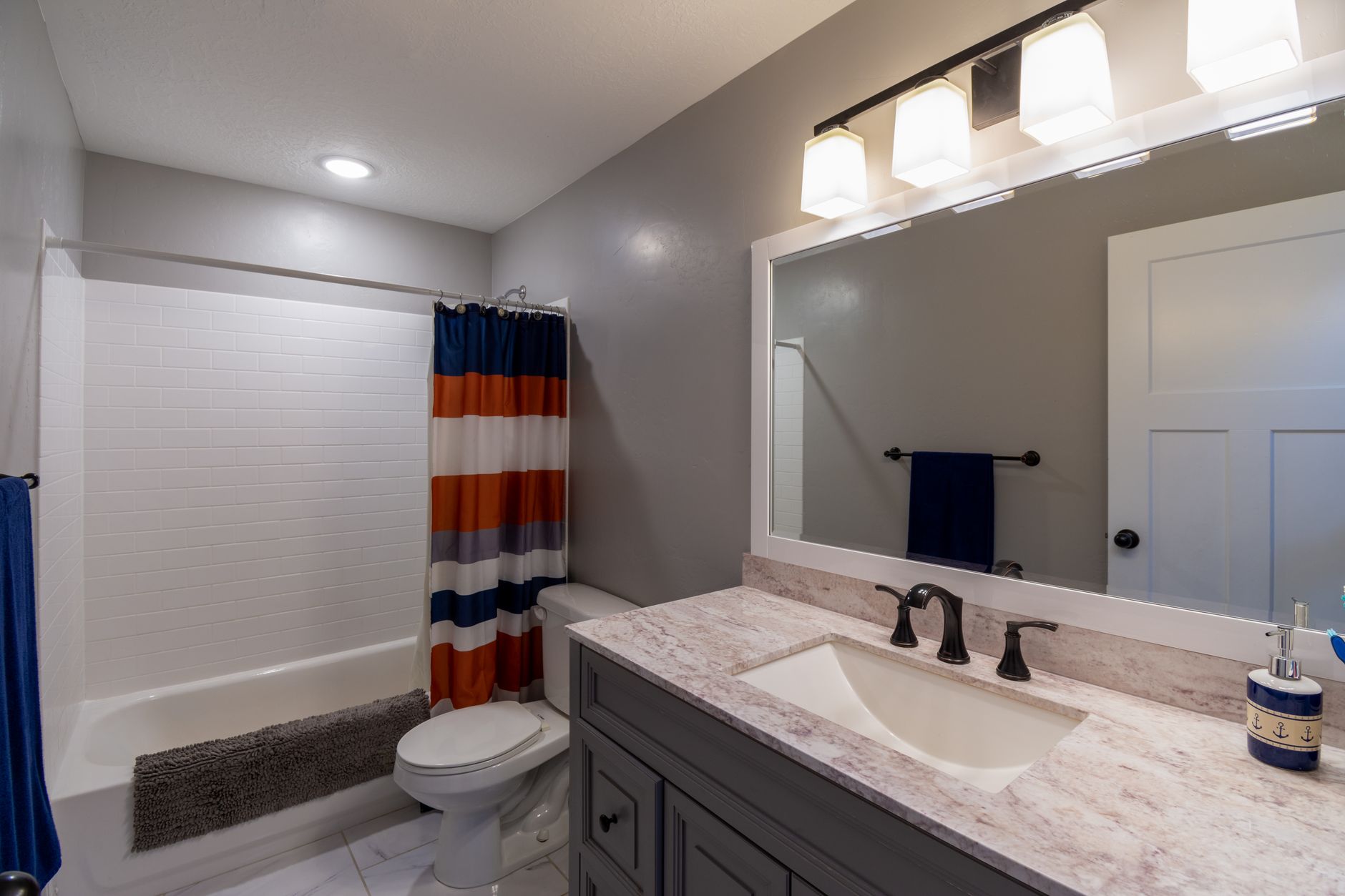
Feng shui traditions generally treat the bathroom door as a weak point in a home’s layout: the room behind it is associated with water and drainage, and several schools hold that chi (qi), the flow of energy the tradition describes moving through a space, can escape or stagnate there. The specific concerns, and the fixes offered, differ by school — Form School, Compass School and the Western Black Sect (BTB) adaptation do not all agree.
Why is the bathroom door considered a problem in feng shui?
The reasoning given is that a bathroom combines running water, drains and (in older or Compass School framing) a strong Water element in a spot the tradition associates with cleansing and letting go — including, in some accounts, letting go of the household’s good fortune along with the water. Practitioners in this line of thinking commonly suggest that a bathroom door left open, or positioned badly relative to other doors, lets that draining quality spread into the rest of the home.
No classical text treats this as a fixed law the way it treats, say, the commanding position of a bed. It shows up more consistently in BTB-derived advice, which tends to speak in terms of energy “leaking” from a room, than in older Compass School material, which is more interested in the door’s compass direction and the occupants’ personal directions than in the idea of drainage as such.
Does it matter if the bathroom door faces the bedroom door?
In several branches of the tradition, yes: a bathroom door directly opposite a bedroom door is treated as undesirable, on the reasoning that the sleeping area sits too close to the bathroom’s Water association and to the traffic and moisture the room generates. This sits alongside the wider set of rules about bedroom door alignment, which cover sightlines to the bed as well as to other doors.
Two doors facing each other more generally is its own recurring topic in the literature, independent of which two rooms are involved — see what feng shui actually says about two doors facing each other for how that principle is argued and where it comes from.
What if the bathroom door faces the front door, the kitchen, or a bed directly?
A bathroom door facing the front door is treated in some Form School and BTB commentary as a specific problem, on the reasoning that chi entering the home is immediately drawn toward the drain rather than circulating through the living space. A bathroom door facing a kitchen door is discussed less often, but where it comes up, the concern given is usually about clashing elements — Water against the Fire and Wood associations of a kitchen — rather than drainage.
A bathroom door facing directly onto a bed is treated more seriously across schools, closer in tone to the concerns raised about bed placement generally. That overlaps with material on what a “poison arrow” is in feng shui, since a straight, unbroken line from a door to a bed is one of the configurations that term is used for.
What are the common remedies, and what do they actually do?
Across BTB-influenced advice in particular, several remedies recur for a bathroom door judged problematic:
- Keeping the door closed and the toilet lid down, so the room is not left “open” toward the rest of the home.
- Hanging a mirror on the outside of the bathroom door, which some practitioners describe as “pushing” the room’s energy back rather than letting it spread — a use of mirrors distinct from the reasoning given for bedroom mirrors, covered separately in the article on mirrors in a bedroom.
- Using a plant or a small screen to break a direct sightline between the bathroom door and another door.
- Keeping the door and the space around it well lit, which BTB material frames as counteracting a yin-heavy space — see what yin and yang mean in a room for how that pairing is used more broadly.
None of these remedies has a mechanism outside the tradition’s own terms, and none is presented on this site as something that will change an outcome. They are described here as what practitioners recommend and why they say they recommend it, not as instructions.
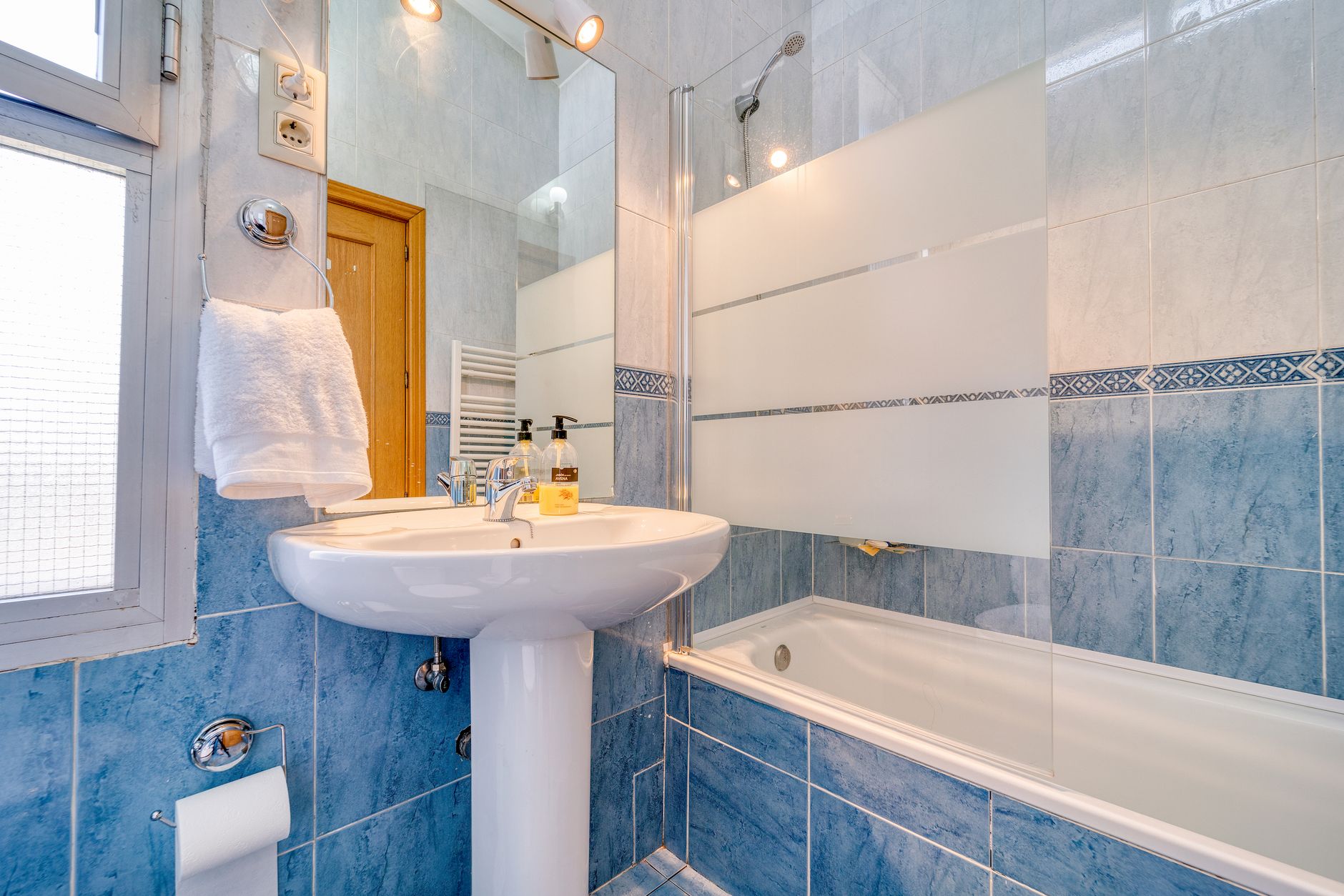
Does the direction the bathroom door faces matter?
In classical Compass School (Liqi), direction matters more than any single door-to-door relationship. A practitioner working in that tradition would want the home’s compass orientation and, in more advanced practice, the occupants’ personal directions before saying anything about where a bathroom belongs — not just whether its door lines up with another door. This is one of the clearest places where the two main schools genuinely diverge rather than just using different vocabulary for the same idea; the difference is set out in full in Form School vs Compass School: the difference.
Much of the door-facing advice repeated online — mirror on the door, keep it shut, watch the bedroom alignment — comes from the BTB adaptation, which places its bagua grid from the front door and generally does not require a compass reading at all. That approach is explained on its own terms in the piece on Black Sect (BTB) feng shui. Readers who want the general logic of how the bagua is positioned over a floor plan, bathroom included, can start with how a bagua map is oriented to a home.
Is there a practical reason behind any of this?
Some of it, yes. A bathroom door kept closed limits the spread of moisture, steam and odour into hallways and bedrooms, which is a straightforward ventilation and hygiene matter rather than anything specific to feng shui. A door that does not open directly onto a bed removes one more obstacle in a room used at night, in the dark, half-awake — the same practical logic that runs through most of the site’s Entrances & Flow coverage.
Where the reasoning is about chi draining away with the water, or about a mirror pushing energy back, no practical mechanism is offered beyond the tradition itself, and this article does not claim one exists. This is not medical, health or building-safety advice: persistent damp, mould or plumbing problems around a bathroom door are matters for a qualified tradesperson or, in a rented property, the landlord or relevant tenancy authority — not for a design rule.
Does feng shui agree on any of this?
Not fully. The bathroom door is a good example of how much English-language “feng shui” advice is BTB without saying so, layered over older material that was really about compass direction. Readers interested in why the rules split this way, and how to tell which version of a claim they are reading, can follow that thread through why feng shui rules contradict each other so often and the broader Basics archive, which sets out what each school actually claims before getting into individual rooms.
For the bathroom specifically, the safest general statement is this: most schools treat it as a room whose door deserves some deliberate placement and some attention to keeping it shut, but the exact reason given — drainage of chi, elemental clash, or compass misalignment — depends entirely on which tradition is doing the talking. Anyone applying a rule to their own home is better served knowing which school it came from than treating it as settled fact.
About this site. Feng Shui Pack explains what the feng shui tradition holds and which school holds it, from published sources. Feng shui is a tradition of placement and orientation, not a science: nothing here will bring you wealth, health, luck or a relationship, and we never claim otherwise. Where a suggestion has an ordinary practical reason — daylight, airflow, sightlines, less clutter — we say so; where it does not, we say that too. This is not medical, financial, legal or tenancy advice. If a decision matters, talk to a professional in that field.