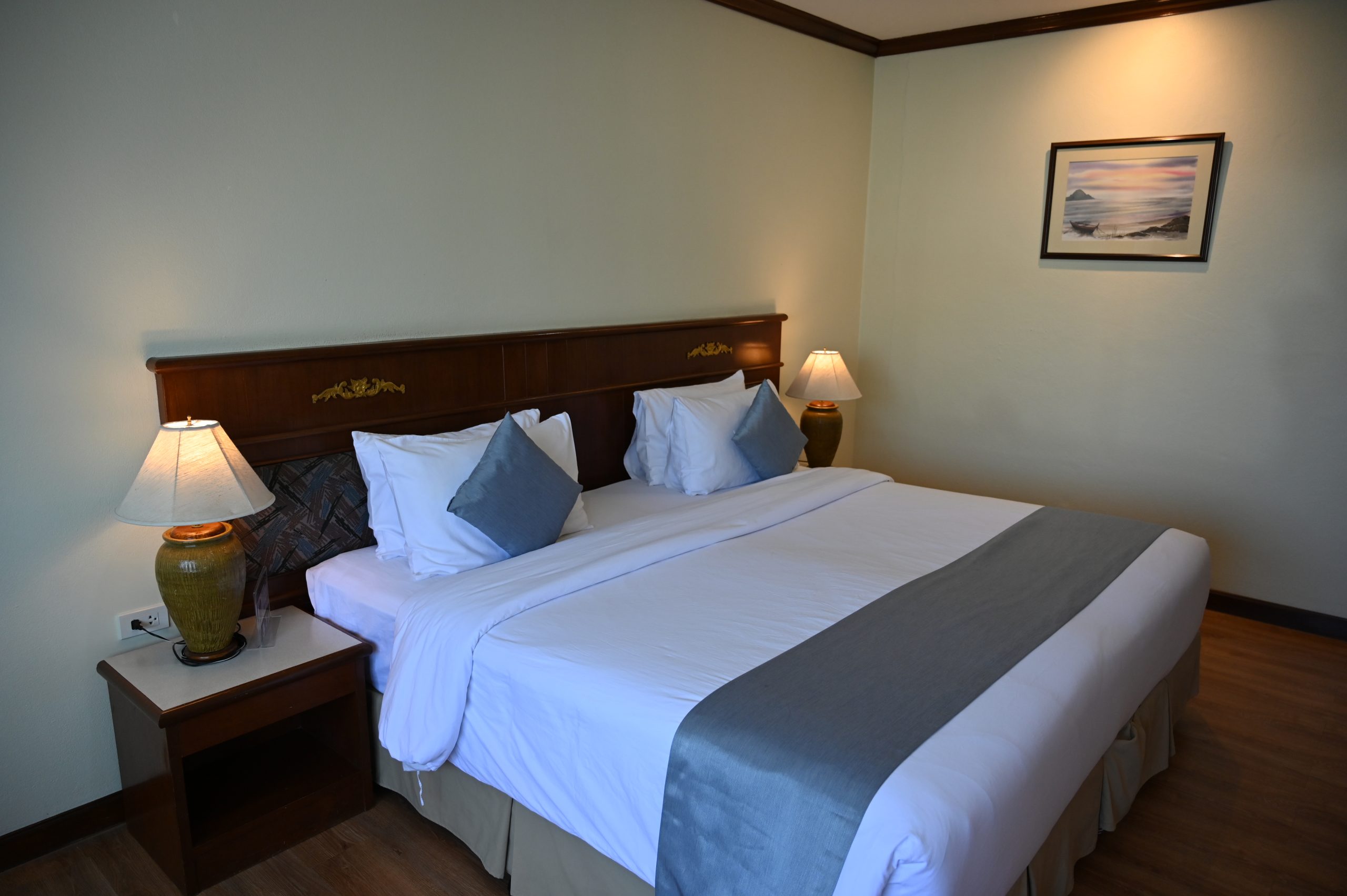
Feng shui treats an exposed beam or a low ceiling as a structural weight pressing down on whoever sits or sleeps beneath it. The concern is about a heavy, fixed shape sitting directly over a person, not about the wood or the plaster itself. Classical Form School texts describe this as one version of a broader idea: that overhead structure should not feel like it is bearing down on the body.
What does feng shui actually say about exposed beams?
A beam that crosses directly above a bed, desk, or dining chair is described in Form School (Xingshi) writing as an oppressive shape — something with visible mass positioned where a person’s head or torso would sit. The tradition does not object to beams as a category. It objects to their position relative to where someone spends sustained time.
This sits alongside a wider set of Form School concerns about shapes that seem to threaten a fixed spot in a room — the same underlying logic that governs a poison arrow, a protruding corner, or an exposed structural column. A beam is simply the overhead version of the same idea: a hard edge with a direction, aimed at where you sit still.
Why are low ceilings considered a problem in feng shui?
A low ceiling is read the same way as a beam, but distributed across the whole room rather than concentrated in one line. The tradition treats it as reduced space for chi (qi) — the room’s air and movement — to circulate above head height, which is said to make the whole space feel more confined.
No measurement threshold appears in classical sources for what counts as “low.” The concern is proportional and comparative: a ceiling that feels close relative to the size of the room and the height of the people using it, judged by eye rather than by a fixed number.
Which school of feng shui addresses this most directly?
Beams and ceiling height are primarily a Form School (Xingshi) topic, because Form School is concerned with the visible shape of a space — its structure, proportions, and sightlines — rather than with compass direction. Compass School (Liqi) calculations about a room’s orientation do not usually factor in beam placement at all.
The Western Black Sect (BTB) adaptation, which is the source of most English-language feng shui advice, absorbed the beam concern from Form School and added its own remedies, discussed below. Readers encountering advice online without a named school attached to it are almost always reading BTB material presented as if it were universal. The difference between these traditions is explained in more detail in Form School vs. Compass School.
What is a beam said to do over a bed, desk, or dining table?
Practitioners in this tradition commonly describe a beam over these three spots as creating a specific pressure:
- Over a bed — said to disturb rest, particularly if the beam crosses the sleeper at chest or head height rather than at the feet.
- Over a desk — said to weigh on concentration and decision-making for whoever sits beneath it for long stretches.
- Over a dining table — said to unsettle the mood of anyone seated directly under the beam’s line, more so at the head or foot of the table than along its sides.
These are the tradition’s claims, not established outcomes, and the site does not present them as anything else. Readers with genuine sleep or concentration difficulties should treat this as separate from any question of room layout and consult a medical professional; nothing here substitutes for that.
Are there practical reasons beams and low ceilings feel oppressive?
Yes, and this is where the tradition and ordinary room-reading agree. A beam positioned directly above a bed or desk is genuinely closer to the body than the rest of the ceiling, which changes how the room reads visually even before any symbolic reasoning is applied. A lower ceiling reduces the volume of air in a room and can make artificial lighting feel more direct and less diffuse, since less ceiling area is available to bounce light.
Ceiling height also affects how a room’s proportions read against its furniture. A tall wardrobe or bookshelf in a low room reduces the sense of headroom further, which is one reason the general guidance on furniture placed against walls pays attention to the height of pieces relative to the room, not just their footprint.

What remedies does the tradition suggest, and what do they actually do?
BTB sources most commonly suggest one or more of the following where a beam cannot be removed or a bed cannot be moved from beneath it:
- Repositioning the bed, desk, or table so the beam runs along the length of the body rather than across it, or clears the space entirely.
- Using a canopy, drape, or false ceiling panel to visually break the line of the beam.
- Painting the beam the same colour as the ceiling so it recedes rather than stands out as a distinct shape.
- Hanging paired flutes from the beam, angled outward — a specific BTB remedy with no equivalent in classical Form School texts.
The first two of these have a plain design rationale: they change what the eye registers when entering the room, and a beam that blends into the ceiling reads as less prominent regardless of any symbolic framework. The flute remedy has no practical mechanism offered for it beyond the tradition itself, and readers should understand it as a symbolic practice rather than a physical fix. This site does not suggest buying objects to achieve an outcome; where a remedy involves an object, the honest description is what the tradition says it does, not what it will do for the reader.
Does this apply to sloped ceilings and attic bedrooms too?
The same reasoning extends to sloped ceilings, which combine the beam concern with an uneven distribution of headroom across the room — full height at one wall, near-zero at the other. This comes up often enough in converted attics and upper floors that it has its own detailed treatment in Sloped Ceiling Bedroom: A Feng Shui Guide to the Layout, including where a bed is best placed relative to the slope.
A related structural question — a bedroom sitting above a garage rather than over living space — raises a different set of Form School concerns about what sits beneath a bed rather than above it, covered separately in Bedroom Above a Garage: What Feng Shui Actually Says.
What should a reader actually do about a beam they can’t move?
Where a bed, desk, or table cannot be shifted out from under a beam, the most consistent advice across Form School and BTB sources is to prioritise the commanding view of the room’s entrance over avoiding the beam entirely — a hierarchy of concerns explained in What Is a “Command View” of a Room?. A beam is treated as a secondary structural issue; sightlines to the door are treated as primary in almost every school’s account of bedroom and desk placement.
Beyond the bed itself, the surrounding layout matters more than any single fixture. How a headboard sits against a wall, what a room’s traffic pattern looks like, and how much open floor remains around the bed all shape how confined or spacious a low-ceilinged room reads. These are covered in How Should a Headboard Be Positioned? and in the wider Layout & Furniture archive, and the room-specific versions of this question sit in the Room by Room section.
Readers weighing how much of this to take literally may find it useful to start with Is There Evidence for Feng Shui? What Kind Exists, which sets out what has and has not been studied, separate from what any individual school claims.
About this site. Feng Shui Pack explains what the feng shui tradition holds and which school holds it, from published sources. Feng shui is a tradition of placement and orientation, not a science: nothing here will bring you wealth, health, luck or a relationship, and we never claim otherwise. Where a suggestion has an ordinary practical reason — daylight, airflow, sightlines, less clutter — we say so; where it does not, we say that too. This is not medical, financial, legal or tenancy advice. If a decision matters, talk to a professional in that field.
Featured image: Photo by PattayaPatrol, source, BY-SA