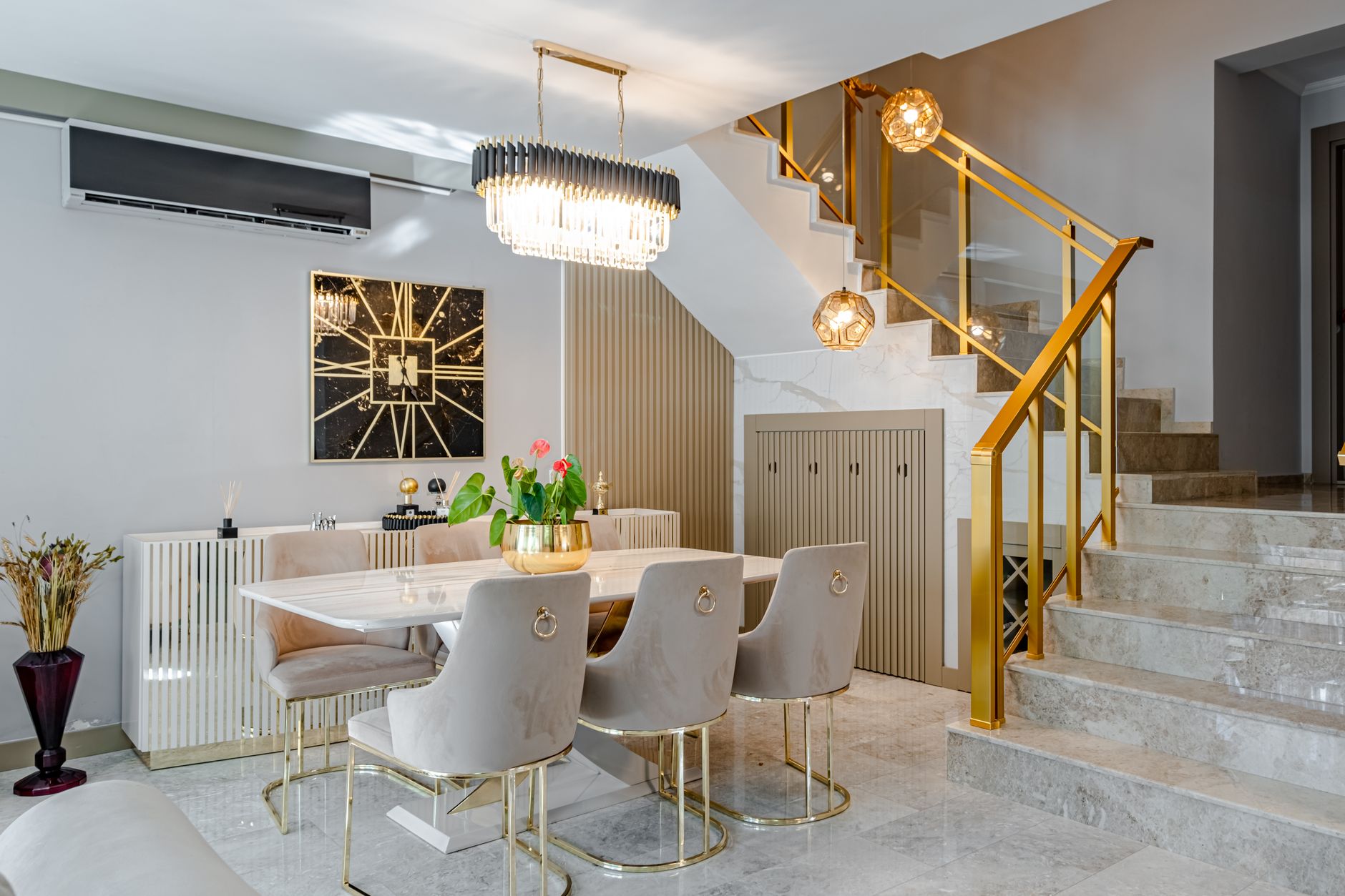
Most feng shui sources place a dining room mirror on the wall so it reflects the dining table, ideally showing the whole table surface rather than cutting it off. The common reasoning given is that the reflection “doubles” the food on the table, a symbol tied to abundance rather than a design rule with a practical basis.
That said, the advice is not uniform across sources, and the placement questions worth answering separately are: where it goes relative to the table, what it should avoid facing, and whether it should be there at all.
Why does a mirror doubling the table matter?
The reasoning given, mostly from Western Black Sect (BTB) sources, is that a mirror positioned to reflect a fully set table symbolically doubles the food and the seats at it. This is a symbolic claim, not a physical one — there is no practical mechanism behind “doubling,” and it should be read as tradition rather than fact.
Classical Chinese sources on mirrors are thinner on this specific point than the abundance of modern English-language advice suggests. Much of what circulates as “feng shui says” about dining mirrors is BTB interpretation, which reworks older mirror lore into a more symbolic, less compass-dependent system. For background on how that school differs from the older Form and Compass traditions, see Black Sect (BTB) Feng Shui: What It Is, and Why It Spread and Form School vs Compass School Feng Shui: The Difference.
Where exactly should the mirror hang?
Practitioners commonly suggest hanging the mirror on a wall adjacent to or facing the table, positioned so the tabletop appears in full in the glass rather than half-cropped. A mirror hung too high, showing only the tops of diners’ heads, is generally considered a poor version of the placement even within traditions that recommend the mirror in the first place.
There is a practical note buried in this advice worth keeping separate from the symbolism: a mirror on a dining room wall does genuinely make a small or windowless room feel larger and brighter, because it reflects available light and doubles the visual depth of the space. That effect is optical, not energetic, and it holds regardless of which feng shui school a household follows.
What should the mirror not reflect?
Two placements recur across sources as ones to avoid, for different reasons.
- The main entrance directly opposite. In several traditions, a mirror facing an entry door is said to reflect entering chi (qi) straight back out before it settles in the room. This is a symbolic claim about energy flow, explained in more detail at What Is Chi, and What Does Energy Flow Mean in Feng Shui?.
- The kitchen stove, if visible from the dining area. Some Form School–influenced advice treats a mirror doubling a visible stove as excessive, tied to fire element concerns discussed further at Where Should the Kitchen Stove Be Placed? A Feng Shui Guide.
Neither avoidance is universal. A reader working strictly from Compass School (Liqi) principles will find the emphasis is less on what the mirror reflects and more on the compass direction of the wall it hangs on, which is a different calculation entirely — see What Is a Feng Shui Compass, and Do You Need One? for how that’s actually worked out.
Does the shape or position of the table change the advice?
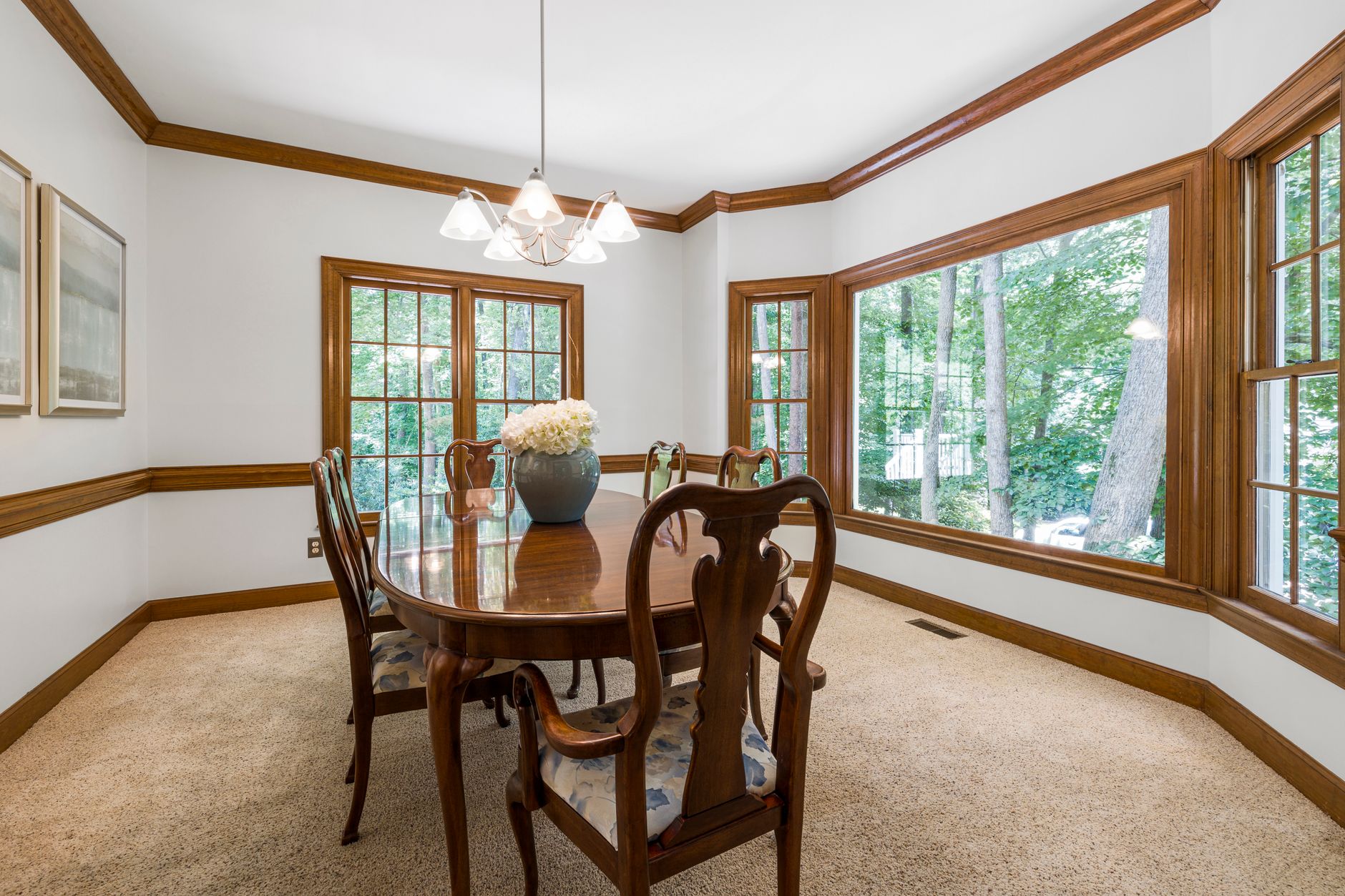
Yes, in the sense that most dining mirror guidance assumes a table shape and seating arrangement that the mirror is reflecting cleanly. A round or rectangular table centred under the mirror reflects predictably; an irregular table, or one pushed against a wall, reflects only a partial view, which some sources treat as undermining the “doubling” symbolism entirely.
The table’s shape and orientation are covered on their own terms — not just as they relate to a mirror — at What Does Feng Shui Say About a Dining Table’s Shape?.
Should the mirror include the whole room, or just the table?
Most guidance is about the table specifically, not the room in general. A mirror that reflects a cluttered sideboard, a stack of storage boxes, or a corridor leading to a bathroom is generally treated as counterproductive regardless of school, on the practical grounds that a mirror amplifies whatever is in front of it — tidy or not. This is one of the few points where the symbolic and the practical readings agree: what gets doubled should be worth doubling.
What if the dining room has no obvious wall for a mirror?
Open-plan dining areas, common in smaller apartments and studio layouts, often don’t have a single wall clearly “opposite” the table. In this case, sources generally treat the placement as more flexible, prioritising whichever wall allows the mirror to reflect the table without also facing the front door or a toilet door. The broader logic of how a room’s openings and sightlines interact — doors, hallways, and what faces what — is covered at Entrances & Flow and, for a related object, at Two Doors Facing Each Other: What Feng Shui Actually Says.
Is a mirror in the dining room the same advice as in a bedroom?
No. Mirror advice in feng shui is highly room-specific, and dining room reasoning (doubling food, abundance symbolism) does not carry over to a bedroom, where the dominant concern in most sources is a mirror facing the bed rather than a table. That separate set of concerns is addressed at What Does Feng Shui Say About Mirrors in a Bedroom?, and it’s worth reading as a distinct topic rather than assuming one set of mirror rules applies to every room in the house.
Does any of this have a design basis beyond symbolism?
Some of it does, and it’s worth separating clearly from the symbolic claims:
- A mirror opposite a window brings more daylight into a dining area used mostly in the evening — an ordinary lighting effect, not a feng shui-specific one.
- A mirror in a small dining nook makes the room read as larger, which is a spatial illusion any interior designer would recognise.
- A mirror positioned to reflect clutter rather than a set table draws the eye to mess — again, true regardless of tradition.
Where no such practical reasoning exists — as with the “doubling” of abundance — the honest description is that it’s a symbolic tradition with no independent design rationale, not a hidden practical rule in disguise. For a wider look at where feng shui claims rest on practical logic and where they don’t, see What Does Feng Shui Actually Claim, and What Does It Not? and Is There Evidence for Feng Shui? What Kind Exists.
Where does this fit with the rest of a dining room’s layout?
A mirror is one placement decision among several that make up a dining room’s arrangement in feng shui terms — table shape, seating orientation, and the room’s relationship to the kitchen and entrance all interact. For the fuller picture, the Room by Room archive and Layout & Furniture archive cover how these decisions are usually sequenced, and The Basics archive is the place to start for how the underlying schools of thought differ before applying any single rule to a specific room.
None of the guidance above is a substitute for professional design, structural, or safety advice about mirror mounting, wall load, or renovation work — a qualified tradesperson or interior professional should be consulted for anything beyond hanging a lightweight mirror securely.
About this site. Feng Shui Pack explains what the feng shui tradition holds and which school holds it, from published sources. Feng shui is a tradition of placement and orientation, not a science: nothing here will bring you wealth, health, luck or a relationship, and we never claim otherwise. Where a suggestion has an ordinary practical reason — daylight, airflow, sightlines, less clutter — we say so; where it does not, we say that too. This is not medical, financial, legal or tenancy advice. If a decision matters, talk to a professional in that field.