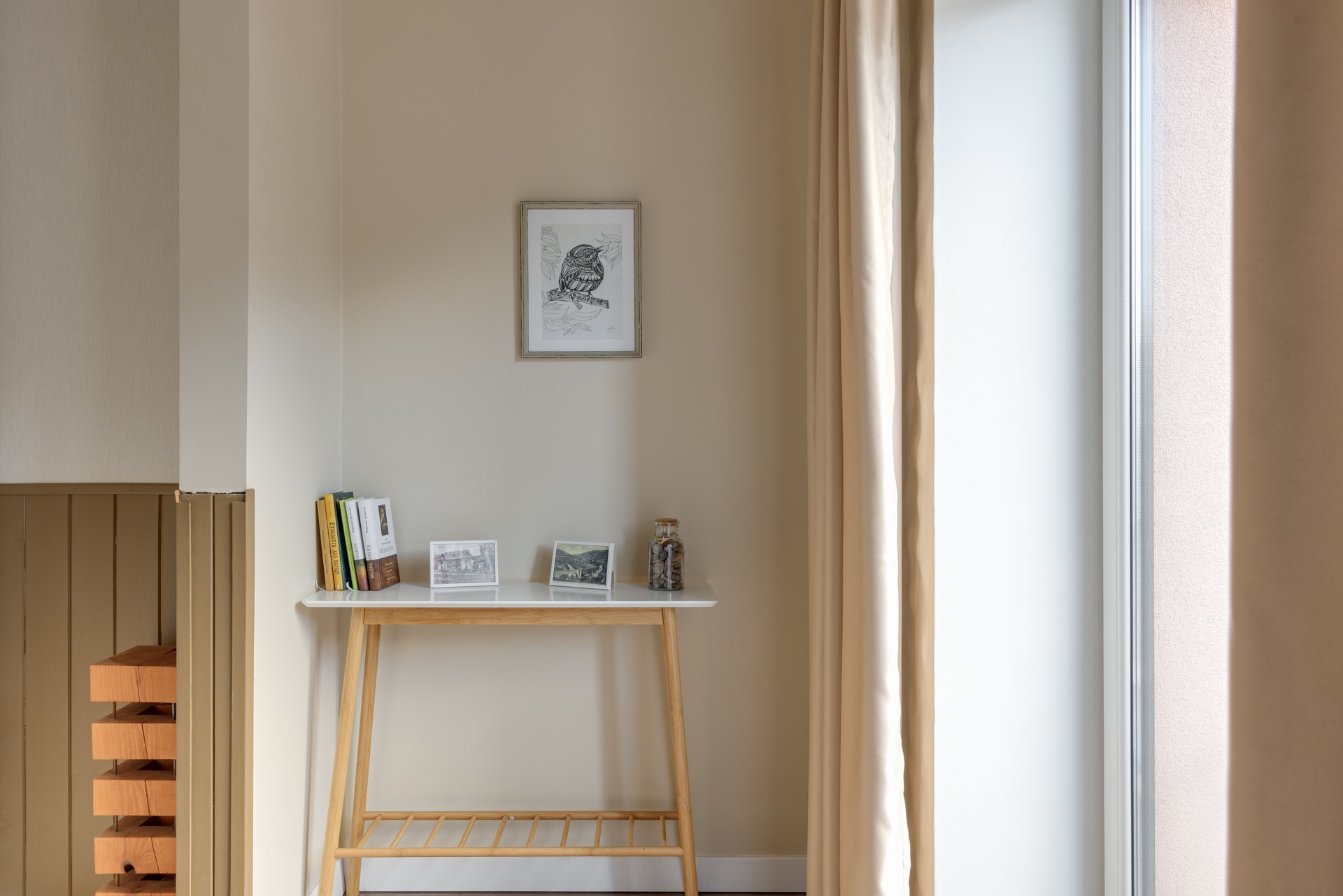
Feng shui traditions do not agree on a single rule for family photographs. The BTB (Black Sect Tantric Buddhist) adaptation assigns them to specific bagua zones — a marriage corner, a family corner — based on subject matter. Classical Form School cares less about what a photograph shows and more about its visual weight, size and where it sits relative to the bed or the door.
Because these are two different systems with two different sets of concerns, a rule that sounds absolute in one is often simply absent from the other. This article separates the two, and says plainly where a claim has no practical backing beyond the tradition itself.
Does feng shui say where in the house photos should go?
In the BTB adaptation, yes: the bagua map is overlaid on the floor plan from the front door, and each of its nine zones is linked to a theme — family, wealth, marriage, and so on. A photograph of a couple is often placed in the marriage/relationship zone, and family group photos in the family zone. Classical Compass School, which orients the bagua to compass direction rather than the door, does not use these thematic zones in the same way and has little to say about photograph subject matter specifically.
Readers who want to understand how the bagua itself is built, and why BTB and classical Compass School disagree about where it starts, are better served by the basics of how a bagua map is oriented than by a rule repeated without its source.
Should photos of a couple go in the bedroom?
This is a genuinely contested point. Some BTB-influenced guides advise against photographs of children, parents, or the extended family in a couple’s bedroom, on the reasoning that the room should represent only the couple. Other practitioners, including some working from Form School principles, see no issue with family photographs anywhere in the home, provided they are hung with the same care given to any other wall object.
Where there is a shared point of agreement, it concerns balance rather than subject: a bedroom wall dominated by a single, oversized photograph, or a lopsided cluster, reads as visually unsettled in Form School terms — the same objection raised about asymmetrical furniture and objects in a bedroom. That is a design observation, not a claim about outcomes.
What does feng shui say about photos of people who have died?
Practices differ, and this is a case where cultural convention outweighs any single “feng shui rule.” Some households, drawing on wider Chinese ancestral customs, keep photographs of deceased relatives in a distinct, often elevated location, separate from photographs of the living, sometimes as part of ancestor veneration rather than as decoration. Other guides make no such distinction and treat all family photographs as a single category.
No universal placement rule for photographs of the deceased is supported across schools. Where a household observes ancestral customs, those customs — not a general feng shui guide — should be the reference point.
Why do some guides say photos shouldn’t face the bed?
The reasoning given, where it is given at all, is about what the eye meets on waking and before sleep — the same logic behind advice on arranging a room so the bed has a clear, unobstructed view of the door. A wall of faces staring back from across the room is, in this reasoning, visually active rather than restful. This is a design argument about a calm sightline, not a claim that a photograph affects sleep, and it should not be read as sleep advice — anyone with a genuine sleep concern should consult a medical professional, not a decorating guide.
Where the objection has no clearer basis than tradition, it is worth saying so directly: some guides caution against photographs facing a bed with no practical rationale offered beyond the rule itself.
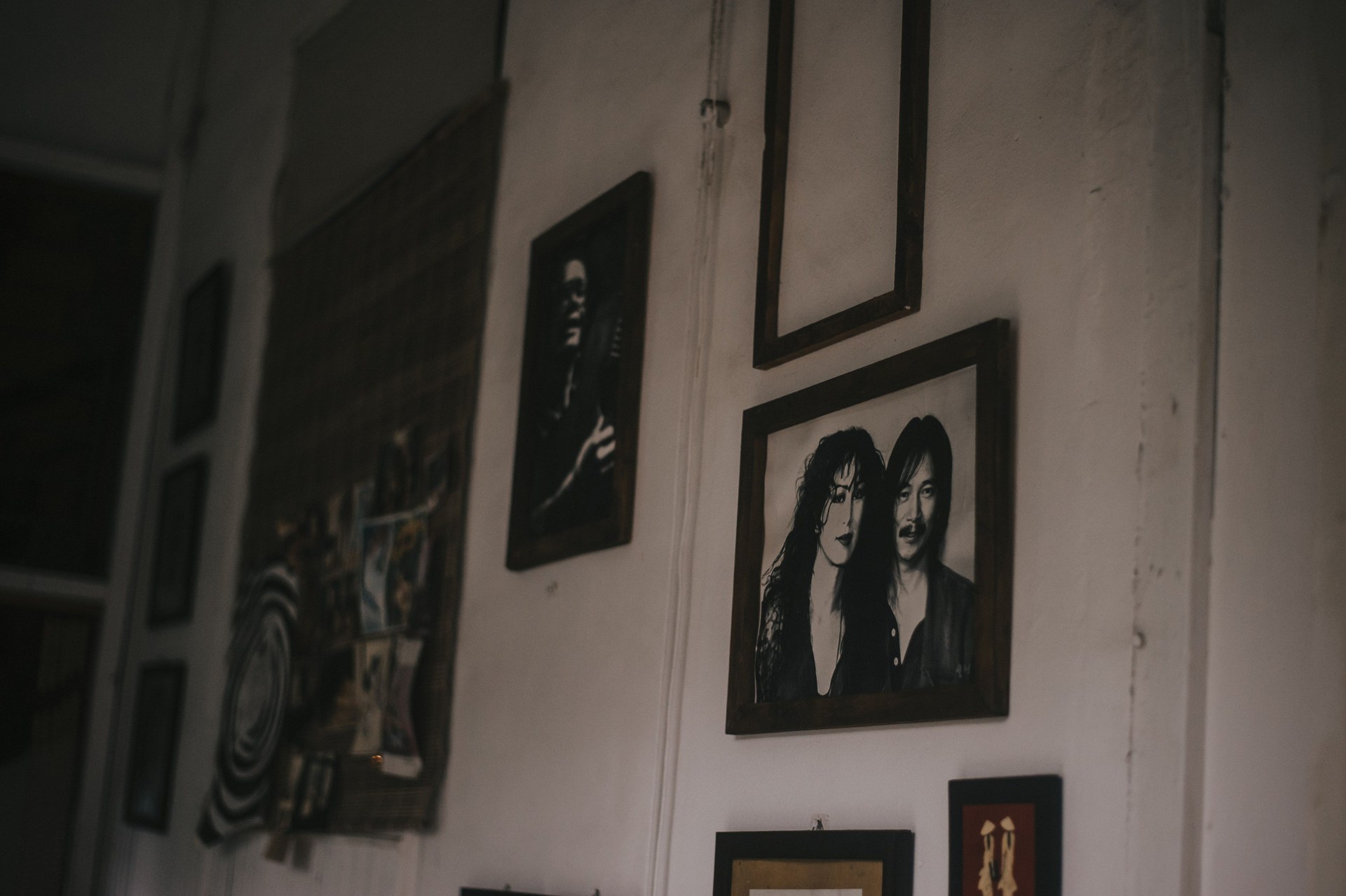
Does the size or number of photos matter?
Form School reasoning treats a photograph the same as any other wall object: proportion to the wall, and to the furniture beneath it, matters more than the subject depicted. A single large frame over a narrow console can look top-heavy; a tight cluster of many small frames on an already busy wall can read as clutter rather than as a display. This overlaps directly with wider guidance on what feng shui says about artwork and its subject matter, where the same schools disagree in similar ways about content versus composition.
A practical, non-mystical point applies regardless of school: a gallery wall that is genuinely crowded is harder to keep dusted and harder for the eye to rest on, which is a plain observation about a room, not a feng shui claim.
Do photos in glass frames or under glass cause a problem?
Some guides raise a concern about glass-framed photographs positioned to reflect a bed, a stove, or the front door, treating the glass as functioning like a mirror for these purposes. This follows the broader set of concerns raised in general guidance on mirrors in feng shui, including where a mirror is said to double or unsettle a space depending on what it reflects. Whether glass over a photograph is treated the same as a true mirror varies by guide, and no single position holds across the tradition.
What about photos of a single family member displayed alone?
BTB guidance sometimes raises a concern that a solitary portrait of one adult, hung in the relationship zone, works against the theme that zone is meant to represent — the reasoning given is thematic consistency, not anything measurable about the photograph itself. Classical schools, which do not use the same zone system, make no equivalent claim. This is a clear case where naming the school matters more than repeating the rule.
Is there evidence any of this affects a household?
No controlled evidence supports a link between where a photograph is displayed and a household’s relationships, finances or health. What can be assessed plainly is whether a wall arrangement is proportionate, well-lit and easy to keep clean — ordinary considerations that apply to any collection of objects on a wall, discussed further in the objects and materials archive. Claims beyond that belong to the tradition being cited, and should be read as such.
How should a reader actually decide where to put family photographs?
Given how much the schools disagree, the more useful approach is procedural rather than prescriptive:
- Decide which tradition, if any, is being followed — BTB’s zone system and classical Compass School are not interchangeable, and a rule from one should not be applied as though it were universal.
- Treat display walls with the same proportion and balance logic used elsewhere in the room, covered in the room-by-room archive.
- Separate design reasoning (sightlines, clutter, glare) from thematic or symbolic reasoning (zones, subject matter) so it is clear which kind of claim is being acted on.
- Where ancestral or cultural custom governs photographs of the deceased, follow that custom rather than a generic guide.
Family photographs are, in the end, wall objects with sentimental weight rather than decorative weight. Feng shui traditions offer several different lenses for arranging them — thematic, spatial, proportional — and this site’s role is to say which lens is being used, not to present one school’s preference as settled fact.
About this site. Feng Shui Pack explains what the feng shui tradition holds and which school holds it, from published sources. Feng shui is a tradition of placement and orientation, not a science: nothing here will bring you wealth, health, luck or a relationship, and we never claim otherwise. Where a suggestion has an ordinary practical reason — daylight, airflow, sightlines, less clutter — we say so; where it does not, we say that too. This is not medical, financial, legal or tenancy advice. If a decision matters, talk to a professional in that field.