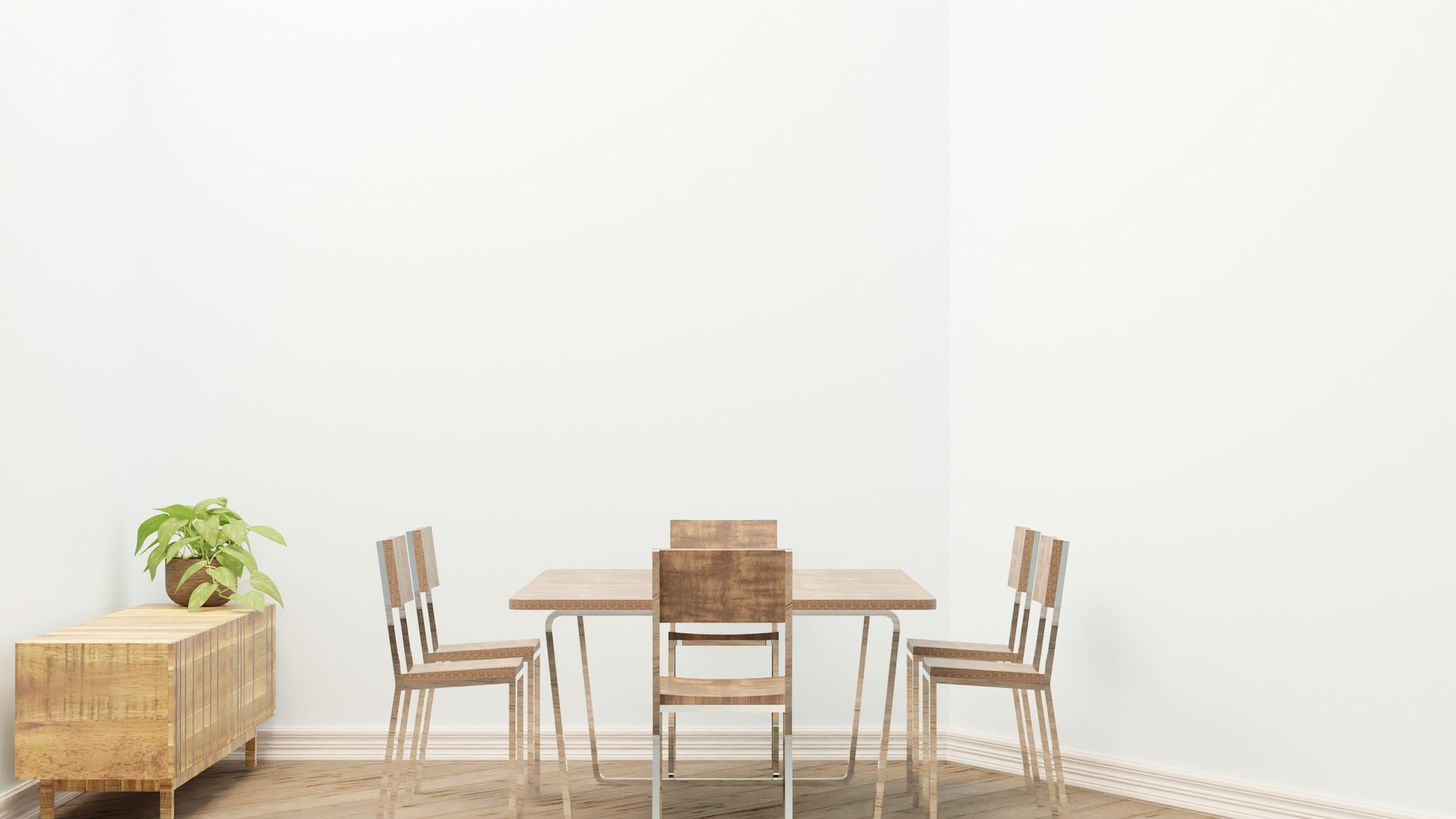
A poison arrow is the common English term for what classical Chinese sources call sha qi (煞气) — a straight, unbroken line of force said to run toward a building, a door, or a person’s seat. It is usually produced by a sharp corner, a straight road, an exposed beam, or any hard edge pointed directly at a space someone occupies.
Where does the term “poison arrow” come from?
“Poison arrow” is not a direct translation of a single Chinese term; it is a Western gloss that has stuck because it is vivid and easy to remember. The underlying idea belongs to Form School (Xingshi) feng shui, the older of the two major traditions, which reads chi (qi) — a term for circulating breath or influence — as something shaped by the visible form of land and buildings. A river bends gently, and Form School reads that as chi moving in a settled way. A road runs straight at a doorway, or a roofline ends in a sharp point aimed at a window, and Form School reads that as chi arriving too fast and too directly — sha qi, sometimes rendered as “killing breath” in academic translations, popularised in English as the poison arrow.
What actually counts as a poison arrow in a home?
In practice, the term covers a fairly narrow set of shapes: anything straight, sharp, or edge-first, aimed at a fixed point where a person sits, sleeps, or enters.
- A straight road, path, or corridor running directly at a front door.
- The sharp corner of a neighbouring building pointed at a window or entrance.
- An exposed structural beam directly over a bed, desk, or dining table.
- The square edge of a bookshelf, kitchen island, or open door aimed at where someone regularly sits.
- A T-junction, where a home sits at the end of a road that traffic drives straight toward.
What unites these is directness and sharpness — a straight line ending in a point, rather than a curve, a gradual approach, or a soft edge.
Is a poison arrow understood the same way in every school?
No, and this is where most English-language advice gets vague. Form School treats sha qi as a matter of visible shape: what a corner, road, or beam actually looks like from where a person stands. It is landscape and architecture read as form, independent of compass direction.
Compass School (Liqi) folds the same observations into directional and time-based calculation — a sharp edge matters partly because of which compass sector it falls in, and which “star” or trigram governs that sector in a given period. The reasoning is more technical and harder to reproduce without training. The difference between the two approaches is covered at more length in Form School vs Compass School Feng Shui: The Difference.
The Black Sect (BTB) adaptation, a twentieth-century Western simplification, tends to broaden “poison arrow” further still, applying it to almost any sharp edge or beam inside a room regardless of compass orientation, and pairing it with its own version of the bagua map laid over the floor plan from the front door. That method is described in Black Sect (BTB) Feng Shui: What It Is, and Why It Spread. Most “fix your poison arrows” advice online is BTB-derived without saying so, which is worth knowing before applying a rule as if it were universal.
What is a poison arrow said to do?
Practitioners describe a poison arrow as disrupting the movement of chi rather than letting it settle — the concern is agitation and interruption, not a specific misfortune. Classical and contemporary sources frame this as an argument about comfort and attention, not a guaranteed outcome. This site does not present feng shui as delivering health, wealth, or any other result, and no claim here should be read that way — only as a description of what the tradition itself argues.
How is a poison arrow addressed, according to the tradition?
The suggestions that recur across sources are mostly about interrupting the straight line rather than eliminating the object causing it.
- Softening a hard edge with a plant, a curtain, or a change in furniture placement so the point no longer aims directly at where someone sits.
- Repositioning a bed or desk so it is no longer under a beam or in the direct line of a doorway edge — closely related to what practitioners call the commanding position, discussed in What Is the Commanding Position, and Why Does It Recur?
- Using a folding screen, bookshelf, or room divider to break a straight sightline between a door and a bed.
- For an external corner or road aimed at an entrance, some practitioners describe placing a small convex mirror on the outside of a door to face the source. This site does not recommend buying any object to achieve an effect; the point here is only to describe what the practice claims a mirror is used for, and leave the decision to the reader.
Is there a practical reason behind any of this?
For interior poison arrows, yes, and it is worth separating from the metaphysical claim. A bed positioned directly under a heavy exposed beam sits under a visual weight that some people find makes a room feel oppressive, regardless of any feng shui framework. A sharp shelf corner at head height in a walkway is a genuine bump hazard. A desk facing a blank wall with a door out of sight, discussed at What Is the Commanding Position, and Why Does It Recur?, has an ordinary explanation involving startle response and sightlines. None of this is medical, structural, or safety advice — if a beam, fixture, or edge is a genuine hazard, the right step is a qualified builder or surveyor, not a feng shui remedy.
For exterior poison arrows — a road, a distant building’s corner, a T-junction — no comparable practical mechanism has been established. The reasoning stays within Form School’s own framework of chi and form, and it is honest to say so plainly rather than dress it up as measurable.
Do poison arrows come from outside the home as well as inside it?
Yes — this is where the concept originated. Form School was developed to read landscape and settlement patterns before it was applied to furniture inside a room: the shape of hills, the course of rivers, the angle at which a road approached a village gate. A straight road running at a front door, a corner of a neighbouring building, or a home sited at the end of a T-junction are the classic, original examples of sha qi, predating any discussion of beams or bookshelves.
Does every sharp corner in a room need addressing?
Not according to most sources describing the practice — proximity and what the edge is aimed at matter more than the edge simply existing. A sharp table corner in an unused corner of a room is treated differently from the same corner aimed directly at a chair someone sits in for hours each day, or at the head of a bed. Practitioners tend to prioritise fixed points where a person spends the most time: a bed, a desk, or a main seat, generally read within the broader layout logic covered in What Is the Bagua, and How Is It Actually Used? and How Do You Orient a Bagua Map to a Home?
Readers working through a full room rather than a single feature may find it more useful to start from the broader questions covered in Layout & Furniture and Entrances & Flow, since a poison arrow is usually discussed as one factor within a wider read of a room’s flow, not a standalone rule. Background on the underlying concept of chi itself is covered in What Is Chi, and What Does Energy Flow Mean in Feng Shui?, and the broader history of the tradition in What Is Feng Shui, and Where Does It Come From?
About this site. Feng Shui Pack explains what the feng shui tradition holds and which school holds it, from published sources. Feng shui is a tradition of placement and orientation, not a science: nothing here will bring you wealth, health, luck or a relationship, and we never claim otherwise. Where a suggestion has an ordinary practical reason — daylight, airflow, sightlines, less clutter — we say so; where it does not, we say that too. This is not medical, financial, legal or tenancy advice. If a decision matters, talk to a professional in that field.