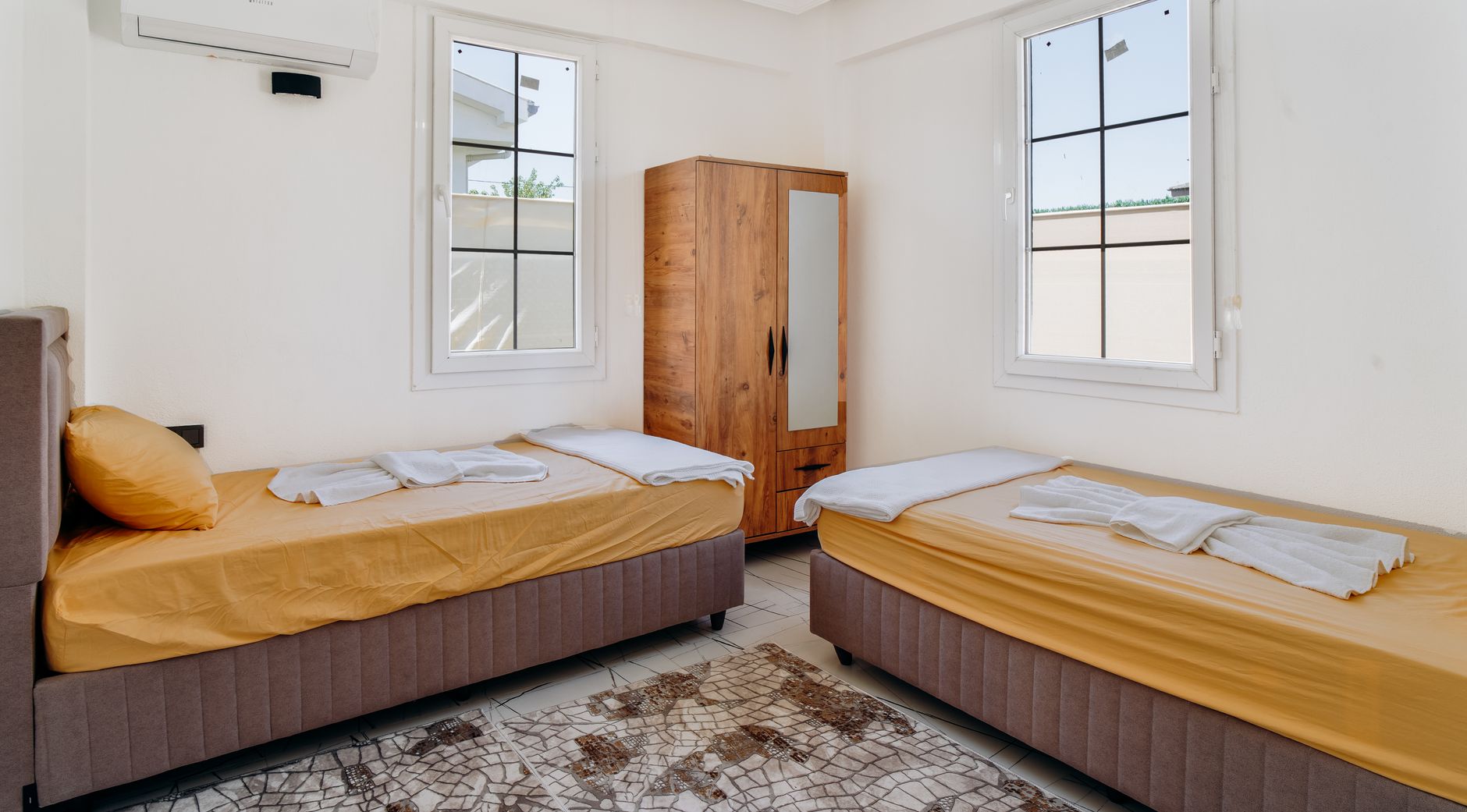
No, it is not a problem in the sense of causing harm — but it does mean one common piece of feng shui advice, the “commanding position,” cannot be satisfied, and the tradition offers workarounds rather than treating a fixed bed as a dead end. What matters is understanding which rule is being missed and why it was suggested in the first place.
Why does feng shui care about where a bed is placed at all?
The bedroom is treated, across most schools, as the room where placement matters most, because a sleeping person is stationary, unaware of their surroundings, and vulnerable in a way they are not while moving through the rest of the house. Form School (Xingshi) reasoning is largely about sightlines and structure: what the sleeper can see, what looms over them, what sits at their back. The BTB (Black Sect) adaptation, common in Western-language feng shui, layers symbolic meaning from the bagua on top of that. The two traditions do not always agree, but they converge on the bed as the piece of furniture worth the most attention. The general logic is covered in more depth in the site’s guide to where the bed should go in a bedroom.
What is the “commanding position,” and why does a fixed bed break it?
The commanding position means the bed is placed so the sleeper can see the door from the bed without being directly in line with it, and is not positioned with their back to the door. Classical Form School reasoning ties this to a practical concern — not being startled by someone entering unseen — rather than anything mystical. Full detail is in the site’s explainer on what the commanding position actually is.
A bed that cannot be moved — because of a fixed platform, a built-in frame, plumbing or wiring behind a wall, a landlord’s furniture layout, or simply a room too small to offer a second option — often ends up in line with the door, facing away from it, or wedged against a wall that puts it under a window instead of against a solid one. None of these are damage; they are simply the layout the room permits.
What can actually be done if the bed cannot be moved?
The tradition does not treat an immovable bed as unsolvable. Several adjustments are commonly suggested that do not require moving the bed frame itself:
- Hanging a mirror positioned so the sleeper can see the door reflected from the bed, where a straightforward view is not possible — though a mirror facing the bed directly raises a separate, well-known objection, covered in the site’s piece on whether a mirror facing the bed is actually a problem.
- Adding a solid headboard where the bed’s position leaves the head end without a wall behind it, discussed in the guide to how a headboard should be positioned.
- Rehanging the door itself so it opens differently, in cases where a renovation is possible — a structural fix rather than a furniture one.
- Using a screen, curtain, or furniture arrangement to break a direct sightline between the door and the foot of the bed, if the bed sits in that line.
None of these promise a different outcome for sleep, health or anything else — the tradition’s own claim is narrower: that the sleeper is less likely to be startled and the room reads as more settled. Where a fixed bed sits under a window rather than against a wall, that is its own separate question, addressed in bed under a window in feng shui.

Does it matter which wall the bed is fixed to, if the door position can’t change?
It matters more than the exact compass direction, in Form School terms. The two structural concerns are the sightline to the door and having a solid surface — not a window, not empty space — behind the head of the bed. A fixed platform bed against an interior wall, even one that is not “ideal” by compass calculation, generally satisfies more of the tradition’s concerns than a bed that is technically well-oriented but backed onto glass or open air. Compass School (Liqi) practitioners would add directional calculation on top of this, using the occupant’s personal kua number, but that calculation assumes the layout can be changed to match it — which is exactly what a fixed bed rules out. This is one of the clearer places where Form School and Compass School can point to different priorities, and it is worth knowing which one any given piece of advice is drawing from.
Is a fixed bed the same problem as a badly arranged one?
No. The tradition distinguishes between a layout constraint and a choice. A rented room with a built-in bed frame against the only available wall is not read the same way as a bed left in line with the door in a room where it could easily have gone elsewhere. The most frequently cited layout error in feng shui writing is not an immovable bed but an avoidable one — covered directly in the most common feng shui mistake in a bedroom — and it usually involves clutter, mismatched furniture heights, or a sightline nobody bothered to check, not a structural limit.
Symmetry is sometimes raised alongside bed position, particularly in BTB writing that treats matching nightstands and lamps as a way of supporting a stable pairing in the room. Where a fixed bed also has no room either side for a second nightstand, that is a related but separate constraint, discussed in what feng shui says about symmetry in a bedroom.
What if the room has two doors, or the bed line runs between them?
A room with two doors, or a door and a large window in direct line with each other, is treated in Form School terms as a stronger version of the same sightline concern — sometimes described as a direct path across the room that the bed should not sit within. Where a fixed bed happens to sit in that path, the same softening measures apply: a screen, a taller headboard, or furniture that breaks the straight line without touching the bed itself. This scenario is covered on its own in the site’s guide to how a room with two doors should be arranged.
Is there a version of this that has no practical explanation at all?
Yes, and it is worth naming plainly rather than dressing it up. Some BTB writing treats an immovable bed as symbolically “stuck” — tying the physical constraint to a claim about the occupant’s circumstances more broadly. That is a metaphorical reading, not a structural one, and no practical mechanism is offered for it beyond the tradition itself. It should be read as a belief some practitioners hold, not as an established consequence of furniture placement. General furniture logic that applies regardless of school — spacing, sightlines, what belongs against a wall — is covered in the site’s Layout & Furniture section.
Does this affect sleep in a way worth taking seriously?
This is not medical advice, and Feng Shui Pack does not offer any. If a fixed bed is genuinely causing poor sleep — because of noise, light, temperature, or a mattress issue — that is a matter for a GP or a sleep specialist, not a layout adjustment. Feng shui’s claims here are about the tradition’s own reasoning, not about physiology, and the two should not be confused.
What about a tenancy where the bed frame legally can’t be moved?
Where a landlord has installed a fixed platform bed, built-in storage bed, or a frame that is part of the property rather than the tenant’s own furniture, moving or removing it may not be within the tenant’s rights under the tenancy agreement. That is a legal question, not a feng shui one, and it should be checked against the lease or with a housing advice service rather than resolved by any furniture-placement rule.
So is an immovable bed actually a problem?
Not in any sense the tradition treats as fixed or fatal. It means one preferred arrangement — the commanding position — isn’t achievable, and the response across Form School and BTB alike is to work with mirrors, headboards, screens or door changes rather than to treat the room as beyond help. A reader working through a small or awkward bedroom more broadly may find it useful to start with the site’s Room by Room section, which covers bedrooms alongside every other room the same layout constraints apply to.
About this site. Feng Shui Pack explains what the feng shui tradition holds and which school holds it, from published sources. Feng shui is a tradition of placement and orientation, not a science: nothing here will bring you wealth, health, luck or a relationship, and we never claim otherwise. Where a suggestion has an ordinary practical reason — daylight, airflow, sightlines, less clutter — we say so; where it does not, we say that too. This is not medical, financial, legal or tenancy advice. If a decision matters, talk to a professional in that field.