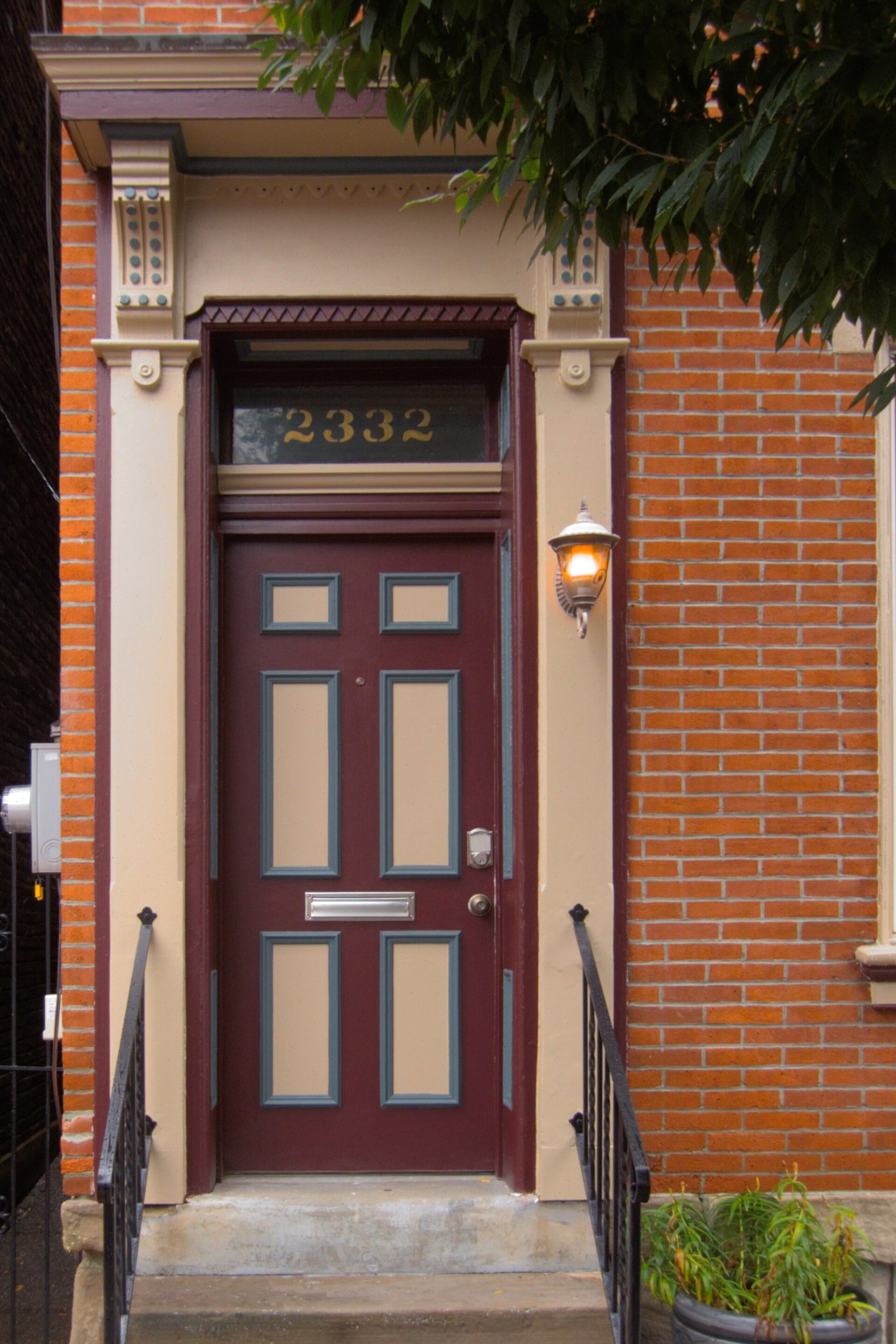
Feng shui traditions do not agree on this in one voice, but the most widely repeated version — from the Western Black Sect (BTB) adaptation — holds that a mirror directly facing the front door reflects incoming chi (qi) straight back out before it can circulate through the home. Classical Compass School texts are far less concerned with this specific placement than modern popular guides suggest.
Why is the front door treated differently from other mirrors?
In most feng shui schools, the front door is given special weight because it is treated as the main point through which chi is said to enter a building. This idea is explained in more detail in the site’s piece on the “mouth of chi”, a term used across several schools to describe the entry point’s symbolic role. A mirror positioned anywhere else in a home rarely carries the same significance in the literature, because it is not thought to interact with that entry function.
What is the reasoning given for “bouncing chi back out”?
The claim, most often made in BTB sources, is that a mirror set opposite the door acts on incoming chi the way it acts on light: it reflects it back the direction it came from. Practitioners in this tradition describe the effect as chi failing to settle in the home before it is sent back out through the door. This is presented as a symbolic mechanism, not a physical one — there is no claim about airflow, temperature or acoustics, and none is implied here either.
No practical, testable process is described for how this is meant to work. That is worth saying plainly: this is a claim about symbolic effect within a specific tradition, and it is not put forward by that tradition as measurable.
Do Form School and Compass School agree with this rule?
Not in the same terms. Form School and Compass School are older and more concerned with a building’s shape, siting, and the compass-based directional charts tied to a household’s specific data — not with a single decorative object opposite one door. Where classical Compass School texts discuss mirrors at all, it is usually in relation to reflecting or countering a specific external form — a road, a structure, a “poison arrow” aimed at the building — rather than an automatic reaction to the front door’s position.
The mirror-facing-the-door rule as commonly stated in English-language guides is a BTB-era simplification. That does not make it “wrong” within its own system; it makes it one school’s rule presented, very often, without saying which school it came from. The site’s page on Black Sect (BTB) feng shui covers where this branch originated and why it spread so widely through Western interior design writing.
Where did this specific rule come from?
BTB feng shui, developed and popularised from the late twentieth century onward, restructured much of classical practice around the front door rather than around compass direction. In BTB method, the bagua map is placed with its base at the entrance wall, regardless of which compass direction the door actually faces. That entrance-first framing is what elevates a mirror opposite the door to a rule of its own, distinct from anything said about mirrors in other rooms. Classical Compass School, by contrast, orients the bagua using compass readings tied to the building and the occupants, a difference explained on the site’s page on orienting a bagua map to a home.
Is there a practical reason to avoid a mirror opposite the door, aside from the symbolic one?
There is a genuinely ordinary design reason that sometimes gets folded into the feng shui explanation without being separated from it: a mirror directly opposite a front door can startle someone entering, because a reflection moves as the door opens and a figure appears unexpectedly in the glass. It can also double the visual clutter of a small entry, making a tight hallway look busier rather than calmer. These are practical observations about a specific layout, not evidence for or against the tradition’s own reasoning, and they are worth stating as separate from it.
Entryways generally benefit from clear sightlines and unobstructed floor space near the door, for the ordinary reason that people carrying bags, keys or children need room to move without negotiating a piece of furniture. The site’s guide to hallway feng shui covers this kind of practical entry design in more depth.
What about mirrors placed elsewhere near the entrance?
Most feng shui guides, including BTB sources, distinguish between a mirror facing the door head-on and a mirror placed to the side of it. A mirror on a side wall of an entryway — angled so it does not directly reflect the door opening — is generally treated in these sources as unproblematic, and some practitioners suggest it can help a narrow hallway feel less confined, which is a plausible visual effect regardless of the tradition attached to it. This is a different placement question from a mirror in a dining room, which the site addresses separately in its guide to dining room mirror placement, or a mirror in a bedroom, discussed in the article on mirrors in a bedroom, where different concerns are raised.
What if the mirror can’t easily be moved?
Renters and apartment dwellers frequently cannot rehang a mirror that was already fixed by a previous occupant, and this is not a site that will suggest buying an object to counter another object. Readers weighing whether to remove, reposition or cover a mirror are working within their own tenancy terms and their own judgment about whether the tradition’s reasoning matters to them — this article describes what different schools claim, not what a reader should do about it. Anyone with questions about altering fixtures in a rented property should check their tenancy agreement or a qualified local advisor rather than a feng shui source.
Does this concern apply to other doors in the home?
Some BTB-influenced guides extend similar reasoning to a mirror facing a bedroom door, and separately to a mirror facing the foot of a bed, though the stated concerns differ in each case. A related and frequently asked layout question — a staircase, rather than a mirror, positioned opposite the front door — is covered in the site’s piece on a staircase facing the front door. As with the mirror question, the reasoning given depends heavily on which school is being cited, which is why the site’s explainer on why feng shui rules contradict each other is useful background before treating any single rule as settled across the tradition as a whole.
How should a reader use this information?
The honest summary is that “no mirror facing the front door” is a real, widely repeated rule — but it belongs specifically to the BTB adaptation of feng shui, it is justified in symbolic rather than physical terms, and classical Form School and Compass School give it far less independent weight. A reader can treat it as one tradition’s guidance to accept or set aside, and can separately consider the ordinary, checkable point that a mirror directly opposite a door changes what is visible the instant that door opens. Further entry-related layout questions are gathered on the Entrances & Flow section of the site.
About this site. Feng Shui Pack explains what the feng shui tradition holds and which school holds it, from published sources. Feng shui is a tradition of placement and orientation, not a science: nothing here will bring you wealth, health, luck or a relationship, and we never claim otherwise. Where a suggestion has an ordinary practical reason — daylight, airflow, sightlines, less clutter — we say so; where it does not, we say that too. This is not medical, financial, legal or tenancy advice. If a decision matters, talk to a professional in that field.