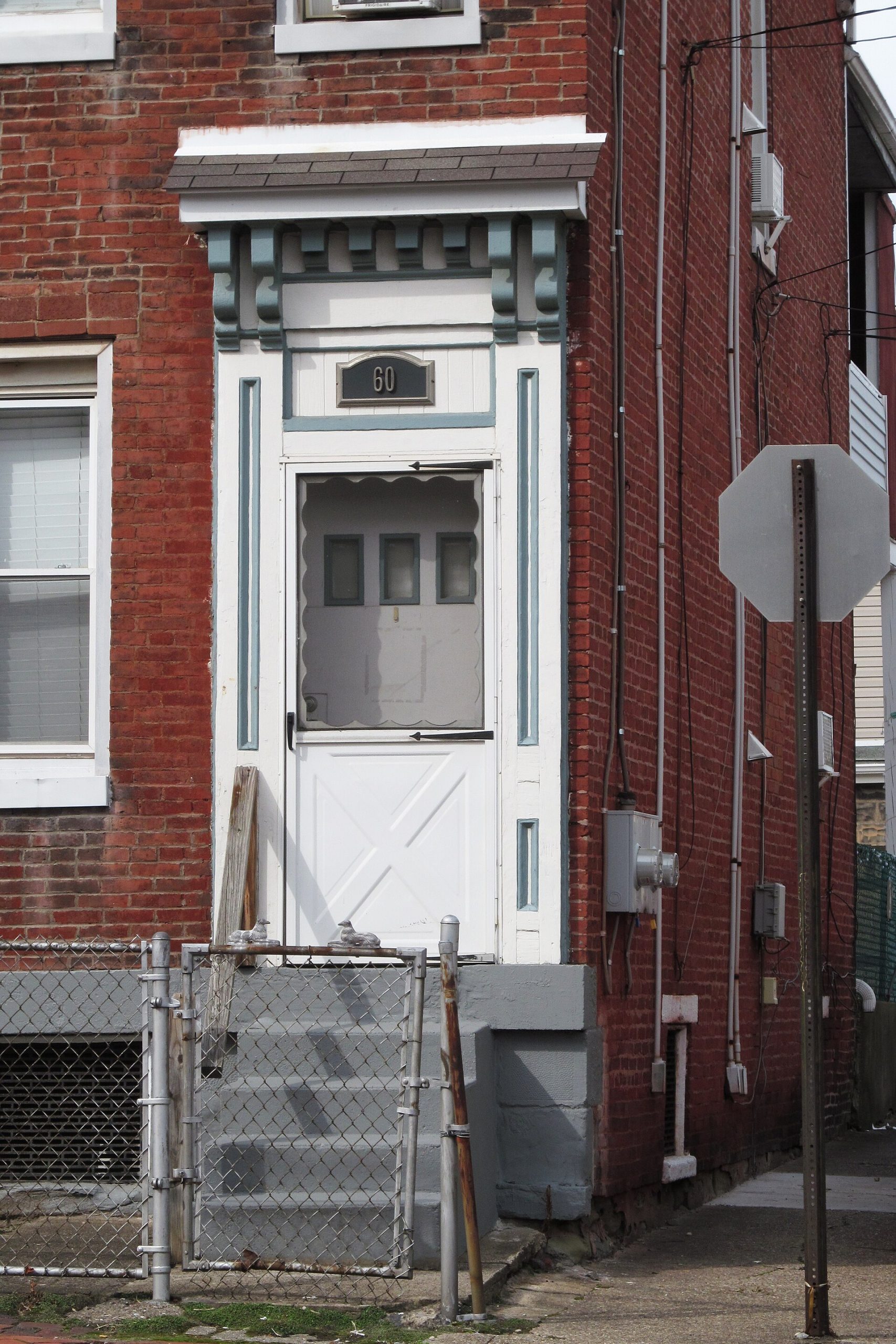
The “mouth of chi” (qi kou) is the traditional feng shui description of the front door as the main channel through which chi — the flow of energy the tradition describes moving through a space — enters a building. The door is treated less like a barrier and more like an intake valve, and its size, condition and surroundings are read accordingly.
What does “mouth of chi” actually mean?
Qi kou translates roughly as “chi mouth” or “energy mouth.” Classical Chinese house theory borrows the language of the body: a house has a “mouth” (the main entrance), and in some texts a rough equivalent of “eyes” (windows) and a circulatory system (the interior paths a person walks). The metaphor is old and it is consistent — writers across centuries return to the same image because it makes the underlying claim easy to state: what a house takes in, it takes in mainly through one opening.
This is a metaphor, not a physical description. No school of feng shui claims chi is a measurable substance moving through a doorway. What is checkable is that the term appears throughout the classical literature and is still the standard way both Form School and Compass School texts refer to a main entrance. For a fuller explanation of what practitioners mean by the term itself, see what chi is and what “energy flow” means in feng shui.
Which school of feng shui uses this term?
Both major branches use it, though they build different conclusions on top of it. Form School (Xingshi) is concerned with the door’s physical context — what it faces, what sits directly opposite it, whether the approach is clear or obstructed. Compass School (Liqi) layers directional calculation on top of that, using the compass facing of the door together with a chart specific to the building to judge whether the entrance suits its orientation.
The Western import known as Black Sect or BTB feng shui, which spread through English-language books from the late 20th century onward, keeps the “mouth of chi” idea but simplifies it: BTB places the bagua map against the wall containing the front door regardless of which direction that wall actually faces, which classical Compass School does not do. The difference matters because most consumer feng shui content in English is BTB without saying so — see the dedicated explainer on Black Sect (BTB) feng shui and why it spread, and the more general piece on the difference between Form School and Compass School.
Why is the front door treated differently from other doors in the house?
Because in both schools, it is the doorway the household and its visitors habitually use to arrive, and the one through which the building is understood to be “read” from the outside. Interior doors are dealt with too — bedroom doors, bathroom doors — but the front door is the entrance that defines the house’s relationship to the street, the approach and the compass in the first place.
Form School attention to the front door usually comes down to three practical-sounding questions: is the approach clear, is the door itself in good repair, and is there an unobstructed transition from outside to inside. A door that is cracked, sticking, poorly lit or blocked by clutter is treated as a weak “mouth” regardless of which school is doing the reading.
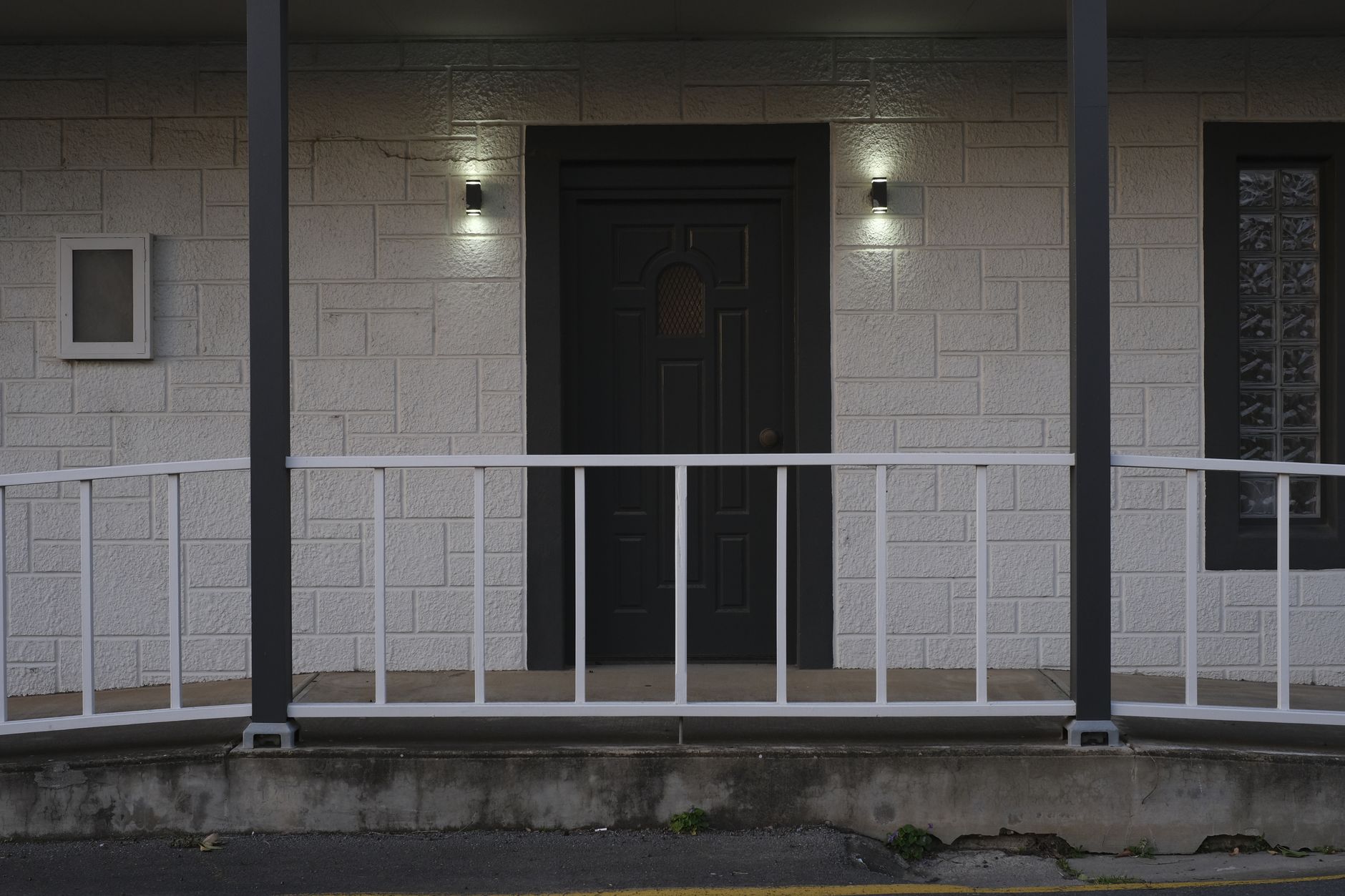
Does the size or facing direction of the front door matter?
In Compass School, yes — the door’s compass facing is checked against a chart specific to the building’s construction period and orientation, a calculation that requires a proper compass reading rather than a guess. That process is explained in more depth in the guide to what a feng shui compass is and whether you need one.
Form School’s interest in size and proportion is comparative rather than numerical: a door judged too small for the house it serves is described as restricting the “mouth,” and one that is oversized relative to the building is sometimes described as letting chi disperse rather than settle. Classical texts do not attach these judgments to a measurable threshold — there is no cited figure for “too small” — and no practical rationale is given for the size claim beyond the tradition itself. That is worth stating plainly rather than dressing it up as engineering.
What is the “mouth of chi” said to affect inside the home?
Practitioners commonly suggest that what happens just inside the front door sets the tone for the hallway, staircase or room it opens onto, because that is the first space chi is said to move through after entering. This is why so much feng shui writing about entrances is really writing about the space immediately behind the door — not the door itself.
Two situations recur across the literature and are treated as needing attention rather than being ignored:
- A staircase running directly toward the front door, which Form School reasoning describes as chi moving straight back out before it can settle — covered in detail in the guide to a staircase facing the front door.
- Two doors directly opposite each other, inside or at the entrance, which is discussed on its own terms in two doors facing each other.
The hallway that leads on from the entrance gets its own attention for similar reasons — see the guide on how a hallway should be treated in feng shui terms, and the wider Entrances & Flow section for how this connects to windows, staircases and interior thresholds.
Is there a practical reason behind any of this, or is it purely traditional?
Some of it overlaps with ordinary common sense about a home’s entrance, and it is worth separating that overlap from the parts that do not have a practical explanation. A clear, well-lit, unobstructed approach to a front door is simply easier and safer to use — that has nothing to do with chi and everything to do with visibility, tripping hazards and basic maintenance. A door in poor repair being read as inauspicious lines up with a door in poor repair simply being a problem worth fixing.
Where the practical logic runs out is in the directional calculations of Compass School, and in some of the size and proportion judgments of Form School, which the classical texts themselves justify by reference to chi and the bagua rather than by any stated mechanical reason. This is exactly the kind of claim the site tries to name honestly rather than dress up as design advice — for the broader picture of where feng shui makes a testable claim and where it does not, see whether there is evidence for feng shui, and what kind exists and what feng shui actually claims, and what it does not.
What about apartments, shared entrances or a side door used more than the front one?
Feng shui literature written for detached houses does not map neatly onto apartment blocks, and most practitioners writing in English acknowledge the mismatch without fully resolving it. Where a building has a shared main entrance and then a private unit door, some contemporary practitioners treat the unit’s own door as the operative “mouth of chi” for that household, while others hold that the building’s main entrance still matters for the block as a whole. Neither position is universal, and the disagreement is a reasonable example of why the tradition is not one settled rulebook — a theme covered directly in why feng shui rules contradict each other so often.
Where a household mostly uses a side or garage door rather than the front door, some practitioners suggest treating the door in actual daily use as the effective mouth of chi, on the reasoning that it is the opening through which the household and its visitors actually move. This is a modern adaptation rather than a classical rule, and it is presented here as exactly that.
How does this connect to the bagua map?
In the BTB adaptation specifically, the front door is the fixed starting point for laying the bagua map onto a floor plan — the map is oriented from wherever a person stands in the doorway looking in, which is why the term “mouth of chi” and the bagua are so often discussed together in BTB-influenced writing. Classical Compass School orients the bagua by compass direction instead, independent of where the door happens to sit. The mechanics of both approaches, and where they diverge, are set out in how a bagua map is oriented to a home and in the broader introduction to what the bagua is and how it is used.
For a household deciding how much of this to apply to a specific room-by-room layout, the Room by Room archive and the The Basics archive are the more useful starting points than any single rule about the front door in isolation. This article describes what the term “mouth of chi” means and where it comes from; it is not a design instruction, and nothing here should be read as a guarantee about what a particular door arrangement will produce.
About this site. Feng Shui Pack explains what the feng shui tradition holds and which school holds it, from published sources. Feng shui is a tradition of placement and orientation, not a science: nothing here will bring you wealth, health, luck or a relationship, and we never claim otherwise. Where a suggestion has an ordinary practical reason — daylight, airflow, sightlines, less clutter — we say so; where it does not, we say that too. This is not medical, financial, legal or tenancy advice. If a decision matters, talk to a professional in that field.