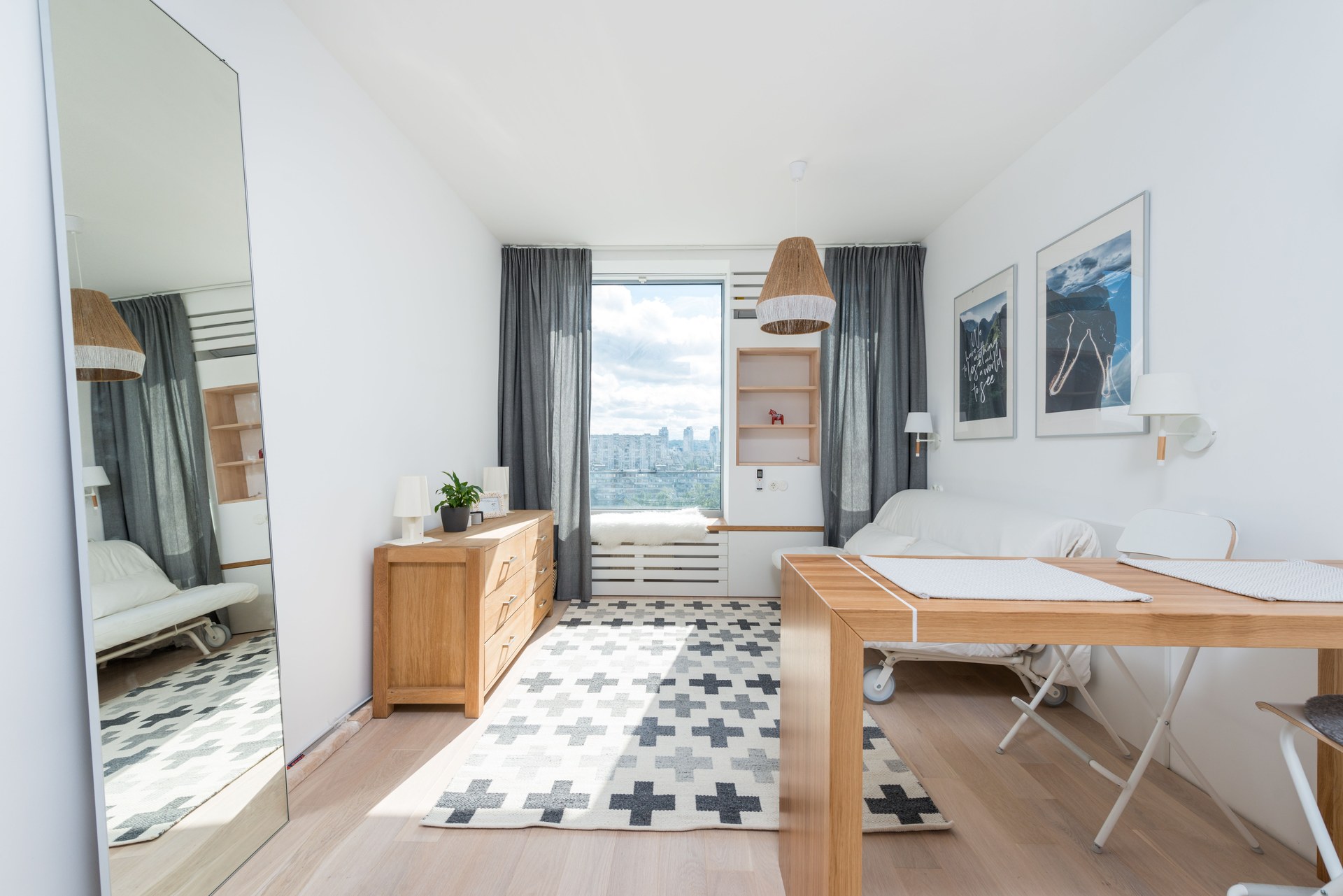
Feng shui traditions treat mirrors in small rooms as amplifiers — of light and usable space, but also of clutter, movement, and whatever they reflect back into the room, including a bed or a door. The BTB adaptation is the most cautious about bedroom mirrors specifically; classical Form School is less concerned with room size and more concerned with what the mirror actually shows.
Why do small rooms get singled out for mirror advice?
Mirrors get more attention in small rooms because there is less room for a mirror to do anything neutral. In a large room, a mirror on one wall reflects a portion of the space and little else. In a small room — a single bedroom, a studio sleeping nook, a boxroom used as an office — a mirror is more likely to face the bed, the door, or a cluttered corner directly, simply because there are fewer walls and fewer alternative placements.
This is a practical observation as much as a tradition-specific one: the smaller the room, the harder it is to avoid a mirror doing double duty as a reflector of something the household would rather not amplify. For general grounding on how mirrors are treated across schools, see the site’s general guide to feng shui and mirrors.
What does Form School say about mirrors in a small room?
Classical Form School (Xingshi) is concerned with what a mirror reflects, not with mirrors as a category. A mirror that reflects a window and brings in more daylight is treated differently from one that reflects a cluttered shelf, a toilet, or the sharp edge of a piece of furniture — the latter is sometimes described as doubling a “poison arrow,” a term covered in more detail in the site’s piece on what a poison arrow is in feng shui.
Form School texts do not generally treat small room size as its own category requiring different mirror rules. The size of the room matters only in that it limits placement options, which is a Form School point restated in modern practical terms rather than an ancient one about small rooms specifically.
What does the BTB adaptation add that Form School doesn’t?
The Western Black Sect (BTB) adaptation, which is the source of most English-language “mirror rules” circulating online, adds specific prohibitions that classical Compass School (Liqi) and Form School do not share in the same form. BTB material commonly advises against a mirror facing the bed, a mirror facing the front door, and a mirror positioned so it reflects a person sleeping without their seeing it directly.
These are BTB-specific positions, not universal feng shui law, and this site treats them as such rather than presenting them as settled tradition. The distinction matters because a reader following one school’s rule while thinking it is universal will often contradict advice from another school without realising the two were never in agreement. The site’s explainer on why feng shui consultants disagree with each other goes into this in more detail.
Is a mirror facing the bed a special case in a small room?
In a small bedroom, a mirror facing the bed is harder to avoid than in a larger one, because there are fewer wall options and the bed often takes up a large share of the floor. The BTB adaptation’s objection to this placement rests on the idea that a reflected sleeping body is disturbing to the sleeper’s energy, but no practical mechanism is given for this beyond the tradition itself.
There is, separately, an ordinary and checkable reason some people dislike facing a mirror from bed: waking suddenly to a reflection can be startling in dim light, a matter of perception and sleep environment rather than chi. Readers dealing with sleep quality concerns should treat that as a matter for their own judgement or a sleep professional, not as something this article can advise on. The site covers the bed-mirror question specifically in Mirror Facing the Bed: Is It Actually a Feng Shui Problem? and in a dedicated guide to mirrors in the bedroom.
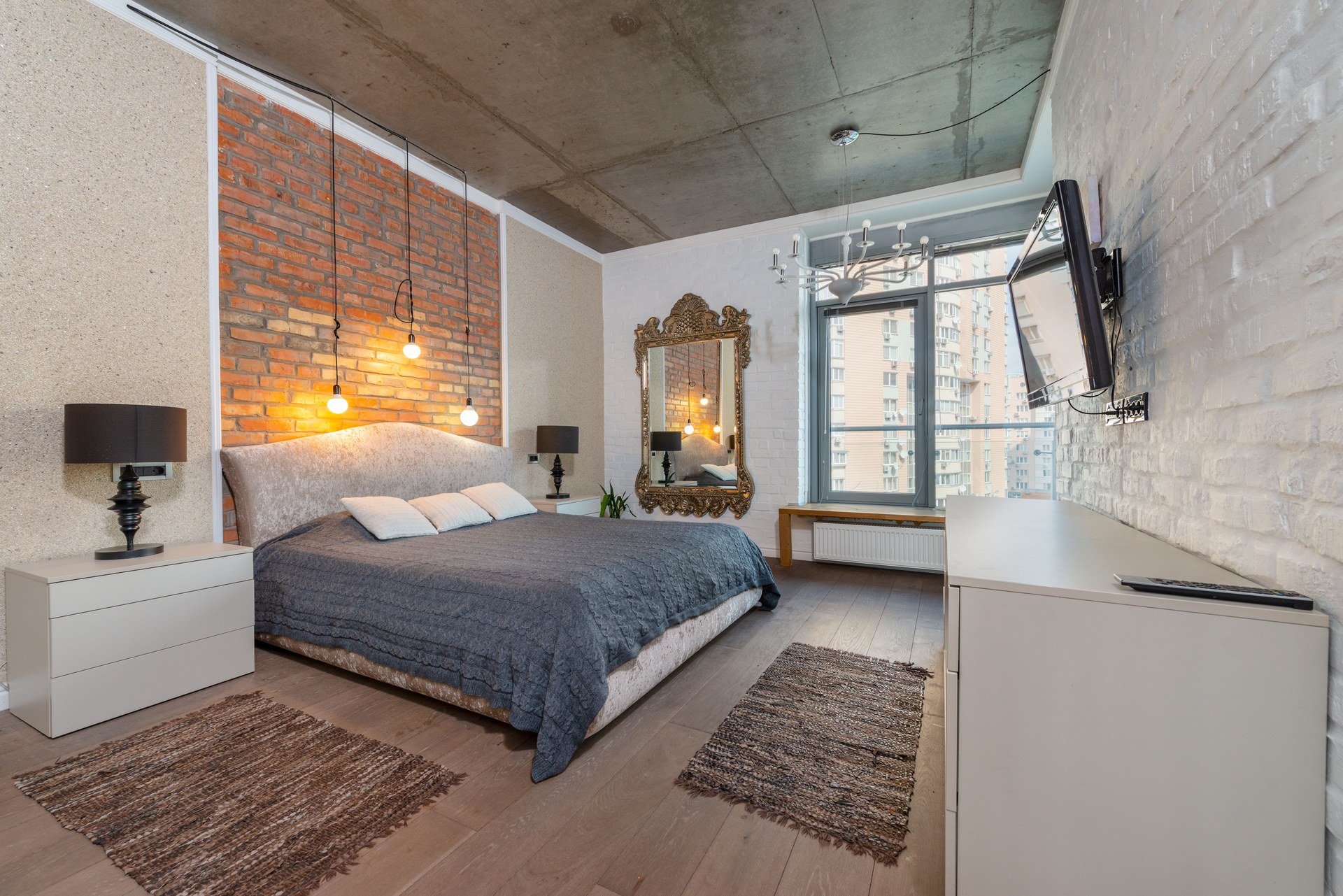
Can a mirror actually make a small room feel larger?
Yes, and this is one of the few mirror claims with an ordinary, checkable basis rather than a symbolic one. A mirror placed to reflect a window multiplies the apparent light in a room and can make a boxy or narrow space read as larger, simply by doubling the sightline. This is an optical fact, not a chi claim, and it holds regardless of which feng shui school a reader follows.
The caveat is that a mirror reflecting clutter, an unmade bed, or a cramped corner will amplify that too. A mirror in a small room tends to make the room’s existing state — tidy or not — more visible, not less. This connects directly to the site’s coverage of why clutter is treated as the first problem in every feng shui school, since a mirror in a cluttered small room compounds rather than solves that issue.
Where do practitioners commonly suggest avoiding a mirror?
Beyond the bed, several placements come up repeatedly across BTB-influenced advice, though again these are attributed positions rather than universal rules:
- Directly facing the main entrance to a room, where practitioners commonly suggest it can reflect entering energy back out — a claim covered on the site’s page about mirrors facing the front door.
- Directly facing a stove, on the reasoning (specific to kitchen-focused advice) that it doubles the flame element.
- Positioned to reflect a toilet or bathroom door, which some practitioners describe as reflecting outgoing waste back into living space.
- Broken, cracked, or heavily tarnished — a condition the site addresses separately in its piece on what feng shui says about broken or unused objects.
None of these carry a mechanism beyond the tradition cited, and none should be read as settled across all schools. Where the underlying design point does hold up practically — a mirror by a stove catching heat and steam, for instance — that is worth noting on its own terms rather than folded into the symbolic claim.
What about mirrored wardrobes and closet doors?
Mirrored wardrobe doors are common in small rooms precisely because they solve two problems at once: they provide a dressing mirror without needing a separate piece of furniture, and they add reflected light. The same considerations apply as with any other mirror — what it faces matters more than the fact of its existence.
A mirrored wardrobe facing the bed is treated by BTB-influenced advice the same way a freestanding mirror would be. Where the wardrobe cannot be moved — a frequent situation in rented single rooms and studios — the tradition’s usual suggestion is to cover the mirror at night with a cloth or curtain rather than remove or replace it. This is discussed further in the site’s guide to storage in a small home, since mirrored storage sits at the intersection of both topics.
Does this apply to renters who can’t move a fixed mirror?
Yes, and it is a common enough situation that it is worth treating directly rather than as a footnote. Many small rented rooms come with a fixed mirror — built into a wardrobe, mounted on a wall, or part of a chimney breast — that a tenant has no ability to relocate.
The tradition’s usual response to a fixture that cannot be changed is not to force a structural fix but to adjust what is practical: reposition the bed or desk relative to the mirror where the room allows it, cover the mirror when not in use, or accept the placement and focus attention on other adjustable factors instead. The site’s broader guide to feng shui and things a renter can’t change covers this reasoning in more depth, and the question of bed placement specifically is addressed in Can’t Move the Bed? What Feng Shui Actually Suggests.
What’s the practical takeaway for a small room?
A mirror in a small room is not inherently a problem in any school of feng shui. What matters, consistently across Form School, Compass School, and the BTB adaptation, is what the mirror faces: a window and open floor is generally treated as favourable; a bed, a door, or clutter is where the caution concentrates, particularly in BTB-influenced advice.
Where a room’s size limits placement options, the tradition’s response is adjustment rather than removal — moving what can be moved, covering what can’t, and keeping the reflected view itself tidy. Readers working through a small bedroom or studio layout more broadly may find it useful to start with the site’s guide to applying the commanding position in a small room, since mirror placement is usually a secondary decision made after the bed or desk position is settled, not before it.
This article describes tradition and attributed practitioner reasoning. It is not interior design, structural, or safety advice, and readers altering a fixed mirror, wardrobe, or wall fitting in a rented property should confirm what changes are permitted with their landlord or letting agent first.
About this site. Feng Shui Pack explains what the feng shui tradition holds and which school holds it, from published sources. Feng shui is a tradition of placement and orientation, not a science: nothing here will bring you wealth, health, luck or a relationship, and we never claim otherwise. Where a suggestion has an ordinary practical reason — daylight, airflow, sightlines, less clutter — we say so; where it does not, we say that too. This is not medical, financial, legal or tenancy advice. If a decision matters, talk to a professional in that field.