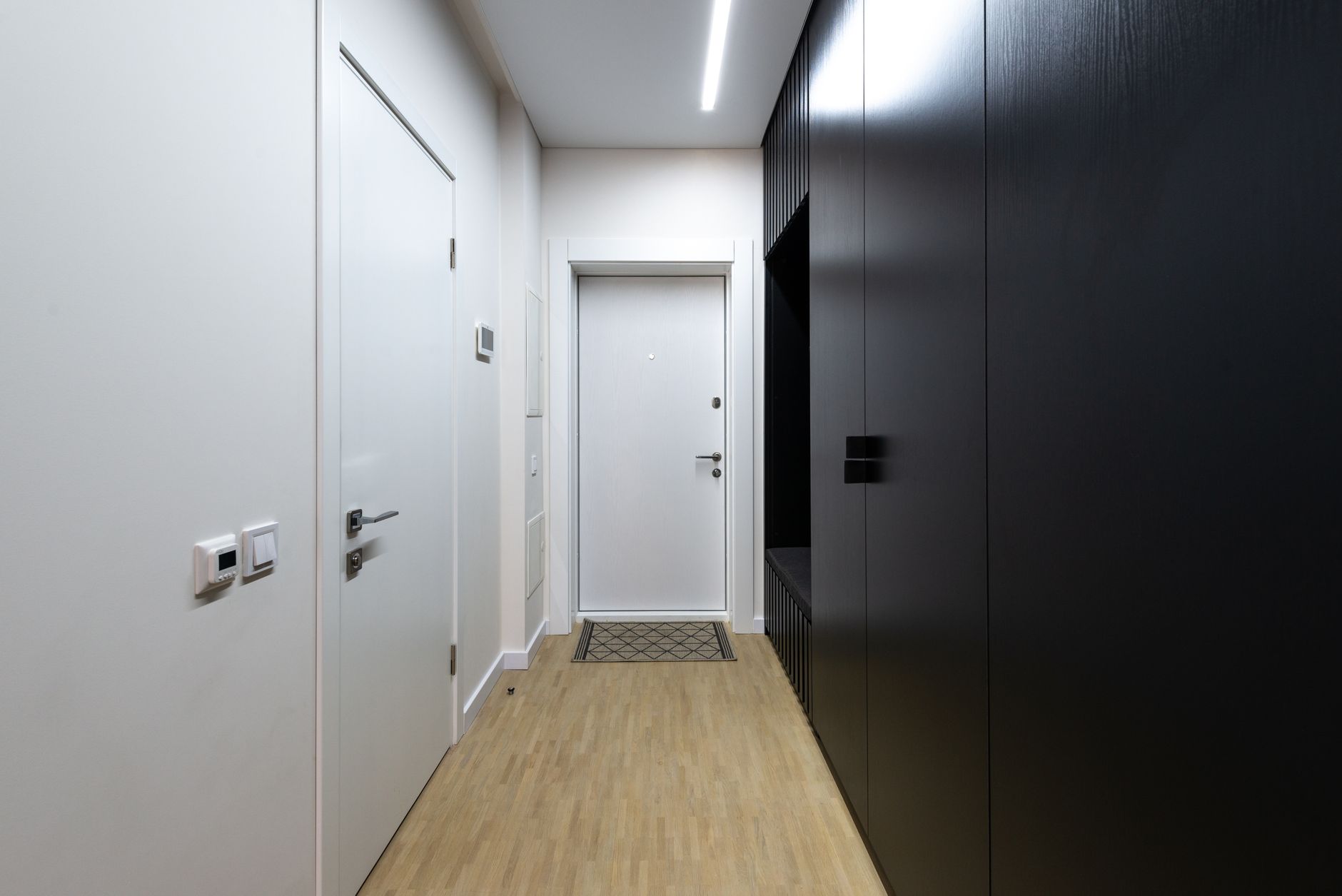
Feng shui treats a door that sticks, drags or squeaks as a sign of blocked or disrupted chi (qi) — the energy the tradition holds should move freely through a home. Practitioners commonly suggest fixing the hinge, the frame or the floor contact promptly, both because a door should open fully and because the tradition reads a struggling door as a struggling threshold.
That is the feng shui claim, stated plainly and attributed rather than presented as fact. It sits alongside an ordinary mechanical one: doors stick because of humidity swelling the wood, a settling frame, a loose hinge screw, or paint building up on an edge. Both readings can be true of the same door at once, and this article keeps them separate throughout.
Why does feng shui care about a sticking or squeaking door?
Because every internal door is treated as a point where chi passes from one space to another, and anything that impedes its physical swing is read as impeding that flow too. A door that catches on carpet, drags on its frame, or won’t open past ninety degrees is read the same way the tradition reads a cluttered hallway or a blocked entrance — as a place where movement through the home is being restricted.
This logic runs through Form School (Xingshi) thinking generally: the school is concerned with the shape and movement of things — staircases, hallways, the sightline from a bed to a door — rather than with compass direction. A door’s swing is a Form School concern almost by definition, because it is about the physical path chi is said to travel, not about which direction the room faces.
The squeak is treated slightly differently. Some practitioners describe a squeaking hinge as a “complaining” door, adding an auditory disruption to the visual one of a stuck door. No classical text is required to make this point — the reasoning given is closer to plain observation: a home that announces itself with unresolved small noises does not feel settled, and the tradition asks that a home feel settled.
Is a sticking door actually a bad sign, or just a maintenance issue?
Feng shui and home maintenance are answering different questions, and conflating them does the reader no favours. The honest answer is that a door sticking is, mechanically, almost always a maintenance issue — and feng shui asks the reader to treat it as one, promptly, rather than ignore it.
Common physical causes worth ruling out first, because they are checkable and fixable without any feng shui framework at all:
- Seasonal humidity swelling a wooden door and frame, common in older housing stock.
- A hinge screw that has worked loose, letting the door drop and catch on the frame or floor.
- Paint or varnish built up along the door’s edge over repeated repaintings.
- A house settling on its foundation, very slightly altering the frame’s shape over years.
- A hinge pin that has dried out, causing the squeak rather than any misalignment.
None of these require a feng shui explanation, and this article is not qualified to give structural or building advice beyond naming them. Where a door’s sticking suggests a foundation or structural issue rather than routine wear, that is a matter for a builder, joiner or structural surveyor, not a feng shui reading.
What does the tradition suggest doing about it?
Practitioners across schools tend to agree on the same practical short list, which happens to be identical to ordinary household maintenance:
- Tighten or replace the hinge screws so the door hangs correctly.
- Oil or lubricate the hinge to stop the squeak.
- Plane or sand a swollen door edge so it clears the frame.
- Check the door can open to its full swing, not just partway.
- Address it soon after noticing it, rather than living with it for months.
The last point is the one feng shui adds that a maintenance checklist alone might not emphasise: promptness. The tradition holds that leaving a known obstruction unaddressed compounds the reading, on the reasoning that a home left to accumulate small unresolved frictions is a home whose flow is chronically restricted, not just occasionally. Whether or not the energetic reading persuades a given reader, fixing a door promptly is uncontroversial advice on its own mechanical terms.
Does it matter which door in the house is sticking?
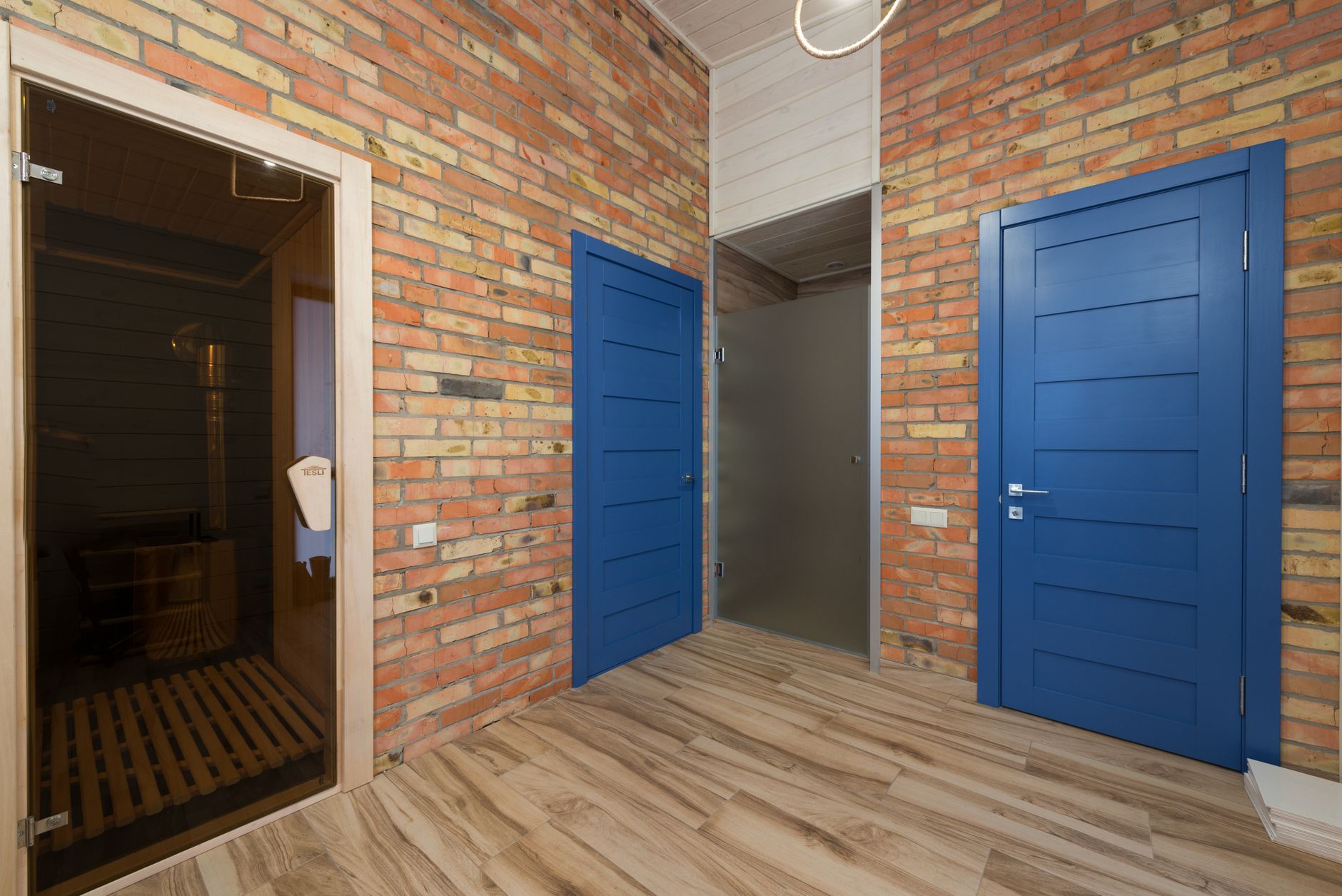
Some practitioners weight the reading by which door and where it sits in the home, though this is more elaborated in the BTB (Black Sect) adaptation than in classical Form School sources. A front door that sticks gets more attention in this literature than, say, a linen-closet door, because the front door is described in feng shui as the “mouth of chi” — the main point of entry for energy into the whole home, a term explained in more detail in this site’s explainer on the mouth of chi.
By that same logic, a bedroom door that sticks gets attention because of what it is said to control for the room behind it, and a bathroom door gets its own separate set of concerns entirely, covered in the site’s piece on what feng shui says about a bathroom door. None of this is presented in classical Compass School (Liqi) texts as a ranked hierarchy of doors — it is a modern, largely BTB-influenced elaboration, and readers should treat “does the specific door matter” as a question with a school-dependent answer rather than a single one.
Does a squeaking hinge mean something different from a sticking door?
The tradition treats the two as related but distinct. A stuck door is read as chi obstructed; a squeaking door is read as chi disrupted or announced badly — the door still moves, but not smoothly. No classical source is needed to separate the two categories; the distinction is closer to a working practitioner’s shorthand than a scriptural one.
Practically speaking, a squeak is also the easier of the two problems to solve. Lubricating a hinge pin takes minutes and resolves both readings — the feng shui one and the purely acoustic one — at once, which is part of why the advice converges so cleanly here regardless of school.
What about doors that won’t open all the way, or are blocked by furniture?
This is treated as a related but separate problem: not a mechanical fault in the door itself, but an obstruction in the room around it. Furniture placed so a door can only open partway, or a door that opens directly into a wall of boxes, is read the same way as a cluttered entrance — as a restriction on the room’s chi rather than a fault with the door’s hardware.
This is covered in more depth in the site’s piece on why feng shui objects to a cluttered entrance, and the logic extends to internal doors generally: a door should be able to open to something close to its full swing, both because the tradition asks for it and because a door that can’t fully open is a door that limits how a room is actually used.
Two doors positioned so they face each other directly, or an internal door that lines up with the front door on the same axis, are treated as their own separate topics in feng shui writing, covered respectively in what feng shui says about two doors facing each other and the view on a back door in line with the front door. A sticking or squeaking door is a maintenance-and-flow question about the door itself; alignment between doors is a different, layout-level question.
Which school of feng shui is this advice coming from?
Mostly Form School reasoning, with the door-hierarchy elaboration (front door matters more than a closet door) more associated with the BTB adaptation that spread through Western feng shui writing from the late twentieth century onward. Classical Compass School sources are far more concerned with the compass direction a door faces than with whether its hinge needs oil.
This distinction matters because so much English-language feng shui content presents itself as a single unified system when it is not. The site’s explainer on Form School versus Compass School sets out where the two genuinely diverge, and the piece on Black Sect (BTB) feng shui covers where the modern Western adaptation departs from both older schools. Readers who want the fuller picture of why the same question gets different answers depending on source should also see why feng shui rules contradict each other so often.
Is there evidence a sticking door affects anything beyond the door itself?
No controlled evidence links a door’s mechanical condition to outcomes in a household, and this article does not claim otherwise. What is checkable is the mechanical fact: a door that sticks or squeaks has a physical cause, and fixing that cause is straightforward home maintenance regardless of which tradition a reader consults about its meaning.
For readers interested in what does and doesn’t have supporting evidence within feng shui more broadly, the site’s piece on what evidence exists for feng shui lays out the distinction between the tradition’s internal logic and claims that can be independently tested. This article is not medical, structural or legal advice; a door that sticks because of a shifting frame or foundation issue should be assessed by a qualified builder or surveyor, not diagnosed through feng shui alone.
Where does door maintenance fit into a wider feng shui reading of a home?
As one item on a longer list of flow-related checks, alongside a hallway kept clear, an entrance that isn’t cluttered, and furniture that doesn’t block a door’s swing. None of these are treated in isolation in Form School reasoning — the concern is the path chi is said to take through the whole home, not any single fitting.
Readers working through a home more systematically may find it useful to start with the site’s Entrances & Flow archive, which covers thresholds, hallways and the paths between rooms, or the Room by Room archive, which takes each room in turn. For the underlying concepts referenced throughout — chi, the bagua, the difference between schools — the The Basics archive is the starting point.
The narrower, more mechanical question of a hallway that doesn’t function well as a passage — too tight, too cluttered, poorly lit — is addressed directly in this site’s guide to narrow hallway fixes, which shares the same underlying logic as the door question here: a home’s paths should be walkable, and where they aren’t, feng shui gives that fact a name.
About this site. Feng Shui Pack explains what the feng shui tradition holds and which school holds it, from published sources. Feng shui is a tradition of placement and orientation, not a science: nothing here will bring you wealth, health, luck or a relationship, and we never claim otherwise. Where a suggestion has an ordinary practical reason — daylight, airflow, sightlines, less clutter — we say so; where it does not, we say that too. This is not medical, financial, legal or tenancy advice. If a decision matters, talk to a professional in that field.