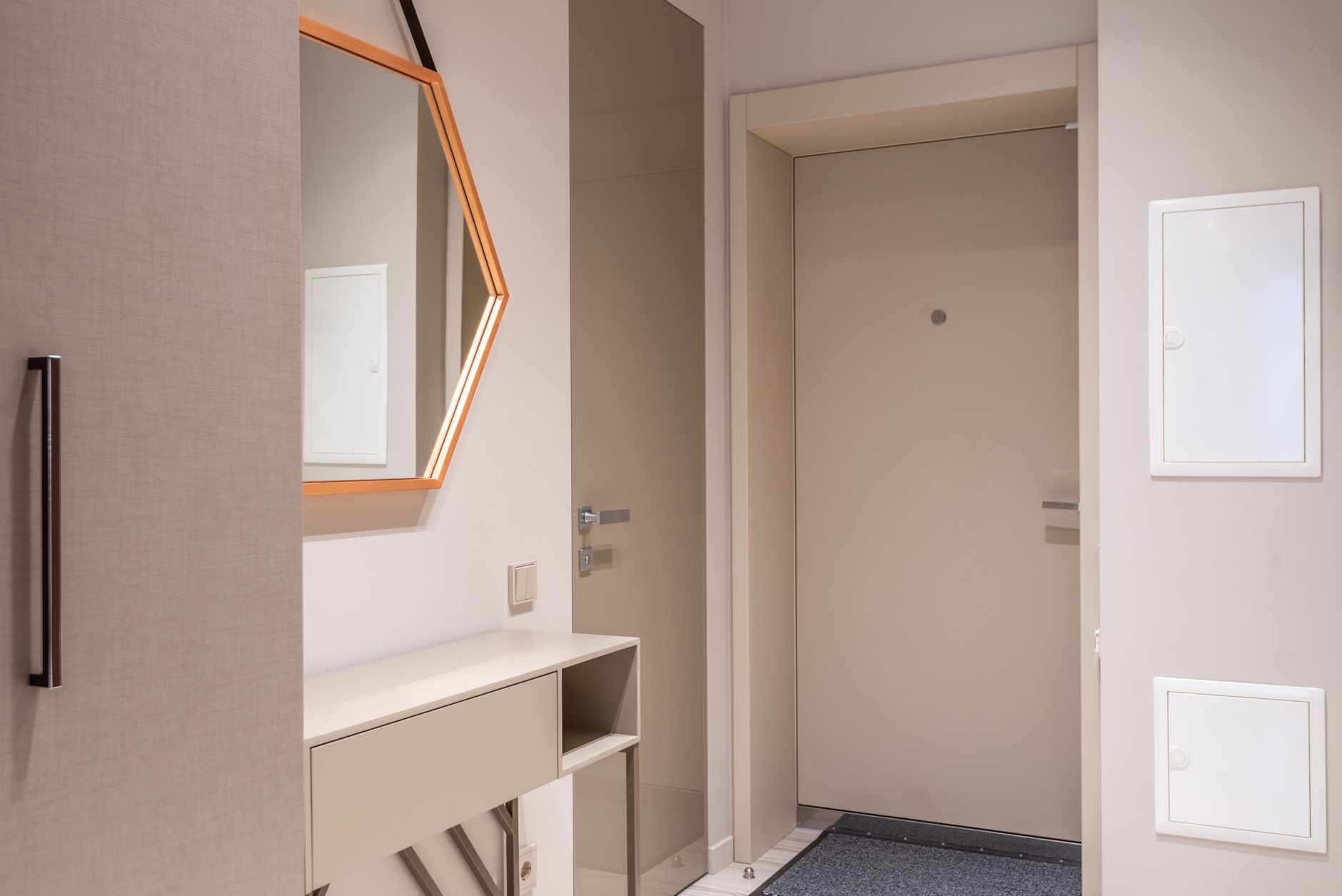
Feng shui objects to a cluttered entrance because the front door is treated as the point where chi (qi), the flow of energy the tradition centres on, enters the home. Clutter piled there is said to block or slow that entry before it can move through the rest of the house. There is also a plain practical reading: a blocked doorway is a blocked doorway, regardless of what one calls the thing moving through it.
What does “cluttered entrance” mean in feng shui terms?
It means anything that obstructs the door itself, the path immediately behind it, or the sightline into the home — shoes in a heap, umbrellas fanned across the floor, bins, boxes, bicycles, coats stacked three deep on a hook meant for one.
The concern is not tidiness as a virtue in itself. It is specifically about the front door, which the tradition calls the “mouth of chi” — the point of entry for energy the same way a mouth is the point of entry for breath or food. The mouth of chi article covers where that term comes from and how literally different schools take it.
Is this a rule from one school of feng shui, or all of them?
Concern about entrance clutter appears across schools, though the reasoning differs. Classical Form School (Xingshi) is concerned with the physical approach to a building — what a door faces, what obstructs it, whether chi can move freely along a path. Compass School (Liqi) layers in directional calculation, using a compass reading to assess how the entrance interacts with the home’s orientation.
The Western Black Sect adaptation, commonly called BTB feng shui, is the version most English-language advice draws from, usually without saying so. BTB places particular emphasis on the entrance as the starting point for mapping the bagua (pa kua) onto a home — the grid of eight life areas used to assign meaning to different zones of a room or building. Because BTB starts its whole spatial reading from the front door, it tends to treat entrance clutter as more consequential than classical Compass School does, which is more concerned with facing direction than with what is stacked against the wall. The difference between these approaches is covered in more detail in Form School vs Compass School and in Black Sect (BTB) Feng Shui: What It Is, and Why It Spread.
None of this means the schools fully agree. For a broader look at why feng shui advice online often contradicts itself from one source to the next, see Why Do Feng Shui Rules Contradict Each Other So Often?
What is chi actually said to do at a doorway?
In feng shui theory, chi is a kind of ambient energy that moves through a space the way air or water might — it can pool, stagnate, rush, or be blocked. The front door is where it is said to enter the building from outside. A full explanation of the concept sits in What Is Chi, and What Does Energy Flow Mean in Feng Shui?
This is a claim from within the tradition, not a physical description that can be measured. Feng shui Pack does not present it as established fact — it is what the tradition holds, and it should be read as such. For where actual evidence does and doesn’t exist on feng shui claims generally, see Is There Evidence for Feng Shui? What Kind Exists.
Is there a practical reason, separate from chi, to keep an entrance clear?
Yes, and it doesn’t require accepting any part of the energy framework. A cluttered entrance is a mechanical obstacle before it is anything else.
- A door that catches on shoes or boxes behind it does not open fully, which matters for daily use and for emergency exit.
- Piled items near a door are a common cause of trips, particularly in low light or for anyone carrying something on the way in.
- A blocked sightline into a home means a returning resident, or a visitor, cannot see the floor space until they are already inside it.
- Coats, shoes and bags dumped at the door rather than stored tend to accumulate — the entrance becomes the room’s default storage overflow simply because it’s the first flat surface encountered.
This is one of the cases where feng shui’s stated reasoning and ordinary household sense point the same direction, even though they start from different premises. What Does Feng Shui Actually Claim, and What Does It Not? looks at this pattern across the wider tradition — where a rule has a workable practical rationale and where it does not.
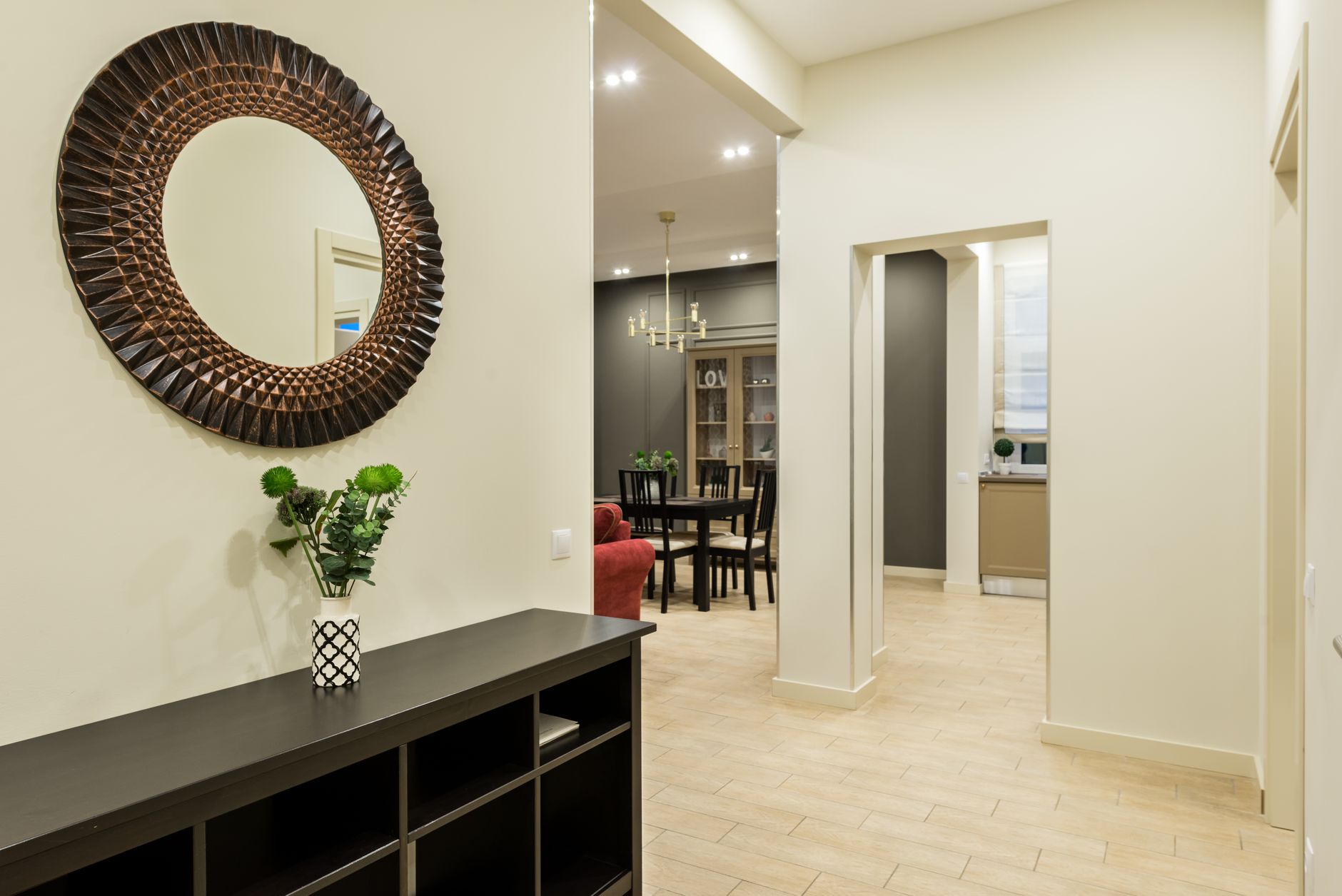
What specifically is supposed to go in an entrance, according to feng shui?
Recommendations vary by school and by source, but common suggestions include a clear path from the door inward, adequate lighting, a place to set down keys or mail, and storage for shoes and coats that keeps them off the main floor rather than eliminating them from the space altogether. The point in most versions of the advice is containment, not austerity — an entrance does not need to be empty, only ordered.
The full breakdown of what belongs and what tends to be advised against — mirrors positioned certain ways, sharp furniture edges, the number and type of items at a threshold — is covered in What Should Be in an Entryway, and What Shouldn’t? Related questions about the entrance specifically, such as door colour and what a mirror facing the door is said to do, are addressed separately in What Colour Should a Front Door Be, and Who Says So? and Mirror Facing the Front Door: What Feng Shui Actually Says.
Does the same logic apply to hallways just past the entrance?
Largely yes. The reasoning that applies to the entrance itself is usually extended to the hallway immediately behind it, on the basis that chi is described as continuing to move along the same path once it has entered.
A narrow, obstructed hallway is treated the same way a blocked door is — as an interruption to that movement. Practically, a hallway used as informal storage has the same mechanical problems as a cluttered entrance: reduced walking width, obstructed sightlines, and a higher chance of something being in the way in poor light. The dedicated guide, How Should a Hallway Be Treated? A Feng Shui Guide, covers this in more depth, including how the tradition treats long straight corridors differently from short or bent ones.
Does entrance clutter connect to anything else in the bagua map?
In the BTB adaptation specifically, yes — the entrance is the starting point from which the whole bagua grid is oriented onto a floor plan, so a blocked or unclear entry is treated as unsettling the reading of the entire home, not just the doorway itself.
This is a BTB-specific mechanic. Classical Compass School does not orient the bagua from the door in the same way; it uses compass direction relative to fixed points instead. Readers working through a bagua overlay on their own floor plan can see how the starting point is chosen, and why it differs by school, in How Do You Orient a Bagua Map to a Home? and What Is the Bagua, and How Is It Actually Used?
Is this something to take seriously as a household decision, or just as tradition?
That’s a judgment for the person living in the space, not a call this site makes either way. What can be said plainly: keeping an entrance clear has an ordinary functional case that stands regardless of feng shui, and feng shui gives it an additional, separate framework of meaning on top of that. A reader can act on the practical case, the traditional one, both, or neither.
This article is not safety, structural or tenancy advice. Any question about fire egress, accessibility, or a landlord’s requirements for shared entrances or corridors should go to a qualified professional or the relevant local authority, not to a feng shui guide.
Where does this fit within feng shui more broadly?
Entrance and flow questions are one recurring theme in a much larger set of claims about how a home is arranged — direction, room function, furniture placement, and the five elements all interact with each other in the tradition’s own logic. The Entrances & Flow section covers doors, hallways and thresholds specifically. For the foundational concepts referenced throughout this piece — chi, the bagua, and the split between schools — the The Basics archive is the place to start, and Room by Room covers how the same reasoning is applied elsewhere in a home.
About this site. Feng Shui Pack explains what the feng shui tradition holds and which school holds it, from published sources. Feng shui is a tradition of placement and orientation, not a science: nothing here will bring you wealth, health, luck or a relationship, and we never claim otherwise. Where a suggestion has an ordinary practical reason — daylight, airflow, sightlines, less clutter — we say so; where it does not, we say that too. This is not medical, financial, legal or tenancy advice. If a decision matters, talk to a professional in that field.