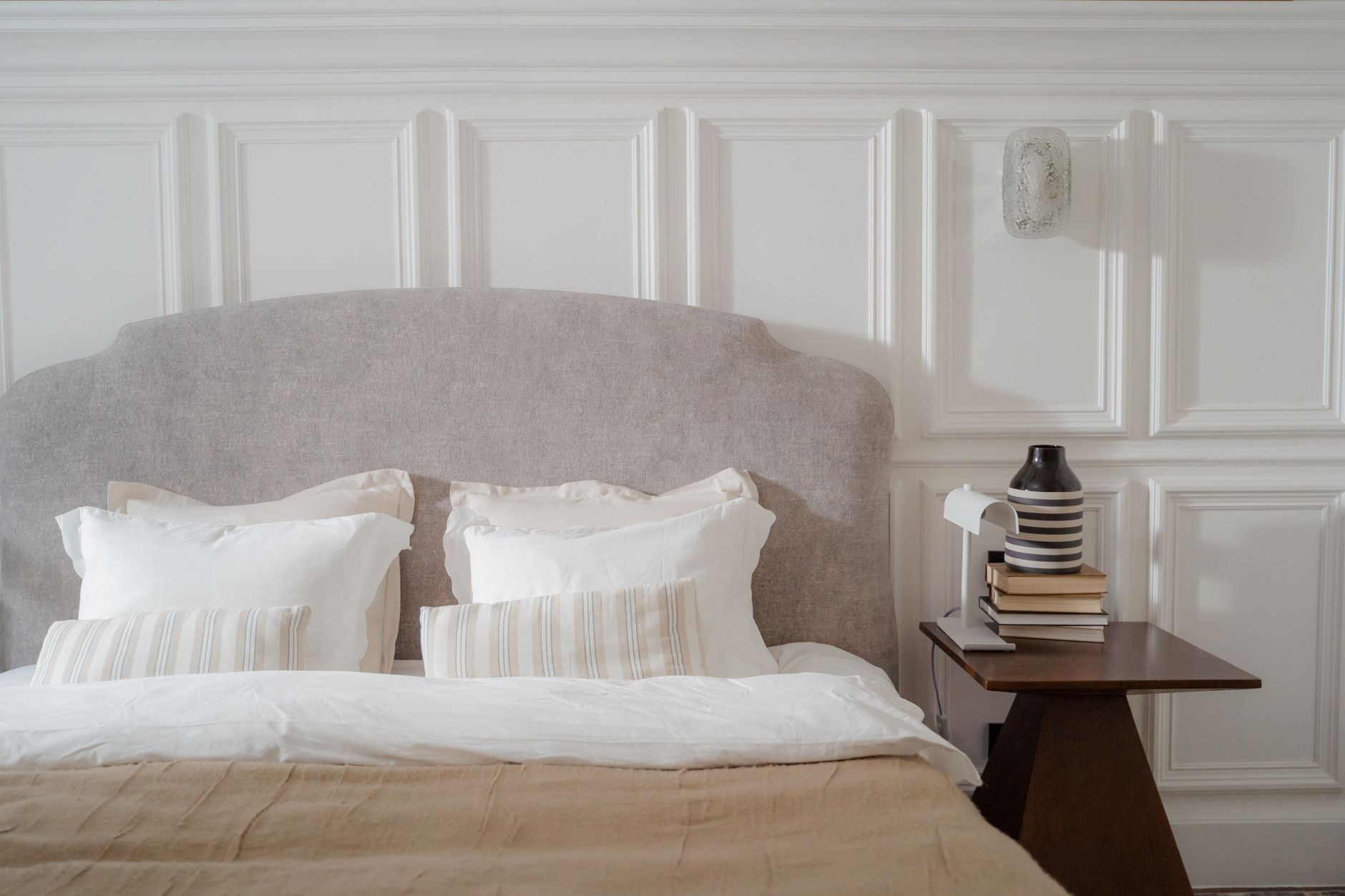
Feng shui does not universally forbid furniture against walls. Form School generally favours a solid wall directly behind a bed, desk or main seat — that backing is treated as support. What draws more criticism, mainly in the BTB adaptation, is pushing every piece of furniture in a room to the perimeter, leaving the centre empty and chi said to have nowhere to gather.
Is there a single feng shui rule about furniture and walls?
No. This is one of the areas where the different schools are answering different questions, and English-language advice often blends them without saying so. Form School reasoning is built on landscape metaphor — a “mountain” behind a seat of power, “water” in front of it. Compass School is concerned with directional orientation using a compass reading, not the distance between a sofa and a wall. The BTB adaptation, developed in the West from Tibetan Buddhist-influenced practice, is the source of most “leave a gap so chi can move” advice. Treating any one of these as the universal rule misrepresents the tradition.
Why does Form School favour solid backing behind furniture?
In Form School, a chair, desk or bed with a solid wall directly behind it is described as being in a stronger position than one with open space at its back. The reasoning given is that a solid surface behind the body offers metaphorical support, echoing the idea of a mountain behind a settlement. This is closely tied to the idea of the command view of a room and what practitioners call the commanding position — the wall gives backing while the front of the piece still faces the room and its entrance.
So why do some feng shui sources say to pull furniture away from the wall?
That advice usually applies to a different situation: a piece placed with only a narrow gap left, or a room where every item is pushed flush against every wall at once. In the BTB adaptation, chi is described as needing room to circulate through a space, and a perimeter arrangement with a bare, walkable centre is sometimes criticised for channelling movement in one direction only, along the walls, rather than letting it settle. No equivalent objection appears in classical Compass School texts, which do not discuss furniture arrangement at all.
What is actually being objected to — the wall, or the layout?
Read closely, the objection is rarely to a single piece touching a wall. It is to a whole-room pattern: chairs and sofas ringing the walls with nothing in the middle, the arrangement common to waiting rooms and some furnished rentals. That pattern has an ordinary practical problem too — people seated around the edge of a room, far apart, cannot easily hold a conversation. This is covered in more detail in the guide to arranging a living room for conversation, where the design logic and the feng shui reasoning point the same direction.
Does the rule differ for a bed, a desk, a sofa or a bookcase?
Yes, and the tradition treats them differently:
- Beds and desks: a solid wall behind the headboard or the chair is generally preferred in Form School, tied to the idea of the commanding position — support behind, a clear view of the door ahead.
- Sofas: the same backing principle applies where floor space allows, though a sofa floating slightly forward of an exterior wall is common in smaller rooms and is not treated as a serious fault.
- Bookcases, wardrobes, sideboards: these are routinely placed flush against a wall in Form School guidance with no objection raised. The concern is storage furniture blocking a door, window or walking path, not the wall contact itself.
The distinction matters. A wardrobe against a wall is simply efficient use of space. A bed or desk floating in open water with its back to a doorway is a different situation, discussed at length in the guide to the commanding position and why it recurs across so much feng shui advice.
Is there a practical reason for any of this, beyond the tradition?
Several of the underlying concerns have ordinary explanations that don’t depend on chi at all:
- A gap of a few centimetres between furniture and an exterior wall allows air to circulate, which reduces the condensation and mould risk that flat contact with a cold wall can create in some climates.
- A small gap makes it possible to reach a socket, clean behind a piece, or check for damp without moving heavy furniture.
- An empty centre with all seating pushed to the edges genuinely does make conversation harder and can make a room feel unused, regardless of any feng shui framework.
Where a rule has no such rationale — for instance, some claims about which exact wall in a bagua-mapped room should hold a sofa — that is worth naming plainly as a tradition-only claim rather than implying a hidden engineering reason.
Does this change in a small room, where there’s nowhere else to put furniture?
It has to. In a small bedroom or studio, furniture against every wall is often the only way to keep any floor open at all, and no serious feng shui source argues that a cramped room should be made more cramped to satisfy a spacing rule. The more workable version of the advice, in small spaces, is to keep a visible line of open floor somewhere in the room rather than a perimeter of furniture with no centre at all. The question of how much open floor a room actually needs is addressed directly in the guide to how much empty floor a room should have, which sets out the reasoning without asking for more space than a room has.
What about open-plan rooms, where “the walls” aren’t fixed?
An open-plan living and dining space doesn’t have a full set of walls to push furniture against in the first place, which changes the question. There the more relevant issue is how furniture groupings divide the space into zones that function on their own, covered in the guide to how an open-plan space should be divided. The wall-contact question becomes secondary to whether each zone — sitting, eating, working — has a defined edge at all.
Does furniture against a wall affect circulation through a room?
This is really the practical core of the whole debate. Furniture placed so that it narrows a doorway, blocks a natural walking line, or forces a turn around a sharp corner is a circulation problem whether or not it happens to be touching a wall. The guide to how furniture placement affects circulation sets out this reasoning in more detail, and it applies regardless of which feng shui school a reader follows. A piece flush against a wall that leaves a clear path is rarely an issue; the same piece jutting into a doorway is, on both practical and traditional grounds.
What should a reader actually do with this?
Three points hold up across the schools that discuss furniture at all:
- A bed or desk with solid wall support behind it and a view of the door is consistent with Form School reasoning and with ordinary comfort — most people prefer not to have their back to an entrance.
- Pushing every piece of seating to the room’s perimeter, leaving a dead centre, is the pattern actually criticised, more than wall contact itself, and it has a plain practical downside for conversation and use of the room.
- Storage furniture against a wall is standard practice with no meaningful objection in any school; the concern there is blocked doors, windows or walkways, not the wall.
Where furniture has sharp corners aimed into a walking path, that is a separate and specific concern, addressed in the guide to sharp corners on furniture. And for readers wanting the wider picture of why feng shui sources disagree this often on something as ordinary as a sofa’s position, the split between the schools is explained directly in the guide to the BTB adaptation and how it differs from classical practice. None of this is structural or safety advice — where pulling a piece of furniture away from a wall reveals damp, mould or a wiring issue, that is a matter for a qualified tradesperson, not a feng shui reading.
About this site. Feng Shui Pack explains what the feng shui tradition holds and which school holds it, from published sources. Feng shui is a tradition of placement and orientation, not a science: nothing here will bring you wealth, health, luck or a relationship, and we never claim otherwise. Where a suggestion has an ordinary practical reason — daylight, airflow, sightlines, less clutter — we say so; where it does not, we say that too. This is not medical, financial, legal or tenancy advice. If a decision matters, talk to a professional in that field.