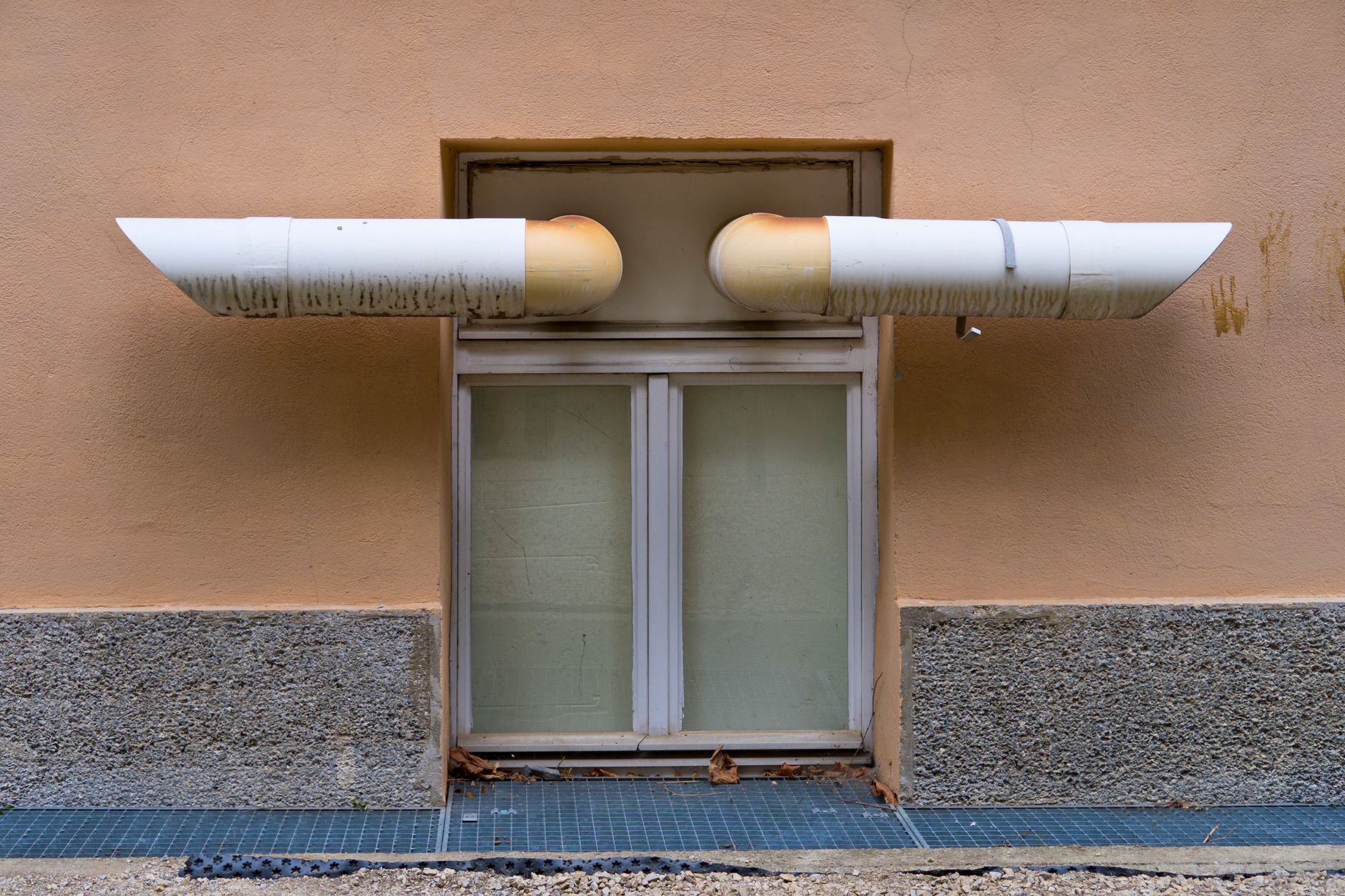
Feng shui treats stagnant, unmoving air the way it treats standing water or a blocked doorway: as a sign that chi (qi) is not circulating. Form School and the BTB adaptation both connect stale air to sluggishness in a household and recommend restoring airflow through windows, doors and less clutter. The qi explanation is a belief, not a measurement — but the underlying advice to ventilate a room has an ordinary, checkable logic of its own.
What does feng shui actually say about stale air?
Classical Chinese texts on siting and interior arrangement treat moving air as one of several signs that a space is “alive” rather than dead. A room that never gets fresh air, in this reading, is a room where chi pools and stagnates, in the same way water pools in a drain that does not run.
This is stated most plainly in later, popularised feng shui writing rather than in the oldest classical sources, which focus more on siting a building relative to landscape — hills, water, and wind — than on indoor air exchange room by room. The indoor-air version of the rule is a later extension of a much older idea: that wind (the “feng” in feng shui) and water together carry and shape chi, and that a home should let both move through it without becoming trapped.
Which school of feng shui actually makes this claim?
Form School practitioners, working from the older tradition of reading landscape and building shape, describe stale, unmoving air as consistent with a poorly sited or poorly designed space — alongside sharp angles, blocked views and heavy overhangs. Compass School writers, who work with directional readings tied to a compass and the occupants’ birth data, are less concerned with air movement specifically and more with which direction a window or door faces.
Most English-language advice a reader encounters online is the Western Black Sect, or BTB, adaptation developed in the United States from the 1980s onward. BTB writing tends to state the stagnant-chi explanation for poor ventilation as settled fact, without noting that this is one modern school’s framing rather than a single, universal feng shui position. The general rules on air, light and layout appear across the site’s Basics and Light & Air categories, with the school named wherever the advice diverges.
Is there a practical reason behind the rule, or only tradition?
There is a practical reason, and it is separate from the chi explanation. Air that does not exchange with the outside builds up moisture, cooking and bathroom odours, dust, and — in some buildings — higher concentrations of pollutants that would otherwise disperse. This is a matter of building physics and indoor air quality, not feng shui, and it is well documented by health and building authorities independent of any spiritual tradition.
Feng shui’s contribution is not the physics. It is a long-standing cultural habit of treating airflow, daylight and an unobstructed layout as related signs of a well-functioning home, worth checking together rather than separately. The site’s piece on why feng shui cares so much about natural light covers the parallel case for daylight, which is argued in similar terms.
This article is not health, medical or building-safety advice. Persistent damp, mould, condensation or ventilation problems in a home are a matter for a qualified surveyor, builder or your local housing authority, and concerns about indoor air quality specifically should go to a health professional or your national environmental health body — not to feng shui guidance.

What does feng shui suggest for a room with no windows?
A windowless room is treated as a harder case in every school, because it cannot exchange air or borrow daylight on its own. Practical suggestions commonly given include running a room via a door left open when possible, using mechanical extraction, and treating the room as unsuitable for prolonged occupation such as a main bedroom, rather than trying to compensate with objects alone. The site covers this specific situation in detail in what feng shui says about a room with no window, including where BTB and Form School give different weight to the problem.
Blocked or permanently obstructed windows raise a related but distinct question, covered separately in what feng shui says about blocked windows, since a window that exists but cannot open or cannot be seen through is not treated the same as no window at all.
Do open windows on opposite sides of a house “let chi escape”?
Some feng shui writers caution against a straight, unbroken line of sight and airflow from a front door or window straight through to a back door or window, arguing that chi entering the home passes straight through without “settling.” This is stated as a concern in some Form School and BTB writing on layout, but it is not a universal position — plenty of practical design advice recommends exactly this kind of cross-ventilation for cooling and air exchange.
Where the two aims conflict, feng shui sources generally suggest breaking a direct line of sight with furniture, a folding screen, or a change in level, rather than closing off the airflow itself. This overlaps with advice on entry sequencing found in the site’s Entrances & Flow category and in back door in line with the front door: the feng shui view.
What about air conditioning, fans and mechanical ventilation?
Feng shui literature has comparatively little to say about mechanical ventilation specifically, since most of the underlying tradition predates it by centuries. Contemporary BTB writers who address it tend to treat a working extractor fan, air conditioning unit or mechanical vent as functionally equivalent to an open window — a route by which stale air leaves and fresh air, or at least moved air, replaces it.
Where advice diverges is on the noise and visual presence of the equipment itself, which some writers treat under separate rules about clutter and clean lines rather than under ventilation. There is no consistent feng shui position that any particular brand, type or design of fan or unit is preferable to another, and this site does not make or repeat such claims.
How does this connect to clutter and blocked doorways?
Feng shui writing consistently groups stale air with two other complaints: clutter that blocks a doorway or window, and furniture placed so it obstructs the room’s main paths. The reasoning given is the same in each case — that anything obstructing movement, whether of people, air or attention, is treated as obstructing chi.
The practical version of this argument holds up independently of the chi explanation. A window blocked by boxes cannot ventilate a room regardless of belief system, and a hallway stacked with belongings is objectively harder to move through. The site’s piece on why feng shui objects to a cluttered entrance makes this practical case directly, and how furniture placement affects circulation in a home extends the same logic to interior layout generally.
Do houseplants and other objects substitute for actual ventilation?
No school of feng shui claims that a plant, object or ornament replaces an open window or a working vent. Houseplants appear frequently in feng shui writing as symbols of living, growing chi and are discussed on this site in which houseplants are suggested indoors, and why, but this is a separate claim from the ventilation one, and the two should not be conflated.
Curtains and other window coverings are treated as a related but distinct topic — how they affect the light and privacy a window provides once it is otherwise able to do its job — and are covered in what feng shui says about curtains and window coverings.
What is a reasonable way to use this advice?
Feng shui’s ventilation advice is worth separating into two layers. The belief that unmoving air represents stagnant chi is a tradition-specific claim, stated with more confidence in BTB writing than in classical sources, and it should be read and attributed as such rather than treated as settled fact.
The advice that follows from it — open a window when possible, do not block the ones you have, do not let a room’s only airflow route stay obstructed by furniture or belongings — matches ordinary building and health guidance regardless of whether the chi explanation is accepted. Readers dealing with a genuinely stale, damp or poorly ventilated home are better served by a builder, surveyor or environmental health service than by feng shui adjustments alone. For the layout questions that sit alongside this one, the site’s Layout & Furniture and Room by Room archives cover how airflow, light and furniture placement are treated together, room by room.
About this site. Feng Shui Pack explains what the feng shui tradition holds and which school holds it, from published sources. Feng shui is a tradition of placement and orientation, not a science: nothing here will bring you wealth, health, luck or a relationship, and we never claim otherwise. Where a suggestion has an ordinary practical reason — daylight, airflow, sightlines, less clutter — we say so; where it does not, we say that too. This is not medical, financial, legal or tenancy advice. If a decision matters, talk to a professional in that field.