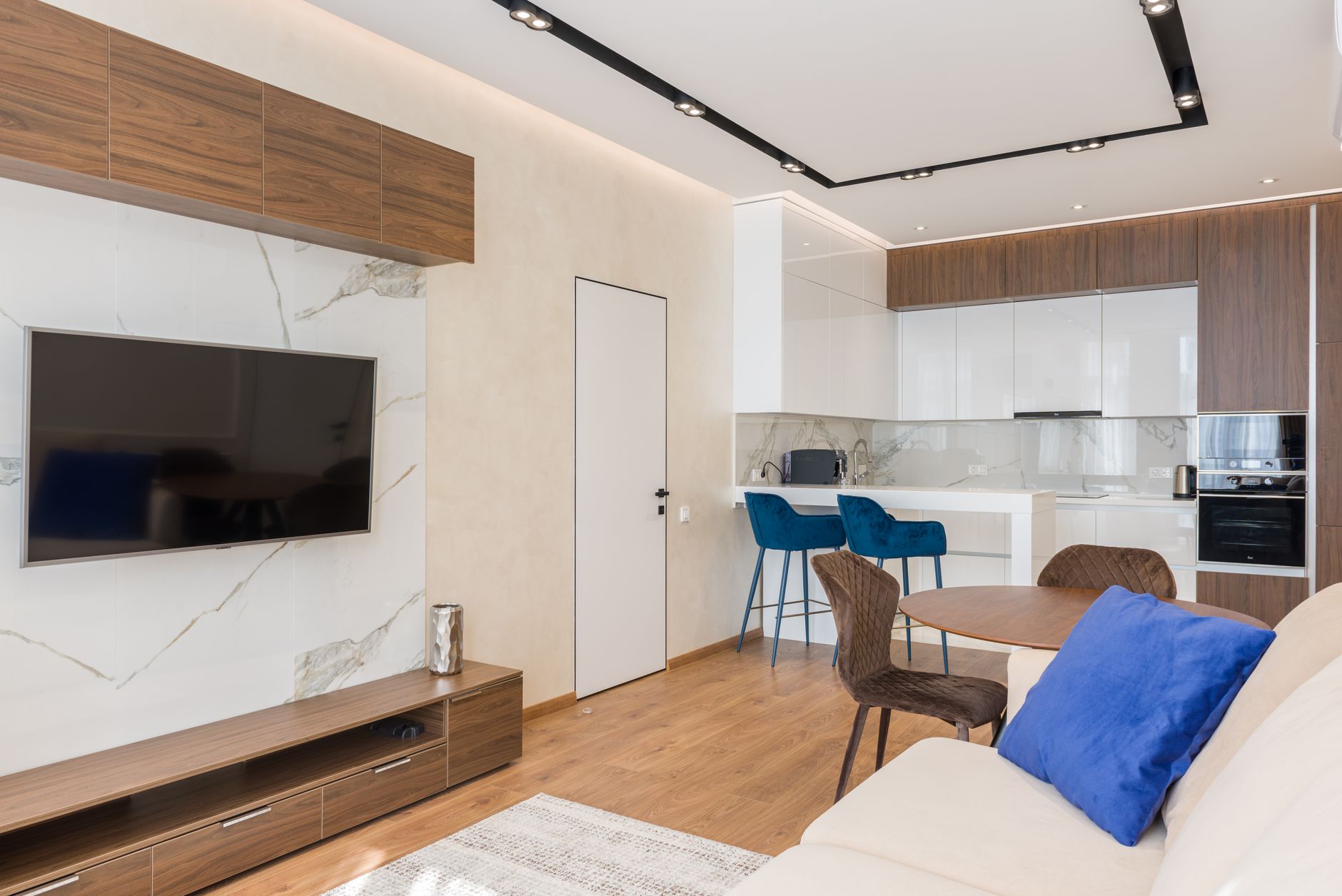
Feng shui treats storage as a question of movement and accumulation, not aesthetics: the tradition holds that objects piled where people walk, under a bed, or blocking a door interrupt the flow of chi through a room. In a small home, where there is less floor and less air to begin with, this concern is applied more strictly, not differently in kind.
Why does clutter matter so much in feng shui?
Clutter is treated as a first-order problem across every school of feng shui, not a minor styling note. Form School reasons about it in terms of physical obstruction — stacked objects block movement, sightlines and airflow. Compass School and the BTB adaptation add a symbolic layer, treating an accumulation of unused things as stuck or stagnant chi. Different schools give different explanations, but all of them arrive at storage as something to manage actively rather than ignore. A fuller account of why this is the one point of near-universal agreement is worth reading in full at why clutter is the first problem in every feng shui school.
Which school’s rules actually apply to storage?
Most storage advice circulating online is BTB (Black Tibetan Buddhist Sect) rather than classical Chinese feng shui, and it rarely says so. BTB tends to speak in terms of “energy” and assigns strong symbolic weight to what is stored and where relative to the bagua map placed over the front door. Classical Form School is more concerned with the physical fact of an obstruction — a wardrobe blocking a doorway is a problem because it blocks the doorway, not because of which bagua area it falls in. Compass School adds direction and the individual’s kua number into decisions about placement, which BTB generally drops. None of this is settled doctrine; it is worth understanding why practitioners give conflicting advice before applying any single rule literally, which is covered at why feng shui consultants disagree with each other.
Is storing things under the bed a problem?
Under-bed storage is one of the most argued points in the tradition. The BTB adaptation generally advises against it, reasoning that objects under a sleeping body obstruct the free circulation of chi around the sleeper. Classical Form School is less absolute, and some practitioners accept under-bed storage provided it is limited, contained in matched boxes, and does not include broken items, out-of-season clutter, or anything with strong negative association for the person sleeping above it. There is no practical mechanism offered for how boxed linens under a bed frame would disturb sleep; this is a symbolic claim, not a physical one, and the site’s fuller treatment sets out both positions plainly at what feng shui says about storing things under the bed and, on the narrower question of what if anything is considered acceptable there, at what should be under the bed.
What about storage that blocks the entrance or a hallway?
This is the one area where feng shui’s reasoning and ordinary practicality line up completely. A shoe rack, coat stand or box left in a hallway is a physical obstruction before it is anything else — it slows a person down, narrows a passage, and in a genuine emergency it is a hazard. Feng shui frames this in terms of the entrance as the “mouth of chi”, the point through which the tradition holds that the flow of the whole home enters, and argues that anything obstructing it dampens what reaches the rest of the space. Whatever the framing, keeping the entrance and any hallway clear is sound practical advice on its own terms, and it matters more in a small home simply because there is less alternative route around an obstruction. The site’s guide to homes without a proper hallway addresses this directly at how to handle a home with no hallway.
Do closed cabinets work better than open shelving?
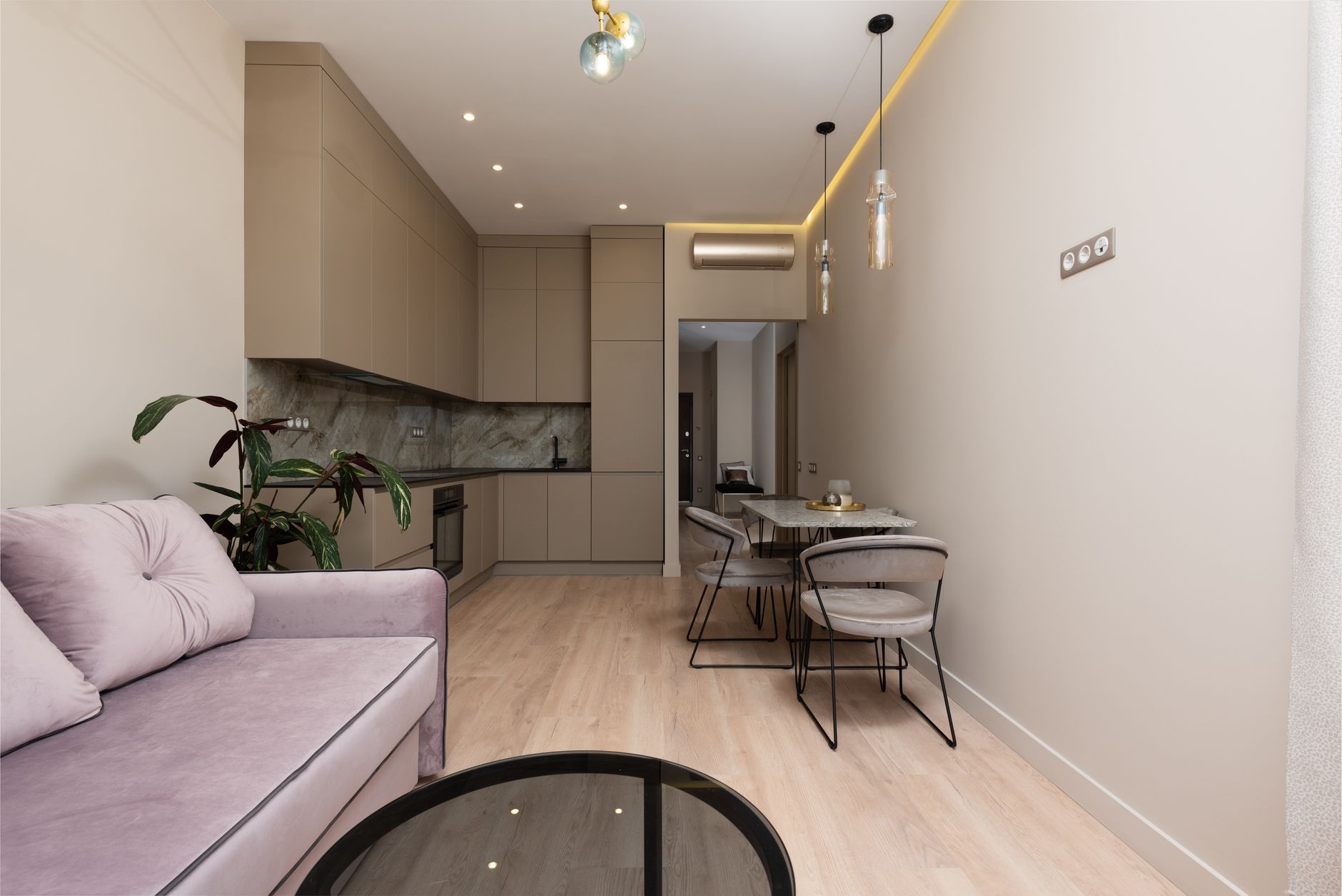
Feng shui generally favours closed storage over open shelving where volume of objects is high, on the reasoning that visible clutter reads as unresolved chi even when the room is otherwise tidy. This is one of the few storage rules with an obvious practical parallel: a room with everything visible looks and feels busier than one with the same contents behind doors, regardless of any energetic claim. Open shelving is not treated as inherently negative — books in particular get separate treatment, since a shelf of books is generally read differently to a shelf of miscellaneous objects. That distinction is set out at feng shui and books: what open shelving really means. Where furniture height comes into it — tall cabinets against a wall versus low units under a window — the reasoning is covered at what feng shui says about furniture height.
Should storage double as a room divider in a one-room home?
In a studio or a single-room flat, storage furniture is frequently the only practical way to separate a sleeping area from a living area, and feng shui has fairly settled reasoning here: a solid or semi-solid divider (a bookcase, a wardrobe, a low cabinet) is preferred over an open sightline between the bed and the rest of the room, because the tradition holds that a bed exposed to constant activity and movement is restless. This overlaps directly with ordinary comfort — most people sleep better without the television or kitchen area in direct view. The practical detail of doing this in a genuinely small footprint is covered at how to apply feng shui in a studio apartment, at how to separate sleeping and living areas in one room, and more generally at how to arrange a room that does two jobs.
How much storage is too much for a small room?
Feng shui does not give a numeric ratio, but Form School reasoning consistently returns to the same principle: a room needs enough open floor for a person to move through it without turning sideways or stepping over things, and enough clear space around furniture for chi — and a person carrying a coffee — to circulate. Where storage furniture fills a wall entirely and leaves only a narrow channel down the centre of a room, the tradition treats that as a problem regardless of how tidy the cabinets themselves are. The general question of how much bare floor a room needs is addressed directly at how much empty floor should a room have.
What should never go into storage, according to the tradition?
Several schools converge on a narrower rule: broken items, and objects kept only because they were expensive or given by someone, rather than because they are used, are treated as a category worth clearing out rather than storing. The reasoning given is that a broken object represents unresolved or stagnant chi whether it is visible or boxed away in a cupboard. There is no practical mechanism offered for this beyond the tradition itself, and readers weighing whether to act on it should read the fuller argument, including the counter-view, at what feng shui says about broken or unused objects.
Can a renter actually apply any of this?
Much of the advice above — clearing hallways, choosing closed over open storage, using furniture as a room divider — requires no structural change and works within a rented flat exactly as it would in an owned one. Where advice calls for built-in cupboards, knocking through a wall, or repositioning a door, it is not something a tenancy typically allows, and any change of that kind should be checked against the lease and, where relevant, local housing regulation before proceeding; this article is not tenancy or legal advice. The wider question of what feng shui recommends when structural change is off the table is addressed at what feng shui says about renting and things you can’t change, and general reading on furnishing decisions in constrained spaces is gathered in the Small Spaces archive and the Layout & Furniture archive.
About this site. Feng Shui Pack explains what the feng shui tradition holds and which school holds it, from published sources. Feng shui is a tradition of placement and orientation, not a science: nothing here will bring you wealth, health, luck or a relationship, and we never claim otherwise. Where a suggestion has an ordinary practical reason — daylight, airflow, sightlines, less clutter — we say so; where it does not, we say that too. This is not medical, financial, legal or tenancy advice. If a decision matters, talk to a professional in that field.