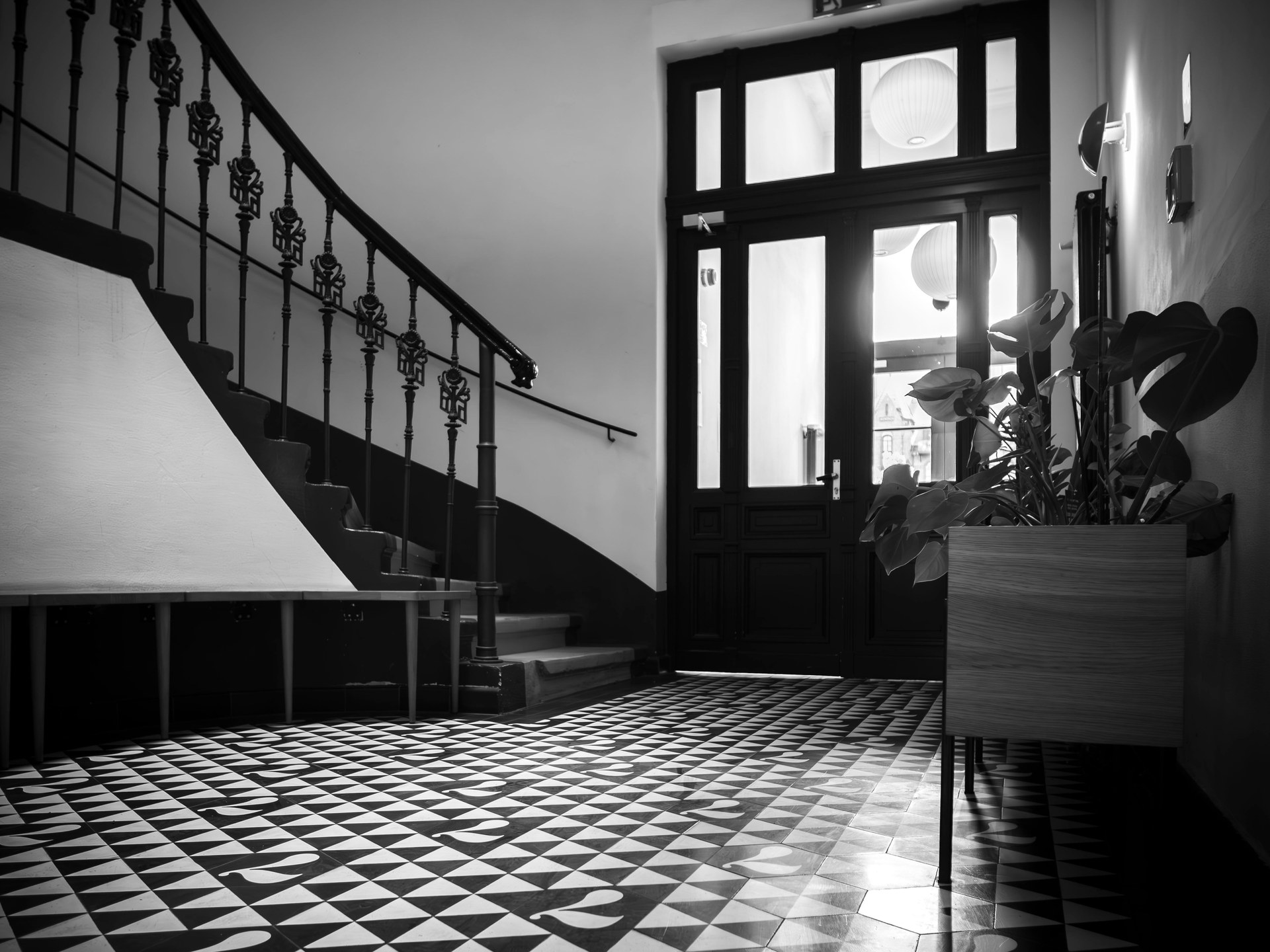
Feng shui traditions generally treat a basement flat as compromised chi (qi) — the term for the quality of light, air and movement in a space — because it sits below ground level, gets less natural light, and has a weaker connection to what Form School calls the “mouth of chi” at street level. None of the schools call it uninhabitable; they call it a space that needs compensating.
This is a design-logic problem as much as a symbolic one, and the two overlap more than most online advice admits. A flat that is partly or fully underground genuinely does get less daylight, has different ventilation needs, and often has a front door reached by going down rather than up. Feng shui has commentary on all three, and it’s worth separating what is tradition-specific interpretation from what is just physics.
Why does feng shui treat basement flats differently?
Classical Form School reasoning ties a home’s vitality to its relationship with light, air movement and the street it opens onto; a dwelling sunk below grade is read as having reduced yang energy — the active, bright quality associated with daytime and human activity — relative to yin, the quiet, still quality associated with rest and enclosure.
The concern isn’t superstition dressed up — it maps onto something real. South-Asian and East Asian courtyard-house traditions, from which much of Form School draws, were developed in climates and eras where a below-ground room genuinely was darker, damper and harder to heat or air. The symbolic reading and the practical one point the same direction, which is part of why the idea has persisted.
Does a basement flat have “too much yin”?
Practitioners in the yin-yang framework commonly describe a basement as yin-heavy — dim, cool, quiet, below the ground rather than open to the sky — and suggest the space needs active, yang elements introduced to bring it back toward balance. This is a stated tradition, not a measurable property of the room.
In practice this usually translates to fairly ordinary advice: brighter and layered artificial lighting, warmer materials, more activity-friendly furniture arrangement, and keeping the space from feeling like a single dim box. The reasoning given is symbolic; the fixes suggested are largely the same ones any lighting designer would offer for a room with limited daylight. See how artificial lighting should be layered in a room and what feng shui says about overhead lighting for the specifics.
What does feng shui say about the entrance being below street level?
In Form School, the front door is the point where chi is said to enter the home, and a door reached by walking down a flight of steps is read as chi “sinking” or arriving diminished, compared with a door at or above the level of the approaching path.
No practical rationale is given for the symbolic claim itself — a below-grade door doesn’t behave differently from any other door once you’re through it. But the practical issues around a sunken entrance are real and worth attending to on their own terms: drainage away from the door, adequate lighting on the steps down, and keeping the stairwell free of clutter and standing water. These are covered in general terms at what feng shui says about the approach to a house and what feng shui says about the path to the front door.
Does the BTB adaptation treat basement flats the same way?
The Western Black Sect (BTB) adaptation of feng shui, common in North American and UK popular guides, tends to focus less on the ground-level symbolism of classical Form School and more on the bagua map applied from the front door inward, along with commanding position for the bed and desk.
Where BTB material discusses basements at all, it typically treats them as any small or light-poor space is treated — a candidate for the same fixes recommended for a windowless room or a studio: layered lighting, mirrors used carefully, and attention to what’s directly visible on entry. It’s worth being explicit that this is one adaptation’s approach, not a universal ruling; see why feng shui consultants disagree with each other for how much these schools actually diverge.
Can a basement flat still work in feng shui terms?
Most traditions say yes, provided the light, air and layout problems are addressed rather than ignored — no school treats a basement as automatically bad chi with no remedy available.
The consistent recommendations across Form School and BTB commentary are:
- Maximise whatever natural light exists, and treat any window as a priority feature rather than an afterthought — see why feng shui cares about natural light.
- Address ventilation directly, since a below-ground room is more prone to stale or damp air; see what feng shui says about ventilation and stale air.
- Keep circulation paths clear, since a below-grade flat often has an awkward or narrow entry sequence; see how furniture placement affects circulation.
- Avoid compounding the yin reading with clutter, since clutter is treated as a chi-blocker in every school regardless of the room’s position — see why clutter is the first problem in every feng shui school.
What about a basement flat with no windows, or only high, small ones?
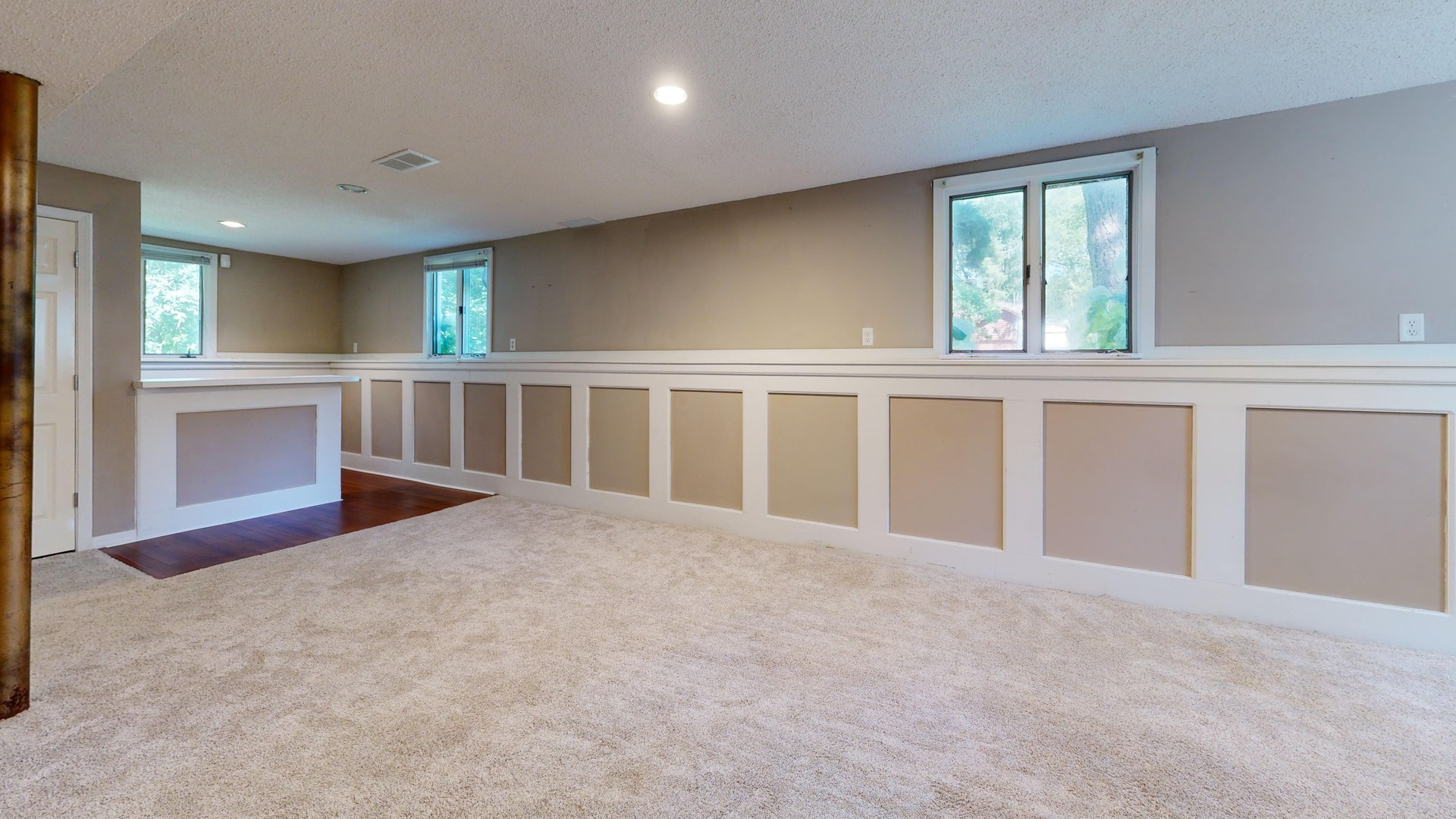
A basement unit with a single high window or no window at all is treated the same way any windowless room is treated in feng shui commentary: as a space that needs artificial light doing real work, and mirrors used to extend the sense of the room rather than to correct a symbolic fault.
This is a genuinely common condition in below-ground flats, particularly in older conversions where the window sits at or near pavement level. The practical guidance at what feng shui says about a room with no window applies directly, as does the general reasoning at what feng shui says about houseplants and air quality, since plants are often suggested — with the caveat that low light limits which species will actually survive, which is a horticultural fact rather than a feng shui one.
Is a basement flat a bad choice to rent or buy?
This is not financial or property advice, and nothing here should be read as guidance on a tenancy or purchase decision — a surveyor, letting agent or solicitor is the right source for damp, drainage, insurance and legal questions specific to a below-ground unit.
What feng shui commentary adds to a viewing is a short checklist of questions worth asking regardless of tradition: how much of the year does the main room get direct or reflected light, where does rainwater go relative to the entrance, and how is the space ventilated when the window can’t be left open. A structured way to look at any flat before committing to it is at the feng shui home-viewing checklist, and the wider question of what a renter can and can’t change is addressed at what feng shui says about renting and can’t-change things.
What can’t be fixed, and what can?
The building’s position below street level is fixed and no rearrangement changes it; what can be worked with is lighting, air movement, clutter, and the sequence of the entrance. This distinction — between a structural fact and an adjustable condition — is the most useful filter for any layout problem, basement or not.
The general framework for sorting the two is set out at which layout problems are fixable in feng shui, and which aren’t. For a basement flat specifically, the fixable list is longer than the fixed one: light layering, air quality, clutter control and entry sequence account for most of what a below-ground flat is criticised for, and all four respond to ordinary attention rather than anything specialised. Broader context on small or awkward homes generally is at what the feng shui tradition holds, and what it doesn’t and the Small Spaces archive.
About this site. Feng Shui Pack explains what the feng shui tradition holds and which school holds it, from published sources. Feng shui is a tradition of placement and orientation, not a science: nothing here will bring you wealth, health, luck or a relationship, and we never claim otherwise. Where a suggestion has an ordinary practical reason — daylight, airflow, sightlines, less clutter — we say so; where it does not, we say that too. This is not medical, financial, legal or tenancy advice. If a decision matters, talk to a professional in that field.