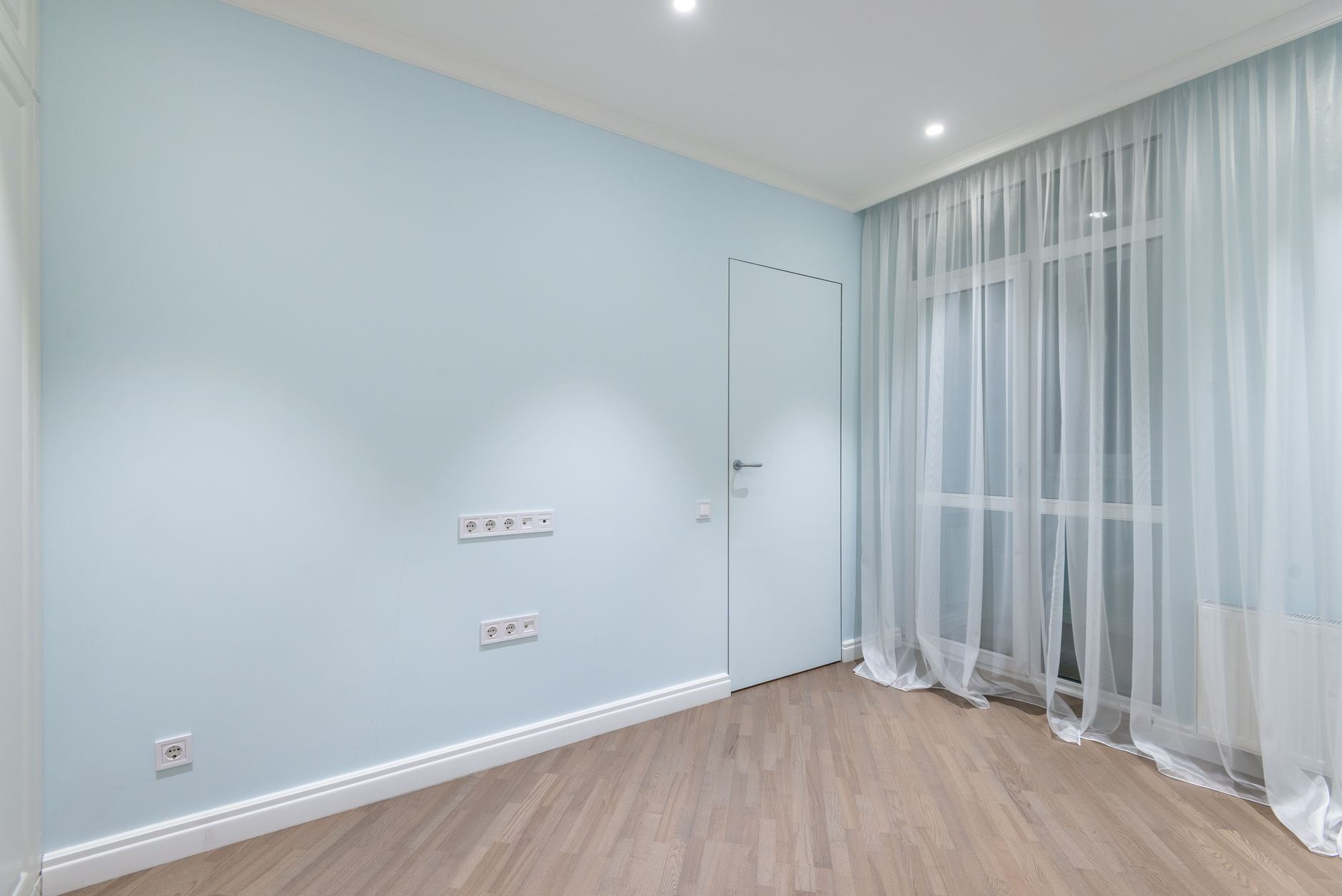
Look at the approach and entrance first (what the front door faces, whether the path to it is direct or obstructed), then daylight and airflow in the main rooms, then the layout — where the bed and the main seating can be placed so a person can see the door from them. These are the points that come up across Form School, Compass School and the BTB adaptation, though they weight them differently.
None of this is a substitute for a structural survey, a proper tenancy check or independent legal advice on a lease or purchase contract. Feng shui is a design tradition, not a safety inspection. What follows is what the tradition itself says to look at, and which school says it.
What should you check outside the house before going in?
Form School practitioners look first at the approach: how a person actually arrives at the door, and what stands in front of it. The reasoning given is practical as much as symbolic — a path that curves gently, or has a clear line of sight from the street, is easier to read and move through than one obscured by a car park, a bin store or a steep drop.
- Whether the house sits at a T-junction, with a road running directly at the front door — a configuration classical Form School treats as a “secret arrow”, discussed in more detail at what feng shui says about a house at a T-junction.
- Whether the house is built on a slope, and which way it faces relative to that slope — covered at what feng shui says about a house on a slope.
- Whether a garage door faces directly onto the street, which some Form School writers treat differently from a recessed or side-facing garage — see garage facing the street.
- Trees close to the house, and whether they block the entrance or a window — see trees near a house.
- Visible water outside — a pond, a drainage feature, a pool — which classical texts treat as active and worth noting, covered at water outside the home.
The fuller list of what to look at on the way in, before ever touching the front door, is at the approach to a house and the Outdoors & Approach archive.
What matters about the front door itself?
In the BTB adaptation, the front door is called the “mouth of chi” — the main point where energy is said to enter the home, and the point from which the bagua map is placed over the floor plan. Classical Compass School does not use the door this way; it places the bagua using compass readings, not the door.
Practical points a viewing can check directly:
- Does the door stick, or scrape the floor? A door that does not open cleanly is a maintenance issue as much as a symbolic one — see sticking or squeaking doors.
- Is there a second door directly behind the front door, in a straight line — back door in line with front door — which some schools describe as allowing energy to pass straight through without settling; more at back door in line with front door.
- Is there a mirror directly facing the front door? Opinion on this is genuinely divided between practitioners; the arguments on both sides are at mirror facing the front door.
- What does the entryway actually hold — room for shoes, coats and post, or is it a bottleneck? See what belongs in an entryway.
House numbers are sometimes raised in this context too, mostly as a matter of numerology rather than layout — see what feng shui says about house numbers for how that claim is sourced and how strong it actually is.
What should you look at in the hallway and flow between rooms?
Check whether you can walk from the entrance to the main living space without obstruction, and whether the hallway is wide enough to feel like a passage rather than a chute. This has an ordinary practical basis: a cluttered or overly narrow hallway is simply harder to live with, independent of any symbolic reading.
Some flats have no distinct hallway at all — the front door opens directly into a living space. This is common in smaller and older builds and is addressed directly at a home with no hallway and what no entryway actually means. Neither the BTB adaptation nor Form School treats this as disqualifying — both offer workarounds rather than calling it a fault.
Also worth noting on a walkthrough:
- A staircase that faces the front door directly — see staircase facing the front door.
- Rooms with two doors, which change how furniture can be arranged inside them — see a room with two doors.
- General circulation — whether furniture placement in the rooms you can see will leave a walkable path — covered at furniture placement and circulation.
How much does daylight and ventilation actually matter?
A great deal, and this is one of the few areas where feng shui reasoning and ordinary building sense line up closely. Natural light and moving air are treated across schools as signs of active, healthy chi, and the practical case for them — reduced damp, better mood, lower reliance on artificial lighting — needs no mysticism at all. See why feng shui cares about natural light.
On a viewing, worth checking specifically:
- Which direction each main room faces, since this affects what light it gets and when — see how daylight direction changes room use and, for a room that faces away from the sun for most of the day, north-facing rooms.
- Whether any room has no external window at all — increasingly common in converted or subdivided flats — addressed at a room with no window.
- Whether windows open, and whether anything outside blocks them — a wall, an extension, a neighbouring structure — see blocked windows.
- General air movement through the flat, and whether it smells stale or shut-up on arrival — see ventilation and stale air.
None of this is a substitute for asking directly about damp, mould or heating costs, which are matters for a survey or the letting agent, not for feng shui.
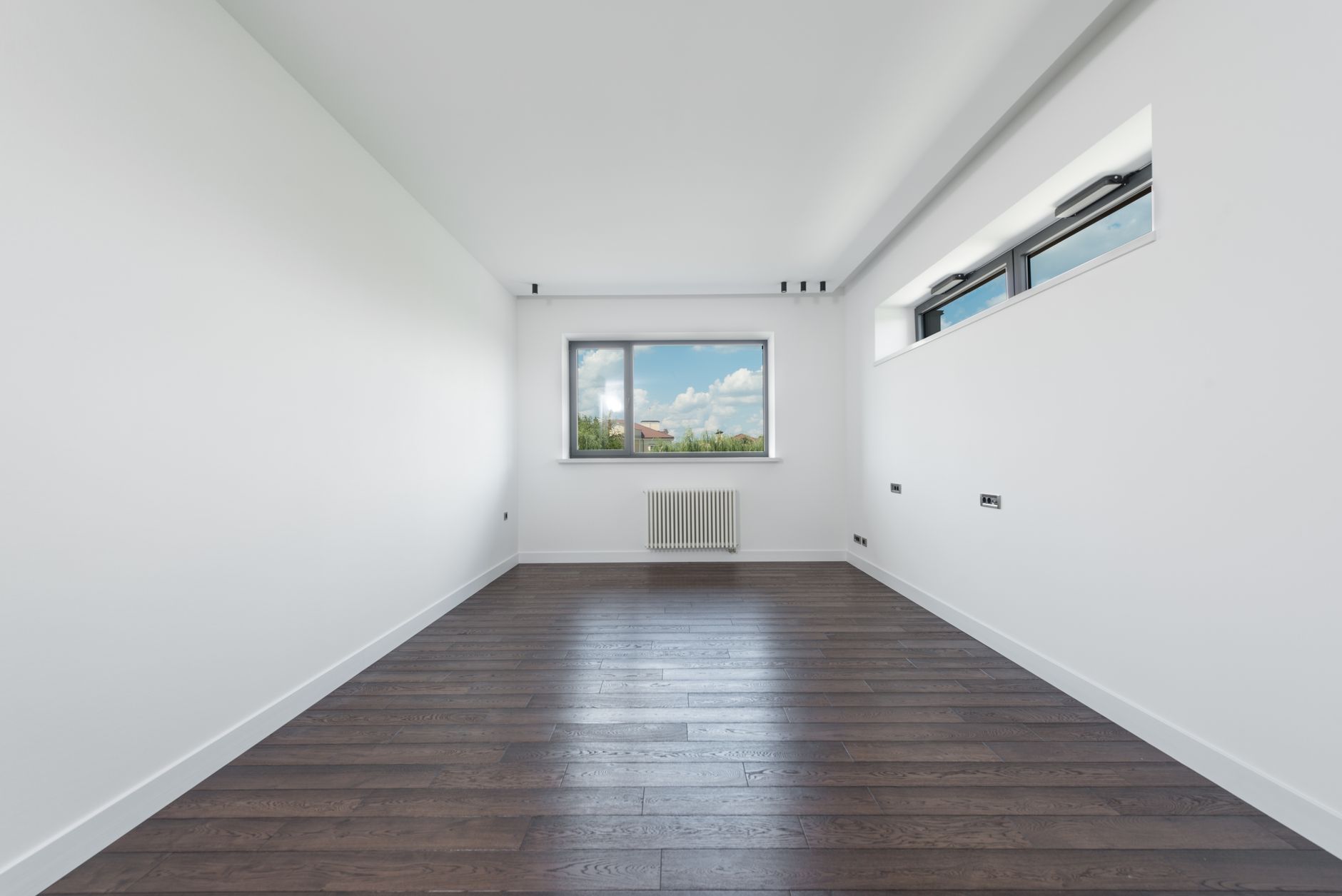
What should you check about noise?
Noise is treated in the tradition as a disturbance to the calm of a room, but the practical case stands on its own — a bedroom on a main road or beside a lift shaft is a different proposition from one at the back of the building, regardless of any school’s reasoning. A viewing at different times of day, if possible, is the only real way to judge this; see what feng shui says about noise for how the tradition frames it and what it does and doesn’t have practical grounding for.
What should you look at in the bedroom specifically?
Check where a bed could go, and whether that position allows a clear view of the door without being directly in line with it. This is the single most repeated point in bedroom feng shui and it has an ordinary explanation: a sleeper who can see the entrance without being startled by it sleeps differently from one who cannot.
On a viewing, this usually comes down to room shape and window placement:
- Where the only sensible bed wall puts the sleeper’s feet or head directly in line with the door — the core issue at a bed that faces the door.
- Whether the only available wall is under a window, which changes how the “commanding position” is usually achieved — see bed under a window and, for small rooms where this is unavoidable, the commanding position in a small room.
- Sloped ceilings, which are common in top-floor and converted properties and change how a bed reads under them — see sloped ceiling bedrooms and beams and low ceilings.
- A bedroom sited directly above a garage, which some Form School writers flag for the change in what sits underneath the sleeper — see a bedroom above a garage.
This is about room and furniture arrangement, not a claim about sleep quality as a medical matter — anyone with ongoing sleep problems should raise them with a doctor, not a layout guide.
What about the kitchen and bathroom?
Two points recur specifically for these rooms. The first is the stove’s position relative to the kitchen door, discussed at where the kitchen stove should go and the layout logic of the kitchen work triangle, which is really a mid-century design-efficiency idea rather than a feng shui one, though the two are often discussed together. The second is the position of the bathroom door relative to other rooms, particularly the kitchen and the main bedroom — see the bathroom door.
What should renters check that owners don’t need to worry about?
Anyone viewing a rental is working within limits an owner doesn’t have — walls that can’t be repainted, a bed position fixed by where the only power sockets are, furniture that has to stay against certain walls. The tradition has a consistent answer to this: work with what can be changed (furniture arrangement, lighting, textiles, clutter) rather than what can’t (the building’s orientation, a fixed layout).
What feng shui says about renting and things you can’t change covers this directly, and what to do when you can’t move the bed is worth reading before a viewing if the bedroom’s proportions look tight in photos. The Buying & Renting archive covers the wider set of questions specific to a tenancy or purchase.
None of this changes the terms of a lease or a survey. Anyone with concerns about a property’s condition, safety or legal status should raise them with the letting agent, a qualified surveyor, or a solicitor, as appropriate — not with a feng shui checklist.
What should you ignore during a viewing?
A viewing is not the moment to start applying the bagua map to a floor plan you’ve only seen for twenty minutes, and it is not the moment to worry about a single object left behind by the outgoing occupant. Common mistakes applying the bagua and what to ignore in most online feng shui advice both cover the kind of over-precise, rule-stacking advice that turns up in searches for exactly this topic and is rarely backed by any named school. Why feng shui consultants disagree with each other is a useful piece of context for why two people can walk the same flat and give opposite verdicts.
For the underlying structure this checklist is drawn from, the Feng Shui Basics hub sets out what the tradition holds and what it doesn’t, and the room-by-room guide and the Entrances, Flow, Light and Small Spaces hub go through each area of a home in the depth a single viewing checklist can’t.
About this site. Feng Shui Pack explains what the feng shui tradition holds and which school holds it, from published sources. Feng shui is a tradition of placement and orientation, not a science: nothing here will bring you wealth, health, luck or a relationship, and we never claim otherwise. Where a suggestion has an ordinary practical reason — daylight, airflow, sightlines, less clutter — we say so; where it does not, we say that too. This is not medical, financial, legal or tenancy advice. If a decision matters, talk to a professional in that field.