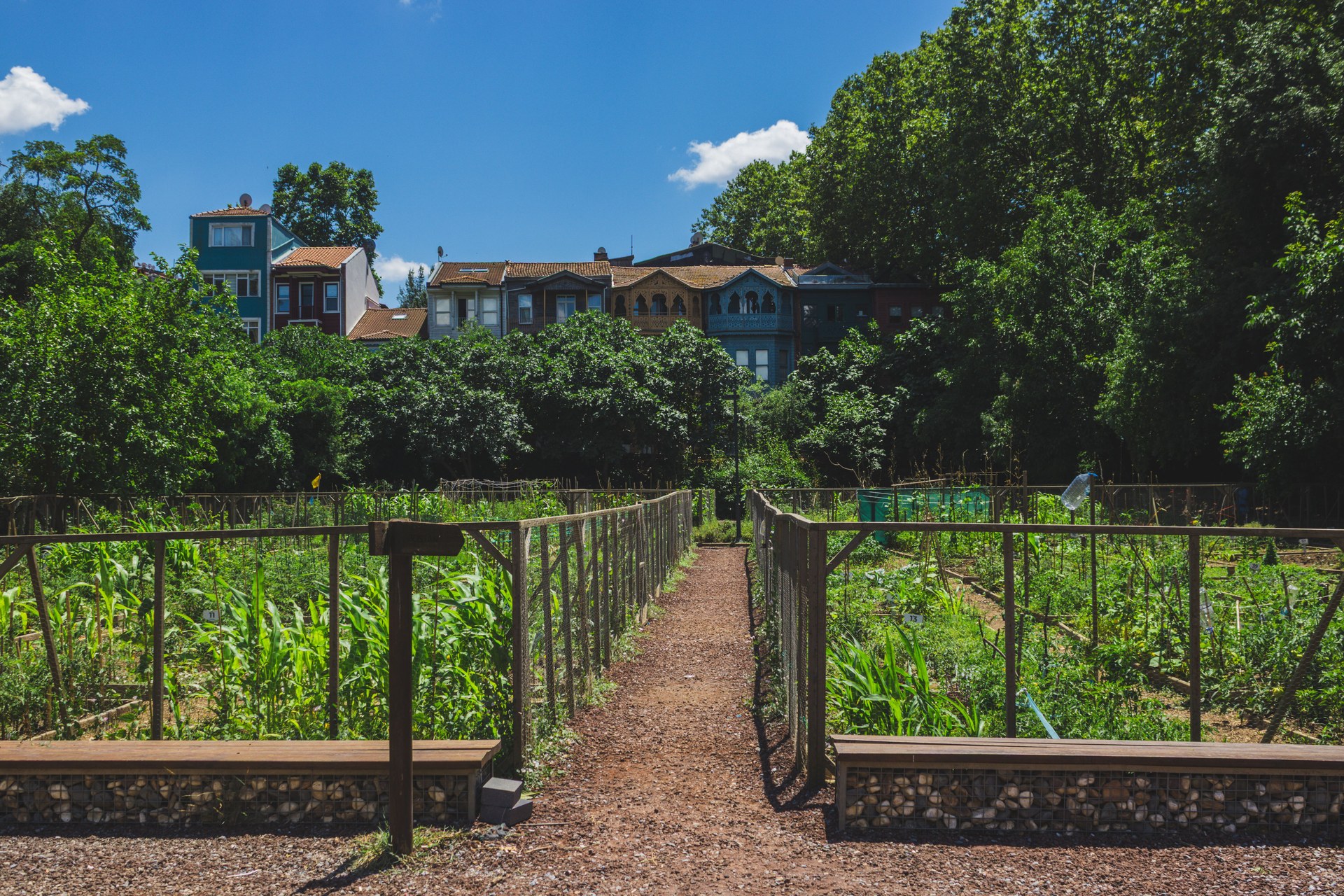
Classical feng shui treats a corner plot with caution, not because a corner is inherently bad, but because a plot facing two streets usually takes in faster, more direct traffic — cars, wind, noise — from two directions instead of one. Form School calls this exposure a “secret arrow.” Compass School and the BTB (Black Sect Tantric Buddhism) adaptation add their own layers on top of that basic concern.
What is a corner plot, in feng shui terms?
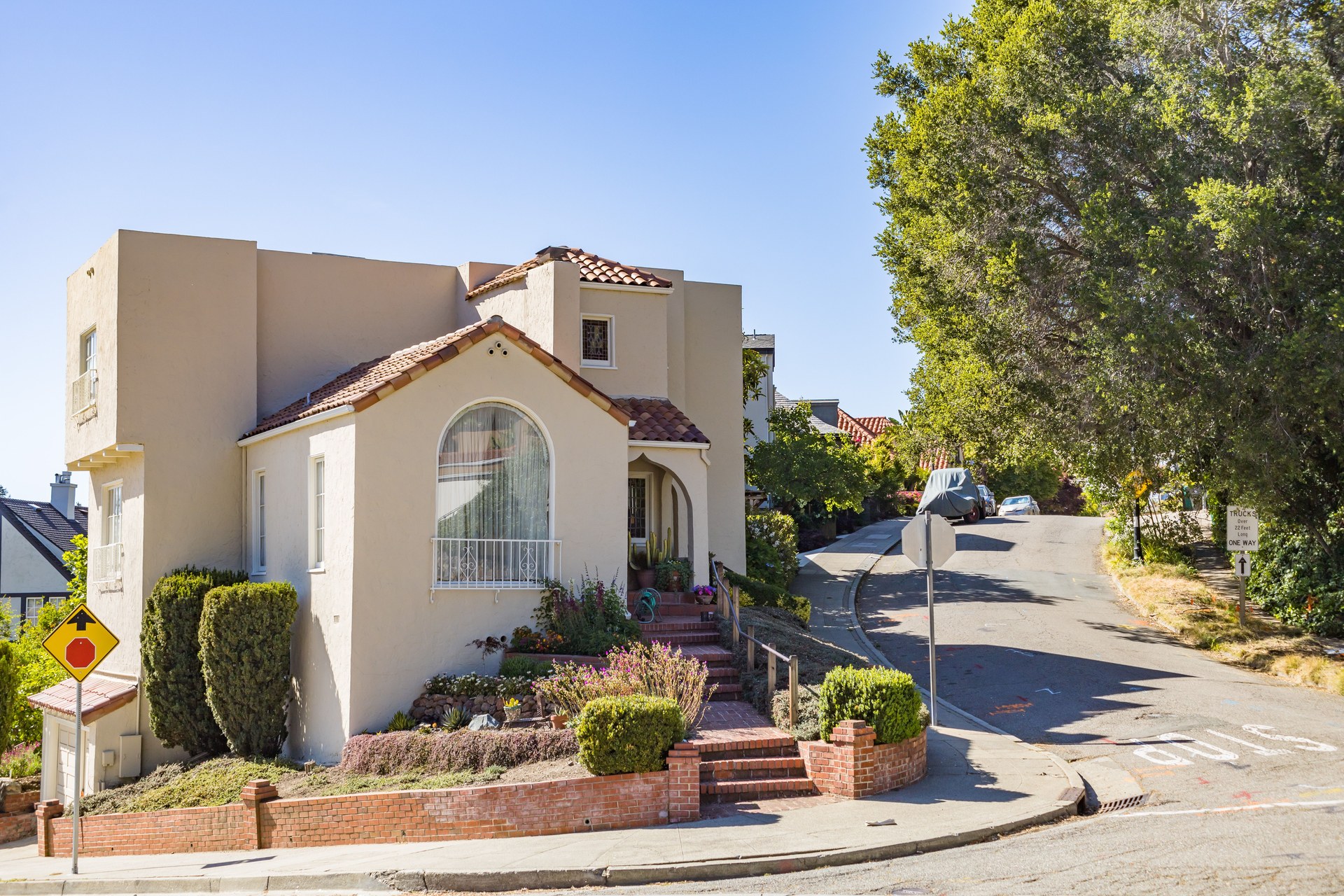
A corner plot is a property bordered by two intersecting roads rather than sitting mid-block with one street frontage. In feng shui writing this matters because the house has two open approaches instead of one, and classical Form School reasoning is built around how chi (qi) — the flow of air, movement and energy the tradition attributes to a site — arrives at a building.
A mid-block house has one road sending movement toward its front. A corner house can have two, sometimes meeting at an angle that points a straight run of traffic directly at the building. Form School texts describe this configuration as more agitated than a plot with a single, calmer approach, because there is more unbroken movement reaching the site.
Why does a corner plot draw special attention in Form School?
Form School reads the land and the buildings around it before anything else, and a plot at a junction changes what the tradition calls the site’s “mouth” — the direction from which movement and chi are said to enter. Two streets create two mouths instead of one.
The practitioner’s concern, as described in Form School sources, is less about the corner itself and more about what the corner does to the angle of approach. A road that runs straight toward a building’s front, rather than curving past it, is treated the same way whether the plot is on a corner or not — the corner simply makes this configuration more common, because a straight road terminating at a junction often points directly at whichever building sits on that corner.
What is a “secret arrow” and does it apply here?
A “secret arrow” (in Chinese, xie qi, sometimes translated as “hidden” or “poison” arrow) is the Form School term for a straight line of fast, unbroken movement aimed at a building — a road, an edge, a sharp roofline. A corner plot at the end of a straight road is one of the classic examples given in the tradition.
The reasoning given is practical as much as symbolic: a straight run of traffic ending at a T-junction or a corner sends vehicles, noise and headlights directly at whichever property faces the end of that road. The site covers this concept in more detail, including how classical sources distinguish a genuine secret arrow from an ordinary road bend, in what a “secret arrow” is from outside a home and in the related discussion of a house sitting at a T-junction, which is one specific form a corner-plot secret arrow can take.
Do all schools of feng shui treat a corner plot the same way?
No, and this is the point most online advice skips. Form School’s objection is about the shape of the approach — the angle of roads and sightlines relative to the building. Classical Compass School (Liqi) instead calculates a site’s reading from compass directions and the birth data of its occupants, using systems such as Flying Stars, and would ask which direction each of the two roads runs before saying anything about the plot at all. The widely circulated BTB adaptation, common in English-language books and blogs, tends to skip both calculations and give blanket advice about corners and arrows without naming which tradition it is drawing on.
None of these three approaches is “the real feng shui” to the exclusion of the others — they are different, sometimes contradictory bodies of practice that happen to share vocabulary. A fuller account of why practitioners give different answers to the same question is at why feng shui consultants disagree with each other, and the tradition’s basic vocabulary and disagreements are laid out at the feng shui basics hub.
Is a corner plot automatically a bad choice?
Not in either school. A corner plot with quiet, low-traffic side streets, generous setback, and a front door that doesn’t face directly down either road is not treated the same as one at a busy junction with fast straight approaches on both sides. Form School’s concern is about specific geometry, not about corners as a category.
Practical points a reader can check without any calculation are also worth noting: a corner plot has two street-facing elevations, which usually means less privacy, more ambient light and noise from two directions, and often a smaller usable garden relative to the plot’s overall size, since more of the boundary runs along public road. These are ordinary planning and lifestyle considerations, independent of any feng shui reading, and worth weighing alongside it.
What features of a corner plot does feng shui look at first?
Practitioners working from Form School principles typically look at a small, consistent set of things when assessing a corner site:
- Whether either road runs straight at the building or curves past it before reaching the corner.
- The angle at which the two roads meet — a sharp, acute junction is read differently from two roads meeting close to a right angle.
- How far back the house sits from the junction, since distance is generally treated as softening the effect of a direct approach.
- What sits between the road and the building — a wall, hedge, mature trees or a change in level, all of which are discussed on this site in relation to approach generally at what feng shui says about the approach to a house.
- Where the front door sits relative to both roads, covered further in the path to the front door.
Compass School practitioners would add the compass bearing of each road and the property’s facing direction, run against the occupants’ personal charts — calculations this site does not attempt to reproduce, since they require a trained practitioner working with a compass reading (a luopan) taken on site.
What can actually be changed about a corner plot?
Layout inside the house is the part a resident or tenant can act on; the roads outside it are not something anyone can move. This is a genuinely useful distinction, and it’s covered at length in which layout problems are fixable in feng shui, and which aren’t.
Where a straight road does point at a house, Form School sources describe screening — planting, a wall, a fence, a change in the garden’s level — as the traditional response, softening or interrupting the sightline rather than trying to redirect the road itself. The reasoning given for planting specifically is discussed at trees near a house, and boundary treatments more broadly at the garden gate. None of this claims to change the traffic pattern; it is presented as changing how directly the approach reaches the building’s entrance.
Where a corner site includes water — a drainage channel, a stream, a feature at the junction — that is treated as a separate question in the tradition, covered at water outside the home.
Should a corner plot affect a decision to buy or rent?
This is a property and lifestyle decision, not a feng shui one, and it sits alongside — not underneath — matters of survey, title, planning history and price that a qualified surveyor, conveyancer or letting agent should advise on; this article is not property, financial or legal advice. Feng shui readings, whichever school they come from, are one more piece of information a buyer or tenant might weigh, not a substitute for those checks.
A structured way to look at any property before committing to it, corner plot or otherwise, is set out in the home viewing feng shui checklist, and the wider question of what’s within a renter’s control is addressed in what feng shui says about renting and things you can’t change. Broader reading on how a site’s outdoor approach is assessed generally sits in the outdoors and approach category.
About this site. Feng Shui Pack explains what the feng shui tradition holds and which school holds it, from published sources. Feng shui is a tradition of placement and orientation, not a science: nothing here will bring you wealth, health, luck or a relationship, and we never claim otherwise. Where a suggestion has an ordinary practical reason — daylight, airflow, sightlines, less clutter — we say so; where it does not, we say that too. This is not medical, financial, legal or tenancy advice. If a decision matters, talk to a professional in that field.